


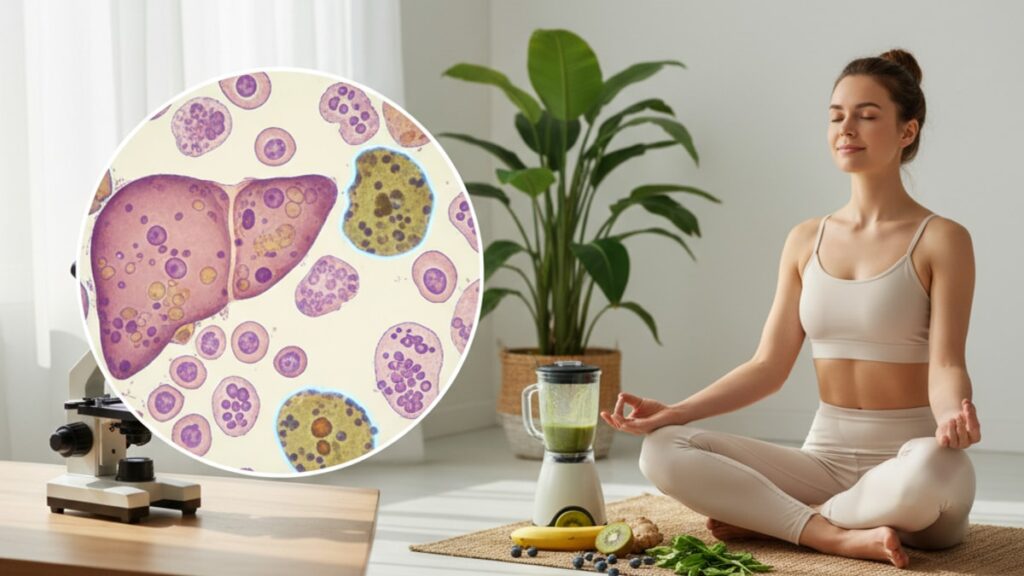
The world of cellular health and longevity research is moving at a breakneck pace, and right at the center of it all is a molecule that’s become a household name in labs and clinics: NAD+, or Nicotinamide Adenine Dinucleotide. We've seen the interest in it explode. It’s a critical coenzyme, fundamental to everything from energy production to DNA repair. But with this surge in popularity, a serious question has started to bubble up, one we hear from researchers and health enthusiasts alike: can NAD+ cause liver damage?
It’s a valid concern, and honestly, it’s one that demands a clear, unflinching answer. The internet is a sprawling maze of conflicting information, with some claiming it’s a miracle molecule and others raising red flags about safety. Here at Real Peptides, our work is rooted in providing researchers with the highest-purity compounds for their studies. That means we have a professional obligation to understand the science inside and out. So, let's cut through the noise together. We’re going to unpack the biochemistry, look at the different forms of NAD+ precursors, and get to the bottom of this liver health question once and for all.
First, What Exactly is NAD+?
Before we can talk about potential risks, we have to be on the same page about what NAD+ is and why it's so vital. Think of it as the cell's master regulator and power source. It's not some exotic compound; it’s a coenzyme found in every single cell in your body. Its job is massive.
Without NAD+, your mitochondria—the tiny power plants inside your cells—can't convert the food you eat into the cellular energy (ATP) that powers literally everything you do. From blinking to thinking to repairing a cut, it all runs on ATP, and ATP production runs on NAD+.
But its role doesn't stop there. It's also a crucial substrate for other enzymes that perform critical maintenance jobs. Sirtuins, often called the “longevity genes,” rely on NAD+ to function. They help regulate inflammation, protect your DNA, and manage cellular stress. Another group of enzymes, PARPs, use NAD+ to rush to the scene of DNA damage and make repairs. When DNA breaks, PARPs are the first responders, and NAD+ is their tool kit. The problem is, our natural levels of NAD+ take a nosedive as we age. This decline is now considered one of the key hallmarks of the aging process, contributing to a wide range of age-related issues. This is why the research community is so intensely focused on finding ways to safely and effectively boost NAD+ levels.
The Real Question: Is it NAD+ or Its Precursors?
Here’s where the conversation often gets muddled. When people ask, “can NAD+ cause liver damage?” they’re usually not talking about the NAD+ molecule already in their cells. They’re talking about the supplements and compounds used to increase NAD+ levels. These are called NAD+ precursors.
This is a critical distinction. The body makes NAD+ from several building blocks, and the most common ones studied for supplementation are:
- Niacin (Nicotinic Acid or Vitamin B3)
- Nicotinamide (NAM, another form of B3)
- Nicotinamide Riboside (NR)
- Nicotinamide Mononucleotide (NMN)
The entire liver debate hinges on how the body processes these different precursors, the dosages used, and the downstream metabolic effects. So, let’s be precise: NAD+ itself doesn’t cause liver damage. It's essential for liver health. The potential for issues arises from the metabolic journey of the precursors used to make it, especially when consumed in very high doses.
The Niacin Story: Where the Liver Concern Began
To understand the root of this fear, we have to look back a few decades. Long before NMN and NR were popular, doctors were prescribing high doses of niacin (a form of Vitamin B3) to help manage high cholesterol. We’re talking about therapeutic doses, often in the range of 1,000 to 3,000 milligrams per day or even higher. This is dramatically more than the recommended daily allowance for B3.
It worked for cholesterol, but it came with a well-documented side effect: the potential for hepatotoxicity, or drug-induced liver damage. At these massive doses, particularly with sustained-release formulations, a significant number of patients experienced elevated liver enzymes (AST and ALT), a clear sign of liver stress. In some rare cases, it led to more severe liver injury. This is also the source of the infamous “niacin flush,” that uncomfortable reddening and warming of the skin.
Because of this history, niacin cast a long shadow over the entire B3 family. It created a link in the public consciousness: high-dose B3 vitamins = potential liver risk. But here's the thing our team can't stress enough: comparing high-dose, sustained-release niacin to modern precursors like NMN or NR is like comparing a sledgehammer to a scalpel. They use different metabolic pathways and have vastly different safety profiles.
Modern Precursors: A Different Ballgame
This brings us to Nicotinamide Riboside (NR) and Nicotinamide Mononucleotide (NMN). These molecules are further down the NAD+ synthesis pipeline than niacin, meaning the body can convert them into NAD+ more efficiently and with fewer intermediate steps. Think of it as starting construction on the third floor instead of in the basement.
Human and animal studies have generally shown both NMN and NR to be remarkably safe, even at doses significantly higher than what’s typically used. Clinical trials using standard dosages (around 250-1000 mg/day) have not reported significant instances of liver toxicity. They don't cause the niacin flush, and they don't seem to carry the same direct hepatotoxic risk that high-dose niacin does. For researchers, this is a game-changer.
However, this doesn't mean they are completely without metabolic consequence. And this is where the truly nuanced, expert-level conversation begins. The real issue isn't direct toxicity; it's about something called the methylation cycle.
The Methylation Connection: The Hidden Culprit
Okay, this is where we get into the deep biochemistry, but it's absolutely crucial for understanding the potential for liver stress. Stick with us.
When you take any NAD+ precursor, your body uses what it needs to make NAD+. Any excess nicotinamide (NAM), which is a byproduct of the NAD+ synthesis and recycling pathway, needs to be processed and excreted. To get rid of this excess NAM, your body attaches a “methyl group” to it. This process, called methylation, neutralizes it and prepares it for removal via urine.
The liver is the body's primary methylation hub. It performs this vital function using a universal methyl donor molecule called S-adenosylmethionine, or SAMe. Your body has a finite pool of these methyl groups.
Here’s the problem: if you flood your system with extremely high doses of NAD+ precursors, you create a massive amount of excess nicotinamide that needs to be methylated. This can put a significant tax on your body's methyl pool, potentially depleting your supply of SAMe. And why does that matter for the liver? Because the liver desperately needs SAMe for its own critical functions, including:
- Detoxification: It's essential for Phase II detoxification pathways.
- Glutathione Production: SAMe is a precursor to glutathione, the body's master antioxidant, which protects liver cells from damage.
- Fat Metabolism: It helps prevent the buildup of fat in the liver (a condition known as steatosis).
So, the theory goes that it's not the precursor itself that's toxic to the liver. It's the depletion of methyl donors caused by processing high doses of precursors that can indirectly stress the liver over time by robbing it of a resource it needs to stay healthy. It’s a resource management problem, not a poison problem. This is a far more sophisticated and likely mechanism than direct toxicity.
A Comparison of NAD+ Precursors and Liver Considerations
To make this clearer, our team put together a quick comparison. It’s important for any researcher to understand these distinctions when designing a study or interpreting data.
| Precursor Form | Primary Pathway | Potential Liver Concern | Mitigation Strategy |
|---|---|---|---|
| Niacin (Nicotinic Acid) | Preiss-Handler pathway | High risk of hepatotoxicity at high doses, especially sustained-release forms. Causes flushing. | Generally not recommended for NAD+ boosting due to side effects. Requires medical supervision. |
| Nicotinamide (NAM) | Salvage pathway | Very low risk at standard doses. Extremely high doses can inhibit sirtuins and tax methylation. | Stick to recommended dosages. Support with methyl donors if using very high amounts. |
| Nicotinamide Riboside (NR) | Salvage pathway | Considered very safe. High doses may tax the methylation cycle over the long term. | Adhere to studied dosages. Consider co-supplementation with a methyl donor like TMG. |
| Nicotinamide Mononucleotide (NMN) | Salvage pathway | Considered very safe. High doses may tax the methylation cycle, similar to NR. | Follow evidence-based dosing protocols. Consider supporting methylation with TMG. |
How to Support Methylation and Protect Your Liver
This brings us to the most practical part of the discussion. If the primary risk is methyl group depletion, then the solution is logical: support the body's methyl pool. It's a proactive strategy that many researchers and biohackers are now incorporating.
This is often done by co-supplementing with a methyl donor. The most common and effective one is TMG (Trimethylglycine), also known as betaine. TMG is an excellent methyl donor that can essentially “donate” its methyl groups to the pool, helping to replenish what's being used to clear excess nicotinamide. Think of it as adding more funds to the bank account that the liver is drawing from.
Other key nutrients involved in the methylation cycle include:
- Folate (in its active form, L-5-MTHF)
- Vitamin B12 (in its active forms, methylcobalamin or adenosylcobalamin)
- Vitamin B6 (in its active form, P-5-P)
Ensuring adequate levels of these B vitamins provides the foundational support for the entire methylation engine to run smoothly. For anyone engaging in research with high doses of NAD+ precursors, our experience shows that considering the methylation pathway isn't just a good idea—it's a critical component of a well-designed, safety-conscious protocol.
The Overlooked Factor: Purity and Quality
There’s one more piece to this puzzle, and it's one we're passionate about at Real Peptides. The purity of the compound being studied is paramount.
In an unregulated market, it's becoming increasingly challenging to know what you're actually getting. A product could be under-dosed, contain inactive fillers, or worse, be contaminated with solvents, heavy metals, or other unknown byproducts from a sloppy synthesis process. In these cases, any adverse reaction—including liver stress—might have nothing to do with the NAD+ precursor itself and everything to do with the contaminants tagging along for the ride.
This is why our entire operation is built around small-batch synthesis and rigorous third-party testing. It’s not just a marketing point; it’s a scientific necessity. For research to be valid, you must eliminate as many confounding variables as possible. Using a compound with guaranteed purity, like the NAD+ 100mg we provide for laboratory settings, ensures that the observed effects are attributable to the molecule itself. This commitment to impeccable quality is the thread that runs through our entire catalog, from metabolic compounds to complex peptides found in our full collection.
It’s simple, right? Bad data comes from bad materials. Good science requires the best.
So, let’s bring it all together. The fear that NAD+ precursors cause liver damage is largely an echo of the issues seen with high-dose niacin decades ago. Modern precursors like NMN and NR are structurally different and have a much stronger safety profile. The primary, and more nuanced, concern is not direct toxicity but the metabolic tax on the methylation cycle from very high, unmanaged doses. This potential issue can be effectively mitigated by using sensible dosing protocols and supporting the body's methyl pool with co-factors like TMG.
Ultimately, the science of NAD+ is incredibly promising. It offers a powerful tool for studying the mechanisms of aging and cellular health. By understanding the biochemistry, respecting the dose, and demanding purity, researchers can move forward with confidence. The key is to proceed with knowledge, not fear. We believe that empowering researchers with both high-quality materials and the deep scientific context to use them is the best way to drive innovation forward. If you're ready to incorporate high-purity compounds into your research, you can Get Started Today.
Frequently Asked Questions
Is NMN safer for the liver than Niacin?
▼
Yes, based on current research, NMN is considered significantly safer for the liver than high-dose niacin. NMN does not cause the ‘niacin flush’ and has not been associated with the same risk of hepatotoxicity seen with therapeutic doses of sustained-release niacin.
What dose of an NAD+ precursor is considered safe?
▼
Most human clinical trials for NMN and NR have used doses ranging from 250 mg to 1,000 mg per day, which have been shown to be well-tolerated. It’s crucial to follow evidence-based dosing protocols, as excessively high doses increase the metabolic burden, particularly on the methylation cycle.
Do I need to take TMG with my NAD+ booster?
▼
While not strictly necessary for everyone, especially at lower doses, co-supplementing with a methyl donor like TMG (trimethylglycine) is a prudent strategy when using higher doses of NAD+ precursors. It helps replenish the methyl groups used to clear excess nicotinamide, thereby reducing stress on the liver.
What are the signs of liver stress I should watch for?
▼
Signs of liver stress can be subtle but may include persistent fatigue, nausea, discomfort or pain in the upper right abdomen, dark urine, or yellowing of the skin or eyes (jaundice). If any of these occur, it’s essential to discontinue use and consult a healthcare professional.
Can taking NAD+ precursors raise my liver enzymes?
▼
While modern precursors like NMN and NR are not typically associated with elevated liver enzymes (like ALT and AST) at standard doses, extremely high doses could potentially cause stress that leads to such elevations. This is primarily linked to methyl pool depletion rather than direct toxicity.
Does intravenous (IV) NAD+ affect the liver differently?
▼
IV NAD+ delivers the molecule directly into the bloodstream, bypassing precursor conversion in the gut and liver. While this is a very efficient delivery method, it’s also a powerful intervention that should only be done under strict medical supervision, as it presents its own set of physiological considerations.
Are there any long-term studies on NAD+ supplements and liver health?
▼
The research on modern NAD+ precursors is still relatively new, so very long-term (multi-decade) human studies are not yet available. However, existing studies lasting up to a year, along with extensive animal data, have not raised significant safety concerns regarding liver health at recommended dosages.
Can I get enough NAD+ from my diet?
▼
Your body can synthesize NAD+ from dietary sources of vitamin B3 (niacin, nicotinamide) found in foods like turkey, fish, and whole grains. However, the amounts needed to significantly raise NAD+ levels to those achieved in anti-aging studies are difficult to obtain from diet alone.
Why is purity so important for NAD+ research compounds?
▼
Purity is critical because contaminants, solvents, or byproducts from improper synthesis can cause adverse effects, including liver stress. For reliable research, you must be certain that any observed biological effect is from the target molecule, which is why we at Real Peptides insist on rigorous third-party testing.
Does the form of NAD+ precursor (powder vs. capsule) matter for liver safety?
▼
The form of delivery does not typically impact liver safety as much as the dosage and purity of the compound itself. The key factor remains the total amount of the precursor being metabolized by the body, regardless of whether it’s ingested as a powder or from a capsule.
Can NAD+ precursors interact with medications that affect the liver?
▼
Yes, there is a potential for interaction. If you are taking any medications known to be metabolized by or stressful to the liver (like statins or acetaminophen), it’s crucial to consult with a healthcare provider before starting any new high-dose supplement regimen, including NAD+ precursors.
