





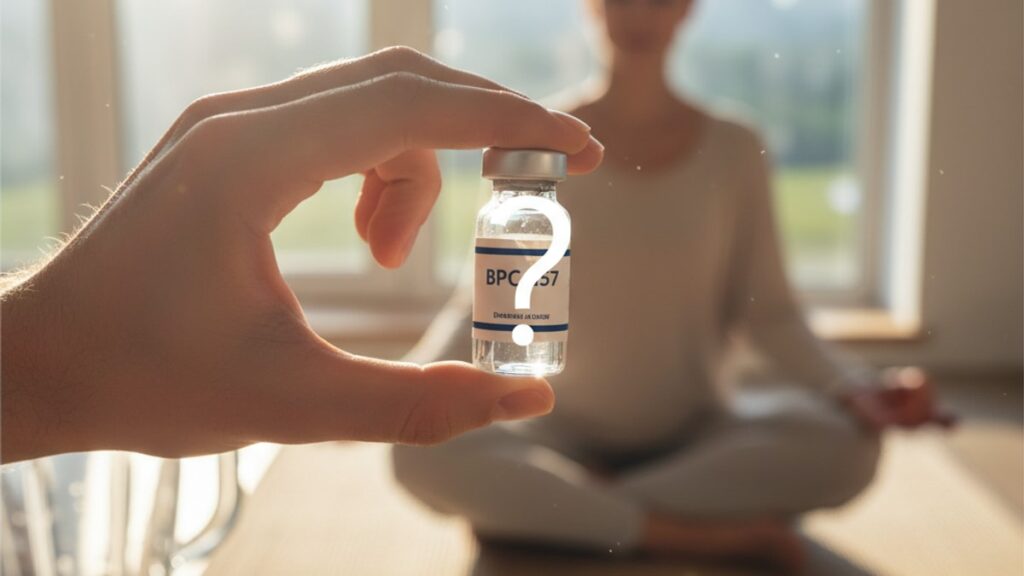
You’ve probably heard the whispers, or maybe even the outright shouts, across forums and fitness circles. BPC 157. It’s touted as a miracle compound for recovery, a near-mythical substance that can mend tissues with astonishing speed. And right alongside that hype, a skeptical question always follows: is BPC 157 a scam? It’s a fair question. Honestly, it’s the right question to be asking in a field flooded with bold claims and murky suppliers.
Our team has been navigating the complex world of peptide research for years, and we've seen this cycle play out time and time again. A promising compound emerges from preclinical trials, the internet explodes with anecdotal reports, and suddenly, a sprawling, unregulated market appears to meet the demand. The result is a minefield of misinformation and questionable products. So, no, the compound itself isn't a 'scam' in the way a fake lottery ticket is. But the environment surrounding it can be treacherous. We're here to cut through that noise, look at the actual science, and show you why the source of a research peptide isn't just important—it's everything.
So, What's the Real Story Behind BPC 157?
Let’s start at the beginning. BPC 157 is a synthetic peptide, a short chain of 15 amino acids. The sequence is derived from a protein found naturally in human gastric juice, which is why it’s often called 'Body Protection Compound'. That name alone gives you a hint about its area of interest for researchers. Its discovery wasn't in some shadowy backroom lab; it originated from legitimate scientific inquiry into the body's own protective and regenerative mechanisms, specifically within the harsh, acidic environment of the stomach.
Researchers were fascinated by how the stomach lining could withstand and repair itself from constant exposure to acid. This led them to isolate specific protective proteins, and BPC 157 is a fragment of one of those. The hypothesis was simple yet profound: if this peptide sequence helps protect and heal the gut, what could it do elsewhere in the body? This question kicked off decades of preclinical research—primarily in animal models like rodents—to explore its potential systemic effects. The results from these studies are what fueled the initial excitement and, eventually, the public hype. We're talking about investigations into everything from tendon and ligament repair to gut inflammation and even neurological protection.
It’s not magic. It’s biochemistry.
The proposed mechanism of action is incredibly complex and multifaceted, which is part of its appeal to the scientific community. It's believed to interact with several growth factor pathways and, most notably, to promote angiogenesis—the formation of new blood vessels. Proper blood flow is a critical, non-negotiable element of healing for any tissue. Without it, you can't deliver the necessary nutrients, oxygen, and cells to repair damage. By potentially upregulating key factors like Vascular Endothelial Growth Factor (VEGF), BPC 157 could theoretically create the vascular infrastructure needed for accelerated and more robust tissue regeneration. This isn't a wild guess; it's an observable phenomenon in lab settings.
The Science: Why Researchers Are So Intrigued
When you move past the forum chatter, the scientific literature on BPC 157 is extensive, though almost exclusively preclinical. We can't stress this enough: these are not human clinical trials. They are foundational studies, mostly in rats and other lab animals, designed to establish proof-of-concept and understand mechanisms. And frankly, the results are compelling.
One of the most heavily researched areas is musculoskeletal healing. In a classic rat study model involving transected Achilles tendons, researchers observed that the BPC 157 group showed significantly improved functional and structural recovery compared to the control group. The healing wasn't just faster; the resulting tissue appeared more organized and stronger. This wasn't a one-off result. Similar findings have been replicated in studies on ligament injuries, muscle tears, and even bone fractures. The peptide appears to have a powerful cytoprotective and regenerative signal that kicks the body's repair processes into a higher gear.
Then there's the gut. This is BPC 157's home turf, so to speak. Studies exploring its effects on inflammatory bowel disease (IBD), NSAID-induced ulcers (damage from drugs like ibuprofen), and other gastrointestinal issues in animal models are numerous. The data suggests it can protect the gut lining, reduce inflammation, and heal lesions. It’s this profound gut-healing potential that has many researchers particularly excited, given the rising prevalence of digestive disorders.
But it doesn't stop there. The rabbit hole goes deeper. Some preclinical research has pointed toward potential neuroprotective effects, suggesting it might help shield the brain from certain types of injury or even influence neurotransmitter systems like dopamine and serotonin. Other studies have looked at its ability to counteract drug-induced damage to organs like the liver and pancreas. It seems to be a master regulator, a systemic healing facilitator that doesn't just target one thing but rather enhances the body's overall ability to repair itself. This is what makes it such a formidable subject of study. It’s also what makes the lack of high-quality, commercially available products for research so frustrating.
Here's Where the 'Scam' Conversation Starts
If the science is so promising, why the skepticism? Why is 'is BPC 157 a scam' such a common search query? The problem isn't the peptide. It's the market.
BPC 157 is not an FDA-approved drug. It's not available by prescription. It exists in a gray area as a 'research chemical,' which means it can be legally sold for in-vitro laboratory research and development purposes only. This unregulated status has created a Wild West environment. Countless online vendors have popped up, many operating with zero oversight, questionable manufacturing practices, and a complete lack of quality control. This is the heart of the problem.
When you buy from an unvetted source, you have absolutely no idea what you're actually getting. Our team has seen reports from independent labs that are truly shocking. Products labeled as '99% Pure BPC 157' have been found to contain:
- The Wrong Substance: Sometimes it's a different, cheaper peptide altogether. Or worse, a completely unknown compound.
- Low Purity: The vial might contain only 50% BPC 157, with the rest being synthesis byproducts, residual solvents, or other contaminants. These impurities can render research results useless and introduce unpredictable variables.
- Heavy Metals or Toxins: Poor manufacturing processes can introduce dangerous contaminants that have no place in a research setting.
- Incorrect Dosage: The amount of peptide in the vial can be drastically different from what's stated on the label, making accurate and repeatable experiments impossible.
This is where the 'scam' happens. Companies prey on the hype, using slick marketing to sell products that are, at best, ineffective and, at worst, dangerous. They cut corners on synthesis, skip expensive quality control steps like High-Performance Liquid Chromatography (HPLC) and Mass Spectrometry (MS) testing, and essentially sell a mystery powder. A researcher using such a product would get unreliable data, potentially invalidating months or even years of work. It’s a catastrophic failure point for any serious scientific endeavor.
Quality Isn't Just a Buzzword—It's Everything
This is why, at Real Peptides, our entire operation is built around an unflinching commitment to quality. We mean this sincerely: for a research chemical, purity and accuracy are the only things that matter. Without them, the entire enterprise of research falls apart. It's the difference between discovering something new and just chasing ghosts in your data.
Our process is meticulous because it has to be. We utilize small-batch synthesis, which gives us granular control over every step. It ensures that the exact amino-acid sequence for a compound like our BPC 157 Peptide is constructed perfectly, every single time. There is no room for error. After synthesis, every batch undergoes rigorous third-party testing to verify its identity, purity, and concentration. We provide these lab reports—the Certificates of Analysis (CoA)—so researchers can be 100% confident in the material they are working with. This transparency is non-negotiable.
Think about it. If you're a scientist studying the effects of BPC 157 on tendon cell cultures, you need to know that the only active variable you're introducing is pure BPC 157. If your sample is contaminated, how can you trust your results? You can't. You're not just wasting time and money; you're contributing to a body of confusing and unreliable science.
This commitment extends to different formulations as well. For researchers investigating oral administration routes in their models, a product like our BPC 157 Capsules must meet the same exacting standards. The stability and bioavailability of the peptide in this form are critical research parameters, and they depend entirely on the quality of the starting material and the precision of the manufacturing process. It's a chain of custody for quality, from raw materials to the final product that lands in the lab.
Navigating the Murky Waters: Spotting Red Flags
So, how can a researcher protect their work from falling victim to a low-quality supplier? You have to become a savvy consumer. Our experience shows that asking the right questions and looking for specific indicators can quickly separate the legitimate suppliers from the charlatans.
It comes down to verifiable proof.
Here's a quick comparison our team put together to illustrate the stark difference between a professional research supplier and a questionable online vendor:
| Feature | Legitimate Research Supplier (like Real Peptides) | Questionable Vendor |
|---|---|---|
| Purity & Identity | Guaranteed via recent, batch-specific third-party lab reports (HPLC/MS). | Vague claims like "ultra-pure" with no proof or outdated/fake labs. |
| Transparency | Clear information on synthesis methods and quality control. Open to questions. | Hides behind flashy marketing and anonymous contact forms. |
| Testing | Provides Certificates of Analysis (CoA) for every batch upon request. | No CoAs available, or provides a generic, non-specific document. |
| Website & Marketing | Professional, scientific language. Clearly states "for research use only." | Makes wild health claims, uses bodybuilding hype, shows before/after pics. |
| Customer Support | Knowledgeable staff who can discuss the technical aspects of their products. | Unresponsive or unable to answer basic questions about chemistry. |
| Company Reputation | Established presence, positive reviews from the research community. | Pops up overnight, disappears quickly. Many negative reviews. |
Don't be swayed by a low price. In the world of peptides, a price that seems too good to be true almost certainly is. The complex synthesis and rigorous testing required to produce a high-purity peptide are expensive. Cutting corners is the only way to offer rock-bottom prices, and that corner-cutting happens at the direct expense of quality, safety, and reliability.
BPC 157 in Context: How It Compares
It’s also helpful to understand where BPC 157 fits within the broader landscape of regenerative peptides. It's often discussed alongside another prominent research peptide, TB 500 Thymosin Beta 4. While both are subjects of intense study for their healing properties, they are believed to work through different mechanisms.
As we discussed, BPC 157 appears to be a powerful promoter of angiogenesis and a direct stabilizer of cellular processes. TB-500, a synthetic version of a naturally occurring protein, is thought to work differently. Its primary proposed mechanisms involve upregulating proteins like actin, which is vital for cell structure and migration, and reducing inflammation. Essentially, while BPC 157 helps build the 'roadways' (blood vessels) for healing, TB-500 helps mobilize the 'construction crews' (cells) and manage the worksite (inflammation).
Because of these complementary, yet distinct, mechanisms, researchers are often interested in studying their synergistic potential. This has led to the development of research products like the Wolverine Peptide Stack, which combines both compounds for studies exploring comprehensive regenerative effects. Understanding these nuances is key. It shows that the world of peptide research isn't about a single 'magic bullet' but about understanding a complex network of biological signals. Exploring our full range of all peptides can give researchers a broader perspective on the various pathways available for investigation.
The Regulatory Landscape: A Critical Piece of the Puzzle
We have to talk about the official status of BPC 157. It's a critical factor in this whole conversation. The World Anti-Doping Agency (WADA) has placed BPC 157 on its Prohibited List. It's banned at all times for athletes. Why? Because it's an experimental substance without current approval for human therapeutic use and is considered to have the potential for performance enhancement.
WADA's position doesn't mean the substance is a scam; in fact, it's quite the opposite. They ban substances that they believe have a plausible mechanism for enhancing performance, and the preclinical data on BPC 157's regenerative capabilities is strong enough to warrant this classification. It's a tacit acknowledgment of its potential biological activity.
In the United States, the FDA has not approved BPC 157 for any medical use. This is a crucial point. The lack of large-scale, randomized, double-blind, placebo-controlled human trials means its safety and efficacy in humans are officially unknown. This is why it remains strictly a research chemical. Any company marketing it as a supplement, treatment, or cure for any disease is breaking the law and should be viewed with extreme suspicion. Responsible suppliers are crystal clear about this distinction. Our products are intended for one purpose: to empower legitimate, controlled, and ethical scientific research. That's it.
So, is BPC 157 a scam? The molecule itself is a legitimate and fascinating subject of scientific inquiry with a substantial body of preclinical evidence suggesting powerful regenerative properties. It is not a hoax. The 'scam' lies entirely in the unregulated marketplace that has grown around it. It's the fraudulent vendors selling impure, mislabeled, or contaminated products who are running the scam. They exploit the scientific promise of the peptide to sell snake oil.
The legitimacy of BPC 157 in any context hinges entirely on its source. For the scientific community, sourcing from a reputable supplier that guarantees purity through verifiable, third-party testing is the only way to conduct meaningful research. It’s the only way to generate clean data that can one day contribute to our understanding of human biology. Anything less is just gambling. And in science, there's no room for that. If you're ready to conduct serious research, we encourage you to Get Started Today with materials you can trust.
Frequently Asked Questions
Is BPC 157 a scam or does it actually work?
▼
BPC 157 is not inherently a scam; it’s a legitimate peptide with extensive preclinical research suggesting significant regenerative potential. The ‘scam’ aspect comes from the unregulated market, where many vendors sell impure, contaminated, or fake products. Its effectiveness in any application depends entirely on the purity and quality of the compound.
Why is BPC 157 not FDA approved?
▼
BPC 157 has not undergone the rigorous, large-scale human clinical trials required by the FDA for approval as a therapeutic drug. While there is a lot of animal data, its safety and efficacy in humans have not been formally established to the FDA’s standards.
What is the biggest risk of buying BPC 157 from a bad source?
▼
The biggest risks are receiving a product with low purity, the wrong substance, or harmful contaminants like heavy metals or bacteria. For researchers, this invalidates data. For any other context, it introduces unknown health risks.
How can I verify the purity of a BPC 157 product?
▼
A reputable supplier will provide a current, batch-specific Certificate of Analysis (CoA) from a third-party lab. This report should show results from tests like HPLC (to determine purity) and Mass Spectrometry (to confirm the molecular weight and identity of the peptide).
What does ‘for research use only’ actually mean?
▼
This label signifies that the substance is not approved for human consumption or use as a drug, supplement, or cosmetic. It is intended solely for in-vitro laboratory experiments or animal studies conducted by qualified researchers.
What is the difference between BPC 157 and TB-500?
▼
Both are researched for healing, but they have different proposed mechanisms. BPC 157 is thought to primarily promote angiogenesis (new blood vessel formation), while TB-500 is believed to work by upregulating proteins like actin to enhance cell migration and reduce inflammation.
Are BPC 157 capsules effective for research?
▼
The oral bioavailability of peptides is a complex area of research. For laboratory purposes, capsules containing a stable form of the peptide, like the Arginate salt form, are used to study its potential effects when administered via the digestive system in animal models.
Why is BPC 157 banned by WADA?
▼
WADA bans substances that are not approved for human use and have the potential to enhance performance. Given the extensive preclinical data on BPC 157’s ability to accelerate tissue healing, it falls into this category as a potential performance-enhancing substance.
Where does BPC 157 originally come from?
▼
BPC 157 is a synthetic peptide fragment derived from a larger protein naturally found in human gastric juice. Researchers isolated this specific 15-amino-acid sequence because of its observed protective effects on the stomach lining.
Does Real Peptides test its BPC 157?
▼
Yes. At Real Peptides, every batch of our BPC 157, and all our peptides, undergoes rigorous third-party testing to confirm its identity, purity, and concentration. We make these lab reports available to ensure our clients have full confidence in their research materials.
What is the stable form of BPC 157?
▼
The Arginate salt form of BPC 157 is considered more stable, particularly in liquid form and in the acidic environment of the stomach, compared to the standard Acetate salt form. This makes it a subject of interest for research into oral administration routes.
Can BPC 157 help with gut health?
▼
A significant amount of animal research has focused on BPC 157’s effects on the gastrointestinal tract. Studies in rodents have shown it may protect the gut lining, reduce inflammation, and help heal ulcers, which is why it’s a major area of ongoing scientific investigation.











