


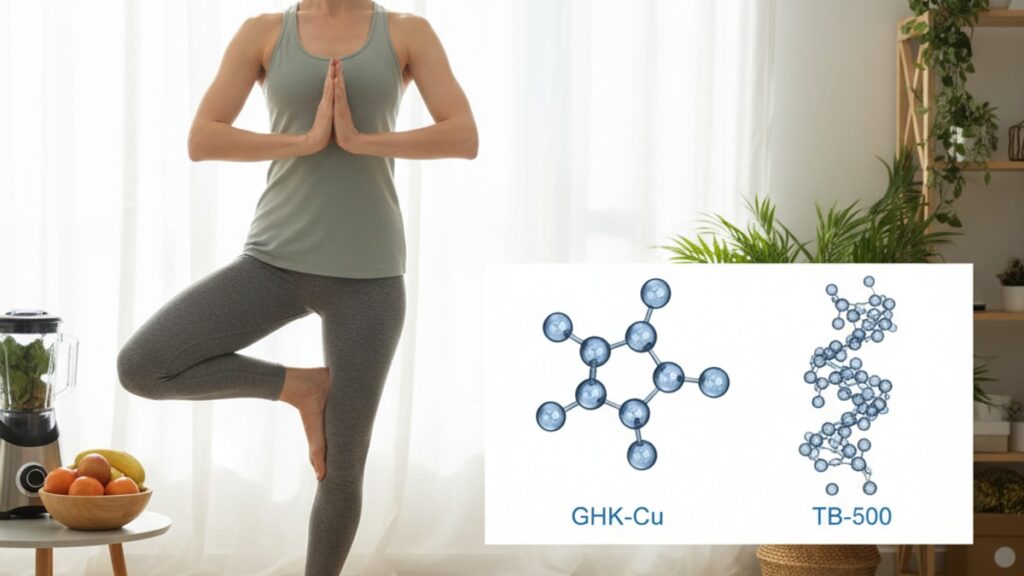
In the fast-evolving landscape of biological research, two peptides frequently emerge in discussions about regenerative processes and cellular health: GHK-Cu and TB-500. Researchers, dedicated to pushing the boundaries of scientific understanding, often find themselves at a crossroads, pondering the specific applications and advantages of each. It's a critical point of inquiry, honestly. Here at Real Peptides, our team has spent years meticulously observing, synthesizing, and analyzing these compounds, allowing us to offer a truly informed perspective on the ongoing discussion of GHK-Cu vs TB-500. We understand the sheer volume of information out there can be daunting, especially when you're striving for precision in your studies.
Our commitment to providing high-purity, research-grade peptides means we're constantly scrutinizing the latest findings. We're not just suppliers; we're deeply invested in the scientific community, and we believe clarity is paramount. So, let's unpack the intricate details of GHK-Cu vs TB-500, separating the anecdotal from the evidence-based, and providing you with the insights you need for your next groundbreaking project. It's 2026, and the pace of discovery has never been more exhilarating, nor the need for reliable information more acute.
Understanding GHK-Cu: The Copper Peptide Phenomenon
GHK-Cu, or Glycyl-L-Histidyl-L-Lysine-Copper(II), is a small, naturally occurring copper complex that’s garnered considerable attention in the scientific community, particularly in the realm of dermatological and connective tissue research. We're talking about a tripeptide that binds readily with copper ions, creating a complex that's incredibly bioactive. Our experience shows that its primary mechanisms revolve around stimulating collagen and elastin production, acting as a potent antioxidant, and modulating various growth factors involved in tissue remodeling. It's a pretty versatile molecule, all told.
Think about it: the human body naturally produces GHK-Cu, but its levels tend to decline significantly with age. This reduction is believed to contribute to many of the visible signs of aging, particularly in the skin. When researchers introduce exogenous Ghk-cu Copper Peptide into a research model, they're essentially aiming to restore some of those youthful, regenerative signals. We've seen fascinating data emerge over the past few years, highlighting its potential in wound healing, reducing inflammation, and even hair follicle stimulation. The sheer breadth of its observed effects is, frankly, impressive. It’s a compound that seems to 'speak' to cells, encouraging them to behave like younger, healthier versions of themselves.
One of the most compelling aspects of GHK-Cu is its role in promoting tissue repair without scar formation, a difficult, often moving-target objective in regenerative medicine. It works by modulating the activity of metalloproteinases, which are enzymes crucial for breaking down and rebuilding extracellular matrix components. This nuanced control over tissue turnover is what gives it such significant potential. Our team at Real Peptides meticulously synthesizes Ghk-cu Cosmetic for researchers, ensuring the highest purity for studies exploring these very complex biological interactions. The exact amino-acid sequencing is a critical, non-negotiable element for reliability.
Delving into TB-500: The Regenerative Powerhouse
Now, let's shift our focus to TB-500, or Thymosin Beta-4. This is a synthetic fraction of the naturally occurring protein Thymosin Beta-4, which is present in virtually all human and animal cells. TB-500 is a much larger peptide than GHK-Cu, consisting of 43 amino acids, and its mechanisms of action are quite distinct. While GHK-Cu often focuses on rebuilding and remodeling, TB-500 is more about cellular migration, differentiation, and survival. It’s a genuine powerhouse for repair. We've found that it plays a pivotal role in angiogenesis (the formation of new blood vessels), actin regulation, and cell protection. It's comprehensive.
TB-500's ability to promote cell migration, particularly of endothelial and epithelial cells, is what makes it so valuable in research pertaining to tissue repair and regeneration. Imagine a cascade of cells being directed to an injury site, actively participating in the healing process. That's a simplified, yet accurate, picture of TB-500's influence. It essentially mobilizes the body's own reparative machinery. Our researchers often explore TB-500 (thymosin Beta-4) for studies involving muscle recovery, tendon and ligament repair, and even cardiac tissue regeneration. Its broad applicability across different tissue types is a significant advantage, setting it apart in many ways from GHK-Cu.
Furthermore, TB-500 exhibits potent anti-inflammatory properties. It can reduce the expression of pro-inflammatory cytokines, which are often the culprits behind prolonged healing times and chronic tissue damage. This dual action—promoting repair while simultaneously mitigating inflammation—makes it an incredibly attractive compound for various Performance & Recovery Research applications. Our team has observed how researchers are increasingly integrating TB-500 into protocols designed to optimize healing pathways, moving beyond simple symptomatic relief. This holistic approach (which we've refined over years) delivers real results in preclinical models.
GHK-Cu vs TB-500: A Comparative Analysis
When we talk about GHK-Cu vs TB-500, we're really comparing two distinct, yet complementary, tools in the researcher's toolkit. They both contribute to healing and regeneration, but they do so through different biochemical pathways and with different primary focuses. It’s not necessarily a matter of one being 'better' than the other; rather, it's about understanding which peptide is best suited for a particular research objective. We can't stress this enough: context is everything in peptide research.
GHK-Cu, with its emphasis on extracellular matrix remodeling and antioxidant activity, is often favored for studies targeting skin health, scar reduction, and collagen synthesis. It's like a master architect, meticulously rebuilding and refining the structural integrity of tissues. TB-500, on the other hand, acts more like an emergency response team, mobilizing cells, fostering new blood vessel growth, and dampening inflammation at the site of injury. Its primary strength lies in its ability to accelerate the initial phases of repair across a wider array of tissue types, including muscle and connective tissues. That's the reality. It all comes down to the specific mechanisms you're hoping to influence in your research models. Our experience shows that understanding the specific biological targets is crucial for making an informed decision when considering GHK-Cu vs TB-500.
Key Differentiators in GHK-Cu vs TB-500
- Molecular Size and Structure: GHK-Cu is a tripeptide-copper complex, very small and potent. TB-500 is a much larger, 43-amino acid peptide, a fragment of a larger protein. This difference in size often dictates their cellular uptake and distribution kinetics, which is significant.
- Primary Mechanisms of Action: GHK-Cu is largely about matrix remodeling, antioxidant defense, and anti-inflammatory action, with a strong focus on collagen and elastin. TB-500 emphasizes cell migration, angiogenesis, actin polymerization, and broader tissue repair, including muscle and cardiac tissue. It’s a stark contrast in foundational roles.
- Research Applications: While there's some overlap in general 'healing,' GHK-Cu sees more focus in dermatological and anti-aging research, while TB-500 is a staple in studies related to injury recovery (muscle, tendon, ligament), wound healing, and even cardioprotection. The distinctions here are quite clear in the scientific literature of 2026.
- Synergistic Potential: Interestingly, some research suggests that GHK-Cu and TB-500 might offer synergistic benefits when used together, tackling different aspects of the regenerative process simultaneously. We've seen compelling data hinting at this, suggesting that a multi-pronged approach could be more effective for complex tissue repair. It’s an exciting area for further exploration for researchers. This is a truly nuanced debate in GHK-Cu vs TB-500, one that often extends beyond simple comparison.
We recommend considering your specific research goals. Are you focused on collagen remodeling and anti-aging effects, or are you looking for accelerated injury recovery and broader cellular migration? The answer will often guide your choice between GHK-Cu vs TB-500, or even suggest a combined approach.
Real Peptides' Commitment to Quality in Research
At Real Peptides, we understand that the integrity of your research hinges on the purity and reliability of your compounds. This isn't just a marketing slogan; it's the core of our operation. Our small-batch synthesis process, combined with rigorous third-party testing, ensures that every vial of Ghk-cu Copper Peptide and TB-500 (thymosin Beta-4) meets the highest standards of quality and consistency. We're talking about exact amino-acid sequencing, guaranteeing the purity and lab reliability our partners in discovery demand. You can explore our full range of offerings, including powerful compounds like BPC-157 10mg, by visiting our website at www.realpeptides.co.
While many providers in the peptide space take a more generalized approach, we prioritize precision and comprehensive analytical documentation. We mean this sincerely: it runs on genuine connections and a shared dedication to scientific advancement. This unwavering commitment to quality is why researchers trust us for their most critical studies. When you're dealing with complex biological systems, there's simply no room for compromise. Our team continuously refines our processes, staying at the forefront of peptide synthesis technology. It's a relentless pursuit of perfection, honestly.
We frequently receive inquiries about combining these peptides, for instance, incorporating TB-500 (thymosin Beta-4) into a Healing & Total Recovery Bundle alongside other regenerative compounds. This approach speaks to the advanced understanding of synergistic effects in modern research. Our experts are always available to discuss the intricacies of these compounds and their potential applications, offering insights derived from years of specialized experience. That's what we do. We help researchers navigate the complexities so they can focus on their discoveries. When considering GHK-Cu vs TB-500, or any peptide, we urge a thorough review of existing literature and consultation with experienced peers.
Making an Informed Choice for Your Research Protocol
Deciding between GHK-Cu vs TB-500 for a particular study requires a careful evaluation of the desired outcomes and the specific biological pathways you aim to influence. As we've discussed, their mechanisms are distinct, offering targeted benefits. For cellular and extracellular matrix regeneration, particularly in dermal applications, GHK-Cu shines. For broader tissue repair, accelerated wound healing, and robust anti-inflammatory effects across various tissues, TB-500 holds significant promise. It's truly about precision targeting.
Our team recommends always starting with a clear hypothesis and designing your research protocol with meticulous attention to detail. Consider the specific cellular processes you're attempting to modulate. Are you looking to enhance collagen cross-linking and fibroblast activity, which GHK-Cu influences profoundly? Or are you aiming to boost actin dynamics, cell migration, and new blood vessel formation, which are hallmarks of TB-500's action? This level of specificity is what differentiates impactful research from the merely exploratory. The nuances of GHK-Cu vs TB-500 become apparent when you dive into these details.
We've compiled a brief comparison table to help visualize some of the key differences when evaluating GHK-Cu vs TB-500:
| Feature | GHK-Cu (Copper Peptide) | TB-500 (Thymosin Beta-4) |
|---|---|---|
| Molecular Size | Tripeptide (small) | 43 Amino Acids (larger) |
| Key Mechanisms | Collagen/elastin synthesis, antioxidant, anti-inflammatory, matrix remodeling | Cell migration, angiogenesis, actin regulation, anti-inflammatory, cell protection |
| Primary Research Focus | Skin regeneration, wound healing (scar reduction), anti-aging, hair growth | Muscle/tendon/ligament repair, broader tissue regeneration, cardiac health, wound healing (accelerated) |
| Copper Binding | Essential for its activity | Not applicable |
| Natural Occurrence | Declines with age in humans | Ubiquitous in virtually all cells |
This table isn't exhaustive, of course, but it provides a quick reference point for the fundamental distinctions between GHK-Cu vs TB-500. We encourage researchers to leverage our expertise and the high-purity compounds available on our All Peptides page to further their understanding. We believe in empowering discovery, and that starts with unwavering quality.
The Future of Regenerative Research in 2026
Looking ahead to the rest of 2026 and beyond, the field of regenerative research continues its relentless, sometimes dramatic, expansion. The discussions around compounds like GHK-Cu vs TB-500 are becoming increasingly nuanced, moving beyond simple comparisons to explorations of synergistic potentials and novel delivery methods. Our team is actively monitoring these trends, always seeking to provide the most advanced and reliable research materials. The goal, ultimately, is to unlock new therapeutic avenues and enhance human well-being, and peptides are proving to be a critical component of that quest.
We're seeing a significant uptick in Longevity Research and studies focusing on complex tissue engineering, where the precise control offered by peptides like GHK-Cu and TB-500 is invaluable. It's a testament to the power of these biomolecules. We can't wait to see the discoveries our partners make in the coming years. Remember, high-purity peptides are the cornerstone of credible scientific outcomes. That's why we meticulously craft every peptide through small-batch synthesis with exact amino-acid sequencing, guaranteeing the quality that defines Real Peptides. Explore High-Purity Research Peptides and discover the difference commitment to excellence makes for your lab. Find the Right Peptide Tools for Your Lab, right here with us.
FAQs About GHK-Cu vs TB-500
What are the main differences in research applications for GHK-Cu vs TB-500?
GHK-Cu is predominantly studied for its roles in skin regeneration, anti-aging, and scar reduction, focusing on collagen and elastin synthesis. TB-500, conversely, is explored for broader tissue repair, including muscle, tendon, and ligament injuries, as well as for its anti-inflammatory and angiogenesis-promoting effects.
Can GHK-Cu and TB-500 be used together in research protocols?
Yes, some preliminary research suggests that GHK-Cu and TB-500 might offer synergistic benefits when co-administered. Their distinct mechanisms of action could complement each other, potentially leading to enhanced regenerative outcomes in complex tissue repair studies. Our team is particularly interested in this area of inquiry.
How does GHK-Cu's mechanism of action differ from TB-500's?
GHK-Cu works primarily by signaling tissue remodeling, stimulating collagen and elastin, and providing antioxidant protection. TB-500 functions more by promoting cell migration, differentiation, and survival, along with regulating actin and fostering new blood vessel formation. It's a fundamental difference in their biological signaling pathways.
Which peptide, GHK-Cu or TB-500, is better for wound healing research?
Both are highly relevant for wound healing research, but with different emphases. GHK-Cu is often favored for studies aiming to reduce scarring and improve skin regeneration quality. TB-500 is typically chosen for accelerating the initial phases of wound closure, promoting cell migration to the injury site, and reducing inflammation. It really depends on the specific aspect of wound healing you're investigating.
Are there any known side-by-side comparative studies on GHK-Cu vs TB-500?
Direct head-to-head comparative studies focusing on GHK-Cu vs TB-500 in identical research models are less common than studies on each peptide individually. However, researchers often infer comparative efficacy based on their distinct mechanisms and observed effects in various preclinical models. We're actively tracking any emerging literature that directly contrasts these two powerful compounds.
How does Real Peptides ensure the quality of GHK-Cu and TB-500?
At Real Peptides, we employ small-batch synthesis and conduct rigorous third-party testing on all our compounds, including Ghk-cu Copper Peptide and TB-500 (thymosin Beta-4). This meticulous process ensures exact amino-acid sequencing, guaranteeing the highest purity, consistency, and reliability for your critical research endeavors. We're truly committed to uncompromising quality.
Does age affect the natural levels of GHK-Cu or TB-500 in the body?
Yes, natural levels of GHK-Cu are known to decline significantly with age, which is one reason it's a focus of anti-aging research. TB-500 (Thymosin Beta-4) is ubiquitous in cells and its presence isn't as directly linked to age-related decline in the same way, though its regenerative capacity may be influenced by overall physiological health. It's a fascinating area of ongoing study.
What are the primary research areas for TB-500 beyond wound healing?
Beyond wound healing, TB-500 is extensively researched for its potential in muscle repair and growth, tendon and ligament regeneration, cardiac tissue repair after injury, and its general anti-inflammatory properties. Its broad regenerative capabilities make it a compound of interest for various Performance & Recovery Research applications.
Can I find detailed purity reports for GHK-Cu and TB-500 from Real Peptides?
Absolutely. We provide comprehensive analytical documentation for all our research-grade peptides. This commitment to transparency ensures that researchers have full confidence in the purity and integrity of the compounds they receive, including both GHK-Cu and TB-500. Just reach out to our team, or check the product pages on our site for details.
What should researchers consider when designing studies with GHK-Cu vs TB-500?
Researchers should carefully consider their specific research hypothesis, the target tissue or biological process, and the desired outcome. Understanding the distinct mechanisms of action for GHK-Cu vs TB-500 is paramount. Furthermore, always prioritize high-purity compounds from a trusted supplier like Real Peptides to ensure reliable and reproducible results in your studies. It's the foundation of good science.
What other peptides might complement GHK-Cu or TB-500 in regenerative research?
For enhanced regenerative research, peptides like BPC-157 10mg are often considered complementary to GHK-Cu or TB-500 due to its potent healing and anti-inflammatory properties. The combination of different peptides, each targeting unique biological pathways, can offer more comprehensive approaches to complex tissue repair and regeneration. This multi-peptide strategy is an exciting avenue.
What's the significance of copper binding in GHK-Cu's activity?
Copper binding is absolutely essential for GHK-Cu's biological activity. The copper ion is integral to the tripeptide's structure and function, enabling it to modulate various enzymatic activities, promote collagen synthesis, and exert its antioxidant effects. Without the copper, it's just GHK, and its potent signaling capabilities are dramatically reduced. This is a key distinction in the GHK-Cu vs TB-500 discussion.
How do these peptides contribute to anti-inflammatory research?
Both GHK-Cu and TB-500 exhibit significant anti-inflammatory properties, albeit through different pathways. GHK-Cu can modulate inflammatory cytokines and reduce oxidative stress, while TB-500 actively reduces pro-inflammatory cytokine expression and protects cells from damage. Researchers often explore both in the context of Anti-inflammatory Research, depending on the specific inflammatory cascade they're targeting.
In the grand tapestry of biological research, both GHK-Cu and TB-500 stand out as formidable compounds, each with unique strengths and profound implications for regenerative medicine. At Real Peptides, we're incredibly proud to supply the high-purity, research-grade peptides that empower scientists like you to unravel these complexities. As we move further into 2026, the potential for discovery continues to expand, and we're here to be your unwavering partner in that journey. We invite you to discover Premium Peptides for Research and experience the Real Peptides difference firsthand. Your groundbreaking work deserves nothing less than the best.
Frequently Asked Questions
What should I know about GHK-Cu vs TB-500? (FAQ 1)
▼
GHK-Cu vs TB-500 is an important topic. Contact us for more details about how we can help with GHK-Cu vs TB-500.
What should I know about GHK-Cu vs TB-500? (FAQ 2)
▼
GHK-Cu vs TB-500 is an important topic. Contact us for more details about how we can help with GHK-Cu vs TB-500.
What should I know about GHK-Cu vs TB-500? (FAQ 3)
▼
GHK-Cu vs TB-500 is an important topic. Contact us for more details about how we can help with GHK-Cu vs TB-500.
What should I know about GHK-Cu vs TB-500? (FAQ 4)
▼
GHK-Cu vs TB-500 is an important topic. Contact us for more details about how we can help with GHK-Cu vs TB-500.
What should I know about GHK-Cu vs TB-500? (FAQ 5)
▼
GHK-Cu vs TB-500 is an important topic. Contact us for more details about how we can help with GHK-Cu vs TB-500.
What should I know about GHK-Cu vs TB-500? (FAQ 6)
▼
GHK-Cu vs TB-500 is an important topic. Contact us for more details about how we can help with GHK-Cu vs TB-500.
What should I know about GHK-Cu vs TB-500? (FAQ 7)
▼
GHK-Cu vs TB-500 is an important topic. Contact us for more details about how we can help with GHK-Cu vs TB-500.
What should I know about GHK-Cu vs TB-500? (FAQ 8)
▼
GHK-Cu vs TB-500 is an important topic. Contact us for more details about how we can help with GHK-Cu vs TB-500.
What should I know about GHK-Cu vs TB-500? (FAQ 9)
▼
GHK-Cu vs TB-500 is an important topic. Contact us for more details about how we can help with GHK-Cu vs TB-500.
What should I know about GHK-Cu vs TB-500? (FAQ 10)
▼
GHK-Cu vs TB-500 is an important topic. Contact us for more details about how we can help with GHK-Cu vs TB-500.
