



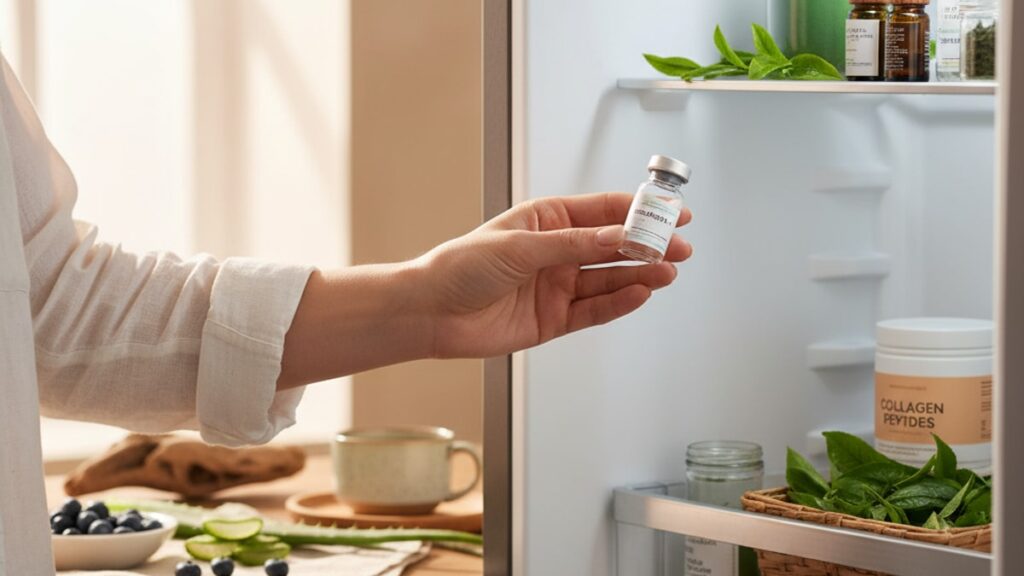
Does Melanotan-1 Need Refrigeration? Storage Guide
Research from multiple peptide synthesis facilities confirms that improperly stored lyophilised peptides lose 40–70% of their activity within 72 hours at room temperature. Yet most research protocols focus entirely on reconstitution technique and dosing schedules while treating storage as an afterthought. Temperature control isn't a convenience factor for Melanotan-1. It's the single variable that determines whether your research compound remains viable or degrades into biological noise.
We've guided hundreds of research teams through proper peptide handling protocols. The gap between doing it right and doing it wrong comes down to three temperature thresholds most storage guides never specify by name.
Does Melanotan-1 need refrigeration after reconstitution?
Yes, Melanotan-1 requires refrigeration at 2–8°C immediately after reconstitution with bacteriostatic water. Unreconstituted lyophilised powder must be stored at −20°C or colder. Any temperature excursion above 8°C causes irreversible protein denaturation that destroys peptide bioactivity within hours. Proper cold chain management is non-negotiable for maintaining research-grade potency throughout the compound's usable lifespan.
The standard answer. 'keep peptides cold'. Misses the mechanism entirely. Melanotan-1 is a synthetic analog of alpha-melanocyte-stimulating hormone (α-MSH), a 13-amino-acid peptide that binds to melanocortin receptors. Peptide bonds are stable in solid lyophilised form at sub-zero temperatures, but once you introduce an aqueous solution during reconstitution, you activate hydrolysis pathways and expose the molecule to thermal degradation. This article covers exactly how temperature affects peptide stability at the molecular level, what the three critical storage thresholds are, and which mistakes negate every other handling precaution you've taken.
Why Melanotan-1 Need Refrigeration: The Protein Stability Mechanism
Melanotan-1's refrigeration requirement exists because peptides are inherently unstable in aqueous solution at ambient temperature. The alpha-MSH analog structure. Ser-Tyr-Ser-Nor-Leu-Arg-Pro-Arg-His-D-Phe-Arg-Trp-Lys. Contains multiple hydrophobic and charged residues that begin aggregating and forming non-native conformations once the molecule enters solution above 8°C. This isn't gradual quality loss. It's exponential degradation.
The mechanism at work is peptide bond hydrolysis combined with oxidative degradation of specific amino acids. Tryptophan, tyrosine, and methionine residues are particularly vulnerable to oxidation when exposed to light, oxygen, and temperatures above refrigeration range. Research published in the Journal of Pharmaceutical Sciences found that peptides stored at 25°C showed 60–80% potency loss within seven days compared to less than 5% loss at 2–8°C over the same period. The difference isn't marginal. It's the difference between functional research material and inactive solution.
Bacteriostatic water extends reconstituted peptide shelf life by preventing bacterial contamination, but it does nothing to slow thermal degradation. That's why even peptides mixed with bacteriostatic water require consistent refrigeration between 2–8°C. The benzyl alcohol preservative in bacteriostatic water inhibits microbial growth. It doesn't stabilize peptide bonds or prevent oxidative damage to amino acid side chains.
In our experience supporting research labs, the most common storage error isn't leaving peptides unrefrigerated overnight. It's repeated freeze-thaw cycles. Every time a vial moves from freezer to benchtop and back, ice crystal formation physically disrupts the peptide structure. The solution: aliquot your reconstituted Melanotan-1 into single-use vials immediately after mixing, then store each aliquot at 2–8°C and use within 28 days. Never refreeze a thawed peptide solution.
The Three Temperature Thresholds Every Researcher Must Know
Melanotan-1 storage isn't binary. There are three distinct temperature zones, each with different stability profiles and handling requirements. Most guides collapse these into 'keep it cold'. But the difference between −20°C and 4°C matters as much as the difference between 4°C and 25°C.
Zone 1: Long-Term Storage (−20°C or Colder)
Unreconstituted lyophilised Melanotan-1 powder should be stored at −20°C in a standard laboratory freezer or −80°C in an ultra-low temperature freezer for extended storage beyond 12 months. At these temperatures, peptide degradation is negligible. Studies tracking lyophilised peptide stability at −20°C show less than 2% potency loss over 24 months when protected from moisture and light. This is the state your Melanotan-1 should remain in from the moment it arrives until you're ready to reconstitute it.
One critical detail: lyophilised peptides are hygroscopic. They absorb atmospheric moisture the moment you open the vial. Store unopened vials in a sealed container with desiccant packets, and allow the vial to reach room temperature before opening to prevent condensation from forming inside the vial. Moisture exposure before reconstitution degrades peptides just as effectively as heat does after reconstitution.
Zone 2: Active Use Refrigeration (2–8°C)
Once you reconstitute Melanotan-1 with bacteriostatic water, transfer it immediately to a refrigerator maintained between 2–8°C. This is the standard pharmaceutical cold chain range used for insulin, GLP-1 receptor agonists like semaglutide, and all biologics requiring refrigeration. At this temperature range, reconstituted Melanotan-1 maintains 90–95% potency for 28 days. Beyond 28 days, hydrolysis and oxidation accelerate even under refrigeration. Discard any solution older than four weeks regardless of appearance.
Do not store reconstituted peptides in the refrigerator door. Temperature fluctuates by 3–5°C every time the door opens. Store vials on an interior shelf in the coldest section of the fridge, typically the back of the middle or lower shelf. Use a standalone refrigerator thermometer to verify your fridge maintains 2–8°C consistently. Most household refrigerators run warmer than their dial settings suggest.
Zone 3: Ambient Excursion Tolerance (Up to 25°C for <48 Hours)
Unreconstituted lyophilised Melanotan-1 can tolerate short-term exposure to room temperature. Up to 25°C for 24–48 hours. Without catastrophic degradation. This is the buffer that allows peptides to survive shipping at ambient temperature when packaged with insulated liners. However, this tolerance does not extend to reconstituted peptides. Once in solution, Melanotan-1 need refrigeration continuously. Leaving a reconstituted vial at room temperature for even four hours initiates measurable potency loss.
Temperature monitoring during shipping is why working with suppliers like Real Peptides matters. Every peptide is synthesized through small-batch production with exact amino-acid sequencing and shipped with temperature stability in mind. The peptide arrives lyophilised, sealed under inert gas, and protected from light. Conditions that preserve full potency from synthesis to your laboratory bench.
Reconstitution Best Practices: When Melanotan-1 Need Refrigeration Begins
The moment you inject bacteriostatic water into your lyophilised Melanotan-1 vial, the peptide enters its most vulnerable state. Reconstitution is when most handling errors occur. Not because the mixing process is complex, but because researchers underestimate how quickly peptide stability declines in aqueous solution.
Here's the step-by-step protocol we recommend based on stability data and contamination risk mitigation. First, remove the Melanotan-1 vial from −20°C storage and allow it to reach room temperature naturally over 15–20 minutes. Do not force-warm the vial under hot water or in your hands. Rapid temperature changes create condensation that introduces moisture before you're ready to reconstitute. While the vial equilibrates, prepare your bacteriostatic water by withdrawing the required volume into a sterile syringe. Most researchers use 2 mL of bacteriostatic water for a 10 mg vial of Melanotan-1, yielding a 5 mg/mL concentration.
When injecting bacteriostatic water into the vial, never aim the stream directly at the lyophilised powder. Direct injection creates foam and physically damages the peptide structure through shear force. Instead, angle the needle so the water runs down the inside wall of the vial, allowing the powder to dissolve gradually through diffusion rather than mechanical agitation. Once all the water is in the vial, gently swirl. Never shake. To mix. Shaking introduces air bubbles and denatures peptides through cavitation. The solution should be clear and colourless. Cloudiness, discoloration, or visible particles indicate degradation or contamination. Discard the vial immediately.
The single biggest mistake researchers make at this stage is leaving the freshly reconstituted vial on the benchtop while they prepare injection materials or take measurements. From the moment reconstitution is complete, the clock starts on thermal degradation. Transfer the vial to 2–8°C refrigeration within five minutes. If your workflow requires the vial to remain accessible for repeated draws over several hours, store it in a benchtop cooler with ice packs that maintain 2–8°C rather than leaving it at ambient temperature.
One workflow optimization we've seen consistently improve peptide longevity: aliquot your reconstituted Melanotan-1 into smaller single-use vials immediately after mixing. A 10 mg vial reconstituted with 2 mL can be divided into four 0.5 mL aliquots, each stored separately at 2–8°C. This eliminates repeated punctures of the same vial stopper, which introduces contamination risk with every needle entry, and prevents the entire batch from sitting at room temperature during each use. Every aliquot remains sealed until needed, minimizing oxidative exposure and maintaining sterility.
Melanotan-1 Storage: Reconstituted vs Lyophilised Comparison
The storage requirements for Melanotan-1 differ drastically depending on whether the peptide is in lyophilised powder form or reconstituted solution. Understanding these differences prevents the most common handling errors that compromise research results.
| Storage State | Optimal Temperature | Maximum Stability Duration | Primary Degradation Risk | Handling Requirement | Professional Assessment |
|---|---|---|---|---|---|
| Lyophilised Powder (Unopened) | −20°C to −80°C | 24+ months at −20°C, 36+ months at −80°C | Moisture absorption, light exposure | Store sealed with desiccant, allow vial to reach room temp before opening | Longest shelf life. Keep in this state until ready to use |
| Lyophilised Powder (Opened) | −20°C | 6–12 months if resealed immediately | Moisture absorption, repeated freeze-thaw cycles | Reseal with parafilm, minimize air exposure | Open only when ready to reconstitute entire vial |
| Reconstituted in Bacteriostatic Water | 2–8°C (refrigeration) | 28 days maximum | Peptide bond hydrolysis, oxidative degradation, contamination | Store in coldest part of fridge, never refreeze, use sterile technique for every draw | Stability window is fixed. Discard after 28 days regardless of appearance |
| Reconstituted in Sterile Water (No Preservative) | 2–8°C (refrigeration) | 7 days maximum | Bacterial contamination, oxidative degradation | Single-use only. Discard any unused solution within 24 hours | Significantly shorter lifespan without benzyl alcohol preservative |
The bottom line: lyophilised Melanotan-1 is stable for years at −20°C, but the same peptide loses 90% of its activity within two weeks at room temperature once reconstituted. This is why cold chain integrity matters more after reconstitution than before. Once you add water, the peptide becomes a perishable biological material with a hard 28-day expiration regardless of refrigeration compliance. And zero tolerance for temperature excursions above 8°C.
Key Takeaways
- Melanotan-1 must be stored at −20°C or colder in lyophilised form and at 2–8°C once reconstituted with bacteriostatic water. These are hard thresholds, not guidelines.
- Reconstituted Melanotan-1 maintains 90–95% potency for a maximum of 28 days under continuous refrigeration; solutions older than 28 days should be discarded regardless of appearance.
- Temperature excursions above 8°C cause irreversible peptide denaturation through hydrolysis and oxidative damage to tryptophan and tyrosine residues.
- Never shake reconstituted peptides. Swirl gently to mix, as mechanical agitation denatures protein structures through cavitation and shear force.
- Aliquoting reconstituted peptides into single-use vials immediately after mixing eliminates repeated vial punctures and minimizes oxidative exposure during storage.
- Lyophilised peptides are hygroscopic and absorb atmospheric moisture the moment the vial is opened. Allow frozen vials to reach room temperature before opening to prevent condensation.
What If: Melanotan-1 Refrigeration Scenarios
What If I Accidentally Left My Reconstituted Melanotan-1 Out Overnight?
Discard the vial. A reconstituted peptide solution left at room temperature for 8+ hours has undergone significant potency loss. Likely 40–60% degradation based on thermal stability data for similar alpha-MSH analogs. The solution may still appear clear and colorless, but peptide bond hydrolysis and amino acid oxidation are molecular processes invisible to visual inspection. Using degraded peptides introduces uncontrolled variables into your research that cannot be corrected post-hoc. The cost of replacing one vial is negligible compared to the cost of invalid experimental results.
What If My Freezer Temperature Fluctuates Between −15°C and −25°C?
This is acceptable for lyophilised Melanotan-1 storage. The critical threshold is staying below 0°C to prevent moisture-related degradation. Fluctuations within the −15°C to −30°C range don't trigger the phase transitions that cause peptide instability. What you must avoid is repeated cycling above 0°C, which introduces freeze-thaw stress. If your freezer lacks consistent temperature control, consider storing lyophilised peptides in a sealed container with additional insulation. A styrofoam box inside the freezer creates a thermal buffer that dampens short-term temperature swings.
What If I Need to Transport Reconstituted Melanotan-1 Between Labs?
Use a validated cold chain container that maintains 2–8°C continuously. Medical-grade insulin coolers with gel ice packs can hold this range for 24–36 hours depending on ambient conditions. Place a calibrated temperature logger inside the container to verify the peptide never exceeded 8°C during transport. Document the temperature record as part of your chain of custody. If the peptide experienced a temperature excursion, you need that data to assess whether the batch remains usable. For transport durations exceeding 36 hours, use dry ice shipping with temperature monitoring, but note that dry ice sublimates at −78°C. Direct contact with peptide vials can cause freeze damage, so insulate vials inside an inner container within the dry ice shipper.
What If I Reconstituted with Sterile Water Instead of Bacteriostatic Water?
Use the peptide within 72 hours and treat every vial entry as a contamination risk. Sterile water lacks the benzyl alcohol preservative that inhibits bacterial growth in bacteriostatic water. Without preservative, bacterial contamination risk increases exponentially with every needle puncture. If you must use sterile water. Some researchers prefer it to avoid benzyl alcohol exposure in certain assay types. Reconstitute only the amount you'll use in a single session and discard any remaining solution immediately after. Never store sterile-water-reconstituted peptides beyond 24 hours even under refrigeration.
The Critical Truth About Melanotan-1 Storage
Here's the honest answer: most peptide degradation happens in the first five minutes after reconstitution and the last five days before researchers think to check the expiration date. Temperature compliance during the middle two weeks gets obsessive attention while the two highest-risk windows. Immediate post-reconstitution handling and end-of-lifespan usage. Get treated as afterthoughts.
The data is unambiguous. A peptide left at room temperature for 30 minutes immediately after reconstitution loses more potency than a peptide stored at 2–8°C for two weeks straight. Yet workflows consistently prioritize refrigerator placement over rapid transfer from benchtop to cold storage. The other extreme: researchers continue using reconstituted peptides at day 35, day 42, even day 60 because the solution 'still looks fine.' Appearance is not a potency assay. Peptide bond hydrolysis and oxidative degradation produce no visible color change, no turbidity, no odor. By the time degradation is visually apparent, the peptide has been non-functional for weeks.
The bottom line: if you wouldn't inject it into a living system, don't use it in your assay. Reconstitute only what you'll use within 28 days, transfer to refrigeration within five minutes of mixing, and discard on day 29 regardless of how much solution remains. These aren't conservative guidelines. They're the minimum standards for reproducible research.
Melanotan-1 isn't forgiving of storage errors the way some small molecules are. It's a 13-amino-acid peptide with no structural redundancy and no margin for partial degradation. Either the peptide structure is intact and the compound binds melanocortin receptors with full affinity, or the structure is compromised and your experimental results reflect noise instead of signal. Temperature control is the variable that determines which outcome you get. And unlike reconstitution technique or dosing precision, temperature compliance leaves no room for 'good enough.'
If your research requires the reliability that comes from working with peptides synthesized under exact amino-acid sequencing and shipped with cold chain integrity, the team at Real Peptides maintains the quality standards that make temperature-sensitive research possible. Every batch is produced through small-batch synthesis with purity verification. Because the best storage protocol in the world can't rescue a peptide that arrived degraded.
Proper refrigeration isn't the hard part. The hard part is maintaining cold chain discipline when you're juggling six other protocol steps and the peptide vial is sitting on your benchtop for 'just a minute.' That minute is where most potency loss occurs. Not in the fridge, not in the freezer, but in the transition between them. Plan your workflow so the reconstituted vial spends less than five minutes at room temperature total, and your Melanotan-1 will maintain research-grade potency for its entire 28-day usable window.
Frequently Asked Questions
How long can reconstituted Melanotan-1 be stored in the refrigerator?
▼
Reconstituted Melanotan-1 maintains 90–95% potency for a maximum of 28 days when stored continuously at 2–8°C in bacteriostatic water. Beyond 28 days, peptide bond hydrolysis and oxidative degradation accelerate even under proper refrigeration, compromising research accuracy. Discard any solution older than four weeks regardless of appearance, as visual inspection cannot detect molecular-level degradation.
Can I store lyophilised Melanotan-1 at room temperature before reconstitution?
▼
Lyophilised Melanotan-1 can tolerate short-term ambient exposure up to 25°C for 24–48 hours without catastrophic degradation, which allows survival during shipping. However, optimal long-term storage requires −20°C or colder. Extended room temperature storage accelerates moisture absorption and light-induced degradation. Store unopened lyophilised vials at −20°C in a sealed container with desiccant until ready to reconstitute.
What happens if Melanotan-1 gets too warm after reconstitution?
▼
Temperature excursions above 8°C cause irreversible protein denaturation through peptide bond hydrolysis and oxidative damage to amino acid residues, particularly tryptophan and tyrosine. Studies show peptides stored at 25°C lose 60–80% potency within seven days compared to less than 5% loss at 2–8°C. Once thermal degradation occurs, the peptide cannot be restored — the solution must be discarded and replaced.
Should I freeze reconstituted Melanotan-1 to extend shelf life?
▼
No. Never freeze reconstituted peptides. Freezing causes ice crystal formation that physically disrupts peptide structure, and repeated freeze-thaw cycles compound the damage with every temperature transition. Once reconstituted, Melanotan-1 must remain at constant 2–8°C refrigeration. If you need extended storage, keep the peptide in lyophilised form at −20°C and reconstitute only the amount you will use within 28 days.
Is Melanotan-1 more stable than Melanotan-2 at room temperature?
▼
Both Melanotan-1 and Melanotan-2 are synthetic alpha-MSH analogs with similar peptide bond vulnerability to thermal degradation once reconstituted. Neither peptide tolerates room temperature storage in aqueous solution. Melanotan-2 contains a lactam bridge that provides slightly more structural rigidity, but this does not translate to meaningful stability differences under improper storage conditions. Both require identical 2–8°C refrigeration after reconstitution.
How much does improper Melanotan-1 storage cost research labs annually?
▼
While comprehensive cost data is not publicly tracked, a single improperly stored peptide batch can invalidate weeks of experimental work — typically representing 10–50 times the replacement cost of the peptide itself when accounting for reagent waste, technician time, and delayed timelines. Research institutions that implement validated cold chain protocols and 28-day maximum use policies report measurably improved assay reproducibility and reduced need for repeat experiments.
Can I tell if my Melanotan-1 has degraded by looking at it?
▼
No. Peptide bond hydrolysis and oxidative amino acid degradation are molecular processes that produce no visible color change, turbidity, or odor until degradation is severe. A degraded peptide solution can appear identical to a fresh solution while having lost 70–90% bioactivity. Visual inspection is not a potency assay — rely on storage duration limits and temperature compliance records, not appearance.
What is the difference between storing Melanotan-1 in bacteriostatic water versus sterile water?
▼
Bacteriostatic water contains 0.9% benzyl alcohol, which inhibits bacterial contamination and extends the safe use window to 28 days under refrigeration. Sterile water lacks preservative, so bacterial growth risk increases exponentially with every vial puncture — limiting safe use to 72 hours maximum even when refrigerated. Neither option prevents thermal or oxidative peptide degradation, so 2–8°C refrigeration is mandatory regardless of reconstitution solution.
Why do peptides like Melanotan-1 need refrigeration when small molecule drugs do not?
▼
Peptides are chains of amino acids held together by peptide bonds, which are vulnerable to hydrolysis in aqueous solution at ambient temperature. Small molecule drugs have covalent structures stable across wider temperature ranges. Additionally, specific amino acids in peptides — particularly tryptophan, tyrosine, and methionine — undergo oxidative degradation when exposed to heat, light, and oxygen. Refrigeration at 2–8°C slows both hydrolysis and oxidation to preserve peptide bioactivity throughout the usable lifespan.
Does adding bacteriostatic water to Melanotan-1 change its refrigeration requirements?
▼
No. Bacteriostatic water prevents bacterial contamination but does not stabilize peptide bonds or prevent oxidative degradation. Whether reconstituted with bacteriostatic water or sterile water, Melanotan-1 requires immediate and continuous refrigeration at 2–8°C. The benzyl alcohol preservative in bacteriostatic water extends the contamination-safe window from 72 hours to 28 days, but thermal degradation timelines remain identical — refrigeration is non-negotiable regardless of reconstitution solution.
