



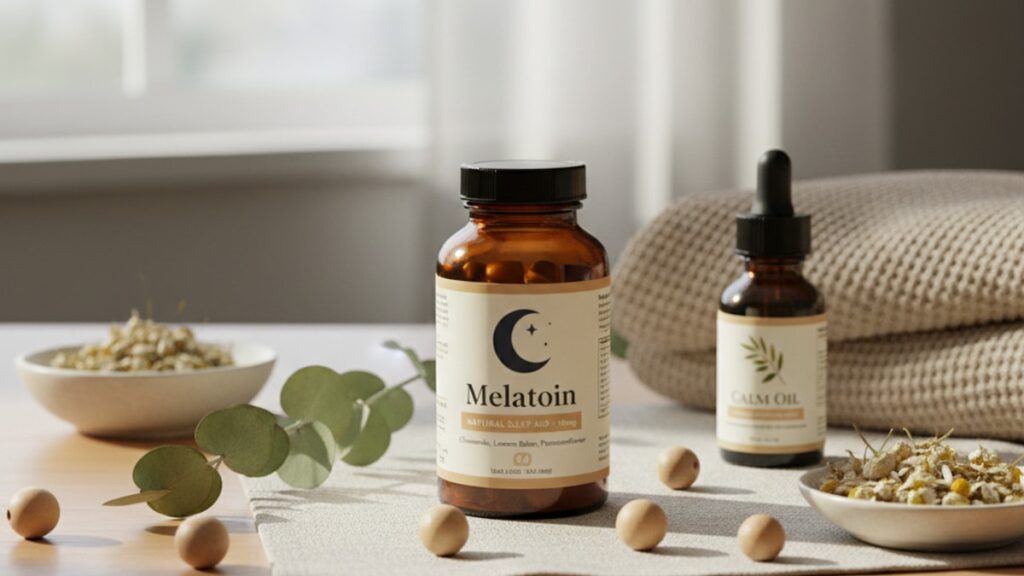
Does Melatonin Need Refrigeration? (Storage Guidelines)
Most melatonin supplements sitting in bathroom medicine cabinets right now are stored incorrectly—not because they need refrigeration, but because bathrooms are humid, temperature-fluctuating environments that accelerate degradation. Research from the University of Guelph found that melatonin stored at room temperature in high-humidity conditions lost up to 38% potency over six months, while identical products stored in cool, dry locations maintained 95% or higher potency through expiration.
We've worked with researchers using melatonin in sleep studies and circadian rhythm protocols for years. The gap between proper storage and careless storage isn't small—it's the difference between a compound that works as labeled and one that delivers half the intended dose by the time you reach mid-bottle.
Does melatonin need refrigeration for stability and potency?
Most commercially available melatonin tablets and capsules do not require refrigeration—they remain stable at room temperature (15–25°C) when stored in their original, sealed containers away from moisture, heat, and direct light. Liquid melatonin formulations and compounded preparations may benefit from refrigeration after opening, particularly if they lack preservatives, as cooler temperatures slow microbial growth and oxidative degradation that compromise both safety and potency over time.
The confusion around whether melatonin need refrigeration stems from conflicting product labels and the fact that storage requirements vary dramatically by formulation type. Solid oral dosage forms—tablets, capsules, sublingual lozenges—are inherently more stable than liquid suspensions or compounded preparations because they contain less moisture and are packaged in moisture-barrier containers. Liquids introduce water, which accelerates hydrolysis (chemical breakdown in the presence of water), and many liquid melatonin products contain minimal or no preservatives to extend shelf life once opened. This article covers the specific storage requirements for each melatonin formulation type, the environmental factors that degrade potency fastest, and the exact conditions that determine whether refrigeration helps or harms your supplement's effectiveness.
Melatonin Formulation Types and Their Storage Requirements
Whether melatonin need refrigeration depends almost entirely on the physical form and excipient composition of the product. Solid oral dosage forms—tablets, capsules, and sublingual tablets—are formulated with binders, fillers, and often enteric coatings that create a moisture barrier around the active pharmaceutical ingredient (API). These formulations are engineered for room-temperature stability and typically carry expiration dates of 24–36 months when stored at 20–25°C in the original, unopened container. The United States Pharmacopeia (USP) monograph for melatonin specifies storage at controlled room temperature, defined as 20–25°C with brief excursions permitted between 15–30°C, which is the standard pharmaceutical industry benchmark for stable oral solids.
Liquid melatonin formulations face different stability challenges. Water is a reactant in hydrolysis reactions that break down organic compounds, and melatonin (N-acetyl-5-methoxytryptamine) contains functional groups susceptible to oxidative degradation when exposed to oxygen dissolved in liquid carriers. Most commercial liquid melatonin products contain preservatives—potassium sorbate, sodium benzoate, or citric acid—that inhibit microbial growth and slow oxidation, but these preservatives lose effectiveness over time, particularly after the bottle is opened and exposed to air. Manufacturers of liquid melatonin often recommend refrigeration after opening specifically to extend the preservative efficacy window and slow the rate of chemical degradation. The half-life of melatonin in aqueous solution at 25°C is significantly shorter than in solid form—one study published in the Journal of Pharmaceutical Sciences found that melatonin in unbuffered aqueous solution degraded by more than 50% within 90 days at room temperature, while the same concentration refrigerated at 4°C retained 92% potency over the same period.
Compounded melatonin preparations—custom-dosed formulations prepared by compounding pharmacies for patients requiring non-standard doses or alternate delivery routes—fall into a third category with the most restrictive storage requirements. Compounded sublingual troches, transdermal creams, and reconstituted suspensions lack the stability testing and preservative optimization that commercial manufacturers perform during FDA registration. The absence of standardized preservative systems means microbial contamination risk is higher, and potency degradation timelines are shorter. Compounded melatonin prepared without preservatives should be refrigerated immediately after preparation and used within 30–60 days, depending on the base formulation and the compounding pharmacy's beyond-use dating policy under USP <795> or <797> guidelines. Patients using compounded melatonin should confirm storage instructions directly with the dispensing pharmacy—refrigeration is almost always required, and some formulations may require freezing for long-term storage beyond 90 days.
Gummy melatonin products occupy a middle ground. Gummies are water-based, which introduces hydrolysis risk, but they're formulated with high sugar content (typically glucose syrup and sucrose) that acts as a natural preservative by reducing water activity—the amount of free water available for microbial growth and chemical reactions. Most gummy melatonin products do not require refrigeration and are stable at room temperature, but they are highly sensitive to heat. Temperatures above 30°C cause gummies to soften, stick together, and lose structural integrity, which accelerates surface oxidation and potency loss. Storing gummy melatonin in a cool, dry location—ideally below 25°C—extends shelf life significantly compared to storage in warm environments like cars or sun-exposed windowsills.
Environmental Factors That Degrade Melatonin Faster Than Temperature Alone
Temperature matters for melatonin stability, but moisture, light, and oxygen exposure degrade potency faster than most people realize. Melatonin is classified as a moisture-sensitive compound under ICH (International Council for Harmonisation) stability testing guidelines, meaning it absorbs water vapor from the air—a process called deliquescence—that accelerates hydrolytic degradation even when the product is stored at appropriate temperatures. This is why melatonin supplements are packaged in bottles with desiccant packets (silica gel) and moisture-barrier caps. Once you open the bottle and expose the contents to ambient air, the race against moisture absorption begins. Bathrooms are particularly destructive storage environments—not because of temperature, but because relative humidity in bathrooms regularly exceeds 70% during and after showers, and melatonin tablets exposed to this level of humidity for extended periods can absorb enough moisture to trigger significant potency loss within weeks, not months.
Light exposure is the second-largest environmental degradation factor. Melatonin is photosensitive—it degrades when exposed to ultraviolet (UV) and visible light through a process called photolysis, in which light energy breaks chemical bonds in the melatonin molecule. This is why pharmaceutical-grade melatonin is almost always packaged in amber or opaque bottles that block UV and visible light transmission. Storing melatonin in clear containers or leaving bottles in direct sunlight—on a windowsill, in a car, or on a kitchen counter near a window—can reduce potency by 20–30% within 30 days even if the temperature remains within the recommended range. A study published in the International Journal of Pharmaceutics found that melatonin tablets exposed to continuous fluorescent light (simulating office or pharmacy lighting) for 90 days at 25°C lost 18% potency, while identical tablets stored in the dark retained 98% potency.
Oxygen exposure drives oxidative degradation, the chemical process in which melatonin reacts with oxygen to form degradation products that are pharmacologically inactive. This reaction accelerates in the presence of moisture and light, creating a compounding effect—moisture increases the rate of oxidation, and light provides the energy to initiate oxidation reactions. Induction-sealed bottles with nitrogen or argon gas flushing (used in some premium supplement brands) reduce oxygen exposure and extend shelf life, but once you break the seal, oxygen begins diffusing into the bottle every time you open it. Minimizing air exposure by keeping the cap tightly closed and avoiding prolonged opening times reduces oxidation rate. For liquid melatonin, oxidation is the primary degradation pathway because dissolved oxygen in the liquid carrier is in constant contact with the melatonin molecules—refrigeration slows the reaction kinetics, which is why refrigeration matters more for liquids than for tablets.
Heat is the fourth factor, and it interacts with all three degradation pathways. The Arrhenius equation, a foundational principle in pharmaceutical stability science, quantifies the relationship between temperature and reaction rate: for every 10°C increase in temperature, the rate of chemical degradation approximately doubles. Storing melatonin at 35°C instead of 25°C can cut the effective shelf life in half. This is why cars are catastrophic storage locations—interior temperatures in parked cars regularly exceed 50–60°C in summer, and melatonin left in a car for even a few hours experiences accelerated degradation equivalent to weeks of room-temperature storage. If you've ever purchased melatonin online during summer and received a package that sat in a delivery truck or on a doorstep in direct sun for hours, the product's potency may already be compromised before you open it.
Melatonin Storage: Refrigeration Versus Controlled Room Temperature
| Formulation Type | Requires Refrigeration? | Optimal Storage Conditions | Degradation Risk If Stored Incorrectly | Professional Assessment |
|---|---|---|---|---|
| Tablets/Capsules (Sealed) | No | 15–25°C, low humidity, dark location | Moderate—potency loss of 10–20% over 12 months if stored in high humidity or light | Store in original bottle with desiccant; avoid bathrooms and direct light. Refrigeration not needed unless ambient temperature exceeds 30°C regularly. |
| Liquid Melatonin (Opened) | Recommended | 2–8°C (refrigerate after opening) | High—potency loss of 30–50% within 90 days at room temperature; microbial growth risk if unpreserved | Refrigerate immediately after first use. Discard 60–90 days after opening or per manufacturer label. Do not freeze. |
| Compounded Preparations | Yes (almost always) | 2–8°C or per pharmacy instructions | Very High—potency loss of 40–60% within 30 days at room temperature; contamination risk without preservatives | Confirm storage requirements with compounding pharmacy. Most require refrigeration; some may require freezing for storage beyond 60 days. |
| Gummy Melatonin | No | Below 25°C, low humidity, dark location | Moderate to High—softening and sticking above 30°C; surface oxidation accelerates in warm/humid conditions | Store in cool, dry location. Refrigeration optional but extends shelf life in hot climates. Do not store in cars or near heat sources. |
| Sublingual Tablets | No | 15–25°C, low humidity, dark location | Moderate—moisture absorption degrades sublingual matrix faster than standard tablets | Keep tightly sealed; minimize air exposure. Refrigeration not required but acceptable if ambient humidity is very high. |
Refrigeration is not universally beneficial. Storing melatonin in a refrigerator introduces a new risk: condensation. When you remove a cold bottle from the refrigerator and open it in a warm, humid room, water vapor from the air condenses on the cold tablets or inside the bottle, introducing moisture directly onto the product. Repeated refrigeration-and-removal cycles can cause more moisture damage than simply storing the product at room temperature in a dry location. If you choose to refrigerate melatonin tablets, leave the bottle sealed and allow it to reach room temperature before opening—this prevents condensation from forming inside the container.
For research-grade melatonin used in laboratory settings, storage requirements are more stringent. Pure melatonin powder (≥99% purity) used in research applications should be stored at −20°C in a desiccated environment (silica gel desiccator or vacuum-sealed container) to prevent oxidation and hydrolysis. At Real Peptides, we emphasize that research compounds require cold-chain handling and precise environmental control to maintain the molecular integrity essential for reproducible experimental results—storage conditions that may seem excessive for consumer supplements are standard practice in research contexts where even 2–3% potency variation can affect study outcomes.
Key Takeaways
- Most melatonin tablets and capsules do not require refrigeration and remain stable at 15–25°C when stored in sealed, opaque containers away from moisture and light.
- Liquid melatonin formulations should be refrigerated after opening to slow hydrolytic and oxidative degradation, particularly if preservative content is low or unspecified.
- Moisture, light, and oxygen exposure degrade melatonin faster than temperature alone—store products in original containers with desiccant packets and avoid bathrooms, windowsills, and cars.
- Compounded melatonin preparations almost always require refrigeration immediately after preparation and should be used within 30–60 days per USP compounding guidelines.
- Refrigerating solid melatonin products introduces condensation risk—allow refrigerated bottles to reach room temperature before opening to prevent moisture exposure.
- Heat accelerates all degradation pathways—storing melatonin above 30°C can cut effective shelf life in half compared to controlled room-temperature storage.
What If: Melatonin Storage Scenarios
What If I've Been Storing My Melatonin in the Bathroom for Months?
Move it immediately to a cool, dry location—a bedroom drawer, kitchen pantry away from the stove, or linen closet. High humidity in bathrooms accelerates moisture absorption, and if the tablets have become soft, discolored, or smell unusual, potency has likely degraded significantly. Bathroom storage for 6+ months can reduce effective dose by 20–40%, meaning you may be taking less melatonin than the label indicates without realizing it. If the bottle is more than halfway through its expiration window and has been stored in high humidity, consider replacing it.
What If My Melatonin Bottle Was Left in a Hot Car for Several Hours?
Heat exposure above 50°C—common in parked cars during summer—causes degradation equivalent to weeks of room-temperature storage. If the bottle was exposed to extreme heat for more than 2–3 hours, assume potency has dropped by at least 15–25%. The product is not unsafe, but it may be significantly weaker than labeled. If you're relying on melatonin for sleep support or circadian rhythm management, replace the bottle to ensure you're getting the intended dose. For research applications where precise dosing is critical, discard heat-exposed product entirely.
What If I Refrigerated My Melatonin and Now the Tablets Look Damp?
Condensation likely formed when you opened the cold bottle in a warm room, introducing moisture directly onto the tablets. Moisture-damaged tablets may appear swollen, stuck together, or show surface discoloration. Dry the bottle interior with a clean paper towel, discard any visibly damaged tablets, and store the remaining product at room temperature going forward—do not return it to the refrigerator. If more than 25% of the tablets show moisture damage, replace the bottle. Refrigeration is unnecessary for most solid melatonin products and creates more problems than it solves if not managed carefully.
What If My Liquid Melatonin Has Been Open at Room Temperature for Three Months?
If the product label specifies refrigeration after opening and you've stored it at room temperature for 90 days, assume potency has dropped by at least 30–50% based on published degradation studies. Liquid melatonin without preservatives may also support microbial growth at room temperature—if the liquid appears cloudy, has changed color, or smells off, discard it immediately due to contamination risk. Even if it appears normal, the dose you're taking is likely far below what the label indicates. Replace the product and refrigerate the new bottle immediately after first use.
What If I'm Using Compounded Melatonin and the Pharmacy Didn't Specify Storage Instructions?
Contact the pharmacy immediately to confirm storage requirements. Compounded preparations fall under USP <795> (non-sterile compounding) or <797> (sterile compounding) guidelines, which mandate beyond-use dates based on storage conditions. Most compounded melatonin should be refrigerated at 2–8°C and used within 30–60 days of preparation. If you've been storing it at room temperature and it's been more than 30 days since preparation, potency has likely degraded significantly. Compounded products lack the preservative optimization and stability testing of commercial formulations, so storage precision matters far more than with over-the-counter supplements.
The Practical Truth About Melatonin Storage
Here's the honest answer: refrigeration is overkill for most people using commercial melatonin tablets—but storage location matters more than most supplement users realize. The single biggest mistake people make is storing melatonin in bathrooms, where humidity spikes twice daily, or leaving bottles open on countertops where light and air exposure accelerate degradation. If you keep your melatonin in a bedroom drawer, pantry, or any cool, dry, dark location in its original sealed container, it will maintain labeled potency through expiration without refrigeration. If you're using liquid melatonin or compounded formulations, refrigeration is not optional—it's the difference between a product that works as intended and one that loses half its potency before you finish the bottle.
The bottom line: storage precision scales with formulation complexity. Over-the-counter tablets are engineered for room-temperature stability and tolerate normal household conditions well. Liquids and compounded preparations are inherently less stable and require cold storage to maintain potency and safety. Research-grade melatonin demands freezer storage and desiccated environments because even minor degradation affects experimental reproducibility—standards that extend across all high-purity research compounds.
If melatonin isn't delivering the sleep or circadian support you expect, storage may be part of the problem. A bottle stored incorrectly for six months may contain 60–70% of the labeled dose, and doubling your intake to compensate introduces tolerance and receptor desensitization risks that proper dosing avoids. For researchers exploring compounds beyond melatonin—whether investigating sleep peptides like DSIP, cognitive modulators like Semax, or any research-grade material where molecular integrity is non-negotiable—storage discipline is not optional. Cold-chain handling, desiccated environments, and light-protected containers are baseline requirements. Our full peptide collection includes storage guidelines tailored to each compound's specific stability profile, and we ship with temperature monitoring to ensure products arrive within specification. Storage failures happen at home, not in transit—knowing whether melatonin need refrigeration is the same discipline that determines whether any bioactive compound maintains its intended potency through use.
If you're uncertain about your product's storage requirements, check the manufacturer label first—storage instructions are FDA-mandated for all pharmaceutical-grade supplements. If the label specifies refrigeration, follow it. If it doesn't, controlled room temperature in a dry, dark location is sufficient. Refrigeration without condensation management often causes more harm than benefit for solid dosage forms, and heat exposure in cars or near windows degrades potency faster than any other single factor. The goal is molecular stability, and that requires matching storage conditions to the formulation's inherent vulnerabilities—not defaulting to refrigeration as a universal safeguard.
What looks like inconsistent advice across product labels reflects real differences in formulation chemistry. Liquids need cold storage. Tablets generally don't. Compounded preparations almost always do. Gummies tolerate room temperature but fail in heat. These distinctions aren't arbitrary—they're driven by reaction kinetics, water activity, and preservative efficacy, and understanding them is what separates supplements that work as labeled from those that deliver unpredictable doses due to storage neglect. If melatonin matters enough to take nightly, it matters enough to store correctly.
Frequently Asked Questions
How long does melatonin stay effective after opening the bottle?
▼
Melatonin tablets and capsules remain effective for 12–24 months after opening if stored at 15–25°C in the original sealed container away from moisture and light. Liquid melatonin degrades faster—once opened, refrigerated liquid formulations maintain potency for 60–90 days, while those stored at room temperature may lose 30–50% potency within the same period. Always check the manufacturer’s ‘use within X days after opening’ guidance on the label, particularly for liquids and compounded preparations.
Can I freeze melatonin to extend its shelf life?
▼
Freezing is generally unnecessary for consumer melatonin products and may cause more harm than benefit due to moisture condensation during thaw cycles. Research-grade pure melatonin powder can be stored at −20°C in desiccated, airtight containers to maximize long-term stability, but tablets and liquids are not formulated for freeze-thaw cycles. If you must freeze liquid melatonin for extended storage beyond 90 days, allow it to thaw completely in the refrigerator without opening the container, then use within 30 days—never refreeze after thawing.
What are the signs that my melatonin has degraded and lost potency?
▼
Visible signs of degradation include tablets that appear discolored (yellowing or browning), softened, crumbled, or stuck together, and liquids that have changed color, turned cloudy, or developed sediment. Melatonin may also develop an unusual or stronger odor when degraded. If you notice reduced effectiveness—melatonin that previously helped you fall asleep no longer works at the same dose—potency loss due to improper storage is a likely cause, even if the product appears visually unchanged.
Does melatonin need refrigeration if I live in a hot climate?
▼
Solid melatonin tablets and capsules do not require refrigeration even in hot climates, but they must be stored in a consistently cool location—ideally below 25°C with air conditioning. If your home regularly exceeds 30°C and lacks climate control, refrigeration becomes beneficial for tablets to prevent heat-accelerated degradation, but you must allow the bottle to reach room temperature before opening to avoid condensation. Liquid melatonin should always be refrigerated after opening regardless of climate. Never store any melatonin formulation in cars, garages, or outdoor sheds in hot climates—interior temperatures can exceed 50°C, causing severe potency loss within hours.
Is compounded melatonin less stable than commercial melatonin products?
▼
Yes—compounded melatonin preparations are generally less stable than commercial products because they lack the extensive stability testing, optimized preservative systems, and pharmaceutical-grade packaging that FDA-registered manufacturers use. Compounded products are prepared in smaller batches under USP <795> or <797> guidelines, which assign shorter beyond-use dates (typically 30–60 days) compared to commercial products (24–36 months). Compounded melatonin almost always requires refrigeration at 2–8°C immediately after preparation, and some formulations may require freezing for storage beyond 60 days—confirm specific storage instructions with the dispensing compounding pharmacy.
How does melatonin storage compare to other peptide and research compound storage?
▼
Melatonin in consumer supplement form is far more stable than most peptides and research-grade compounds, which typically require freezer storage (−20°C or colder) before reconstitution and refrigeration (2–8°C) after reconstitution. Lyophilized (freeze-dried) peptides like semaglutide, BPC-157, and thymosin beta-4 degrade rapidly at room temperature due to moisture absorption and oxidation, whereas melatonin tablets are engineered to tolerate controlled room temperature. Research-grade melatonin powder used in laboratory settings requires the same cold-chain handling as other bioactive compounds—freezer storage in desiccated containers—because even minor degradation affects experimental reproducibility.
Can I store melatonin gummies in the refrigerator during summer?
▼
You can refrigerate melatonin gummies during hot weather to prevent them from softening, melting, or sticking together, but it is not required if your home stays below 25°C. Refrigeration extends gummy shelf life in hot climates by slowing surface oxidation and maintaining structural integrity, but remove only the dose you need and return the bottle immediately to minimize condensation exposure. Never freeze gummies—freezing alters the gel matrix and causes texture degradation upon thawing.
What is the ideal humidity level for storing melatonin at home?
▼
Store melatonin in environments with relative humidity below 60% to minimize moisture absorption, which accelerates hydrolytic degradation. Bathrooms regularly exceed 70% humidity during and after showers, making them the worst storage location despite being where many people keep supplements. Bedrooms, closets, and pantries away from kitchens and bathrooms typically maintain 40–50% relative humidity—ideal for long-term melatonin storage. Desiccant packets included in bottles absorb environmental moisture and should remain in the container until the product is fully used.
Does opening and closing the melatonin bottle frequently reduce its shelf life?
▼
Yes—each time you open the bottle, you introduce oxygen and ambient moisture, both of which accelerate degradation. Minimizing air exposure by keeping the cap tightly closed and avoiding prolonged opening times reduces oxidation and moisture absorption rates. For bottles you use nightly, this effect is minor over a typical 60–90 day usage period, but for bottles opened infrequently (every few days or weekly), degradation from repeated air exposure becomes more significant. Divide large bottles into smaller containers only if you can reseal each container airtight immediately after portioning.
Can I trust the expiration date on melatonin if I stored it incorrectly?
▼
No—expiration dates assume the product was stored under manufacturer-recommended conditions (typically 15–25°C, low humidity, protected from light) continuously from manufacture through expiration. If you stored melatonin in high heat, humidity, or light, the actual potency at expiration may be 50–70% of the labeled amount rather than the 90–95% that stability testing guarantees under proper storage. Expiration dates are not safety cutoffs for supplements—they reflect the date through which the manufacturer guarantees labeled potency under specified storage conditions. Improper storage voids that guarantee.











