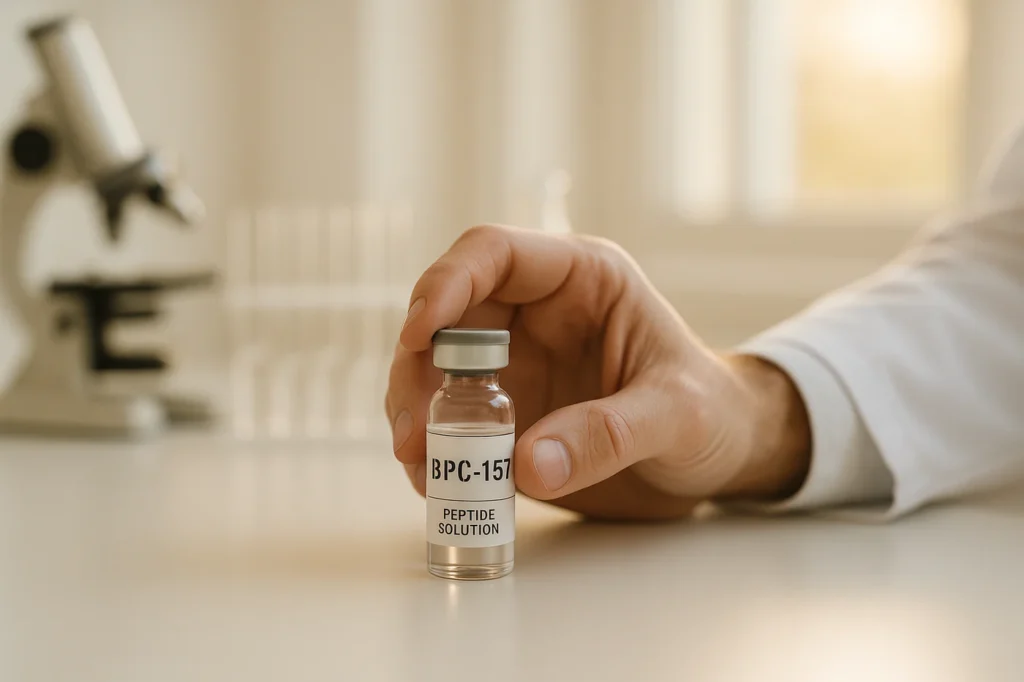
BPC-157 is a synthetic peptide derived from a protein in human gastric juice, primarily used in research settings. It has not been approved for medical use by the FDA or other regulatory bodies and is limited to laboratory studies. Researchers study BPC-157 for its potential roles in:
Tissue repair: Examining its effects on musculoskeletal injuries and fibroblast activity.
Wound healing: Investigating its support for blood vessel formation and oxygen delivery.
Anti-inflammatory effects: Studying its ability to reduce inflammation and protect the gastrointestinal lining.
BPC-157 works by activating cellular pathways like VEGFR2 and the Akt-eNOS axis, which promote angiogenesis, cell survival, and anti-inflammatory responses. It is also studied for its impact on oxidative stress and cellular regeneration. While promising in lab models, its applications remain restricted to preclinical research.
Proper storage, handling, and sourcing are critical for maintaining the peptide’s stability and ensuring reliable research outcomes. Suppliers like Real Peptides provide research-grade BPC-157 with verified purity for laboratory use only.
What is BPC-157? The Benefits, Risks, and Research behind BPC-157
How BPC-157 Works in Laboratory Studies
BPC-157 functions through a network of cellular pathways, as demonstrated in various laboratory studies. These mechanisms shed light on its potential in areas like tissue repair and anti-inflammatory research. By understanding its molecular activity, researchers can better explore its applications in cell-based experiments.
“BPC-157 activates several overlapping pathways, notably VEGFR2 and nitric oxide synthesis via the Akt-eNOS axis, promoting angiogenesis, fibroblast activity, and neuromuscular stabilization.” – Flynn P McGuire et al., Department of Physical Medicine & Rehabilitation, University of Utah
Key Molecular Pathways
One of the most studied mechanisms is the ERK1/2 signaling pathway. Research shows that BPC-157 enhances ERK1/2 phosphorylation in endothelial cells, which promotes cell growth, migration, and blood vessel formation. This activation triggers transcription factors like c-Fos, c-Jun, and EGR-1, which are crucial for these processes. Notably, when the ERK pathway is pharmacologically inhibited, BPC-157’s effects on cell movement and angiogenesis disappear, highlighting this pathway’s importance.
Another critical mechanism involves angiogenesis pathways. BPC-157 supports blood vessel formation by stimulating VEGFR2 activity and nitric oxide (NO) production through the Akt-eNOS pathway. In animal models, it increases VEGF and nitric oxide synthase (NOS) expression, which leads to endothelial cell growth, vessel dilation, and capillary development.
BPC-157 also offers cytoprotective benefits. It enhances eNOS activity via Src kinase-caveolin-1 signaling and boosts antioxidants like heme oxygenase-1 (HO-1). These actions help reduce oxidative stress, protect mitochondria, and prevent apoptosis.
Its anti-inflammatory properties are equally noteworthy. BPC-157 reduces inflammation by suppressing pro-inflammatory pathways and cytokines, such as cyclooxygenase-2 (COX-2), interleukin-6 (IL-6), and tumor necrosis factor-alpha (TNF-α). It also promotes tissue regeneration by shifting macrophages from an inflammatory (M1) to a reparative (M2) state.
For tissue repair, BPC-157 enhances fibroblast activity and collagen production through the FAK-paxillin signaling pathway. Studies using tendon fibroblast cultures have shown increased FAK and paxillin gene expression, which are essential for cell adhesion, migration, and survival.
Applications in Cell-Based Assays
These molecular pathways translate into specific cellular responses, which researchers analyze through various in vitro models.
Endothelial cell assays: BPC-157 enhances cell migration, proliferation, and tube formation. Studies in both cell cultures and animal models show that it triggers early expression of EGR-1 and its corepressor NAB2, creating a feedback loop that regulates angiogenic gene activity during wound healing.
Fibroblast culture studies: In tendon fibroblast cultures, BPC-157 boosts growth hormone receptor expression, supporting cell proliferation and tissue repair via the FAK-paxillin pathway.
Cell survival assays: Research demonstrates that BPC-157 increases AKT phosphorylation and KRAS gene expression, which are linked to cell survival and proliferation. These findings highlight its ability to protect cells from stress and promote recovery.
What’s particularly intriguing is the peptide’s long-lasting effects despite its short half-life.
“The sustained effects are thought to result from BPC-157’s activation of multiple gene expression pathways within minutes of administration (including genes like Akt1, VEGFR2, eNOS, and numerous growth factors), which then trigger cascading cellular processes that continue independently. Essentially, the peptide acts as a biological ‘switch’ that initiates self-sustaining healing programs rather than requiring continuous presence.” – Flynn P McGuire et al., Department of Physical Medicine & Rehabilitation, University of Utah
To ensure accurate and reliable results in such advanced studies, using high-quality research-grade BPC-157 is essential. Real Peptides offers peptides that meet the rigorous purity standards necessary for laboratory research.
Primary Research Uses
Preclinical studies have been exploring how BPC-157 affects tissue repair, blood vessel growth, and inflammation control. The findings from these studies highlight its potential in triggering self-sustaining healing mechanisms, as seen through the molecular processes discussed earlier.
Tissue Repair and Regeneration
Research into tissue repair focuses on BPC-157’s ability to aid musculoskeletal injury recovery. Scientists examine how it supports the cellular processes involved in rebuilding tissue, shedding light on its promise for regenerative treatments.
Wound Healing and Blood Vessel Growth
BPC-157 has been studied for its role in speeding up wound healing and encouraging the formation of blood vessels. By improving the delivery of oxygen and nutrients through new vessels, it could play a key role in more efficient wound recovery. Lab models analyzing blood vessel development provide valuable insights into this process.
Anti-Inflammatory and Gastrointestinal Effects
Experimental research shows that BPC-157 can influence inflammatory responses and protect the gastrointestinal lining when under stress. These findings open doors for its potential use in managing inflammation and maintaining gut health.
sbb-itb-9529e2d
Benefits and Limitations of BPC-157 in Research
BPC-157 offers researchers a mix of advantages and challenges in laboratory settings. Its stability makes it ideal for controlled experiments, but its use remains limited to preclinical studies. Additionally, the lack of long-term data poses obstacles for designing and interpreting experiments.
Here’s a breakdown of the key benefits and limitations to consider when working with BPC-157 in research:
Comparison of Benefits and Drawbacks
The table below highlights the main factors that researchers encounter when using BPC-157 in laboratory studies:
Benefits
Limitations
High purity and stability – Research-grade BPC-157 retains its molecular structure when stored correctly.
Exclusive preclinical use – Research is limited to laboratory models, with no direct clinical applications.
Reproducible results – Standardized protocols consistently deliver reliable outcomes in different labs.
Narrow dosage data – Optimal concentrations vary widely across experimental models.
Broad research applications – BPC-157 is studied for tissue repair, wound healing, and inflammation.
Short-term focus – Most studies focus on short durations, typically days or weeks.
Compatibility with various assays – Effective in cell cultures, tissue samples, and animal models.
Specific storage needs – Requires precise temperature and pH conditions, complicating handling.
Potential to influence growth factor pathways – Early findings suggest it may affect pathways like angiogenesis.
High cost – Securing high-quality peptides can strain research budgets over time.
Despite some handling challenges, BPC-157’s ability to produce measurable effects across different experimental models makes it a valuable tool for researchers. Its use in cellular assays, tissue studies, and animal models opens multiple avenues for testing hypotheses.
However, the gap between preclinical findings and clinical application remains a significant hurdle. Without extensive regulatory approval, the promising results seen in the lab cannot yet be applied to human treatments. This limitation underscores the importance of continued research and long-term studies.
To ensure reproducibility and effective use, researchers often source high-quality BPC-157 from trusted suppliers like Real Peptides, especially given the compound’s time-sensitive nature.
Laboratory Handling and Sourcing Guidelines
Handling and sourcing research-grade BPC-157 properly is essential for achieving reliable experimental results. To maintain the integrity and quality of research-grade peptides, strict storage and handling protocols must be followed throughout the study process.
Storage and Handling Guidelines
To ensure stability, store lyophilized BPC-157 at –20°C (-4°F). Once reconstituted with a suitable diluent, such as bacteriostatic water or sterile saline, keep the solution at 2–8°C (36–46°F) and use it within the recommended timeframe to maintain effectiveness.
Protect the peptide from direct light by using amber vials or a protective covering. To prevent moisture-related clumping, control humidity with desiccants like silica gel. Avoid repeated freeze–thaw cycles to preserve its structure, and gently mix reconstituted solutions using sterile techniques. If frozen, allow samples to thaw gradually at room temperature before use.
During transport, use temperature-controlled shipping methods and data loggers to monitor temperature fluctuations, ensuring the peptide remains stable throughout transit.
These careful storage and handling practices help preserve the peptide’s quality, laying the groundwork for selecting the best research materials, as discussed in the following section.
Sourcing from Reputable Suppliers
Beyond proper handling, sourcing high-quality BPC-157 is key to producing consistent and reproducible research outcomes. For reliable results, choose HPLC-verified, endotoxin-screened BPC-157 with a purity level of at least 99%. Reputable suppliers, such as Real Peptides, offer U.S.-manufactured research-grade peptides that meet strict quality standards. Each batch should come with a Certificate of Analysis (COA) that confirms purity, molecular weight, and contamination screening results, ensuring consistency across batches.
Working with U.S.-based suppliers can provide added benefits, including faster shipping, adherence to FDA guidelines, and reduced transit times. Companies with ISO-certified manufacturing processes also deliver more consistent batches, which is especially important for multi-phase or collaborative research projects.
When choosing a supplier, consider how often you order and your storage capacity. Since reconstituted peptides have limited stability, smaller, more frequent orders can help minimize waste while maintaining the continuity of your experiments.
Conclusion
BPC-157 has emerged as a powerful tool in regenerative medicine research, offering valuable insights into tissue repair and anti-inflammatory processes in laboratory settings. By interacting with key molecular pathways – such as promoting angiogenesis and modulating growth factors – this peptide enables researchers to delve deeper into the complexities of biological systems in controlled environments.
The studies highlighted above emphasize BPC-157’s primary research applications, including tissue regeneration, wound healing, and gastrointestinal models. Its ability to encourage blood vessel formation and reduce inflammation makes it particularly useful in cell-based assays and preclinical experiments focused on regenerative processes. These applications provide researchers with a better understanding of how peptides can influence cellular healing, establishing a strong foundation for future exploration.
For reliable research outcomes, proper storage and sourcing of BPC-157 are essential. Partnering with suppliers that offer rigorous quality verification – like Real Peptides – ensures experimental consistency and dependable results.
With its broad range of research applications – from studying tissue repair to exploring anti-inflammatory pathways – BPC-157 remains an important element in advancing laboratory studies on regenerative medicine and cellular healing. Such research continues to expand our understanding of peptide-based interventions and their potential impact on healing processes.