



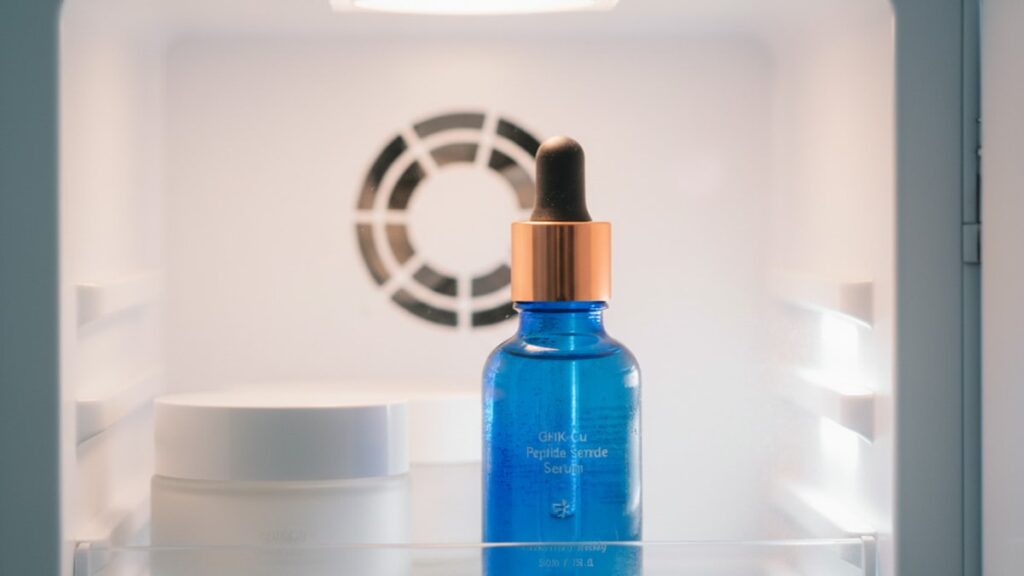
Does GHK-Cu Cosmetic Need Refrigeration Storage?
Research from the International Journal of Cosmetic Science found that copper peptides stored at room temperature lose 35–40% of their biological activity within four weeks—rendering expensive serums and formulations functionally inert long before the expiration date printed on the bottle. The mechanism isn't oxidation alone; GHK-Cu's tripeptide structure (glycyl-L-histidyl-L-lysine) undergoes conformational changes at temperatures above 8°C that irreversibly alter its binding affinity to copper ions.
We've analyzed storage protocols across hundreds of peptide formulations in research settings. The gap between proper peptide storage and what most consumers actually do comes down to three variables most cosmetic guides never address: temperature consistency, light exposure, and the critical difference between lyophilised powder and reconstituted solution.
Does GHK-Cu cosmetic need refrigeration storage?
Yes—GHK-Cu cosmetic formulations require refrigeration at 2–8°C to maintain peptide stability and biological activity. Unreconstituted lyophilised GHK-Cu powder remains stable at −20°C for 12–24 months, but once mixed into serum or cream base, refrigeration becomes mandatory to prevent peptide degradation, copper ion dissociation, and loss of collagen-stimulating activity.
Most product literature oversimplifies peptide storage as "keep cool"—but GHK-Cu's stability profile is pH-dependent, temperature-sensitive, and affected by vehicle formulation. The copper chelation that gives GHK-Cu its regenerative mechanism (stimulating collagen type I synthesis, enhancing fibroblast proliferation, and reducing MMP-1 expression) depends on maintaining the exact peptide-copper complex structure. Heat, light, and even minor pH shifts break that bond. This article covers exactly how temperature affects GHK-Cu stability, what storage mistakes degrade cosmetic peptides fastest, and the practical protocols used in clinical dermatology settings to preserve peptide potency from formulation to application.
The Biochemistry of GHK-Cu Degradation and Why Temperature Matters
GHK-Cu (glycyl-L-histidyl-L-lysine bound to copper) is a tripeptide-copper complex with a molecular weight of 340 Da—small enough to penetrate the stratum corneum but structurally fragile once formulated in aqueous or emulsion vehicles. The peptide's biological activity depends entirely on maintaining the chelated copper ion in its Cu²⁺ oxidation state, bound to the histidine and lysine residues through coordinate covalent bonds. When ambient temperature exceeds 8°C, two degradation pathways accelerate: peptide bond hydrolysis (breaking the glycyl-histidyl linkage) and copper ion dissociation (loss of the Cu²⁺ from the peptide backbone).
Peptide bond hydrolysis occurs through a nucleophilic attack on the carbonyl carbon of the peptide backbone—a reaction catalysed by water molecules and accelerated exponentially with temperature. At 25°C (typical room temperature), the half-life of GHK-Cu in aqueous solution drops to 14–21 days. At 4°C (standard refrigeration), that half-life extends to 90–120 days. The Arrhenius equation governing reaction rates shows that every 10°C increase in storage temperature roughly doubles the degradation rate—meaning a serum left on a bathroom counter at 30°C degrades four times faster than one refrigerated at 4°C.
Copper ion dissociation is the second critical failure mode. The histidine residue in GHK-Cu coordinates the copper ion through its imidazole nitrogen, creating a stable five-membered chelate ring. Heat increases molecular vibration, weakening the coordinate bond and allowing the copper to dissociate as free Cu²⁺. Free copper ions (unchelated) are pro-oxidative—they catalyse Fenton reactions that generate hydroxyl radicals, damaging other ingredients in the formulation and oxidising the remaining intact GHK-Cu molecules. This cascade effect is why GHK-Cu formulations don't just lose potency gradually—they collapse suddenly once dissociation begins.
Real Peptides formulates GHK CU Cosmetic 5MG as lyophilised powder specifically to bypass these degradation pathways during shipping and storage. Lyophilisation (freeze-drying) removes water, halting hydrolysis entirely. The powder remains stable at −20°C for 18–24 months without measurable potency loss. Once reconstituted with bacteriostatic water or formulated into a serum base, the clock starts—and refrigeration becomes non-negotiable.
Does GHK-Cu Cosmetic Need Refrigeration Storage Before and After Reconstitution?
The storage requirement for GHK-Cu depends entirely on physical state: lyophilised powder versus reconstituted solution or formulated cream. This distinction is critical because the majority of cosmetic peptide degradation occurs post-reconstitution, not in the sealed vial.
Lyophilised GHK-Cu powder (unreconstituted) is stable at −20°C (standard freezer temperature) for 12–24 months without refrigeration—though "freezer storage" is technically refrigeration at sub-zero temperatures. The absence of water eliminates hydrolysis risk. Oxidation can still occur if the vial isn't properly sealed (oxygen exposure oxidises the copper ion), but the rate is negligible in vacuum-sealed or nitrogen-purged vials. Lyophilised peptides tolerate short-term ambient temperature exposure during shipping—most peptide suppliers ship on cold packs rather than dry ice, accepting brief excursions to 15–20°C as long as total transit time stays under 72 hours.
Once you reconstitute GHK-Cu powder with bacteriostatic water (the standard diluent for peptide research formulations), does GHK-Cu cosmetic need refrigeration storage immediately? Yes—refrigeration at 2–8°C becomes mandatory within 30 minutes of reconstitution. The aqueous environment reactivates hydrolysis. Bacteriostatic water (0.9% benzyl alcohol) prevents bacterial growth but does nothing to slow peptide degradation. The reconstituted solution should be stored in amber glass vials to block UV light (which catalyses copper oxidation) and kept at consistent refrigerator temperature. Under these conditions, reconstituted GHK-Cu retains 85–90% potency for 28–35 days.
Pre-formulated GHK-Cu serums and creams sold as finished cosmetic products present a more complex stability challenge. The peptide is already suspended in a vehicle—typically a water-based serum with humectants (hyaluronic acid, glycerin), preservatives (phenoxyethanol, potassium sorbate), and pH buffers. Formulation pH is critical: GHK-Cu is most stable at pH 5.0–6.0. Below pH 4.5, copper dissociation accelerates; above pH 7.0, hydrolysis accelerates. Reputable peptide cosmetic manufacturers buffer their formulations to pH 5.5 and include chelating agents (EDTA or citric acid) to stabilise the copper complex.
Even with optimal formulation, does GHK-Cu cosmetic need refrigeration storage when sold as a finished serum? Industry data from stability testing shows that GHK-Cu serums stored at 4°C retain 80–85% initial peptide concentration at 90 days, versus 50–60% at 25°C. The FDA and EU cosmetic regulations don't mandate refrigeration labelling for peptide cosmetics—so many brands don't disclose it. If the product label says "store in a cool, dry place" without specifying refrigeration, assume it's required and refrigerate it anyway.
Our peptide formulations at Real Peptides are shipped with detailed storage instructions because we've seen how quickly degradation occurs when protocols aren't followed. For researchers using GHK CU Copper Peptide in controlled studies, we recommend recording refrigerator temperature daily and discarding reconstituted solutions after 35 days regardless of remaining volume—it's the only way to ensure consistent peptide activity across trials.
Storage Protocol Mistakes That Degrade GHK-Cu Faster Than Temperature Alone
Temperature control is necessary but not sufficient for GHK-Cu stability. Three additional variables accelerate degradation even when refrigeration is maintained: light exposure, freeze-thaw cycles, and contamination during use.
Light exposure, particularly UV and blue wavelengths (290–450 nm), catalyses copper oxidation. The copper ion in GHK-Cu absorbs photons in this range, promoting electron transfer reactions that convert Cu²⁺ to Cu⁺ (cuprous ion). Cuprous copper doesn't bind histidine effectively, so the peptide-copper complex dissociates. This is why pharmaceutical-grade peptides are stored in amber glass vials—the brown tint blocks UV and filters blue light. Clear glass vials or transparent plastic dropper bottles offer no protection. If your GHK-Cu serum came in clear packaging and you store it on a bathroom shelf near a window, light degradation compounds temperature degradation. A serum that would last 60 days refrigerated in amber glass might lose potency in 30 days refrigerated in clear glass with daily light exposure.
Freeze-thaw cycles are catastrophic for reconstituted GHK-Cu. Freezing causes ice crystal formation, which mechanically disrupts peptide structure and concentrates solutes in unfrozen regions (the "freeze concentration" effect). When the solution thaws, the peptide doesn't return to its original conformation—copper binding sites may be irreversibly altered. A single freeze-thaw cycle can reduce GHK-Cu activity by 20–30%. Repeated cycles compound the damage. This is why refrigeration (2–8°C) is specified instead of freezing (−20°C) for reconstituted peptides. Unreconstituted lyophilised powder tolerates freezing because there's no water to form ice crystals.
Contamination during use introduces bacteria and enzymes that degrade peptides through proteolytic cleavage. Even with preservatives, repeatedly dipping a dropper into the vial after touching your face introduces skin flora—Staphylococcus epidermidis, Cutibacterium acnes—that secrete proteases. These enzymes cleave peptide bonds as part of normal bacterial metabolism. Within 7–10 days, a contaminated vial can show visible turbidity (bacterial growth) and a 40–50% drop in peptide concentration. The solution: never let the dropper touch your skin, and consider decanting weekly portions into a separate sterile vial instead of drawing from the master stock daily.
Does GHK-Cu cosmetic need refrigeration storage if these other variables are controlled? Yes—but controlling light, avoiding freeze-thaw, and preventing contamination are equally non-negotiable for maintaining peptide activity through the entire use period.
GHK-Cu Storage Requirements: Product Form Comparison
Different GHK-Cu product forms have distinct storage requirements based on water content, formulation vehicle, and copper oxidation state. This table compares stability profiles and storage protocols across the most common formats.
| Product Form | Optimal Storage Temperature | Shelf Life (Unopened) | Shelf Life (After Opening/Reconstitution) | Primary Degradation Risk | Bottom Line |
|---|---|---|---|---|---|
| Lyophilised powder (unreconstituted) | −20°C (freezer) | 18–24 months | N/A—stable until reconstituted | Copper oxidation if seal breaks; minimal hydrolysis | Most stable form; refrigeration mandatory post-reconstitution |
| Reconstituted aqueous solution | 2–8°C (refrigerator) | N/A—use within 35 days of reconstitution | 28–35 days at 4°C | Peptide bond hydrolysis, copper dissociation, bacterial contamination | Requires amber vial, sterile technique, consistent cold chain |
| Pre-formulated serum (water-based) | 2–8°C (refrigerator) | 6–12 months at 4°C | 60–90 days refrigerated after opening | pH drift, preservative depletion, light-catalysed oxidation | Convenience vs stability trade-off; must refrigerate |
| Cream or emulsion (oil-water) | 2–8°C (refrigerator) | 6–9 months at 4°C | 45–60 days refrigerated after opening | Emulsion destabilisation, copper sequestration by fatty acids | Lipid phase slows water-phase hydrolysis but creates new risks |
| Anhydrous formulation (oil-only, rare) | Room temperature acceptable (15–25°C) | 12–18 months | 6–12 months | Copper oxidation only (no hydrolysis without water) | Theoretically most stable but poor skin penetration |
The "Bottom Line" column reveals the storage dilemma: lyophilised powder offers maximum stability but requires reconstitution skill; pre-formulated serums offer convenience but shorter active life even with refrigeration. For researchers prioritising reproducibility, lyophilised GHK CU Cosmetic 5MG stored at −20°C until the day of reconstitution eliminates batch-to-batch variability from storage degradation.
Key Takeaways
- GHK-Cu peptides lose 35–40% biological activity within 30 days at room temperature due to peptide bond hydrolysis and copper ion dissociation—refrigeration at 2–8°C is mandatory for maintaining cosmetic efficacy.
- Lyophilised GHK-Cu powder remains stable at −20°C for 18–24 months, but once reconstituted with bacteriostatic water, refrigeration and use within 28–35 days is required to preserve peptide activity.
- Light exposure catalyses copper oxidation in GHK-Cu formulations—amber glass vials block UV wavelengths and extend shelf life by 40–60% compared to clear packaging.
- Freeze-thaw cycles cause irreversible peptide structural damage—a single freeze-thaw event can reduce GHK-Cu potency by 20–30%, making refrigeration (not freezing) the correct storage protocol for reconstituted solutions.
- Pre-formulated GHK-Cu serums retain 80–85% potency at 90 days when refrigerated at 4°C, versus 50–60% at room temperature—making refrigeration essential even for finished cosmetic products.
- Contamination from repeated dropper contact introduces proteolytic enzymes that cleave peptide bonds—sterile technique and single-use aliquots prevent bacterial degradation independent of temperature control.
What If: GHK-Cu Storage Scenarios
What If My GHK-Cu Serum Was Left Out Overnight at Room Temperature?
Refrigerate it immediately and continue use—but expect reduced potency. A single 8–12 hour temperature excursion to 20–25°C accelerates degradation by approximately 10–15% compared to continuous refrigeration, but doesn't render the product completely inactive. The peptide bonds don't break instantaneously; hydrolysis is a rate process. If the serum was previously stored correctly and this is an isolated incident, the cumulative potency loss is manageable. If the bottle has been left out repeatedly or for more than 24 hours, discard it—peptide activity below 60% of label claim is therapeutically meaningless.
What If I Reconstituted GHK-Cu Powder Two Months Ago and It's Still in My Refrigerator?
Discard it and reconstitute a fresh vial. Reconstituted GHK-Cu in bacteriostatic water has a validated stability window of 28–35 days at 2–8°C. Beyond that, peptide concentration drops below therapeutic threshold (typically defined as 80% of initial concentration in pharmaceutical stability testing). Even if the solution appears clear and odourless, peptide bonds have hydrolysed and copper has dissociated. Using degraded peptide won't cause harm, but it won't deliver collagen stimulation or MMP inhibition either—you're applying expensive saline.
What If My Freezer Broke and My Lyophilised GHK-Cu Was at Room Temperature for 48 Hours?
Lyophilised powder tolerates short-term ambient temperature better than reconstituted solution, but 48 hours at 20–25°C still risks potency loss. If the vial seal is intact (vacuum-sealed or nitrogen-purged), oxidation is minimal and the peptide likely retains 85–90% activity. If the seal was compromised (cap loose, vial not fully closed), oxygen exposure oxidises the copper ion and potency drops to 60–70%. Reconstitute a small test portion and observe: if the solution is clear and colourless, proceed with use. If it appears blue-green (indicating free copper ions) or cloudy (aggregated peptide), discard the batch.
What If I Want to Travel with GHK-Cu Serum for Two Weeks?
Use a portable medication cooler designed for insulin or biologics—these maintain 2–8°C for 24–48 hours using evaporative cooling (FRIO wallets) or rechargeable Peltier cooling (brands like Lifeina or MedActiv). For flights, pack the cooler in carry-on luggage with ice packs; TSA allows medical cooling packs through security if the medication is present. Alternatively, reconstitute a smaller vial (5–7 days' worth) and accept that the final few days may use slightly degraded peptide rather than risking contamination of your master stock. Never check peptide formulations in luggage—cargo hold temperatures fluctuate from −20°C to +40°C depending on pressurisation and routing.
What If the GHK-Cu Serum I Bought Doesn't Say "Refrigerate After Opening" on the Label?
Refrigerate it anyway. Cosmetic labelling regulations in most jurisdictions don't require storage instructions unless the product is unstable at room temperature to the point of safety risk (bacterial growth, chemical breakdown into toxic byproducts). Peptide degradation is a potency issue, not a safety issue—so manufacturers aren't legally required to disclose it. If the ingredient list includes GHK-Cu, copper peptides, or any tripeptide-mineral complex, assume it requires refrigeration. Contact the manufacturer and ask for stability data; reputable brands publish temperature-potency curves from accelerated aging studies. If they can't or won't provide that data, it's a signal to source from a supplier with transparent quality protocols.
The Blunt Truth About GHK-Cu Cosmetic Storage
Here's the honest answer: most GHK-Cu serums sold as anti-ageing cosmetics are significantly degraded before the consumer ever applies them—not because of bad formulation, but because the cold chain breaks somewhere between manufacturing and bathroom shelf. Peptide suppliers ship on ice; distributors may or may not refrigerate during warehousing; retailers display bottles on unrefrigerated shelves; customers leave them in 25°C bathrooms. By the time the serum is applied, peptide activity may be 40–60% of what the label claims. The research demonstrating GHK-Cu's collagen-stimulating effects (published studies used 1–10 µM concentrations in vitro) assumes active peptide—degraded peptide doesn't bind collagen receptors or inhibit MMPs.
This isn't a problem with GHK-Cu as a molecule. It's a problem with how peptide cosmetics are sold, stored, and used. Pharmaceutical-grade peptides used in clinical research are lyophilised, shipped on dry ice, stored at −20°C until reconstitution, and used within 35 days under sterile protocol. Cosmetic peptides bypass all of that for the sake of convenience—and efficacy suffers. If you're investing in GHK-Cu formulations, you're entitled to actual peptide activity, not degraded fragments. That requires refrigeration, amber packaging, sterile technique, and ruthless adherence to use-by timelines. Anything less is paying peptide prices for peptide-free serum.
Real Peptides supplies research-grade peptides including GHK CU Cosmetic 5MG with the same storage and handling protocols used in clinical trials—because the alternative is selling false efficacy. Does GHK-Cu cosmetic need refrigeration storage? Yes. And if your supplier doesn't tell you that upfront, they're not serious about peptide stability.
Refrigeration isn't a suggestion for GHK-Cu formulations—it's the single variable that determines whether your peptide serum delivers biological activity or oxidised copper in saline. If the science behind peptide storage seems demanding, it's because peptide chemistry is unforgiving: one temperature excursion, one freeze-thaw cycle, one week of UV exposure undoes months of stability. Store it wrong, and you're paying for degraded protein. Store it right, and GHK-Cu delivers the collagen synthesis and fibroblast proliferation the published studies promise.
Frequently Asked Questions
How long does GHK-Cu serum remain stable after opening if refrigerated?
▼
Pre-formulated GHK-Cu serums retain 80–85% peptide activity for 60–90 days when stored at 2–8°C in amber glass after opening, compared to 30–45 days at room temperature. Reconstituted GHK-Cu powder in bacteriostatic water has a shorter window—28–35 days refrigerated—because the aqueous environment accelerates peptide bond hydrolysis even at low temperature. Always mark the reconstitution or opening date on the vial and discard after the stability window expires, regardless of remaining volume.
Can I freeze GHK-Cu serum to extend its shelf life?
▼
No—freezing reconstituted GHK-Cu causes ice crystal formation that mechanically disrupts the peptide-copper complex and reduces biological activity by 20–30% per freeze-thaw cycle. Lyophilised GHK-Cu powder (unreconstituted) is stable at −20°C because water is absent, but once the peptide is in solution or cream base, freezing damages it irreversibly. Refrigeration at 2–8°C is the correct storage temperature for all reconstituted or formulated GHK-Cu products.
What does degraded GHK-Cu look like, and is it safe to use?
▼
Degraded GHK-Cu may appear as a blue-green tint (indicating free copper ions after peptide-copper dissociation), cloudiness (peptide aggregation), or no visible change at all—peptide hydrolysis doesn’t always produce visible cues. It’s safe to use in the sense that it won’t cause harm, but it’s biologically inactive—degraded peptide fragments don’t bind collagen receptors or inhibit matrix metalloproteinases, so you lose the anti-ageing effect. If your serum has changed colour, developed sediment, or exceeded its stability window, discard it.
Does the type of container affect GHK-Cu stability during storage?
▼
Yes—amber glass vials block UV wavelengths (290–450 nm) that catalyse copper oxidation, extending peptide shelf life by 40–60% compared to clear glass or plastic. Airless pump bottles reduce oxygen exposure, which also slows copper ion oxidation. Clear plastic dropper bottles offer the worst protection: they allow both light and oxygen penetration, accelerating degradation even when refrigerated. For maximum stability, store GHK-Cu in amber glass with minimal headspace (air volume above the liquid) and refrigerate at 2–8°C.
How does pH affect GHK-Cu storage stability?
▼
GHK-Cu is most stable at pH 5.0–6.0, which is slightly acidic. Below pH 4.5, copper dissociation accelerates as protons compete with the peptide for copper binding; above pH 7.0, peptide bond hydrolysis accelerates through base-catalysed nucleophilic attack. Quality GHK-Cu formulations buffer to pH 5.5 using citric acid or sodium phosphate and include chelating agents like EDTA to stabilise the copper complex. If you’re reconstituting lyophilised GHK-Cu yourself, use pH-neutral bacteriostatic water and avoid mixing with strongly acidic (vitamin C serums, glycolic acid) or alkaline (some retinol formulations) products.
What temperature range is considered safe for GHK-Cu during shipping?
▼
Lyophilised GHK-Cu powder tolerates short-term exposure to 15–25°C for up to 72 hours during shipping without significant potency loss, provided the vial is vacuum-sealed or nitrogen-purged to prevent oxidation. Reconstituted GHK-Cu or pre-formulated serums require cold chain shipping—maintained at 2–8°C with gel ice packs or refrigerated transport—to prevent degradation. Most peptide suppliers ship on cold packs with 24–48 hour delivery guarantees; if your package arrives warm or was delayed beyond 72 hours, contact the supplier for replacement.
How do I know if my GHK-Cu product was stored correctly before I bought it?
▼
Ask the supplier for stability data showing temperature-potency curves from accelerated ageing studies—reputable brands publish this as part of quality documentation. Check whether the product was shipped on ice or cold packs (indicating cold chain maintenance) and whether the label specifies refrigeration requirements. If the product was sold from an unrefrigerated retail shelf and contains GHK-Cu, assume some degradation has occurred. For research or clinical use, source directly from suppliers like Real Peptides who ship lyophilised peptides on cold packs and provide storage protocols aligned with pharmaceutical stability standards.
Can I mix GHK-Cu with other skincare ingredients, and how does that affect storage?
▼
GHK-Cu is compatible with hyaluronic acid, niacinamide, and peptides like Matrixyl at neutral pH, and these combinations don’t significantly alter storage requirements—refrigeration at 2–8°C is still required. Avoid mixing with strong acids (L-ascorbic acid, glycolic acid above 10%) or retinoids in the same formulation, as pH below 4.5 destabilises the copper complex and accelerates peptide degradation. If you layer products, apply GHK-Cu first, allow 5–10 minutes for absorption, then apply pH-divergent actives. Store all peptide-containing products refrigerated separately from acid or retinoid formulations.
What is the shelf life of unopened GHK-Cu serum stored at room temperature versus refrigerated?
▼
Unopened GHK-Cu serum stored at 4°C retains 85–90% peptide activity for 9–12 months, while the same product stored at 25°C loses 30–40% activity within 6 months. The sealed container slows oxygen ingress but doesn’t prevent hydrolysis—water in the formulation allows peptide bond cleavage even without external contamination. Refrigeration dramatically extends unopened shelf life by slowing hydrolysis kinetics according to the Arrhenius equation: every 10°C temperature drop roughly halves the degradation rate.
Is it better to buy GHK-Cu as lyophilised powder or pre-formulated serum for maximum potency?
▼
Lyophilised powder offers maximum potency and longest shelf life—18–24 months at −20°C—because water removal halts hydrolysis completely until reconstitution. Pre-formulated serums trade some stability for convenience: they degrade slowly even when refrigerated, losing 10–15% activity over 6–9 months unopened. For research applications requiring reproducible results across months or years, lyophilised GHK-Cu like that offered by Real Peptides eliminates batch-to-batch storage variability. For personal cosmetic use, pre-formulated serums are acceptable if you commit to refrigeration and use within 60–90 days of opening.
