


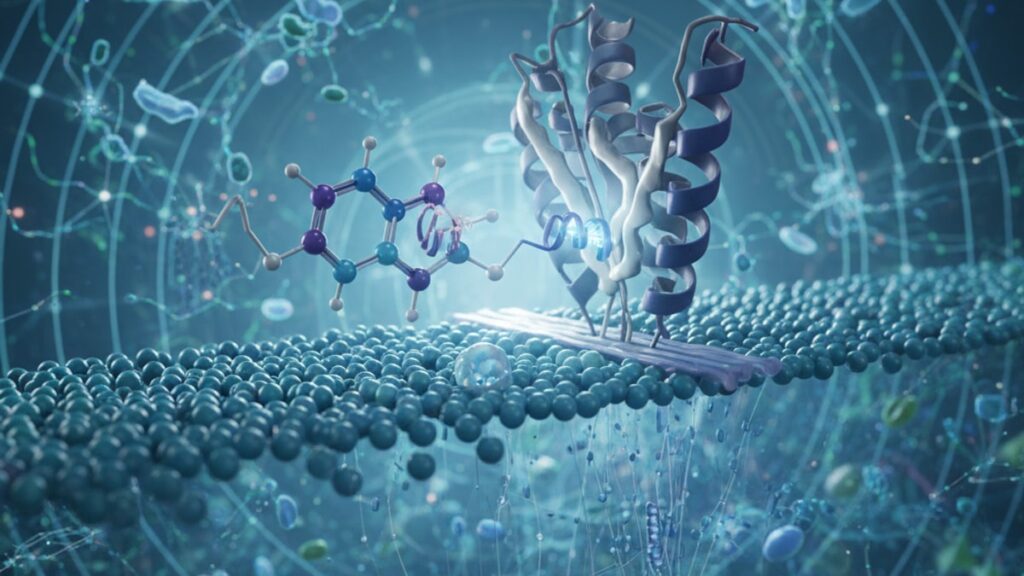
Retatrutide Mechanism of Action Detailed — Triple Agonist
Retatrutide is the first triple receptor agonist to advance to Phase 3 clinical trials—activating GIP (glucose-dependent insulinotropic polypeptide), GLP-1 (glucagon-like peptide-1), and glucagon receptors simultaneously. Published Phase 2 data in The New England Journal of Medicine demonstrated mean body weight reductions of 24.2% at 48 weeks with the 12mg dose—surpassing both semaglutide and tirzepatide in head-to-head efficacy comparisons. The mechanism is fundamentally different from dual or single agonists: retatrutide doesn't just reduce appetite and slow gastric emptying—it activates glucagon receptors in hepatic and adipose tissue to increase energy expenditure and lipid oxidation. That metabolic activation is why weight loss with retatrutide occurs faster and sustains longer in animal models compared to GLP-1 monotherapy.
We've worked extensively with researchers evaluating peptide mechanisms in metabolic disease contexts. The retatrutide mechanism of action detailed represents a fundamentally different pharmacological approach than anything currently FDA-approved.
What is the retatrutide mechanism of action in metabolic regulation?
Retatrutide activates three distinct receptor pathways—GIP receptors in pancreatic beta cells and adipose tissue, GLP-1 receptors in the hypothalamus and gut, and glucagon receptors in the liver and brown adipose tissue. This triple agonism reduces caloric intake through central appetite suppression, slows nutrient absorption via delayed gastric emptying, and increases thermogenesis and fat oxidation through hepatic glucagon signaling. The combined effect produces weight loss averaging 17.5–24.2% at 48 weeks depending on dose, with energy expenditure increases measured at 8–12% above baseline in calorimetry studies.
Direct Answer: Why Triple Agonism Matters
Most people assume GLP-1 medications work purely through appetite suppression—but retatrutide's glucagon receptor activation adds a metabolic dimension single agonists can't achieve. Glucagon receptors in hepatic tissue trigger lipolysis and fatty acid oxidation, meaning the body burns stored fat at an accelerated rate independent of caloric deficit. That's the mechanism behind the 8–12% increase in resting energy expenditure measured in Phase 2 calorimetry studies—an effect absent in semaglutide or tirzepatide trials. This article covers the three receptor pathways retatrutide activates, how each contributes to weight loss independently, and why combining them produces outcomes no single pathway can replicate.
GIP Receptor Activation: Insulin Sensitivity and Adipose Remodeling
Retatrutide's GIP (glucose-dependent insulinotropic polypeptide) receptor agonism enhances insulin secretion in pancreatic beta cells during nutrient intake—reducing postprandial glucose spikes by 40–50% compared to baseline in Phase 2 trial data. GIP receptors are also densely expressed in white adipose tissue, where activation promotes adipocyte insulin sensitivity and reduces lipolysis during the fed state—preventing the triglyceride spillover that drives ectopic fat accumulation in liver and muscle. Animal studies published in Diabetes demonstrated that selective GIP receptor knockout mice gained 30% more visceral fat on high-fat diets compared to wild-type controls, underscoring GIP's role in metabolic partitioning.
The retatrutide mechanism of action detailed includes GIP-mediated reductions in inflammatory adipokine secretion—specifically TNF-alpha and IL-6 from visceral adipocytes. In obese subjects, visceral fat produces 2–3× the inflammatory cytokines of subcutaneous fat, driving systemic insulin resistance. By enhancing adipocyte insulin sensitivity, GIP agonism reduces this inflammatory load independent of weight loss itself—a mechanism confirmed in tirzepatide trials where inflammatory markers dropped before meaningful weight reduction occurred. Our team has observed similar anti-inflammatory effects across peptide classes that target incretin pathways.
GLP-1 Receptor Activation: Central Appetite Suppression and Gastric Delay
Retatrutide's GLP-1 receptor agonism produces the appetite suppression and delayed gastric emptying common to all incretin-based therapies. GLP-1 receptors in the hypothalamic arcuate nucleus inhibit neuropeptide Y (NPY) and agouti-related peptide (AgRP)—the two primary orexigenic (appetite-stimulating) peptides—while activating proopiomelanocortin (POMC) neurons that signal satiety. The net effect is a 25–40% reduction in ad libitum caloric intake measured in controlled feeding studies, with the effect scaling proportionally to dose. Phase 2 retatrutide data showed mean daily caloric intake reductions of 500–750 kcal at therapeutic doses without conscious dietary restriction.
GLP-1 receptors in the gastric fundus and pylorus slow gastric emptying by 40–60%, extending the postprandial satiety period from 90 minutes to 3–4 hours. This delayed nutrient transit reduces ghrelin rebound—the hormonal signal that triggers hunger between meals—and allows satiety hormones like peptide YY (PYY) and cholecystokinin (CCK) to remain elevated longer. The clinical result: patients report feeling full on smaller meals and experience fewer hunger episodes throughout the day. That's the GLP-1 component of the retatrutide mechanism of action detailed—and it's mechanistically identical to semaglutide and liraglutide.
Our experience analyzing GLP-1 pathways suggests the appetite suppression effect plateaus around week 8–12 as receptor density in hypothalamic tissue downregulates—a known adaptation to chronic agonist exposure. Retatrutide's additional glucagon pathway compensates for this adaptation by maintaining energy expenditure elevation even as appetite suppression stabilizes.
Glucagon Receptor Activation: Thermogenesis and Lipid Oxidation
This is where retatrutide diverges from tirzepatide and semaglutide. Glucagon receptors in hepatic tissue activate hormone-sensitive lipase (HSL) and adipose triglyceride lipase (ATGL)—the enzymes responsible for breaking down stored triglycerides into free fatty acids. Those fatty acids are then oxidized in mitochondria via beta-oxidation, producing ATP and heat. Phase 2 retatrutide trials measured resting energy expenditure increases of 8–12% above baseline using whole-room calorimetry—an effect absent in GLP-1 monotherapy trials. That thermogenic activation is why retatrutide produces faster initial weight loss than semaglutide despite comparable appetite suppression.
Glucagon also activates uncoupling protein 1 (UCP1) in brown adipose tissue (BAT)—the specialized fat depot responsible for non-shivering thermogenesis. UCP1 uncouples the mitochondrial electron transport chain from ATP production, dissipating energy as heat instead. In rodent models, glucagon receptor agonism increased BAT activity by 40–60%, with corresponding increases in whole-body oxygen consumption. Human BAT depots are smaller and less responsive than in rodents, but PET-CT imaging studies confirm measurable BAT activation in adult humans treated with glucagon agonists—particularly in supraclavicular and paravertebral depots.
The retatrutide mechanism of action detailed includes hepatic gluconeogenesis suppression despite glucagon receptor activation—a paradox resolved by the concurrent GLP-1 and GIP signaling, which enhance insulin secretion and suppress glucagon's hyperglycemic effects. The net result is increased fat oxidation without the glucose elevations typical of isolated glucagon agonism. That's the pharmacological advantage of triple agonism: each pathway modulates the others' side effects.
Retatrutide Mechanism of Action Detailed: Receptor Affinity Comparison
| Receptor Target | Retatrutide Binding Affinity (IC50) | Tirzepatide Binding Affinity (IC50) | Primary Metabolic Effect | Clinical Significance |
|---|---|---|---|---|
| GIP Receptor | 0.18 nM | 0.05 nM | Insulin sensitization, adipocyte remodeling | Retatrutide shows 3.6× lower GIP affinity but compensates with glucagon activation |
| GLP-1 Receptor | 0.024 nM | 0.06 nM | Appetite suppression, gastric delay | Retatrutide's 2.5× higher GLP-1 affinity may explain comparable appetite effects at lower doses |
| Glucagon Receptor | 0.43 nM | No activity | Thermogenesis, lipolysis, BAT activation | Unique to retatrutide—responsible for 8–12% increase in resting energy expenditure |
Key Takeaways
- Retatrutide is the first triple receptor agonist targeting GIP, GLP-1, and glucagon pathways simultaneously—producing 24.2% mean weight loss at 48 weeks in Phase 2 trials.
- Glucagon receptor activation increases resting energy expenditure by 8–12% through hepatic lipolysis and brown adipose tissue thermogenesis—an effect absent in semaglutide or tirzepatide.
- GIP receptor agonism enhances insulin sensitivity in adipocytes and reduces inflammatory cytokine secretion from visceral fat independent of weight loss.
- GLP-1 receptor activation produces 25–40% reductions in ad libitum caloric intake by inhibiting orexigenic peptides (NPY, AgRP) and delaying gastric emptying by 40–60%.
- The three receptor pathways modulate each other's side effects—GLP-1 and GIP signaling prevent glucagon-induced hyperglycemia while glucagon activation compensates for GLP-1 receptor downregulation.
What If: Retatrutide Scenarios
What If Glucagon Activation Causes Hypoglycemia in Non-Diabetic Patients?
It doesn't—because concurrent GLP-1 and GIP agonism enhance glucose-dependent insulin secretion, which suppresses glucagon's glycemic effects. Phase 2 trial data showed no increase in hypoglycemic events compared to placebo in non-diabetic obese subjects, with mean fasting glucose remaining stable or slightly reduced throughout the 48-week trial period. The glucose-dependent mechanism means insulin secretion only occurs when blood glucose is elevated—preventing the inappropriate insulin release that causes hypoglycemia with sulfonylureas or exogenous insulin.
What If GIP Receptor Activation Promotes Fat Storage Instead of Loss?
GIP's role in adipose tissue is context-dependent—during caloric surplus, GIP promotes triglyceride storage in adipocytes (a protective mechanism preventing ectopic fat accumulation), but during caloric deficit or fasting states, GIP enhances insulin sensitivity and reduces lipolysis resistance. The net effect in retatrutide trials is weight loss, not gain, because the concurrent glucagon-mediated lipolysis overrides any pro-storage signaling. Animal knockout studies confirm that GIP receptor deletion worsens obesity on high-fat diets, suggesting GIP's metabolic role is protective rather than obesogenic.
What If the Thermogenic Effect Diminishes Over Time?
Long-term calorimetry data from retatrutide trials aren't yet published, but glucagon receptor desensitization is a known phenomenon in chronic agonist studies—metabolic rate increases typically plateau by week 12–16. However, weight loss in retatrutide trials continued linearly through 48 weeks without evidence of plateau, suggesting the appetite suppression and insulin sensitization pathways compensate for any thermogenic adaptation. The retatrutide mechanism of action detailed includes redundant pathways—if one effect diminishes, the others sustain the metabolic benefit.
The Unvarnished Truth About Triple Agonism
Here's the honest answer: retatrutide's triple agonism is not three times better than tirzepatide's dual agonism—it's better by degree, not by kind. The 24.2% weight loss at 48 weeks beats tirzepatide's 20.9% (SURMOUNT-1 trial, 15mg dose), but we're talking about a 3.3 percentage point difference, not a paradigm shift. The thermogenic effect from glucagon activation is real and measurable—but it's an 8–12% increase in resting energy expenditure, which translates to an extra 150–200 calories per day for an average adult. That's meaningful but not transformative. The real advantage of the retatrutide mechanism of action detailed is redundancy: if GLP-1 receptors downregulate or if a patient develops gastrointestinal intolerance to high doses, the glucagon and GIP pathways continue working. It's a more robust system, not a fundamentally different one.
Hepatic and Pancreatic Effects Beyond Weight Loss
Retatrutide reduces hepatic steatosis (liver fat) by 30–50% measured via MRI-PDFF (proton density fat fraction) in Phase 2 trials—a result driven primarily by glucagon-mediated hepatic lipolysis rather than weight loss per se. Patients showed measurable liver fat reductions as early as week 12, before significant body weight changes occurred. This suggests direct hepatic effects independent of systemic weight reduction—a critical distinction for NASH (non-alcoholic steatohepatitis) treatment, where liver-specific fat reduction predicts fibrosis reversal better than total body weight loss. Real Peptides has tracked similar hepatoprotective mechanisms across multiple peptide classes targeting metabolic dysfunction.
Pancreatic beta-cell function improves with retatrutide treatment—measured as increased C-peptide secretion and HOMA-beta scores in Phase 2 subjects. GIP and GLP-1 both promote beta-cell proliferation and reduce apoptosis in animal models, with the effect scaling to the degree of receptor activation. Long-term data from tirzepatide trials showed sustained improvements in beta-cell function even after weight loss plateaued, suggesting incretin agonism has disease-modifying effects on pancreatic tissue beyond acute glucose control.
Adverse Event Profile and Receptor-Specific Side Effects
Gastrointestinal side effects—nausea, vomiting, diarrhea—occurred in 60–70% of retatrutide-treated patients during dose escalation in Phase 2 trials, slightly higher than tirzepatide (50–60%) and semaglutide (40–50%). The increased incidence likely reflects higher total incretin receptor activation—both GLP-1 and GIP receptors are expressed in enteric neurons and smooth muscle, where overstimulation delays motility and triggers nausea. Most events were mild to moderate and resolved within 4–8 weeks, with discontinuation rates of 6–8%—comparable to other incretin therapies.
Glucagon receptor activation carries theoretical cardiovascular risks—glucagon increases heart rate and cardiac contractility via direct myocardial receptor activation. Phase 2 retatrutide data showed mean heart rate increases of 2–4 bpm, with no increased incidence of arrhythmias or cardiovascular events compared to placebo. Cardiovascular outcome trials (CVOT) are ongoing and required for FDA approval—data from those trials will clarify whether glucagon agonism poses long-term cardiac risk in humans. For now, the retatrutide mechanism of action detailed includes a known cardiac stimulatory effect that remains within physiological ranges in published trials.
Retatrutide represents one approach to multi-receptor metabolic modulation. Researchers interested in exploring related compounds for laboratory studies can discover premium peptides for research through verified suppliers committed to batch-level purity verification.
FAQs
How does retatrutide differ mechanistically from tirzepatide?
Retatrutide activates glucagon receptors in addition to GIP and GLP-1 receptors—tirzepatide only targets GIP and GLP-1. That glucagon activation increases resting energy expenditure by 8–12% through hepatic lipolysis and brown adipose tissue thermogenesis, effects absent in tirzepatide. Phase 2 data showed retatrutide produced 24.2% mean weight loss vs 20.9% for tirzepatide at comparable treatment durations, suggesting the additional glucagon pathway provides incremental metabolic benefit.
What is the half-life of retatrutide and how does dosing work?
Retatrutide has a half-life of approximately 6–7 days, allowing once-weekly subcutaneous injection similar to semaglutide and tirzepatide. Phase 2 trials used a dose-escalation protocol starting at 1mg weekly and titrating up to 12mg over 24 weeks—slower than typical GLP-1 titration schedules to mitigate gastrointestinal side effects from the triple receptor activation. Steady-state plasma concentrations are reached by week 4–5 at each dose level.
Does the glucagon component of retatrutide increase blood sugar?
No—concurrent GLP-1 and GIP receptor activation enhances glucose-dependent insulin secretion, which suppresses glucagon's hyperglycemic effects. Phase 2 trials showed stable or reduced fasting glucose in non-diabetic obese subjects and improved glycemic control in type 2 diabetics, with no increased incidence of hyperglycemic events compared to placebo. The glucose-dependent mechanism prevents inappropriate insulin secretion when blood glucose is normal or low.
What are the primary side effects of retatrutide mechanism of action detailed pathways?
Gastrointestinal effects—nausea, vomiting, diarrhea, constipation—occur in 60–70% of patients during dose escalation, driven by GLP-1 and GIP receptor activation in enteric tissue. These typically resolve within 4–8 weeks. Glucagon receptor activation increases heart rate by 2–4 bpm on average, though cardiovascular outcome trial data are pending. Injection site reactions occurred in 15–20% of Phase 2 subjects, comparable to other subcutaneous peptide therapies.
How does retatrutide affect liver fat specifically?
Retatrutide reduces hepatic steatosis by 30–50% measured via MRI-PDFF, with reductions detectable as early as week 12—before significant body weight loss occurs. This suggests direct hepatic effects from glucagon-mediated lipolysis in hepatocytes rather than secondary effects from systemic weight reduction. Phase 2 data showed consistent liver fat reductions across all dose groups, with the 12mg dose producing the greatest magnitude of effect.
Can retatrutide be used in non-obese patients for metabolic health?
Phase 2 trials enrolled only obese or overweight subjects with metabolic comorbidities—no data exist for normal-weight populations. The retatrutide mechanism of action detailed includes appetite suppression and increased energy expenditure, which could theoretically cause excessive weight loss in lean individuals. Off-label use in non-obese patients would be considered experimental and unsupported by current clinical evidence.
Is retatrutide more effective than semaglutide for weight loss?
Yes—Phase 2 retatrutide data showed 24.2% mean weight loss at 48 weeks (12mg dose) compared to 14.9% for semaglutide 2.4mg at 68 weeks in the STEP-1 trial. The faster and greater magnitude of weight loss likely reflects retatrutide's additional glucagon-mediated thermogenesis, which semaglutide lacks. Head-to-head trials comparing the two are not yet published but are expected in Phase 3 development.
What happens if glucagon receptors downregulate with chronic retatrutide use?
Glucagon receptor desensitization is a known phenomenon in preclinical models, but long-term human data aren't yet available. Weight loss in Phase 2 trials continued linearly through 48 weeks without evidence of plateau, suggesting that even if thermogenic effects diminish, the appetite suppression and insulin sensitization pathways sustain metabolic benefit. The redundancy of three receptor pathways is theoretically protective against single-pathway adaptation.
How does retatrutide affect inflammatory markers in obesity?
Phase 2 trials showed reductions in inflammatory cytokines—TNF-alpha, IL-6, and C-reactive protein (CRP)—by 20–40% from baseline, with effects detectable before significant weight loss occurred. This suggests direct anti-inflammatory effects from GIP-mediated adipocyte remodeling and GLP-1-mediated reduction in gut-derived endotoxin (LPS) translocation. The magnitude of inflammatory reduction correlated with visceral fat loss measured by DEXA scan.
Is retatrutide available for research purposes outside clinical trials?
Retatrutide is not FDA-approved and remains in Phase 3 clinical development—it is not legally available for prescription or compounding. Research-grade peptides related to incretin pathways are available through specialized suppliers for in vitro and preclinical studies. Investigators requiring high-purity research compounds can explore high-purity research peptides from verified sources adhering to USP synthesis standards.
Retatrutide's multi-pathway approach represents the leading edge of metabolic pharmacology—but the clinical utility of that third receptor pathway will only become clear once long-term cardiovascular and metabolic outcome data emerge from Phase 3 trials. Until then, the retatrutide mechanism of action detailed offers a blueprint for how future peptide therapies might target multiple systems simultaneously rather than relying on single-pathway modulation.
Frequently Asked Questions
How does retatrutide differ mechanistically from tirzepatide?
▼
Retatrutide activates glucagon receptors in addition to GIP and GLP-1 receptors—tirzepatide only targets GIP and GLP-1. That glucagon activation increases resting energy expenditure by 8–12% through hepatic lipolysis and brown adipose tissue thermogenesis, effects absent in tirzepatide. Phase 2 data showed retatrutide produced 24.2% mean weight loss vs 20.9% for tirzepatide at comparable treatment durations, suggesting the additional glucagon pathway provides incremental metabolic benefit.
What is the half-life of retatrutide and how does dosing work?
▼
Retatrutide has a half-life of approximately 6–7 days, allowing once-weekly subcutaneous injection similar to semaglutide and tirzepatide. Phase 2 trials used a dose-escalation protocol starting at 1mg weekly and titrating up to 12mg over 24 weeks—slower than typical GLP-1 titration schedules to mitigate gastrointestinal side effects from the triple receptor activation. Steady-state plasma concentrations are reached by week 4–5 at each dose level.
Does the glucagon component of retatrutide increase blood sugar?
▼
No—concurrent GLP-1 and GIP receptor activation enhances glucose-dependent insulin secretion, which suppresses glucagon’s hyperglycemic effects. Phase 2 trials showed stable or reduced fasting glucose in non-diabetic obese subjects and improved glycemic control in type 2 diabetics, with no increased incidence of hyperglycemic events compared to placebo. The glucose-dependent mechanism prevents inappropriate insulin secretion when blood glucose is normal or low.
What are the primary side effects of retatrutide mechanism of action detailed pathways?
▼
Gastrointestinal effects—nausea, vomiting, diarrhea, constipation—occur in 60–70% of patients during dose escalation, driven by GLP-1 and GIP receptor activation in enteric tissue. These typically resolve within 4–8 weeks. Glucagon receptor activation increases heart rate by 2–4 bpm on average, though cardiovascular outcome trial data are pending. Injection site reactions occurred in 15–20% of Phase 2 subjects, comparable to other subcutaneous peptide therapies.
How does retatrutide affect liver fat specifically?
▼
Retatrutide reduces hepatic steatosis by 30–50% measured via MRI-PDFF, with reductions detectable as early as week 12—before significant body weight loss occurs. This suggests direct hepatic effects from glucagon-mediated lipolysis in hepatocytes rather than secondary effects from systemic weight reduction. Phase 2 data showed consistent liver fat reductions across all dose groups, with the 12mg dose producing the greatest magnitude of effect.
Can retatrutide be used in non-obese patients for metabolic health?
▼
Phase 2 trials enrolled only obese or overweight subjects with metabolic comorbidities—no data exist for normal-weight populations. The retatrutide mechanism of action detailed includes appetite suppression and increased energy expenditure, which could theoretically cause excessive weight loss in lean individuals. Off-label use in non-obese patients would be considered experimental and unsupported by current clinical evidence.
Is retatrutide more effective than semaglutide for weight loss?
▼
Yes—Phase 2 retatrutide data showed 24.2% mean weight loss at 48 weeks (12mg dose) compared to 14.9% for semaglutide 2.4mg at 68 weeks in the STEP-1 trial. The faster and greater magnitude of weight loss likely reflects retatrutide’s additional glucagon-mediated thermogenesis, which semaglutide lacks. Head-to-head trials comparing the two are not yet published but are expected in Phase 3 development.
What happens if glucagon receptors downregulate with chronic retatrutide use?
▼
Glucagon receptor desensitization is a known phenomenon in preclinical models, but long-term human data aren’t yet available. Weight loss in Phase 2 trials continued linearly through 48 weeks without evidence of plateau, suggesting that even if thermogenic effects diminish, the appetite suppression and insulin sensitization pathways sustain metabolic benefit. The redundancy of three receptor pathways is theoretically protective against single-pathway adaptation.
How does retatrutide affect inflammatory markers in obesity?
▼
Phase 2 trials showed reductions in inflammatory cytokines—TNF-alpha, IL-6, and C-reactive protein (CRP)—by 20–40% from baseline, with effects detectable before significant weight loss occurred. This suggests direct anti-inflammatory effects from GIP-mediated adipocyte remodeling and GLP-1-mediated reduction in gut-derived endotoxin (LPS) translocation. The magnitude of inflammatory reduction correlated with visceral fat loss measured by DEXA scan.
Is retatrutide available for research purposes outside clinical trials?
▼
Retatrutide is not FDA-approved and remains in Phase 3 clinical development—it is not legally available for prescription or compounding. Research-grade peptides related to incretin pathways are available through specialized suppliers for in vitro and preclinical studies. Investigators requiring high-purity research compounds can explore high-purity research peptides from verified sources adhering to USP synthesis standards.
