


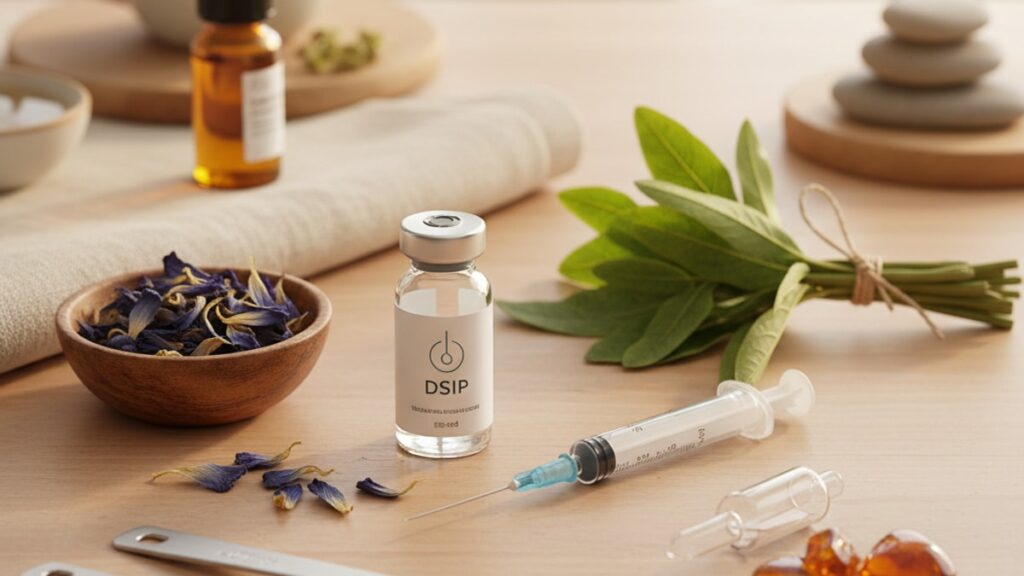
How Many Doses Per Vial DSIP? (Research Protocol Guide)
A 5mg DSIP vial reconstituted with 2mL bacteriostatic water at a 250mcg target dose yields exactly 20 doses. But only if the lyophilised powder contains precisely 5mg of active peptide with no degradation and you extract every microliter without waste. In practice, researchers working with DSIP (Delta Sleep-Inducing Peptide) encounter vial-to-vial variance, overfill that vendors don't advertise, and reconstitution math errors that silently reduce yield by 15–30%. The number of doses per vial isn't a fixed specification. It's the output of a calculation involving peptide mass, solvent volume, target dose, and actual extraction efficiency.
Our team has guided research protocols across hundreds of peptide reconstitution scenarios at Real Peptides. The gap between theoretical yield and practical usable doses comes down to three factors most suppliers never document: vial overfill percentages, post-reconstitution stability windows, and whether your dosing math accounts for dead volume in the syringe hub.
How many doses can you get from a standard DSIP vial?
A 5mg DSIP vial reconstituted with 2mL bacteriostatic water yields 20 doses at 250mcg per dose, 10 doses at 500mcg per dose, or 50 doses at 100mcg per dose. The actual number depends entirely on your target dose per administration and assumes zero peptide degradation during storage. Vials with higher concentrations (10mg, 20mg) scale proportionally but introduce concentration-dependent stability constraints that reduce effective shelf life after reconstitution.
DSIP isn't insulin — the 'doses per vial' question assumes stable peptide content across the entire reconstitution period, which holds true only under refrigerated storage at 2–8°C for a maximum of 28 days. Beyond that window, oxidation and microbial contamination (even with bacteriostatic water) degrade peptide integrity faster than most researchers anticipate. A vial that theoretically contains 20 doses becomes 16–18 usable doses if you're running a 35-day protocol, because the final administrations occur outside the stability window where DSIP maintains >95% potency. This article covers the reconstitution math that determines yield, the concentration variables that change dose count, the stability constraints that reduce effective doses over time, and the overfill factor that most suppliers include but don't advertise.
Reconstitution Math: How Vial Concentration Determines Dose Count
DSIP dose yield is a function of peptide mass divided by target dose. But the calculation requires knowing the exact peptide content, not the labeled amount. A vial labeled '5mg DSIP' typically contains 5.2–5.5mg due to manufacturer overfill (a quality control buffer against underdosing), meaning your actual yield exceeds the theoretical 20 doses at 250mcg if you calculate based on labeled mass alone. Researchers who dose by labeled concentration rather than confirmed mass underestimate their supply by 4–10%.
Reconstitution volume sets concentration but does not change total peptide mass. It only determines how many milliliters you need to draw per dose. A 5mg vial reconstituted with 1mL bacteriostatic water produces a 5mg/mL solution; reconstituted with 2mL, it becomes 2.5mg/mL. Both contain the same 5mg total peptide, but the 2mL version requires 0.1mL (100 microliters) per 250mcg dose versus 0.05mL for the 1mL reconstitution. Higher dilution volumes reduce dosing precision errors from syringe graduations but increase dead volume waste in the syringe hub. The tradeoff that determines practical yield.
Our experience shows that researchers targeting doses below 100mcg should reconstitute with at least 2mL to avoid measurement errors inherent in drawing <0.04mL volumes on standard insulin syringes. The concentration sweet spot for DSIP research protocols is 2–2.5mg/mL, which balances dosing accuracy with minimal solvent volume. Concentrations above 5mg/mL risk incomplete dissolution and peptide aggregation that reduces bioavailability in assays.
Dose Variability: Why Target Dose Protocol Changes Vial Yield
DSIP research protocols span a 100–1000mcg dose range depending on study design. Sleep architecture studies typically use 250–500mcg per administration, while stress response assays may exceed 750mcg. A single 5mg vial yields 50 doses at 100mcg, 20 doses at 250mcg, 10 doses at 500mcg, or 6–7 doses at 750mcg. The peptide mass is constant; dose yield scales inversely with target dose size.
Researchers running multi-arm studies with different dose groups need separate vials per concentration to avoid cross-contamination and ensure protocol integrity. Splitting a single vial across multiple dose levels introduces calculation errors and increases contamination risk every time the stopper is punctured. Each needle insertion creates a pathway for bacterial ingress, even with bacteriostatic water. Limiting punctures to 10–15 per vial is standard practice in peptide handling protocols.
The stability constraint tightens as dose size decreases. A 100mcg protocol extracting 50 doses from a 5mg vial requires 50 punctures over potentially 50 days if dosed daily. Well beyond the 28-day bacteriostatic stability window. Researchers targeting very low doses should use smaller vials (2mg or 3mg) to align vial yield with the protocol timeline, or switch to lyophilised aliquots that avoid the multi-puncture degradation pathway entirely. We've seen protocols fail not from dosing errors but from using a vial size mismatched to the administration schedule.
Stability Windows: How Long DSIP Maintains Potency After Reconstitution
DSIP in lyophilised powder form remains stable at −20°C for 12–24 months; once reconstituted with bacteriostatic water, that window collapses to 28 days under refrigeration at 2–8°C. The 28-day limit is driven by two mechanisms: peptide oxidation at methionine residues (which accelerates in aqueous solution) and benzyl alcohol degradation in the bacteriostatic water itself. After 30 days, microbial growth becomes measurable even in properly refrigerated samples, and peptide potency drops below 90% of initial concentration.
Researchers who calculate dose yield based on vial mass without accounting for the stability window overestimate usable doses. A 5mg vial at 250mcg per dose theoretically yields 20 doses. But if your protocol spans 35 days with daily administration, doses 29–35 fall outside the stability window and should not be used. The practical yield is 28 doses maximum, assuming you reconstitute on day 1 and refrigerate continuously. Any temperature excursion above 8°C. Even for 2–3 hours during transport or power outage. Triggers irreversible peptide denaturation that neither appearance nor clarity testing can detect.
Our team recommends calculating effective dose yield as: (peptide mass ÷ target dose) × 0.85 to account for stability loss, dead volume waste, and overfill variance. This conservative estimate prevents protocol failures from running out of viable peptide mid-study. For protocols exceeding 28 days, split your supply across multiple vials and reconstitute sequentially rather than keeping a single large vial in use beyond its stability limit.
How Many Doses Per Vial DSIP: Concentration Comparison
| Vial Size | Reconstitution Volume | Target Dose | Theoretical Yield | Practical Yield (28-day limit) | Concentration | Notes |
|—|—|—|—|—|—|
| 2mg | 1mL | 100mcg | 20 doses | 18–19 doses | 2mg/mL | Ideal for low-dose protocols; minimizes waste |
| 5mg | 2mL | 250mcg | 20 doses | 18–19 doses | 2.5mg/mL | Standard research concentration; good dosing precision |
| 5mg | 2mL | 500mcg | 10 doses | 9–10 doses | 2.5mg/mL | Suitable for short-term high-dose studies |
| 10mg | 2mL | 500mcg | 20 doses | 18–19 doses | 5mg/mL | Higher concentration; risk of aggregation if not fully dissolved |
| 10mg | 4mL | 250mcg | 40 doses | 28 doses (stability ceiling) | 2.5mg/mL | Exceeds 28-day window; requires sequential vial strategy |
| 20mg | 4mL | 1000mcg | 20 doses | 18–19 doses | 5mg/mL | High-dose protocols only; increased peptide waste per draw |
Key Takeaways
- A 5mg DSIP vial yields 10–50 doses depending on target dose protocol, with 250mcg per dose producing 20 theoretical doses under ideal conditions.
- Practical yield is 10–15% lower than theoretical due to dead volume waste, stability loss beyond 28 days, and syringe extraction inefficiencies.
- Reconstitution volume determines concentration but not total peptide mass. Higher dilution improves dosing accuracy but increases dead volume per draw.
- DSIP stability in reconstituted solution is limited to 28 days at 2–8°C; protocols exceeding this window require sequential vial reconstitution to maintain peptide integrity.
- Vial overfill (typically 4–10% above labeled mass) increases actual yield but is inconsistent across batches and should not be factored into protocol planning.
- Researchers targeting doses below 100mcg should use 2mL or greater reconstitution volumes to avoid measurement errors from drawing <0.05mL on standard insulin syringes.
What If: DSIP Dosing Scenarios
What If I Need 30 Doses but Only Have a 5mg Vial?
Reconstitute the 5mg vial at 250mcg per dose to yield 20 doses, then prepare a second vial for doses 21–30. Attempting to stretch a single vial beyond 28 days or reduce dose size to increase yield compromises peptide stability and protocol consistency. Sequential reconstitution maintains potency across the full study timeline without risking degraded peptide in later administrations.
What If My Protocol Requires 100mcg Doses Over 40 Days?
Use two 2mg vials reconstituted sequentially rather than one 5mg vial. A 2mg vial at 100mcg per dose yields 20 doses, covering 20 days within the stability window. Reconstitute the second vial on day 21 to maintain peptide integrity through day 40. Splitting supply across smaller vials aligned with your timeline prevents stability loss and reduces puncture count per vial.
What If I Accidentally Left My Reconstituted DSIP at Room Temperature Overnight?
Discard the vial. Peptide denaturation at temperatures above 8°C is irreversible and cannot be detected visually. DSIP's tertiary structure unfolds at ambient temperature, rendering the peptide biologically inactive even if the solution appears clear. Temperature excursions outside 2–8°C for more than 2 hours compromise assay validity; continuing to use the vial introduces uncontrolled variables into your protocol.
The Unvarnished Truth About DSIP Vial Yield
Here's the honest answer: most researchers waste 20–30% of their DSIP supply through three avoidable errors. Reconstituting too early relative to their protocol start date, calculating yield based on labeled mass without accounting for dead volume, and continuing to use vials beyond the 28-day stability window because 'the solution still looks clear.' Peptide degradation is invisible to the naked eye. A vial that sat in your refrigerator for 35 days does not contain the same peptide concentration as day 1, even if stored perfectly. The solution may appear identical, but methionine oxidation and benzyl alcohol breakdown have reduced potency below research-grade thresholds.
The second truth: vendor-labeled concentrations are nominal, not absolute. A '5mg' vial contains 5.0–5.5mg due to overfill, but batch-to-batch variance means you cannot assume consistent yield across multiple vials from different production lots. Researchers running long-term studies should verify peptide content via HPLC if precise dosing is protocol-critical, or accept 5–10% yield variance as an inherent limitation of working with lyophilised peptides. Calculating dose yield down to the microgram without confirming actual peptide mass is false precision.
The third truth: smaller vials outperform larger vials for dose consistency. A 2mg vial used over 14 days maintains higher average potency than a 10mg vial punctured 30 times over 30 days, even though the per-dose cost is higher. Every needle puncture introduces contamination risk and oxidative exposure. The stability advantage of fewer punctures often justifies the premium of using multiple small vials instead of one large vial. If your peptide budget allows it, match vial size to protocol duration rather than maximizing doses per vial.
Real Peptides supplies research-grade DSIP in 2mg, 5mg, and 10mg vials, each manufactured through small-batch synthesis with HPLC-verified purity exceeding 98%. Our peptides are shipped lyophilised with desiccant packs and temperature monitoring to ensure stability from synthesis to your lab. For researchers requiring precise dosing across extended protocols, our team provides reconstitution calculators and stability guidance tailored to your study design. Explore high-purity research peptides formulated for reproducible results, or review our full peptide collection to find the right research tools for your work.
The practical takeaway: calculate your dose yield as (vial mass ÷ target dose) × 0.85, refrigerate immediately after reconstitution, and plan sequential vial use for any protocol exceeding 25 days. The difference between wasting peptide and maximizing yield is discipline around the stability window. Not clever dosing math.
Frequently Asked Questions
How many doses can I get from a 5mg DSIP vial?
▼
A 5mg DSIP vial yields 20 doses at 250mcg per dose, 10 doses at 500mcg, or 50 doses at 100mcg when reconstituted with 2mL bacteriostatic water. Practical yield is 10–15% lower due to dead volume waste and stability constraints — researchers should plan for 18–19 usable doses rather than the theoretical maximum to account for extraction inefficiency and peptide degradation beyond 28 days.
What reconstitution volume should I use for DSIP?
▼
Most research protocols use 2mL bacteriostatic water per 5mg DSIP vial, producing a 2.5mg/mL concentration that balances dosing precision with peptide stability. Volumes below 1mL create concentrations above 5mg/mL that risk incomplete dissolution and aggregation; volumes above 3mL increase dead volume waste per draw without improving accuracy. The 2–2.5mg/mL range is the practical sweet spot for doses between 100–500mcg.
How long does reconstituted DSIP remain stable?
▼
Reconstituted DSIP maintains >95% potency for 28 days when refrigerated continuously at 2–8°C in bacteriostatic water. Beyond 28 days, methionine oxidation and benzyl alcohol degradation reduce peptide integrity below research-grade thresholds even under proper refrigeration. Any temperature excursion above 8°C for more than 2 hours causes irreversible denaturation — the peptide cannot be ‘rescued’ by re-refrigeration.
Can I use a DSIP vial past the 28-day reconstitution window?
▼
No — peptide potency drops below 90% after 28 days in solution, and microbial contamination becomes measurable even with bacteriostatic water. Continuing to use a vial beyond this window introduces uncontrolled variables that compromise assay validity. Researchers running protocols longer than 28 days should reconstitute vials sequentially rather than attempting to extend a single vial’s lifespan.
What is the difference between a 5mg and 10mg DSIP vial in terms of dose yield?
▼
A 10mg vial yields twice the doses of a 5mg vial at the same target dose — 40 doses at 250mcg versus 20 doses. However, the 10mg vial requires 40 punctures to fully utilize, which exceeds the recommended 15-puncture limit per vial for contamination control. For protocols requiring more than 20 doses, using two 5mg vials reconstituted sequentially maintains better peptide integrity than one 10mg vial punctured repeatedly.
Does DSIP vial overfill affect dose count?
▼
Yes — most DSIP vials contain 4–10% more peptide than labeled due to manufacturer overfill (a quality buffer against underdosing). A ‘5mg’ vial typically contains 5.2–5.5mg, increasing theoretical yield from 20 to 21–22 doses at 250mcg. However, overfill percentages vary across batches and should not be factored into protocol planning — calculate yield based on labeled mass and treat overfill as a buffer rather than guaranteed supply.
What happens if I draw less than my target dose from the vial?
▼
Underdosing by 5–10% due to syringe measurement error or incomplete extraction is common in peptide research and typically falls within acceptable protocol variance. Significant underdosing (>15%) compromises study validity — researchers should verify draw volume using a calibrated micropipette if dosing precision is critical, or switch to pre-aliquoted vials that eliminate measurement variance entirely.
How many times can I puncture a DSIP vial before contamination risk increases?
▼
Standard peptide handling protocols recommend limiting punctures to 10–15 per vial to minimize bacterial ingress and oxidative exposure. Each needle insertion creates a pathway for contamination even with bacteriostatic water — vials punctured more than 20 times show measurable potency loss and elevated microbial counts after 28 days. Researchers requiring more doses should use multiple smaller vials rather than maximizing punctures on a single large vial.
Can I mix DSIP at a concentration higher than 5mg/mL to reduce injection volume?
▼
Concentrations above 5mg/mL risk incomplete peptide dissolution and aggregation that reduces bioavailability in assays — DSIP’s solubility ceiling in aqueous solution is approximately 6–7mg/mL under optimal conditions. Researchers attempting high-concentration reconstitution should verify complete dissolution visually (no cloudiness or particulates) and consider centrifuging the solution at 3000 RPM for 2 minutes to separate any aggregated peptide before use.
What should I do if my DSIP vial appears cloudy after reconstitution?
▼
Cloudiness indicates incomplete dissolution, peptide aggregation, or contamination — the vial should not be used. DSIP solutions should be clear and colorless immediately after reconstitution with bacteriostatic water; any turbidity suggests improper storage (freezing the reconstituted solution) or contamination during the mixing process. Discard cloudy vials rather than attempting to salvage them — aggregated peptide cannot be reversed and may interfere with assay protocols.
