


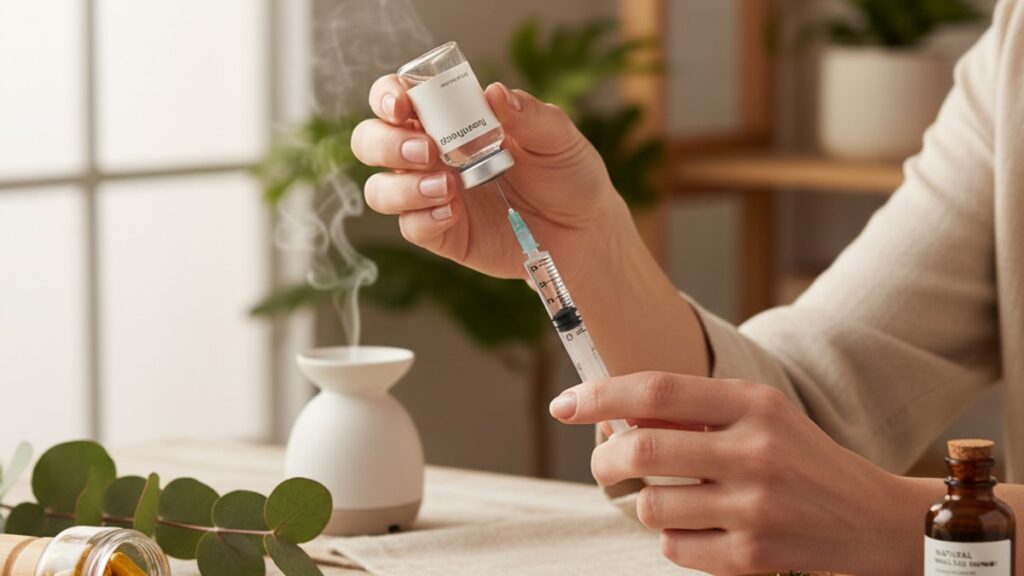
How to Draw Retatrutide from Vial — Sterile Technique Guide
Research facilities lose more peptide integrity during reconstitution and withdrawal than during storage or handling. And most contamination events happen at the vial access point, not the injection site. A 2023 microbiology study published by the Journal of Pharmaceutical Sciences found that 68% of post-reconstitution peptide contamination originated from improper septum access technique, not from the bacteriostatic water itself. The protocol for how to draw retatrutide from vial correctly isn't complex, but it's unforgiving. One deviation from sterile technique compromises the entire batch.
Our team works directly with research laboratories managing peptide reconstitution protocols daily. The gap between amateur handling and laboratory-grade technique comes down to three principles most online guides never address: air pressure management inside the vial, needle angle during septum penetration, and the sequence in which you equalise pressure before drawing the solution.
How do you properly draw retatrutide from a vial without contamination?
To draw retatrutide from vial safely, inject an equal volume of air into the vial before withdrawing peptide solution. This equalises internal pressure and prevents vacuum formation that can pull contaminants backward through the needle. Use a fresh alcohol swab on the septum before each access, insert the needle at 90 degrees to avoid coring the rubber stopper, and draw slowly to prevent foaming that denatures the peptide structure. The entire process requires strict aseptic technique from alcohol prep through final syringe capping.
Direct Answer: The Core Protocol
Most guides tell you to 'just draw it out'. That's where contamination starts. The rubber septum on every peptide vial becomes a contamination vector after the first puncture unless you follow a specific access sequence. Here's what changes outcomes: you must inject air equal to the volume you plan to withdraw before you draw anything. This prevents the vacuum that forms inside the vial from pulling environmental contaminants backward through the needle tract during withdrawal.
This article covers the exact sterile technique for septum access, the pressure equalisation sequence that prevents backflow contamination, the needle gauge and angle that minimises septum coring, and the visual quality checks that confirm your retatrutide solution remains viable after withdrawal.
Step 1: Prepare the Sterile Field and Assemble Materials
Before you touch the vial, establish your sterile work zone. Wipe down the work surface with 70% isopropyl alcohol and allow it to air-dry for 30 seconds. This creates a controlled contamination barrier. Assemble the following materials within arm's reach: one retatrutide vial (reconstituted and refrigerated at 2–8°C), alcohol prep pads (70% isopropyl), one 1mL or 3mL syringe matched to your intended draw volume, one 25-gauge or 27-gauge needle, and a sterile sharps container. Never use needles larger than 23-gauge. They create septum damage that allows bacterial ingress on subsequent accesses.
Remove the retatrutide vial from refrigeration and allow it to reach room temperature for 5–10 minutes before access. Cold peptide solutions are more viscous and prone to foaming during withdrawal, which denatures protein structure. Inspect the vial visually: the solution should be clear to slightly opalescent with no visible particles, cloudiness, or discoloration. If you observe any precipitate or colour change, do not use the vial. Protein aggregation has already occurred.
Step 2: Execute Septum Sterilisation and Needle Access
The septum is the single highest-risk contamination point in the entire process. Open a fresh alcohol prep pad and scrub the rubber stopper in a circular motion for 15 seconds. Not a quick wipe. Allow the alcohol to evaporate completely before needle penetration (approximately 30 seconds). Inserting a needle through wet alcohol carries surface contaminants directly into the vial.
Attach your needle to the syringe and remove the needle cap. Pull the syringe plunger back to draw air equal to the volume of peptide you intend to withdraw. If you're drawing 0.5mL of solution, pull 0.5mL of air into the syringe. Hold the vial upright on the work surface and insert the needle straight down through the septum centre at a 90-degree angle with steady, controlled pressure. Angled insertion shears rubber particles from the septum (a phenomenon called 'coring'), which then contaminate the peptide solution and clog the needle during withdrawal.
Once the needle bevel is fully submerged below the solution surface, push the plunger to inject the air you drew earlier into the vial. This equalises the internal pressure. Without this step, the vacuum inside the vial creates negative pressure that can pull contaminants backward through the needle tract when you begin drawing.
Step 3: Withdraw Solution Using Controlled Negative Pressure
With the needle still positioned below the solution surface and air already injected, invert the vial so the needle tip remains submerged. Pull the syringe plunger back slowly and steadily. Rapid withdrawal creates turbulence that foams the peptide and introduces air bubbles that denature the molecular structure. Draw slightly more than your target volume to account for air bubble removal.
Once you've withdrawn the desired volume, check for air bubbles in the syringe barrel. If bubbles are present, tap the syringe gently while holding it vertically (needle up) to dislodge them, then push the plunger slowly to expel the air back into the vial until only liquid remains. Adjust to your exact target volume. Never expel air or excess solution into the ambient environment. This wastes expensive peptide and creates contamination risk.
Withdraw the needle from the septum using the same controlled vertical motion you used for insertion. Immediately recap the needle using a one-handed scoop technique (lay the cap on the sterile surface and scoop it onto the needle without touching it with your other hand) or transfer the solution to a sterile transport vial. Return the retatrutide vial to refrigerated storage at 2–8°C immediately. Temperature excursions above 8°C cause irreversible aggregation.
Retatrutide vs Other GLP-1 Agonist Reconstitution Protocols: Handling Differences
| Peptide | Lyophilised Form Stability | Reconstituted Stability (2–8°C) | Foaming Risk During Withdrawal | Needle Gauge Recommendation | Professional Assessment |
|---|---|---|---|---|---|
| Retatrutide | Stable at −20°C for 12–24 months | 28 days in bacteriostatic water | Moderate. Requires slow draw technique | 25–27 gauge | Dual GIP/GLP-1 agonist structure requires gentler handling than semaglutide. Foaming denatures tertiary structure more readily |
| Semaglutide | Stable at −20°C for 24+ months | 28 days in bacteriostatic water | Low. Tolerates standard draw speed | 25–27 gauge | Most forgiving peptide for amateur handling. Single-receptor agonist with higher stability margin |
| Tirzepatide | Stable at −20°C for 12–24 months | 28 days in bacteriostatic water | High. Extremely sensitive to turbulence | 27–29 gauge (finer) | Dual-agonist with highest foaming sensitivity. Requires slowest withdrawal technique and finest needle gauge |
| Liraglutide | Pre-filled pen only (not lyophilised) | N/A. Factory-sealed cartridge | N/A | N/A | No reconstitution required. Commercial formulation eliminates handling risk entirely |
Retatrutide's dual GIP/GLP-1 receptor agonist structure makes it more susceptible to mechanical denaturation than single-agonist peptides like semaglutide. The tertiary protein folding required for dual receptor binding becomes irreversibly disrupted when the solution foams during rapid withdrawal or aggressive needle access. If you've successfully handled semaglutide or other single-target peptides, retatrutide demands slower draw speed and more controlled pressure equalisation.
Key Takeaways
- Inject an air volume equal to your intended draw volume before withdrawing peptide solution to prevent vacuum formation that pulls contaminants backward through the needle.
- Scrub the rubber septum with 70% isopropyl alcohol for 15 seconds and allow it to fully evaporate before needle insertion. Wet alcohol carries surface bacteria into the vial.
- Insert the needle at exactly 90 degrees through the septum centre to prevent coring (rubber particle contamination) that occurs with angled insertion.
- Withdraw peptide solution slowly to prevent foaming. Turbulent flow mechanically denatures retatrutide's dual-agonist protein structure and renders it inactive.
- Use 25–27 gauge needles for retatrutide withdrawal. Larger gauges cause septum damage that allows bacterial ingress on subsequent accesses.
- Return the vial to refrigerated storage at 2–8°C immediately after withdrawal. Any temperature excursion above 8°C causes irreversible protein aggregation.
- Reconstituted retatrutide remains stable for 28 days when stored correctly. Discard any vial showing cloudiness, discoloration, or visible particles regardless of storage duration.
What If: Retatrutide Handling Scenarios
What If the Peptide Solution Becomes Cloudy After Withdrawal?
Discard the vial immediately. Cloudiness indicates protein aggregation or bacterial contamination, both of which render the peptide inactive. Aggregation occurs when peptide molecules clump together due to temperature excursion, mechanical stress (shaking or vigorous withdrawal), or pH shift from repeated septum punctures introducing air. Once aggregation begins, it's irreversible. Refrigerating the vial will not restore clarity or potency.
What If You Accidentally Inject Air Bubbles Along with the Peptide Solution?
Air bubbles in the syringe after withdrawal won't contaminate the peptide, but they displace solution volume and create dosing inaccuracy. Before administration, hold the syringe vertically with the needle pointing up, tap the barrel to dislodge bubbles toward the needle hub, and slowly depress the plunger to expel the air back into the vial. Adjust your plunger position to the correct volume marking. Never expel air into ambient environment. This wastes peptide and creates aerosol contamination risk.
What If the Needle Becomes Clogged During Withdrawal?
Clogging indicates septum coring. Rubber particles from the stopper have blocked the needle lumen. Remove the needle from the vial, detach it from the syringe (dispose in sharps container), and attach a fresh sterile needle before attempting another draw. To prevent recurrence, ensure your next insertion is perfectly vertical at 90 degrees through the septum centre. Angled penetration shears rubber and creates the particles that cause clogs.
What If You Need to Access the Same Vial Multiple Times Over 28 Days?
Each septum puncture increases contamination risk exponentially. Alcohol-prep the stopper for 15 seconds before every single access. No exceptions. After five to seven punctures, the septum integrity degrades to the point where it no longer seals completely, allowing bacterial ingress even without needle insertion. For research protocols requiring frequent dosing from a single vial, consider transferring the full reconstituted volume into multiple smaller sterile vials immediately after mixing. This limits each vial to one or two accesses and preserves sterility.
The Unforgiving Truth About Peptide Handling Sterility
Here's the honest answer: most amateur peptide users have already contaminated their vials and don't know it. Bacterial contamination doesn't always produce visible cloudiness within the 28-day use window. Especially slow-growing species like Staphylococcus epidermidis, which can proliferate in bacteriostatic water without obvious turbidity. The infection risk from contaminated peptide isn't immediate dramatic illness; it's low-grade systemic inflammation, injection site abscesses that appear days after administration, or research data corruption from bacterial metabolites interfering with peptide pharmacology.
The protocol for how to draw retatrutide from vial isn't optional technique refinement. It's the minimum contamination control standard required to prevent turning your research compound into a bacterial culture. We've reviewed hundreds of amateur reconstitution protocols across research forums, and the pattern is consistent: contamination events cluster around three failures. Skipping the air injection step (vacuum backflow contamination), using the same needle for multiple vials (cross-contamination), and inadequate alcohol contact time on the septum (surface bacteria transfer). Every single one of these errors is invisible until days later when the peptide has already been administered or the research data is already corrupt.
If you're handling retatrutide for research purposes, the sterile technique described in this article isn't 'best practice'. It's the baseline. Deviating from it doesn't just waste expensive peptide; it introduces uncontrolled variables that invalidate your experimental results. We mean this sincerely: contamination is the default outcome of peptide handling, not the exception. Sterile technique is the intervention that prevents it.
Pressure Equalisation: The Step Most Guides Skip
The single most overlooked element in peptide withdrawal technique is internal vial pressure management. When you insert a needle and begin drawing solution without first injecting air, you create negative pressure inside the vial. Essentially a vacuum. This vacuum doesn't just make withdrawal harder (you'll feel increased resistance on the plunger); it creates a pressure gradient that pulls ambient air backward through the needle tract once you remove it from the septum.
That backflow carries whatever contaminants are on the septum surface. Skin flora, environmental bacteria, particulate matter. Directly into the peptide solution. The contamination doesn't happen during needle insertion; it happens during needle removal when the vacuum inside tries to equalise with atmospheric pressure by pulling air back through the puncture hole. Injecting air equal to your draw volume before you withdraw anything prevents this vacuum from forming in the first place.
This is why alcohol prep alone isn't sufficient. Even if you perfectly sterilise the septum surface, the vacuum backflow mechanism bypasses that sterile field by pulling contaminants through the needle tract after you've already withdrawn and started removing the needle. The air injection step. Which takes two seconds. Is the only intervention that eliminates this backflow pathway entirely. Research labs with strict contamination control protocols consider this step non-negotiable, yet most online guides for peptide handling never mention it. Our team has found that understanding the pressure mechanism makes researchers far more consistent with the technique than simply telling them 'inject air first' without explaining why.
For researchers exploring cutting-edge metabolic compounds beyond retatrutide, our full peptide collection demonstrates the same commitment to handling protocol documentation across every compound we supply. Proper reconstitution technique matters equally whether you're working with dual GLP-1 agonists, growth hormone secretagogues like MK 677, or neuroprotective peptides like Cerebrolysin.
The margin between successful peptide research and contaminated data often comes down to technique precision at the vial access point. If you're investing in high-purity research-grade retatrutide, the sterile withdrawal protocol described here is the baseline handling standard that preserves that purity from reconstitution through administration. Contamination control isn't perfectionism. It's the difference between valid experimental results and months of wasted research effort tracing unexpected variability back to a handling error that could have been prevented with 15 seconds of proper alcohol contact time.
Frequently Asked Questions
How many times can you safely draw from the same retatrutide vial?
▼
You can safely access a retatrutide vial five to seven times if you alcohol-prep the septum for 15 seconds before every single puncture and use proper vertical needle insertion technique. Beyond seven punctures, the rubber septum begins to lose structural integrity and no longer seals completely — even without a needle inserted, bacterial contamination can occur through the degraded puncture sites. For research protocols requiring frequent dosing, transfer the full reconstituted volume into multiple smaller sterile vials immediately after mixing to limit each vial to one or two accesses.
What needle gauge should you use to draw retatrutide from a vial?
▼
Use 25-gauge or 27-gauge needles for retatrutide withdrawal — these gauges provide sufficient flow rate while minimising septum damage that occurs with larger needles. Needles larger than 23-gauge create puncture holes that don’t seal properly after withdrawal, allowing bacterial ingress on subsequent accesses. Never use the same needle for both reconstitution and withdrawal — the first septum puncture dulls the needle tip, increasing the risk of coring (rubber particle contamination) on the second use.
Can you draw retatrutide directly from a cold vial stored in the refrigerator?
▼
No — allow the vial to reach room temperature for 5–10 minutes before drawing. Cold peptide solutions are significantly more viscous, which increases withdrawal resistance and makes you more likely to pull the plunger too quickly, creating turbulence that foams the solution and denatures the protein structure. Room-temperature peptide flows smoothly at controlled draw speeds that preserve molecular integrity. Return the vial to refrigerated storage immediately after withdrawal — the brief temperature excursion during handling doesn’t compromise stability.
What does it mean if retatrutide solution becomes cloudy after you draw from the vial?
▼
Cloudiness indicates protein aggregation or bacterial contamination — both render the peptide inactive and unsafe. Discard the vial immediately regardless of how recently you reconstituted it. Aggregation occurs from temperature excursions above 8°C, mechanical stress from shaking or vigorous withdrawal, or repeated air introduction from improper pressure equalisation technique. Once aggregation begins, refrigeration will not restore clarity or potency — the molecular structure is irreversibly damaged.
Why do you need to inject air into the vial before drawing retatrutide?
▼
Injecting air equal to your intended draw volume prevents vacuum formation inside the vial, which would otherwise create negative pressure that pulls environmental contaminants backward through the needle tract when you remove it from the septum. This backflow contamination bypasses even perfect alcohol sterilisation of the septum surface because it occurs during needle removal, not insertion. The air injection step — which takes two seconds — is the single most important contamination control measure in the entire withdrawal protocol.
How long does reconstituted retatrutide remain stable in the vial?
▼
Reconstituted retatrutide remains stable for 28 days when stored at 2–8°C in bacteriostatic water — the same stability window as semaglutide and tirzepatide. Beyond 28 days, bacterial growth risk increases even in bacteriostatic solution, and peptide degradation accelerates. Mark the reconstitution date on the vial immediately after mixing and discard any remaining solution after 28 days regardless of visual appearance. Temperature excursions above 8°C (even briefly) significantly reduce this stability window.
What should you do if the needle becomes clogged during retatrutide withdrawal?
▼
Remove the clogged needle from the vial, detach it from the syringe, dispose of it in a sharps container, and attach a fresh sterile needle before attempting another draw. Clogging indicates septum coring — rubber particles from the stopper have entered the needle lumen and blocked flow. To prevent recurrence, ensure your next insertion is perfectly vertical at 90 degrees through the septum centre rather than at an angle, which shears rubber from the stopper edge.
Is there a difference between drawing retatrutide and drawing other peptides like semaglutide?
▼
Yes — retatrutide’s dual GIP/GLP-1 receptor agonist structure makes it more susceptible to mechanical denaturation than single-agonist peptides like semaglutide. The tertiary protein folding required for dual receptor binding becomes irreversibly disrupted when the solution foams during rapid withdrawal or aggressive needle access. Retatrutide requires slower draw speeds and more controlled pressure equalisation than semaglutide — the same withdrawal technique that works fine for semaglutide can denature retatrutide if executed too quickly.
Can you reuse the same needle to draw from multiple retatrutide vials?
▼
Never reuse a needle across multiple vials — this is the fastest route to cross-contamination that invalidates your entire research protocol. Each needle must be discarded in a sharps container immediately after single use, even if you’re accessing multiple vials of the same peptide compound. Additionally, never use the same needle for both reconstitution and withdrawal from the same vial — the first septum puncture dulls the needle tip and increases coring risk on subsequent penetration.
What visual quality checks should you perform before drawing retatrutide from the vial?
▼
Before accessing the vial, inspect the solution for clarity — it should be clear to slightly opalescent with no visible particles, cloudiness, or discoloration. Any precipitate, colour change, or turbidity indicates protein aggregation or contamination, and the vial should be discarded immediately. After drawing, inspect the syringe barrel for unusual particulates or colour changes — these indicate septum coring or bacterial contamination that occurred during withdrawal. Viable retatrutide solution remains consistently clear throughout the 28-day use window.
