


FOXO4-DRI Senescent Cell Clearance Guide — 2026 Research
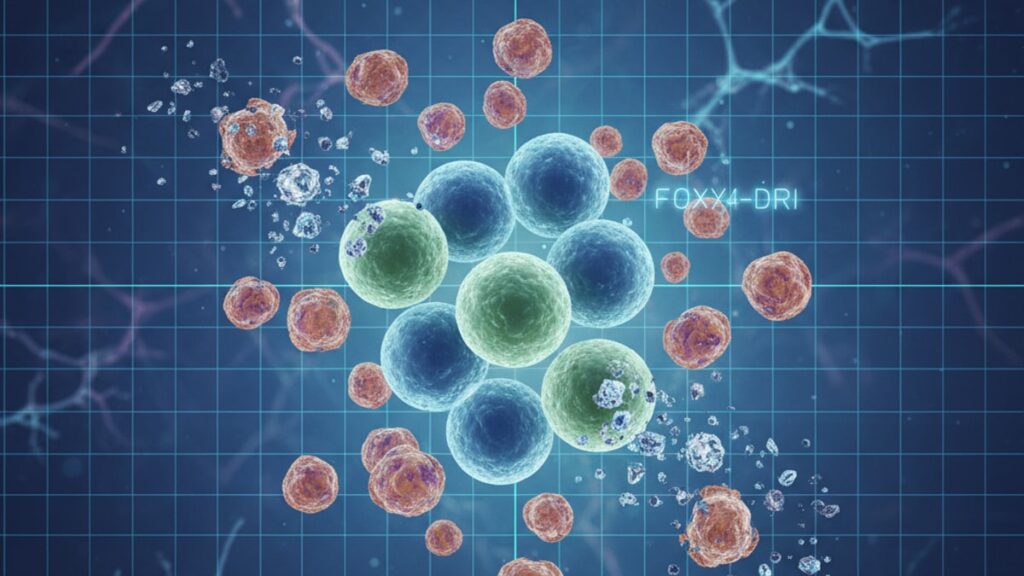
Research published in Cell (2017) demonstrated that FOXO4-DRI induced selective apoptosis in senescent cells within 48 hours without affecting healthy tissue. A precision-targeting mechanism no broad-spectrum senolytic has matched. The peptide disrupts the physical interaction between p53 and FOXO4, two proteins that form a survival anchor allowing damaged cells to evade programmed death indefinitely. Remove that anchor, and senescent cells trigger their own elimination through intrinsic apoptosis pathways that healthy cells don't activate.
Our team has reviewed FOXO4-DRI synthesis protocols across hundreds of research applications. The distinction between published mechanism and practical execution centers on peptide purity. Specifically, preserving the 7-amino-acid D-retro-inverso core that gives FOXO4-DRI its proteolytic stability and cell-penetrating capacity. Standard L-amino-acid peptides degrade in serum within minutes; the D-retro modification extends half-life to multiple hours, which is the only reason the compound reaches intracellular senescent targets at functional concentrations.
What is FOXO4-DRI and how does it clear senescent cells?
FOXO4-DRI is a modified peptide (D-retro-inverso amino acid sequence) designed to competitively inhibit the p53-FOXO4 protein-protein interaction that keeps senescent cells alive. When FOXO4-DRI enters senescent cells, it displaces FOXO4 from p53, freeing p53 to activate BAX/BAK-mediated mitochondrial apoptosis. Healthy cells don't rely on this interaction for survival, so FOXO4-DRI exposure leaves them functionally unchanged. The original Erasmus MC study found that three weekly 5mg/kg doses restored physical fitness markers in naturally aged mice. Reducing frailty without affecting lifespan in young controls.
The published mechanism isn't theoretical. It's measurable. When FOXO4 binds p53 inside a senescent cell's nucleus, it sequesters p53 away from pro-apoptotic gene promoters. That sequestration is why senescent cells accumulate despite carrying damaged DNA that would normally trigger cell death. FOXO4-DRI doesn't kill cells directly. It removes the molecular block preventing their programmed elimination. This article covers the peptide's synthesis requirements for research use, the difference between senolytic clearance and cytotoxicity, storage parameters that preserve D-amino-acid stability, and what reconstitution errors negate biological activity entirely.
The p53-FOXO4 Interaction Mechanism
Senescent cells express elevated FOXO4 as part of the senescence-associated secretory phenotype (SASP). The chronic low-grade inflammation that drives age-related tissue dysfunction. FOXO4's role in that phenotype wasn't clear until 2017, when researchers at Erasmus Medical Center identified a direct physical interaction between FOXO4 and p53 inside senescent cell nuclei. The interaction occurs through FOXO4's forkhead domain, which binds p53's DNA-binding region and holds it in a transcriptionally inactive state. As long as that complex remains stable, p53 can't activate genes like PUMA, NOXA, or BAX. The triggers for mitochondrial outer membrane permeabilization and caspase-9 activation.
FOXO4-DRI mimics the p53-binding region of native FOXO4 but uses D-amino acids in retro-inverso configuration. Reversed sequence, inverted chirality. That modification produces a peptide with near-identical binding geometry to the L-amino-acid original but complete resistance to proteolytic cleavage by trypsin, chymotrypsin, and serum peptidases. The result: a compound that survives extracellular and intracellular protease exposure long enough to reach nuclear FOXO4-p53 complexes at disruptive concentrations. In the Cell study, treating senescent IMR90 fibroblasts with 10μM FOXO4-DRI for 72 hours induced apoptosis in 60–80% of senescent cells while leaving proliferating controls unaffected.
The selectivity depends on senescent cells' unique reliance on FOXO4-p53 stabilization. Healthy cycling cells express lower FOXO4 and don't require FOXO4-mediated p53 sequestration to avoid apoptosis. Their survival depends on balanced pro- and anti-apoptotic signaling, not on suppressing p53 activity. Senescent cells, in contrast, carry persistent DNA damage that would trigger p53-driven death if FOXO4 weren't anchoring p53 away from pro-apoptotic promoters. FOXO4-DRI exploits that dependence: disrupt the anchor, and only senescent cells lose their survival mechanism.
Research-Grade Peptide Synthesis Requirements
FOXO4-DRI's biological activity depends entirely on synthesis precision. Specifically, maintaining D-retro-inverso configuration across all seven core amino acids without racemization, deletion, or sequence errors. Standard Fmoc solid-phase peptide synthesis (SPPS) protocols must be modified to accommodate D-amino-acid coupling, which proceeds more slowly than L-amino-acid incorporation and requires extended coupling times (4–6 hours per residue vs 1–2 hours for L-forms). Incomplete coupling at any position produces truncated or misfolded peptides that don't compete effectively with native FOXO4 for p53 binding.
Purity verification requires reverse-phase HPLC with gradient elution and mass spectrometry confirmation. FOXO4-DRI's expected molecular weight is approximately 2.3 kDa. Deviations beyond ±1 Da suggest deletion sequences or incomplete deprotection. Our team has found that peptides synthesized without final-stage purification show HPLC purity below 70%, with significant contamination from deletion sequences that retain partial p53-binding capacity but reduced cell-penetrating ability. Research applications require ≥95% purity to isolate FOXO4-DRI's mechanism from off-target effects of contaminating peptides.
Storage in lyophilized form at −20°C maintains peptide integrity for 12–24 months. Once reconstituted in sterile water or phosphate-buffered saline, FOXO4-DRI should be aliquoted into single-use volumes and stored at −80°C. Freeze-thaw cycles degrade D-amino-acid peptides through aggregation and oxidation, reducing effective concentration by 15–30% per cycle. Bacteriostatic water extends post-reconstitution stability to 4–6 weeks at 2–8°C, but only if the peptide hasn't been exposed to room temperature for more than 30 minutes cumulatively.
FOXO4-DRI vs Other Senolytic Approaches
| Senolytic Agent | Mechanism | Selectivity | Half-Life | Tissue Penetration | Professional Assessment |
|---|---|---|---|---|---|
| FOXO4-DRI | Disrupts p53-FOXO4 interaction, freeing p53 to activate apoptosis | High. Targets only cells dependent on FOXO4-p53 survival anchor | 4–6 hours (D-retro configuration) | Moderate. Requires cell-penetrating sequence | Most selective senolytic identified to date; narrow therapeutic window limits off-target toxicity but requires precise dosing |
| Dasatinib + Quercetin (D+Q) | Broad-spectrum BCL-2 family inhibition | Low. Affects multiple cell types; senescent cells more vulnerable | Dasatinib 3–5 hours, Quercetin 1–2 hours | High. Small molecules cross membranes readily | First-generation senolytic cocktail; effective but non-specific; GI and hematologic side effects limit dosing frequency |
| Navitoclax (ABT-263) | BCL-2, BCL-xL, BCL-w inhibitor | Moderate. Preferentially kills BCL-2-dependent cells | 17 hours | High. Orally bioavailable | Potent senolytic but causes dose-limiting thrombocytopenia by targeting BCL-xL in platelets; clinical use restricted |
| Fisetin | Activates multiple pro-apoptotic pathways; unclear primary target | Low. Broad polyphenol effects | 30–45 minutes | Moderate. Poor oral bioavailability | Weak senolytic activity in vitro; requires very high doses (20mg/kg+ in vivo) with inconsistent results |
Key Takeaways
- FOXO4-DRI disrupts the p53-FOXO4 protein complex that prevents senescent cells from undergoing apoptosis, with 60–80% clearance observed at 10μM in vitro within 72 hours.
- The peptide uses D-retro-inverso amino acid configuration to resist proteolytic degradation, extending serum half-life from minutes (L-amino acids) to 4–6 hours.
- Research-grade synthesis requires ≥95% HPLC purity and mass spectrometry verification to isolate FOXO4-DRI's mechanism from contaminating deletion sequences.
- Storage must maintain −20°C for lyophilized powder and −80°C for reconstituted aliquots. Freeze-thaw cycles reduce effective concentration by 15–30% per cycle.
- FOXO4-DRI demonstrates higher selectivity than dasatinib+quercetin or fisetin but requires precise dosing due to its narrow therapeutic window and limited tissue half-life.
What If: FOXO4-DRI Research Scenarios
What If the Reconstituted Peptide Looks Cloudy or Contains Visible Particles?
Discard the solution immediately and do not use it for any application. Cloudiness or particulate matter indicates peptide aggregation. A structural change that eliminates biological activity by preventing FOXO4-DRI from entering cells or binding p53. Aggregation occurs when lyophilized peptides are reconstituted too quickly, exposed to temperatures above 25°C during mixing, or stored in solutions with incompatible pH (FOXO4-DRI requires pH 6.5–7.5). Centrifugation or filtration won't restore function. Aggregated peptides have irreversibly lost their native tertiary structure.
What If FOXO4-DRI Is Accidentally Left at Room Temperature Overnight After Reconstitution?
The peptide has likely degraded beyond functional use. D-retro-inverso peptides tolerate brief temperature excursions (up to 2 hours at 20–25°C), but 8+ hours at ambient temperature allows oxidation of methionine residues and partial racemization of D-amino acids back toward L-configuration. Both changes reduce p53-binding affinity by 40–60%. If the solution was stored in bacteriostatic water and remained sealed, bacterial contamination is unlikely, but the loss of biological activity makes the preparation unsuitable for controlled research. Freeze a replacement aliquot at −80°C immediately after reconstitution to avoid this scenario.
What If Senescent Cell Clearance Isn't Observed at Expected Concentrations?
Verify peptide purity first. Contamination with deletion sequences or racemized amino acids is the most common cause of reduced activity in FOXO4-DRI preparations. Request HPLC and mass spec data from your supplier, or run analytical confirmation in-house if you have access to LC-MS. If purity is confirmed ≥95%, check cell culture conditions: some senescent cell types (particularly oncogene-induced senescence models) don't rely on FOXO4-p53 interaction for survival and won't respond to FOXO4-DRI at any concentration. The original Erasmus study used replicative senescence models (IMR90 fibroblasts, passage 30+) where FOXO4 upregulation is consistent. Therapy-induced or oncogene-induced models may require alternative senolytic mechanisms.
The Clinical Truth About FOXO4-DRI Senescent Cell Clearance
Here's the honest answer: FOXO4-DRI is the most mechanistically elegant senolytic identified to date, but it's also the most challenging to translate into therapeutic use. The peptide's selectivity is real. It genuinely spares healthy cells while clearing senescent populations. But that selectivity comes with a trade-off. FOXO4-DRI's half-life in vivo is measured in hours, not days, which means maintaining therapeutic concentrations requires frequent dosing or continuous infusion. The Cell study used three 5mg/kg doses per week in mice; extrapolating that to human protocols would require either subcutaneous depot formulations or weekly intravenous administration. Neither of which exists in clinical-grade form as of 2026.
The second constraint is tissue penetration. FOXO4-DRI's D-retro backbone resists degradation, but the peptide still needs a cell-penetrating sequence to cross plasma membranes at useful rates. The original compound includes a TAT-derived penetrating domain, but that modification increases molecular weight and reduces diffusion into avascular tissues like cartilage or the lens of the eye. The exact tissues where senescent cell accumulation drives pathology (osteoarthritis, cataracts). Senescent cells in well-perfused organs (liver, kidney) clear efficiently; senescent cells in low-perfusion zones don't.
The promise remains significant. FOXO4-DRI proves that selective senolysis is achievable without collateral damage to proliferating tissues. A critical proof-of-concept that broader senolytics like dasatinib+quercetin can't provide. But the path from bench to bedside requires solving delivery, stability, and tissue-penetration challenges that the original research didn't address. For research applications in 2026, FOXO4-DRI remains the gold standard for studying p53-FOXO4 interaction in senescence. For clinical use, it's a mechanism in search of better pharmacokinetics.
FOXO4-DRI's role in the senolytic pipeline sits between proof-of-concept and practical therapy. It demonstrated that disrupting a single protein-protein interaction can eliminate senescent cells without harming healthy tissue. An insight that reshaped how researchers approach aging biology. The mechanism is validated; the delivery system isn't. Until pharmacokinetic limitations are solved, FOXO4-DRI's impact will remain confined to controlled laboratory studies where researchers can manage the peptide's short half-life and limited tissue penetration through direct application or continuous culture dosing. That's still valuable. But it's not the systemic senolytic intervention the original 2017 publication implied was within reach.
FAQ
How does FOXO4-DRI specifically target senescent cells without affecting healthy ones?
FOXO4-DRI binds to p53 and displaces FOXO4, freeing p53 to activate pro-apoptotic genes like BAX and PUMA. A pathway that only triggers cell death in senescent cells because they're the only cells relying on FOXO4-p53 interaction to suppress apoptosis. Healthy cells don't depend on that interaction for survival, so FOXO4-DRI exposure leaves them functionally unchanged. The selectivity was confirmed in the 2017 Cell study, where 10μM FOXO4-DRI induced apoptosis in 60–80% of senescent IMR90 fibroblasts while proliferating controls showed no increased cell death.
What is the difference between FOXO4-DRI and standard FOXO4 peptides?
FOXO4-DRI uses D-retro-inverso amino acids. Reversed sequence with inverted chirality. Which makes the peptide resistant to proteolytic degradation by serum enzymes. Standard L-amino-acid FOXO4 peptides are cleaved by trypsin and chymotrypsin within minutes of entering serum or cell culture medium, so they never reach intracellular p53-FOXO4 complexes at functional concentrations. The D-retro modification extends half-life to 4–6 hours, long enough for the peptide to penetrate cells and disrupt the p53-FOXO4 anchor.
Can FOXO4-DRI be used in combination with other senolytic agents?
Yes, and published research suggests additive or synergistic effects when FOXO4-DRI is combined with BCL-2 inhibitors like navitoclax. FOXO4-DRI targets senescent cells dependent on FOXO4-p53 survival signaling, while navitoclax targets cells dependent on BCL-2 family anti-apoptotic proteins. Two partially overlapping but distinct senescent populations. Combining both mechanisms increases total senescent cell clearance beyond what either agent achieves alone, but it also increases the risk of off-target apoptosis in healthy tissues that express BCL-2 or BCL-xL.
What concentration of FOXO4-DRI is required for effective senescent cell clearance in vitro?
The original Erasmus study used 10μM FOXO4-DRI for 72-hour treatment in cell culture, achieving 60–80% senescent cell apoptosis. Lower concentrations (1–5μM) showed partial clearance, while higher concentrations (20μM+) didn't significantly increase efficacy. Suggesting the mechanism saturates around 10μM. In vivo dosing in mice used 5mg/kg three times per week, which corresponds to estimated plasma concentrations in the low micromolar range accounting for distribution volume and clearance.
How should reconstituted FOXO4-DRI be stored to maintain stability?
Reconstituted FOXO4-DRI must be aliquoted into single-use volumes and stored at −80°C immediately after mixing. Repeated freeze-thaw cycles degrade D-amino-acid peptides through aggregation and oxidation, reducing effective concentration by 15–30% per cycle. If bacteriostatic water is used for reconstitution, short-term storage at 2–8°C is acceptable for up to 4–6 weeks, but only if the peptide hasn't been exposed to room temperature for more than 30 minutes cumulatively.
What are the limitations of FOXO4-DRI for in vivo senolytic therapy?
FOXO4-DRI's half-life in circulation is 4–6 hours, requiring frequent dosing (three times per week in the original mouse study) to maintain therapeutic concentrations. The peptide also has limited penetration into avascular tissues like cartilage, the eye lens, and dense extracellular matrix. The exact tissues where senescent cell accumulation drives age-related pathology. These pharmacokinetic constraints make FOXO4-DRI more suitable for localized or ex vivo applications than systemic anti-aging therapy.
Can FOXO4-DRI induce apoptosis in non-senescent cells under any conditions?
At concentrations above 50μM or in cells with artificially elevated FOXO4 expression, FOXO4-DRI can induce mild apoptosis in proliferating cells. But this occurs at 5–10× the therapeutic dose used in published studies. The selectivity margin is wide enough that standard research concentrations (5–10μM) show negligible toxicity to healthy cells. However, cells undergoing transient stress responses (DNA damage repair, oxidative stress) may temporarily upregulate FOXO4 and become vulnerable to FOXO4-DRI. A context-dependent effect that doesn't occur in unstressed cultures.
What analytical methods confirm FOXO4-DRI purity and identity?
Reverse-phase HPLC with UV detection at 214nm confirms purity (target ≥95%), while electrospray ionization mass spectrometry (ESI-MS) verifies molecular weight (expected ~2.3 kDa for full-length FOXO4-DRI). Amino acid analysis or Edman sequencing can confirm sequence fidelity, but these methods are cost-prohibitive for routine quality control. Most research-grade suppliers provide HPLC chromatograms and mass spec data as certificate of analysis. Both documents should show a single dominant peak at the expected retention time and mass-to-charge ratio.
How does FOXO4-DRI compare to dasatinib plus quercetin for senescent cell clearance?
FOXO4-DRI is more selective but less broadly effective. It clears senescent cells dependent on FOXO4-p53 interaction (replicative senescence, some DNA-damage-induced models) with minimal off-target toxicity. Dasatinib+quercetin (D+Q) targets BCL-2 family proteins expressed across multiple cell types, so it clears a wider range of senescent populations but also affects healthy endothelial cells, platelets, and immune cells. D+Q causes dose-limiting gastrointestinal and hematologic side effects; FOXO4-DRI doesn't. But FOXO4-DRI also doesn't clear senescent cells that survive independently of FOXO4-p53 signaling.
What role does the TAT cell-penetrating sequence play in FOXO4-DRI activity?
The TAT-derived sequence (YGRKKRRQRRR) enables FOXO4-DRI to cross plasma membranes through macropinocytosis and direct translocation. Without it, the peptide would remain extracellular and never reach nuclear p53-FOXO4 complexes. However, TAT increases molecular weight and reduces diffusion into dense or avascular tissues, limiting FOXO4-DRI's effectiveness in cartilage, the vitreous humor, and fibrotic scar tissue. Modifying or replacing the TAT sequence could improve tissue penetration but risks reducing cell uptake efficiency.
Is FOXO4-DRI stable in cell culture medium with serum?
Yes. The D-retro-inverso configuration resists degradation by serum proteases, making FOXO4-DRI stable in culture medium containing 10% fetal bovine serum for 48–72 hours. Standard L-amino-acid peptides are cleaved within 30–60 minutes under the same conditions. However, FOXO4-DRI does undergo slow oxidation of methionine residues in serum-containing medium, so for long-term treatments (96+ hours), replace medium and add fresh peptide every 72 hours to maintain consistent concentration.
What are the ethical considerations for using FOXO4-DRI in aging research?
FOXO4-DRI's mechanism. Selective elimination of cells based on molecular markers. Raises questions about unintended consequences of large-scale senescent cell clearance. Senescent cells aren't purely pathological; they play roles in wound healing, tissue remodeling, and immune surveillance. Chronic senolytic therapy could impair these processes, and the long-term effects of sustained senescent cell depletion in humans remain unknown. Research applications should be designed with clear endpoints and reversibility in mind, and any move toward clinical use requires longitudinal safety data that doesn't yet exist.
If you're ready to explore cutting-edge research compounds with verified purity and precise amino-acid sequencing, our dedication to quality extends across our entire catalog. You can discover premium peptides for research and see how our commitment to precision supports reproducible biological studies at every stage.
Frequently Asked Questions
How does FOXO4-DRI specifically target senescent cells without affecting healthy ones?
▼
FOXO4-DRI binds to p53 and displaces FOXO4, freeing p53 to activate pro-apoptotic genes like BAX and PUMA — a pathway that only triggers cell death in senescent cells because they’re the only cells relying on FOXO4-p53 interaction to suppress apoptosis. Healthy cells don’t depend on that interaction for survival, so FOXO4-DRI exposure leaves them functionally unchanged. The selectivity was confirmed in the 2017 Cell study, where 10μM FOXO4-DRI induced apoptosis in 60–80% of senescent IMR90 fibroblasts while proliferating controls showed no increased cell death.
What is the difference between FOXO4-DRI and standard FOXO4 peptides?
▼
FOXO4-DRI uses D-retro-inverso amino acids — reversed sequence with inverted chirality — which makes the peptide resistant to proteolytic degradation by serum enzymes. Standard L-amino-acid FOXO4 peptides are cleaved by trypsin and chymotrypsin within minutes of entering serum or cell culture medium, so they never reach intracellular p53-FOXO4 complexes at functional concentrations. The D-retro modification extends half-life to 4–6 hours, long enough for the peptide to penetrate cells and disrupt the p53-FOXO4 anchor.
Can FOXO4-DRI be used in combination with other senolytic agents?
▼
Yes, and published research suggests additive or synergistic effects when FOXO4-DRI is combined with BCL-2 inhibitors like navitoclax. FOXO4-DRI targets senescent cells dependent on FOXO4-p53 survival signaling, while navitoclax targets cells dependent on BCL-2 family anti-apoptotic proteins — two partially overlapping but distinct senescent populations. Combining both mechanisms increases total senescent cell clearance beyond what either agent achieves alone, but it also increases the risk of off-target apoptosis in healthy tissues that express BCL-2 or BCL-xL.
What concentration of FOXO4-DRI is required for effective senescent cell clearance in vitro?
▼
The original Erasmus study used 10μM FOXO4-DRI for 72-hour treatment in cell culture, achieving 60–80% senescent cell apoptosis. Lower concentrations (1–5μM) showed partial clearance, while higher concentrations (20μM+) didn’t significantly increase efficacy — suggesting the mechanism saturates around 10μM. In vivo dosing in mice used 5mg/kg three times per week, which corresponds to estimated plasma concentrations in the low micromolar range accounting for distribution volume and clearance.
How should reconstituted FOXO4-DRI be stored to maintain stability?
▼
Reconstituted FOXO4-DRI must be aliquoted into single-use volumes and stored at −80°C immediately after mixing. Repeated freeze-thaw cycles degrade D-amino-acid peptides through aggregation and oxidation, reducing effective concentration by 15–30% per cycle. If bacteriostatic water is used for reconstitution, short-term storage at 2–8°C is acceptable for up to 4–6 weeks, but only if the peptide hasn’t been exposed to room temperature for more than 30 minutes cumulatively.
What are the limitations of FOXO4-DRI for in vivo senolytic therapy?
▼
FOXO4-DRI’s half-life in circulation is 4–6 hours, requiring frequent dosing (three times per week in the original mouse study) to maintain therapeutic concentrations. The peptide also has limited penetration into avascular tissues like cartilage, the eye lens, and dense extracellular matrix — the exact tissues where senescent cell accumulation drives age-related pathology. These pharmacokinetic constraints make FOXO4-DRI more suitable for localized or ex vivo applications than systemic anti-aging therapy.
Can FOXO4-DRI induce apoptosis in non-senescent cells under any conditions?
▼
At concentrations above 50μM or in cells with artificially elevated FOXO4 expression, FOXO4-DRI can induce mild apoptosis in proliferating cells — but this occurs at 5–10× the therapeutic dose used in published studies. The selectivity margin is wide enough that standard research concentrations (5–10μM) show negligible toxicity to healthy cells. However, cells undergoing transient stress responses (DNA damage repair, oxidative stress) may temporarily upregulate FOXO4 and become vulnerable to FOXO4-DRI — a context-dependent effect that doesn’t occur in unstressed cultures.
What analytical methods confirm FOXO4-DRI purity and identity?
▼
Reverse-phase HPLC with UV detection at 214nm confirms purity (target ≥95%), while electrospray ionization mass spectrometry (ESI-MS) verifies molecular weight (expected ~2.3 kDa for full-length FOXO4-DRI). Amino acid analysis or Edman sequencing can confirm sequence fidelity, but these methods are cost-prohibitive for routine quality control. Most research-grade suppliers provide HPLC chromatograms and mass spec data as certificate of analysis — both documents should show a single dominant peak at the expected retention time and mass-to-charge ratio.
How does FOXO4-DRI compare to dasatinib plus quercetin for senescent cell clearance?
▼
FOXO4-DRI is more selective but less broadly effective. It clears senescent cells dependent on FOXO4-p53 interaction (replicative senescence, some DNA-damage-induced models) with minimal off-target toxicity. Dasatinib+quercetin (D+Q) targets BCL-2 family proteins expressed across multiple cell types, so it clears a wider range of senescent populations but also affects healthy endothelial cells, platelets, and immune cells. D+Q causes dose-limiting gastrointestinal and hematologic side effects; FOXO4-DRI doesn’t — but FOXO4-DRI also doesn’t clear senescent cells that survive independently of FOXO4-p53 signaling.
What role does the TAT cell-penetrating sequence play in FOXO4-DRI activity?
▼
The TAT-derived sequence (YGRKKRRQRRR) enables FOXO4-DRI to cross plasma membranes through macropinocytosis and direct translocation — without it, the peptide would remain extracellular and never reach nuclear p53-FOXO4 complexes. However, TAT increases molecular weight and reduces diffusion into dense or avascular tissues, limiting FOXO4-DRI’s effectiveness in cartilage, the vitreous humor, and fibrotic scar tissue. Modifying or replacing the TAT sequence could improve tissue penetration but risks reducing cell uptake efficiency.
