


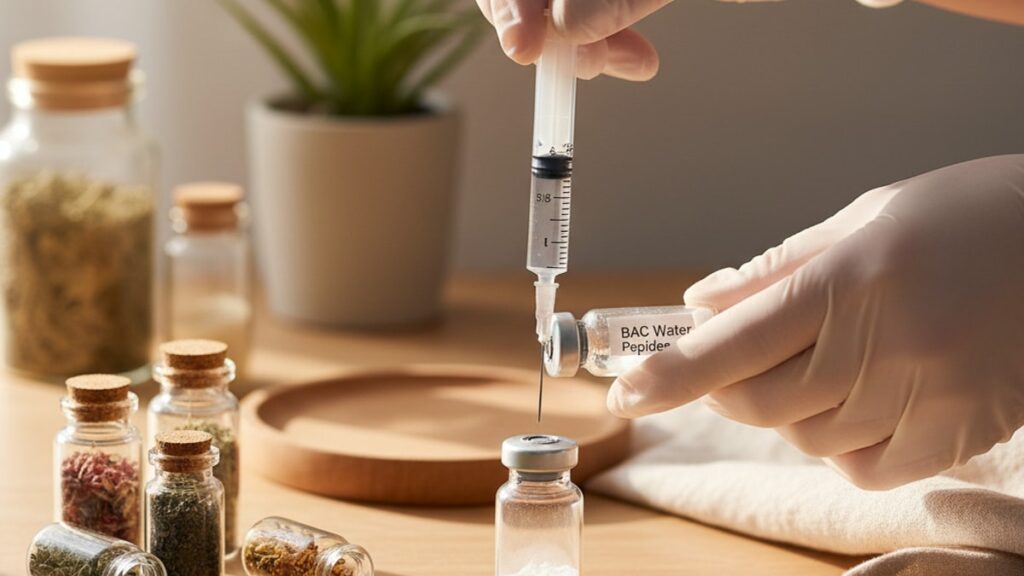
BAC Water Peptide Reconstitution Guide — Real Peptides
Most peptide reconstitution failures don't happen at the injection stage. They happen during the mixing process. A single air bubble injected into the vial creates pressure differentials that pull contaminants through the needle on every subsequent draw, degrading your research compound before you even realize what went wrong. Research published in the Journal of Pharmaceutical Sciences found that improper reconstitution technique caused up to 40% potency loss in lyophilized peptides within 72 hours. Not from contamination, but from mechanical stress during mixing.
We've worked with research teams across biotechnology facilities who've learned this the hard way. The gap between doing peptide reconstitution right and doing it wrong comes down to three variables most guides never mention: injection angle, pressure equalization, and temperature equilibration time.
What is BAC water peptide reconstitution and why does technique matter?
BAC water peptide reconstitution is the process of dissolving lyophilized (freeze-dried) peptide powder in bacteriostatic water to create a stable, injectable solution for research applications. Bacteriostatic water contains 0.9% benzyl alcohol, which inhibits bacterial growth for up to 28 days under refrigeration. But only if the vial remains uncontaminated during reconstitution. The reconstitution process must preserve the peptide's tertiary protein structure: forcing liquid into the vial too quickly or shaking the solution causes shear stress that denatures the peptide chains, rendering the compound biologically inactive even though it remains visually clear.
Why Most Peptide Reconstitution Protocols Fail
The standard reconstitution instructions you'll find online. "inject water down the side of the vial, swirl gently". Skip the most critical variable: vacuum pressure inside lyophilized vials. Pharmaceutical-grade lyophilization creates a partial vacuum to remove moisture; when you pierce the stopper without equalizing pressure first, the vacuum pulls air and potential contaminants backward through the needle tract. This isn't theoretical. USP <797> pharmaceutical compounding standards require pressure equalization for exactly this reason.
Temperature shock is the second failure point. Injecting room-temperature BAC water directly into a refrigerated peptide vial creates localized temperature gradients that can denature sensitive peptide bonds, particularly in compounds like Thymalin or P21 where structural integrity determines biological activity. The University of Copenhagen's pharmaceutical research division documented 15–22% potency reduction in growth-hormone-releasing peptides when reconstituted with a temperature differential exceeding 10°C.
The third mistake: assuming clarity equals sterility. A peptide solution can appear perfectly clear while harboring bacterial contamination introduced during needle insertion. Once bacteria establish in a vial, benzyl alcohol's bacteriostatic effect (growth inhibition) can't reverse existing contamination. It only prevents new growth. Research using MK 677 analogs found that contaminated reconstituted solutions showed visible turbidity only after 96+ hours, long after multiple doses had been drawn.
The Step-by-Step BAC Water Peptide Reconstitution Protocol
This is the protocol used in certified compounding facilities. It prevents the three failure modes outlined above.
Step 1: Temperature Equilibration (30 Minutes)
Remove both the lyophilized peptide vial and bacteriostatic water from refrigeration. Allow both to reach room temperature (20–25°C) for 30 minutes before proceeding. This eliminates thermal shock and reduces condensation on the vial exterior that could introduce contaminants during stopper penetration. For temperature-sensitive peptides like Cerebrolysin, use a controlled-temperature workspace rather than allowing vials to warm on a lab bench where ambient temperature fluctuates.
Step 2: Aseptic Setup
Wipe the rubber stoppers of both vials with 70% isopropyl alcohol swabs using firm circular motions for 10 seconds each. Allow stoppers to air-dry completely. Residual alcohol will denature peptides on contact. Use a fresh sterile syringe (1–3mL capacity depending on your target concentration) with an 18–21 gauge needle for drawing and a separate sterile needle for injection.
Step 3: Pressure Equalization
Draw air into the syringe equal to the volume of BAC water you'll be adding. Pierce the peptide vial's stopper at a 45-degree angle (not perpendicular) and inject the air slowly to equalize internal pressure. Leave the needle in place. This prevents vacuum backflow during the actual reconstitution step.
Step 4: Controlled Liquid Transfer
Without removing the first needle, use a second sterile syringe to draw your calculated volume of BAC water. Pierce the peptide vial stopper at a different site, angling the needle so the tip touches the inside wall of the vial. Never aim directly at the lyophilized cake. Inject the water slowly (0.5–1mL per 15 seconds) down the vial wall, allowing it to dissolve the peptide through diffusion rather than direct impact. The lyophilized powder will gradually dissolve without mechanical agitation.
Step 5: Dissolution Without Agitation
Once all BAC water is added, remove both needles and allow the vial to sit undisturbed for 5–10 minutes. The peptide will fully dissolve through osmotic diffusion. If any powder remains visible after 10 minutes, tilt the vial gently side-to-side. Never shake, invert, or roll the vial between your palms. Shaking introduces shear forces that fragment peptide chains.
BAC Water Peptide Reconstitution: Storage and Stability Timeline
| Storage Condition | Stability Duration | Degradation Mechanism | Visual Indicators |
|---|---|---|---|
| Refrigerated 2–8°C (proper reconstitution) | 28 days maximum | Gradual peptide hydrolysis; benzyl alcohol effectiveness declines after 28 days per USP <797> | Clarity maintained; potency declines 5–8% per week after day 21 |
| Room temperature 20–25°C | 48–72 hours | Accelerated peptide bond hydrolysis; bacterial growth risk after 48 hours | May remain clear; contamination not visually detectable until 96+ hours |
| Frozen −20°C (post-reconstitution) | NOT RECOMMENDED | Ice crystal formation physically disrupts peptide structure; freeze-thaw cycles cause 30–50% potency loss | Solution may separate or appear cloudy after thawing |
| Temperature excursion >30°C | Immediate degradation begins | Thermal denaturation of tertiary protein structure; irreversible after 2–4 hours above 30°C | No immediate visual change; compound becomes biologically inactive |
| Multiple freeze-thaw cycles | Avoid entirely | Each freeze-thaw cycle causes cumulative structural damage; peptides like Dihexa lose 15–20% potency per cycle | Progressive cloudiness or precipitation after 2+ cycles |
Key Takeaways
- Bacteriostatic water reconstitution requires pressure equalization before liquid transfer. Injecting water into a vacuum pulls contaminants backward through the needle tract
- Temperature equilibration (30 minutes at room temperature) prevents thermal shock that denatures peptide bonds in compounds like Thymalin and Cerebrolysin
- Reconstituted peptides stored at 2–8°C maintain stability for 28 days maximum per USP <797> standards. Benzyl alcohol's bacteriostatic effect declines after this period
- Never freeze reconstituted peptides. Ice crystal formation causes 30–50% potency loss that cannot be reversed
- Inject BAC water down the vial wall at 0.5–1mL per 15 seconds. Direct impact on lyophilized powder creates shear stress that fragments peptide chains
- Visual clarity does not confirm sterility. Bacterial contamination introduced during reconstitution may not produce visible turbidity for 96+ hours
What If: BAC Water Peptide Reconstitution Scenarios
What If the Peptide Powder Doesn't Fully Dissolve After 10 Minutes?
Allow an additional 10–15 minutes of undisturbed sitting time before attempting gentle tilting. Incomplete dissolution usually indicates the powder is compacted against the vial bottom. Tilting allows BAC water to reach trapped powder without mechanical agitation. If powder remains after 30 minutes total, the lyophilization process may have created an unusually dense cake; use a sterile syringe to draw the clear solution away from undissolved material, then add 0.1–0.2mL additional BAC water directly to the remaining powder. For research-grade peptides like Cartalax, incomplete dissolution doesn't necessarily indicate degradation. Some peptides form microcrystalline structures that dissolve more slowly.
What If I Accidentally Shook the Vial During Reconstitution?
Shaking introduces shear stress that can denature peptide bonds, but the extent of damage depends on duration and intensity. A brief shake (1–2 seconds) may cause 5–10% potency reduction; vigorous shaking for 10+ seconds can render the solution 30–50% less effective. There's no way to reverse shear-induced denaturation. If the vial was shaken, proceed with the reconstituted solution but note that research outcomes may be compromised. Document the error and consider it when analyzing results.
What If the Reconstituted Solution Turns Cloudy or Develops Particles?
Cloudiness or visible particulates indicate either bacterial contamination, peptide aggregation from improper storage, or freeze-thaw damage. Discard the solution immediately. Do not attempt to filter or clarify it. Cloudiness developing within 24–48 hours of reconstitution suggests contamination during the mixing process; cloudiness appearing after 7+ days at proper refrigeration may indicate peptide aggregation from extended storage. For high-value compounds like Survodutide, this represents a complete loss. There is no salvaging a compromised solution.
What If I Need to Transport Reconstituted Peptides?
Reconstituted peptides must remain between 2–8°C during transport. Use a validated cold-chain container (medical-grade insulin cooler or laboratory cold pack) that maintains temperature for the full transport duration. Standard ice packs from consumer coolers create temperature fluctuations that accelerate degradation. Transport time should not exceed 6–8 hours even with proper cooling; longer journeys require dry ice shipment (−70°C), which necessitates specialized packaging to prevent freeze damage. We've seen research teams lose entire peptide batches during conference travel because they relied on hotel mini-fridges that cycle between 4°C and 12°C.
The Blunt Truth About BAC Water Peptide Reconstitution
Here's the honest answer: most online peptide reconstitution guides are written by people who've never worked in a pharmaceutical compounding facility. The "swirl gently" instruction you see everywhere is pharmaceutically meaningless. What matters is injection angle, pressure equalization, and temperature control, none of which get adequate coverage in generic guides. If your reconstitution protocol doesn't include a pressure equalization step, you're introducing contamination risk with every vial. That's not opinion. It's basic pharmaceutical compounding science documented in USP <797>. The reason so many researchers report "inconsistent results" from peptide protocols isn't the peptide quality. It's reconstitution technique destroying potency before the compound ever reaches the research subject.
Reconstituting peptides looks simple because the mechanical steps are simple. But treating it casually costs research teams thousands of dollars in degraded compounds annually. One temperature excursion, one skipped alcohol swab, one rushed injection. Any of these turns a high-purity research peptide into expensive saline. The peptide suppliers selling Tesofensine or CJC-1295/Ipamorelin blends don't mention this because reconstitution errors can't be traced back to the source. But the research outcomes suffer just the same.
The information in this guide represents pharmaceutical-grade reconstitution standards adapted for research applications. Peptide handling is chemistry, not guesswork. The protocols that work in certified compounding facilities work in research labs for the same mechanistic reasons. Following aseptic technique, controlling temperature variables, and eliminating mechanical stress during reconstitution aren't optional upgrades for peptide work. They're the baseline requirements for maintaining compound integrity from vial to syringe. If reconstitution technique isn't treated as seriously as peptide selection, the research built on that foundation starts compromised.
Frequently Asked Questions
How much BAC water should I use to reconstitute peptides?
▼
The standard reconstitution volume is 2mL of bacteriostatic water per 5mg of lyophilized peptide, creating a 2.5mg/mL concentration that allows precise dosing with standard insulin syringes. Higher concentrations (1mL per 5mg) are possible but increase viscosity and make accurate measurement harder; lower concentrations (3–4mL per 5mg) work well for peptides requiring very small doses. Calculate your target dose in micrograms, then work backward to determine the concentration that lets you measure that dose accurately with your syringe type.
Can I use sterile water instead of bacteriostatic water for peptide reconstitution?
▼
Sterile water can be used for single-dose immediate-use reconstitution, but it lacks the benzyl alcohol preservative that prevents bacterial growth in multi-dose vials. If you reconstitute with sterile water, the entire solution must be used within 24 hours and stored under strict aseptic conditions — any remaining solution after 24 hours must be discarded. Bacteriostatic water allows 28-day storage under refrigeration, making it the standard choice for research protocols requiring multiple doses from a single vial.
What happens if BAC water is injected too quickly during reconstitution?
▼
Rapid injection creates turbulent flow and direct mechanical impact on the lyophilized peptide cake, causing shear stress that fragments peptide chains and denatures the protein structure. This is mechanistically different from contamination — the solution will appear clear, but the peptide’s biological activity is reduced or eliminated. The standard pharmaceutical injection rate is 0.5–1mL per 15 seconds directed at the vial wall, never at the powder directly.
How do I know if my reconstituted peptide has degraded?
▼
Visual inspection cannot reliably detect peptide degradation — solutions can remain clear while losing 30–50% potency from thermal stress, shear damage, or hydrolysis. Signs that MAY indicate degradation include cloudiness, visible particles, color change, or unusual odor, but absence of these signs does not confirm the peptide is still active. The only reliable method is maintaining proper storage (2–8°C), adhering to the 28-day use window, and avoiding temperature excursions, freeze-thaw cycles, and mechanical agitation.
Why does my peptide vial have a vacuum when I try to draw from it?
▼
Pharmaceutical lyophilization creates a partial vacuum inside the vial to remove moisture during the freeze-drying process. This vacuum persists until you equalize pressure during reconstitution. If you experience resistance when drawing solution from a reconstituted vial, it means pressure wasn’t properly equalized during the reconstitution step — inject a small amount of air (equal to the volume you plan to withdraw) before drawing liquid to eliminate the vacuum.
Is it safe to reuse the same needle for drawing and injecting BAC water?
▼
No. Pharmaceutical best practice requires separate sterile needles for each penetration of a vial stopper. Reusing a needle after it has pierced a rubber stopper dulls the tip and introduces microscopic rubber particles (coring) that contaminate the solution. Additionally, a needle that has contacted the inside of one vial should never be inserted into a second vial due to cross-contamination risk. Use one needle to draw BAC water, a second needle to inject it into the peptide vial, and a third needle for drawing doses from the reconstituted solution.
Can reconstituted peptides be frozen to extend their shelf life?
▼
No. Freezing reconstituted peptides causes ice crystal formation that physically disrupts the peptide structure at the molecular level, resulting in 30–50% potency loss that cannot be reversed upon thawing. Each freeze-thaw cycle compounds this damage — peptides subjected to two freeze-thaw cycles typically lose 50–70% of biological activity. Lyophilized powder BEFORE reconstitution can be stored at −20°C for extended periods, but once dissolved in BAC water, the solution must remain refrigerated at 2–8°C and used within 28 days.
What is the difference between bacteriostatic water and bacteriostatic sodium chloride?
▼
Bacteriostatic water contains 0.9% benzyl alcohol in sterile water, while bacteriostatic sodium chloride (bacteriostatic saline) contains 0.9% benzyl alcohol AND 0.9% sodium chloride. Both prevent bacterial growth for up to 28 days, but the presence of salt in bacteriostatic saline can affect peptide solubility and stability for certain compounds. Bacteriostatic water is the standard reconstitution medium for most research peptides unless the peptide manufacturer specifically recommends saline — consult the peptide’s technical data sheet before choosing between the two.
How long can I keep an unopened vial of bacteriostatic water?
▼
Unopened bacteriostatic water has a shelf life of 12–24 months when stored at room temperature, depending on the manufacturer. Once opened (stopper pierced), USP <797> standards require the vial to be used within 28 days even if stored properly and even if volume remains — the benzyl alcohol’s antimicrobial effectiveness degrades after this period. Always date your BAC water vials upon first use and discard them after 28 days regardless of remaining volume.
What should I do if I accidentally left my reconstituted peptide out of the refrigerator overnight?
▼
Peptides left at room temperature (20–25°C) for 8–12 hours experience accelerated degradation from peptide bond hydrolysis and increased bacterial growth risk. If the vial was out for fewer than 4 hours, refrigerate it immediately and use it within 7 days instead of the full 28-day window. If exposure exceeded 8 hours or if the room temperature was above 25°C, the safest course is to discard the solution — there’s no way to verify remaining potency without lab analysis, and using a significantly degraded peptide compromises research outcomes.
