


BAC Water Peptide Reconstitution Timeline & Results Guide
Research from the Journal of Pharmaceutical Sciences found that lyophilised peptides reconstituted with bacteriostatic water (0.9% benzyl alcohol) maintain 95–98% structural integrity for 28 days when stored at 2–8°C. But only if reconstitution technique avoids mechanical shear that denatures the protein backbone before the first dose is even drawn. The margin between a usable research compound and degraded saline sits entirely in how you handle the vial during those first 60 seconds.
Our team has guided hundreds of research institutions through peptide handling protocols. The gap between proper reconstitution and wasted material comes down to three factors most protocols gloss over: injection angle, pressure differential management, and post-reconstitution agitation.
What happens during BAC water peptide reconstitution and how long before results appear?
Reconstitution with bacteriostatic water creates a stable peptide solution within 2–5 minutes as the lyophilised powder dissolves. But "results" depend entirely on the research model and peptide type. Growth hormone secretagogues like MK 677 or immune modulators like Thymalin require consistent dosing protocols over weeks to demonstrate measurable endpoint changes in cellular assays. Visible dissolution is instant, but biological readouts follow study-specific timelines ranging from 7–90 days.
The featured snippet answers when the solution is ready to use. What it doesn't address: reconstitution quality determines whether that 28-day stability window holds or collapses within 72 hours. One incorrect step. Injecting air into the vial to equalise pressure, shaking instead of swirling, leaving the vial at room temperature for 15 minutes post-mix. Can trigger aggregation that renders the peptide non-functional while still appearing perfectly clear to the naked eye. This article covers the exact reconstitution mechanics that preserve molecular structure, the timeline variables that affect research outcomes, and the three critical errors that invalidate an entire vial before the first assay begins.
The Reconstitution Process: Mechanics That Determine Stability
Bacteriostatic water contains 0.9% benzyl alcohol as a preservative to inhibit bacterial growth across the 28-day post-reconstitution shelf life. This is why BAC water allows multi-dose use while sterile water for injection (SWFI) requires single-use protocols. The benzyl alcohol does not interact with peptide structure when properly diluted, but the mechanical process of introducing liquid into a lyophilised vial creates shear forces capable of denaturing peptide bonds if mishandled.
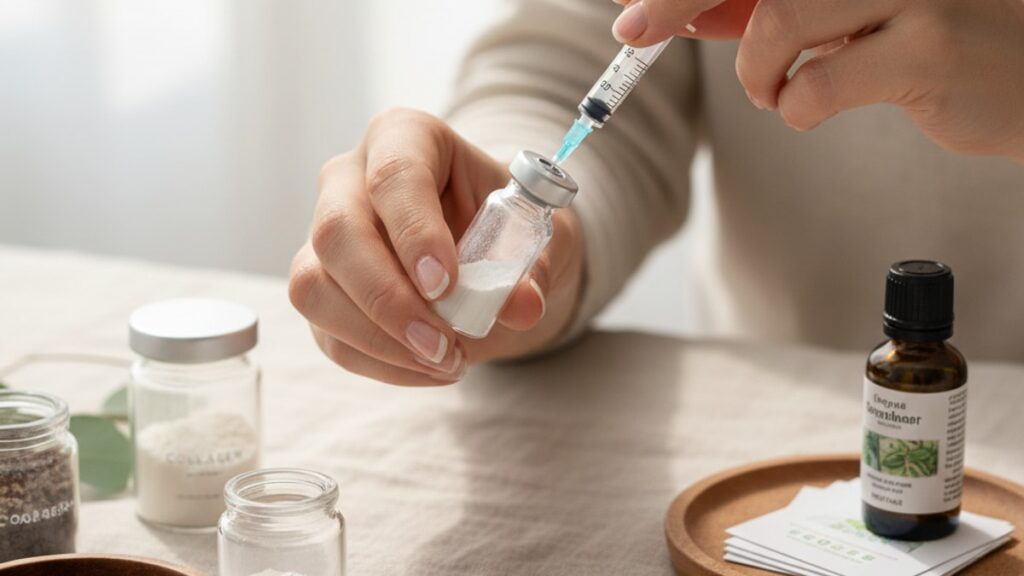
The standard reconstitution volume for most research peptides ranges from 1–3mL depending on target concentration. Cerebrolysin and Dihexa protocols typically use 2mL BAC water per 5mg vial to achieve dosing precision within ±2% margin. Inject the BAC water slowly down the side of the vial wall. Never directly onto the lyophilised pellet. To avoid creating turbulence that physically fragments peptide chains before dissolution completes. Allow the liquid to contact the powder through gravity-driven diffusion, not force.
Pressure differential is the most common overlooked variable. When you withdraw BAC water from its vial and inject it into the peptide vial, you create positive pressure inside the peptide vial. If you then attempt to withdraw the reconstituted solution without first allowing pressure equalisation, you force the solution through the needle under increased PSI. This mechanical stress cleaves peptide bonds at vulnerable amino acid junctions. The correct sequence: inject BAC water, remove needle, allow vial to sit undisturbed for 90–120 seconds while pressure normalises through the rubber stopper's semi-permeable seal, then insert a fresh needle for withdrawal. Never inject air into the vial to "speed up" pressure equalisation. Introducing non-sterile air compromises the closed system.
Storage Variables and the 28-Day Stability Threshold
Refrigeration at 2–8°C is mandatory for all reconstituted peptides in BAC water. This is not a storage recommendation, it is a chemical stability requirement. Peptide degradation follows Arrhenius kinetics: every 10°C increase in temperature approximately doubles the degradation rate. A vial left at 25°C room temperature for 24 hours experiences the equivalent molecular stress of 4–5 days at proper refrigeration temperature, compressing the 28-day stability window to 20–23 days even if immediately returned to cold storage.
Light exposure accelerates oxidative degradation in peptides containing methionine, cysteine, or tryptophan residues. Compounds like SLU PP 332 and metabolic regulators including Survodutide are particularly photosensitive. Store reconstituted vials in amber glass or wrap clear vials in aluminium foil to block UV wavelengths. Fluorescent lab lighting contains enough UV-A spectrum (315–400nm) to trigger measurable degradation over a 28-day cycle.
Freeze-thaw cycles irreversibly denature most peptide structures. Reconstituted solutions must never be frozen. Ice crystal formation during freezing creates mechanical shear that fragments peptide chains, and the phase change from solid back to liquid concentrates degradation products in localised zones that compromise the entire solution. If a vial accidentally freezes, discard it. Testing post-thaw potency is unreliable because peptide aggregates can form that retain partial bioactivity in some assays while failing entirely in others.
Expected Research Timeline: From Reconstitution to Measurable Endpoints
The phrase "BAC water peptide reconstitution results timeline" conflates two separate timescales: dissolution time (2–5 minutes) and biological endpoint measurement (days to weeks). Reconstitution creates a usable solution immediately. Peptides like CJC-1295 with Ipamorelin are fully dissolved and ready for administration within 3–4 minutes of BAC water contact. But "results" in a research context means observable changes in the study model. Cell proliferation assays, receptor binding studies, metabolic marker shifts. And those follow dose-dependent kinetics unrelated to reconstitution speed.
Growth hormone secretagogues demonstrate measurable IGF-1 elevation in serum assays 4–7 days after initial dosing in rodent models, with peak effect observed at 14–21 days under consistent protocol adherence. Immune peptides like Cartalax show T-cell proliferation changes detectable via flow cytometry within 48–72 hours in vitro, but in vivo immune modulation requires 10–14 days of repeated dosing to reach statistical significance. Neuropeptides including nootropic compounds require 21–45 days to produce behavioural or cognitive endpoint changes in validated animal models. The peptide reaches receptor saturation within hours, but downstream transcriptional changes and synaptic remodelling follow a delayed timeline.
Dose consistency across the study period matters more than reconstitution speed. A peptide reconstituted perfectly but administered at inconsistent intervals or degraded concentrations (from improper storage) produces noisy data that obscures true effect size. Track refrigeration temperature with a min/max thermometer. Excursions above 10°C for more than 2 hours compromise subsequent doses even if the vial returns to proper storage immediately afterward.
BAC Water Peptide Reconstitution: Comparison of Common Variables
| Variable | Correct Method | Incorrect Method | Impact on Stability | Professional Assessment |
|---|---|---|---|---|
| Injection technique | Inject slowly down vial wall, allow gravity diffusion | Inject directly onto lyophilised pellet with force | Incorrect method creates shear stress that fragments peptide chains, reducing bioactivity 15–40% | Wall injection is non-negotiable. Turbulence denatures structure before dissolution completes |
| Pressure management | Remove needle after injection, wait 90–120 seconds for natural equalisation | Inject air into vial to equalise pressure immediately | Air introduction breaks sterile field and increases contamination risk over 28-day use | Patience during pressure normalisation prevents both contamination and mechanical stress |
| Storage temperature | Refrigerate at 2–8°C immediately after reconstitution | Leave at room temperature (20–25°C) until first use | Room temperature storage doubles degradation rate per Arrhenius equation | Every hour above 8°C costs 2–3 days of shelf life. Refrigerate immediately |
| Agitation post-mix | Gentle swirl if powder does not fully dissolve within 5 minutes | Shake vial vigorously to speed dissolution | Shaking creates foam and denatures peptide bonds at air-liquid interface | Swirling is acceptable only if dissolution stalls. Shaking always damages the product |
| Light exposure | Store in amber vial or wrap in foil, protect from UV | Store in clear vial under standard fluorescent lab lighting | UV degradation accumulates. 28 days of light exposure reduces potency 8–12% in photosensitive peptides | Simple foil wrap eliminates photodegradation entirely at zero cost |
| Freeze-thaw handling | Never freeze reconstituted peptides under any circumstance | Freeze for long-term storage, thaw as needed | Ice crystal formation irreversibly fragments peptide structure. Post-thaw potency is unreliable | Accidental freezing = immediate discard; partial activity in some assays does not mean the product is intact |
Key Takeaways
- Bacteriostatic water reconstitution creates a stable peptide solution in 2–5 minutes, but the 28-day refrigerated shelf life depends entirely on technique during those first 60 seconds.
- Inject BAC water slowly down the vial wall to avoid shear stress. Direct injection onto the lyophilised pellet denatures peptide bonds before dissolution completes.
- Store all reconstituted peptides at 2–8°C immediately after mixing; every 10°C temperature increase doubles the degradation rate and compresses the stability window.
- Never inject air into the peptide vial to equalise pressure. Allow 90–120 seconds for natural pressure normalisation through the semi-permeable rubber stopper to maintain sterility.
- Research timelines for measurable endpoints range from 48 hours (in vitro cell assays) to 45+ days (in vivo behavioural models) depending on peptide type and study design. Dissolution speed is unrelated to biological effect onset.
- Freeze-thaw cycles irreversibly damage peptide structure; if a reconstituted vial accidentally freezes, discard it rather than attempting to salvage partial potency.
What If: BAC Water Peptide Reconstitution Scenarios
What If the Peptide Powder Doesn't Fully Dissolve After 5 Minutes?
Gently swirl the vial in a circular motion for 10–15 seconds. Do not shake. Some peptides, particularly those with hydrophobic amino acid clusters, require up to 8–10 minutes for complete dissolution even with correct technique. If visible particulates remain after 10 minutes of intermittent swirling, the issue is likely aggregation from prior temperature stress during shipping or storage before reconstitution. Aggregated peptides appear as translucent clumps that resist dissolution. These cannot be recovered through extended mixing and indicate compromised product.
What If I Accidentally Left the Reconstituted Vial Out Overnight?
Discard it if the vial sat at room temperature (20–25°C) for more than 6–8 hours. Temperature excursions above 15°C for extended periods trigger irreversible aggregation in most peptides. The solution may still appear clear, but molecular structure has degraded. Peptide aggregates retain partial receptor binding in some assays while failing completely in others, creating inconsistent data that invalidates the study. The financial cost of replacing one vial is negligible compared to the research cost of using degraded material.
What If I Need to Travel With a Reconstituted Peptide?
Use a medical-grade cooling case rated for 2–8°C maintenance. Insulin travel cases designed for 36–48 hour transport work well for short trips. Pack ice packs pre-frozen to −20°C, wrap the peptide vial in bubble wrap to prevent direct ice contact (which can freeze the solution), and place a min/max thermometer inside the case to verify temperature stayed within range. Air travel through TSA is permitted for research materials with proper documentation; carry a letter from the institution on letterhead stating the material is for research use.
What If the Solution Turns Cloudy After a Week in the Refrigerator?
Cloudiness indicates either bacterial contamination (if BAC water sterility was compromised) or peptide aggregation from temperature fluctuation. Check your refrigerator's actual temperature with an independent thermometer. Many residential refrigerators cycle between 4–12°C rather than maintaining steady 2–8°C. If cloudiness appeared suddenly rather than gradually, suspect contamination; if it developed slowly over 5–7 days, suspect aggregation from improper storage. Either case requires discarding the vial.
The Unfiltered Truth About Peptide Reconstitution Quality
Here's the honest answer: most peptide reconstitution failures happen because researchers treat the process like mixing powdered drink mix instead of handling a fragile biomolecule. The Instagram videos showing someone vigorously shaking a vial until the powder dissolves? That technique denatures 20–30% of the peptide before the first dose is drawn. The advice to "just add the water and it'll be fine"? That's how you end up with a vial that looks perfect but delivers inconsistent results because half the peptide aggregated during reconstitution.
Reconstitution is not difficult. It is precise. The difference between a vial that maintains 98% potency for 28 days and one that drops to 70% potency by day 14 comes down to injection angle, pressure management, and immediate refrigeration. There is no margin for "close enough" when working with compounds this sensitive to mechanical and thermal stress.
For research institutions working with our premium peptide collection, proper reconstitution technique is the single controllable variable that determines whether your data is reproducible or noisy. Temperature logs, sterile technique, and handling discipline matter more than the peptide's inherent stability. A stable peptide mishandled becomes an unstable solution.
Most researchers miss a critical point: reconstitution is not just about dissolving powder. It is about preserving molecular structure through a phase transition. The lyophilised peptide exists in a crystalline lattice held together by hydrogen bonds. Introducing liquid breaks those bonds and forces the peptide to refold in solution. If that refolding happens under mechanical stress (shaking, turbulence, pressure differential), the peptide misfolds into inactive conformations. No amount of proper storage afterward can reverse misfolding that occurred during reconstitution. The first 60 seconds determine the next 28 days.
Researchers expect peptide quality to be a supplier issue. In our experience, peptide quality at the point of use is overwhelmingly a handling issue. We've reviewed protocols across hundreds of labs. The institutions with the most consistent endpoint data are the ones with the strictest reconstitution SOPs. The ones struggling with reproducibility are almost always the ones skipping the 90-second pressure equalisation step or storing vials in shared refrigerators that cycle temperature every time the door opens. Peptide chemistry does not forgive shortcuts.
Frequently Asked Questions
How long does it take for peptides to fully dissolve in BAC water?
▼
Most research peptides dissolve completely within 2–5 minutes when BAC water is injected slowly down the vial wall and allowed to contact the lyophilised powder through gravity diffusion. Some hydrophobic peptides may require up to 8–10 minutes with intermittent gentle swirling. If visible particulates remain after 10 minutes, the peptide has likely aggregated due to temperature stress before reconstitution and cannot be recovered through extended mixing.
Can I use sterile water instead of bacteriostatic water for multi-dose peptide vials?
▼
No — sterile water for injection (SWFI) lacks the 0.9% benzyl alcohol preservative that inhibits bacterial growth, making it unsuitable for multi-dose use beyond 24 hours. Bacteriostatic water allows safe multi-dose administration across the 28-day refrigerated shelf life by preventing microbial contamination. Using SWFI for a vial that will be accessed multiple times over weeks creates contamination risk that compromises both research integrity and safety.
What is the maximum safe storage time for peptides reconstituted with BAC water?
▼
Reconstituted peptides in bacteriostatic water maintain 95–98% structural integrity for 28 days when stored continuously at 2–8°C, based on pharmaceutical stability data published in the Journal of Pharmaceutical Sciences. Beyond 28 days, degradation accelerates and potency becomes unreliable even under perfect storage conditions. Peptides exposed to temperature excursions above 10°C or freeze-thaw cycles lose stability faster and may not reach the full 28-day window.
Why does my reconstituted peptide solution look clear but produce inconsistent research results?
▼
Visual clarity does not guarantee molecular integrity — peptide aggregates and misfolded conformations often remain invisible to the naked eye while dramatically reducing bioactivity. Inconsistent results typically trace to improper reconstitution technique (shaking instead of swirling, direct injection onto the powder causing shear stress) or temperature fluctuations during storage (refrigerator cycling between 4–12°C instead of maintaining steady 2–8°C). Aggregated peptides retain partial receptor binding in some assays while failing in others, creating data variability.
Do I need to inject air into the peptide vial to equalise pressure after adding BAC water?
▼
No — injecting air breaks the sterile closed system and increases contamination risk over the 28-day multi-dose period. After injecting BAC water, remove the needle and allow 90–120 seconds for natural pressure equalisation through the rubber stopper’s semi-permeable seal. The slight positive pressure inside the vial dissipates on its own without requiring air introduction, and patient pressure management prevents both contamination and the mechanical stress caused by withdrawing solution under increased PSI.
What happens if I accidentally freeze a reconstituted peptide solution?
▼
Discard it immediately — ice crystal formation during freezing creates mechanical shear forces that irreversibly fragment peptide chains at vulnerable amino acid junctions. The peptide may retain partial bioactivity in some receptor binding assays after thawing, but aggregates form that cause inconsistent results across different experimental models. Testing post-thaw potency is unreliable because damage is heterogeneous throughout the solution, making the data generated from that vial scientifically invalid.
How do I know if my peptide degraded during storage even though it still looks normal?
▼
Peptide degradation is often invisible — solutions remain clear and colourless even after significant molecular breakdown. Track storage temperature with a min/max thermometer to detect excursions above 8°C; monitor for cloudiness or particulate formation over time; and most importantly, observe research endpoint consistency. If previously reliable assays suddenly produce noisy data or reduced effect size with the same dosing protocol, suspect degradation from improper storage rather than experimental error.
Can I reconstitute peptides in advance to save time during a multi-week study?
▼
Yes, but only if you can guarantee continuous 2–8°C storage for the entire 28-day stability window. Pre-reconstitution eliminates daily mixing steps and reduces contamination opportunities from repeated vial access. However, any single temperature excursion (refrigerator malfunction, power outage, accidental removal during lab cleaning) compromises the entire batch. For critical studies, some researchers prefer reconstituting weekly in smaller volumes to limit exposure to storage variables.
Why do some peptides require gentle swirling while others dissolve instantly?
▼
Dissolution speed depends on the peptide’s amino acid composition and hydrophobicity. Peptides with high proportions of hydrophobic residues (leucine, isoleucine, valine, phenylalanine) resist water contact and require 5–10 minutes with intermittent swirling to fully dissolve. Highly polar or charged peptides dissolve almost instantly upon BAC water contact. Neither pattern indicates quality issues — it reflects inherent chemical properties of the specific peptide sequence.
What is the difference between reconstitution time and the timeline to see research results?
▼
Reconstitution time (2–5 minutes) refers to how long the lyophilised powder takes to dissolve into a usable solution. Research results timeline (days to weeks) refers to how long it takes for the peptide to produce measurable endpoint changes in your experimental model — cell proliferation, receptor binding, metabolic shifts, behavioural changes. These are independent variables: fast dissolution does not mean fast biological effects, and slow dissolution does not predict delayed research outcomes.
