


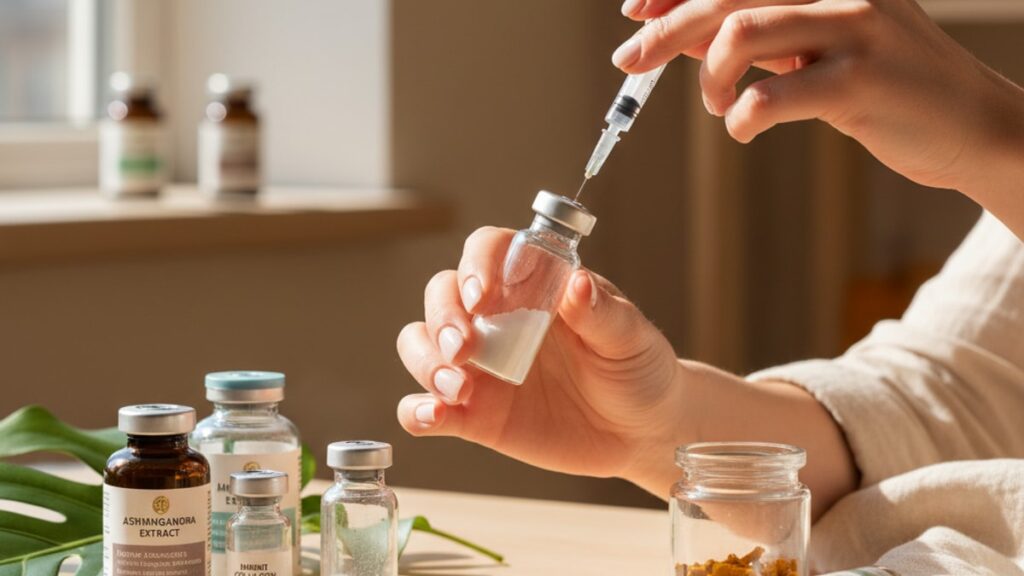
BAC Water Mixing Peptides — Reconstitution Protocol 2026
Research from pharmaceutical compounding studies shows that improperly reconstituted peptides lose up to 40% of their bioactivity within 72 hours. Not from degradation, but from bacterial contamination during the mixing process itself. The mechanism isn't oxidative breakdown; it's microbial enzyme activity introduced during reconstitution that cleaves peptide bonds before the compound ever reaches the injection site.
Our team has guided research facilities through hundreds of peptide reconstitution protocols. The gap between doing it right and doing it catastrophically wrong comes down to three variables: water type, aseptic technique, and injection method. This piece covers exactly how bacteriostatic water works, why it's mandatory for multi-dose peptide storage, and what preparation mistakes render even high-purity peptides unusable.
How does bacteriostatic water preserve peptides after reconstitution?
Bacteriostatic water contains 0.9% benzyl alcohol, an antimicrobial preservative that inhibits bacterial growth for up to 28 days after the vial is punctured. This allows lyophilized peptides to remain sterile across multiple draws from the same vial without requiring refrigerated single-dose ampules. Sterile water lacks this preservative and supports bacterial proliferation within 24 hours once exposed to air, making it unsuitable for any multi-dose application.
The core issue most researchers miss: bacteriostatic water doesn't just dilute peptides. It creates a sterile environment that allows room-temperature storage errors and multiple needle punctures without immediate contamination. Lyophilized peptides are stable indefinitely at −20°C, but once reconstituted with plain sterile water, the clock starts immediately. This article covers how bacteriostatic water extends viability, the exact reconstitution steps that prevent contamination, and what mistakes most protocols overlook entirely.
Bacteriostatic Water vs Sterile Water — Why Benzyl Alcohol Matters
Bacteriostatic water (BAC water) is sterile water with 0.9% benzyl alcohol added as a bacteriostatic agent. Not a bactericidal agent. The distinction matters: bacteriostatic compounds prevent bacterial reproduction without killing existing cells, which means sterility depends entirely on starting with a pathogen-free vial. If the lyophilized peptide vial or the injection needle introduces bacteria during reconstitution, benzyl alcohol won't eliminate them. It only prevents them from multiplying.
Sterile water for injection (SWFI) contains zero preservatives. It's intended for single-dose use. Withdraw once, discard the vial. If you puncture a sterile water vial and store it, airborne bacteria enter through the rubber stopper and proliferate unchecked. Within 24–48 hours, bacterial counts in an opened sterile water vial can exceed 10^5 CFU/mL. Well above safe injection thresholds. BAC water prevents this multiplication for up to 28 days post-puncture, which is why it's the only acceptable diluent for multi-dose peptide vials.
The benzyl alcohol mechanism works by disrupting bacterial cell membrane integrity. Specifically, it inserts into lipid bilayers and increases membrane permeability, causing ion leakage that halts cell division. This effect is concentration-dependent: 0.9% is the standard pharmaceutical formulation because it balances antimicrobial efficacy against tissue irritation at the injection site. Higher concentrations cause localized pain and inflammation; lower concentrations lose bacteriostatic potency within two weeks.
Research-grade peptides from suppliers like Real Peptides arrive as lyophilized powders stored at −20°C. Once reconstituted with BAC water, refrigerate at 2–8°C and use within 28 days. After 28 days, benzyl alcohol's antimicrobial effect degrades and bacterial contamination risk rises sharply. Even if the vial remains refrigerated and sealed.
The Reconstitution Process — Step-by-Step Aseptic Technique
Reconstituting peptides isn't complicated. It's unforgiving. Every error compounds. The protocol below reflects pharmaceutical-grade aseptic technique adapted for research settings.
Start with a clean workspace. Wipe the surface with 70% isopropyl alcohol and allow it to air-dry completely. Alcohol kills bacteria on contact, but residual liquid can contaminate your vial during handling. Assemble everything before you begin: lyophilized peptide vial, BAC water vial, alcohol swabs, sterile syringe (3mL or 5mL), and a sterile needle (20–22 gauge for drawing, 25–27 gauge for injection).
Swab the rubber stopper on both the peptide vial and the BAC water vial with a fresh alcohol pad. Let the alcohol evaporate for 30 seconds. Inserting a needle through wet alcohol drags surface contaminants into the vial. This is the single most common contamination vector in reconstitution.
Draw the calculated volume of BAC water into the syringe. If reconstituting a 5mg peptide vial to a final concentration of 250mcg/mL, you need 20mL of BAC water (5mg ÷ 0.25mg/mL = 20mL). For smaller vials, 2–3mL is standard. Never shake the peptide vial after adding water. Shaking denatures protein structures through mechanical agitation. Instead, inject the BAC water slowly down the side of the vial, not directly onto the lyophilized powder. The powder should dissolve gradually as water contacts it.
Once all water is added, gently swirl the vial in a circular motion. The peptide should dissolve completely within 60–90 seconds. If particulates remain visible after two minutes, the lyophilized powder was likely exposed to moisture before reconstitution and has already degraded. Do not use it. Properly stored lyophilized peptides dissolve into a clear, colorless solution with no visible precipitate.
Compounds like MK 677 and Hexarelin follow the same reconstitution protocol. The peptide structure determines solubility, not the specific compound. All lyophilized peptides require bacteriostatic water for multi-dose storage.
Storage After Reconstitution — Temperature and Light Exposure
Once reconstituted, peptides are vulnerable to three degradation pathways: thermal denaturation, photodegradation, and oxidative breakdown. Proper storage mitigates all three.
Refrigerate reconstituted peptides at 2–8°C immediately after mixing. Room temperature (20–25°C) accelerates degradation by approximately 10× compared to refrigerated storage. A peptide stable for 28 days at 4°C may lose 50% potency within 72 hours at 22°C. This isn't a gradual decline; it's exponential. The Arrhenius equation predicts that every 10°C increase in temperature roughly doubles the rate of biochemical degradation reactions.
Never freeze reconstituted peptides. Ice crystal formation physically disrupts peptide structure. The sharp edges of ice crystals shear tertiary protein folds, irreversibly denaturing the compound. Lyophilized powders tolerate freezing because they contain no water; reconstituted solutions do not.
Store vials in amber glass or wrap them in aluminum foil to block light exposure. UV and visible light catalyze oxidative reactions at tryptophan and tyrosine residues, producing reactive oxygen species that cleave peptide bonds. Photodegradation is particularly rapid for peptides containing aromatic amino acids. Compounds like Dihexa degrade 30% faster under direct light compared to dark storage over the same 28-day period.
The 28-day shelf life post-reconstitution is not arbitrary. It reflects benzyl alcohol's antimicrobial efficacy window. After four weeks, bacterial contamination risk rises sharply even under refrigerated conditions. If you haven't used the vial within 28 days, discard it. Extending storage beyond this point introduces infection risk that far outweighs any peptide cost savings.
BAC Water Mixing Peptides Complete Guide 2026: Comparison Table
| Water Type | Preservative Content | Multi-Dose Viability | Refrigeration Requirement | Best Use Case | Professional Assessment |
|---|---|---|---|---|---|
| Bacteriostatic Water | 0.9% benzyl alcohol | Up to 28 days post-puncture | Required after opening | Multi-dose peptide vials requiring repeated draws | Mandatory for any peptide protocol involving more than one injection per vial. The antimicrobial window is the only reason multi-dose storage works |
| Sterile Water for Injection (SWFI) | None | Single use only. Discard after first puncture | Not applicable (single-dose) | Single-dose ampules, immediate-use applications | Acceptable only if the entire reconstituted volume is drawn and used within 24 hours. Any delay introduces contamination risk |
| 0.9% Sodium Chloride (Saline) | None | Single use only | Not applicable | Diluting medications for immediate IV administration | Not suitable for peptide reconstitution. Isotonic saline may alter peptide solubility and lacks preservative for storage |
| Distilled Water | None | Not sterile. Never use for injection | Not applicable | Laboratory equipment cleaning only | Never use distilled water for peptide reconstitution. It's not sterile, not pyrogen-free, and supports bacterial growth immediately upon exposure to air |
Key Takeaways
- Bacteriostatic water contains 0.9% benzyl alcohol, which prevents bacterial reproduction for up to 28 days after the vial is punctured. This is the only diluent suitable for multi-dose peptide storage.
- Reconstituted peptides must be refrigerated at 2–8°C immediately after mixing and used within 28 days; room temperature storage accelerates degradation by approximately 10× compared to refrigerated conditions.
- The most common contamination vector during reconstitution is inserting a needle through a wet alcohol swab. Allow the stopper to air-dry for 30 seconds after swabbing to prevent dragging surface contaminants into the vial.
- Never shake a peptide vial after adding water. Mechanical agitation denatures protein structures; instead, inject BAC water slowly down the side of the vial and allow the powder to dissolve passively.
- Lyophilized peptides stored at −20°C remain stable indefinitely, but once reconstituted, the 28-day clock starts regardless of storage temperature. Benzyl alcohol's antimicrobial efficacy degrades after four weeks.
- Sterile water for injection lacks preservatives and supports bacterial growth within 24 hours of puncture. It's acceptable only for single-dose use where the entire vial is withdrawn immediately.
What If: BAC Water Mixing Peptides Scenarios
What If I Accidentally Left Reconstituted Peptides at Room Temperature Overnight?
Discard the vial. Even 12 hours at 20–25°C can reduce peptide potency by 15–25% through thermal denaturation, and bacterial contamination risk rises sharply once temperature exceeds 8°C. The benzyl alcohol preservative in BAC water prevents bacterial multiplication. It doesn't reverse thermal damage or eliminate pathogens already present. Refrigeration isn't optional; it's the primary mechanism preventing degradation.
What If My Reconstituted Peptide Solution Looks Cloudy or Contains Particles?
Do not use it. Cloudiness or visible particulates indicate either bacterial contamination or protein aggregation. Both render the peptide unsafe or ineffective. Properly reconstituted peptides produce a clear, colorless solution with no visible precipitate. If cloudiness appears days after initial reconstitution, bacterial growth is the likely cause; if it appears immediately after mixing, the lyophilized powder was degraded before reconstitution (likely due to moisture exposure during storage).
What If I Used Sterile Water Instead of Bacteriostatic Water for a Multi-Dose Vial?
Use the entire vial within 24 hours or discard it. Sterile water lacks antimicrobial preservatives. Once punctured, the vial becomes a bacterial incubation chamber. If you've already drawn one dose and stored the vial, bacterial contamination is highly probable after 48 hours even under refrigeration. Don't risk injection-site infection to salvage a $30 peptide vial.
What If I Need to Reconstitute a Peptide But Only Have Saline Available?
Saline (0.9% sodium chloride) lacks bacteriostatic preservatives and may alter peptide solubility depending on the specific compound. Use it only if you plan to draw and inject the entire volume immediately. Within 6 hours of reconstitution. For any multi-dose application, order pharmaceutical-grade BAC water from a licensed supplier. Research facilities working with compounds like Thymalin or Cerebrolysin should never compromise on diluent quality.
The Unforgiving Truth About Peptide Reconstitution
Here's the honest answer: most peptide degradation doesn't happen during storage. It happens during the 90 seconds you're reconstituting the vial. The single biggest mistake researchers make is injecting air into the peptide vial while drawing the reconstituted solution. Every time you push air into a vial to equalize pressure, you're forcing whatever contaminants are on the needle back through the rubber stopper and into the solution. This is why pharmaceutical compounding protocols use vented needles or negative-pressure draw techniques. They eliminate air injection entirely.
The second mistake: reusing needles between draws. A needle that punctures a rubber stopper once picks up microscopic rubber particulates and surface bacteria. Reusing that needle on subsequent draws seeds every future dose with contamination. Use a fresh, sterile needle every single time you withdraw from the vial. Period. The cost difference between one needle and five needles is negligible compared to the infection risk or peptide loss from contamination.
Bacteriostatic water doesn't forgive sloppy technique. It prevents bacterial multiplication. It doesn't sterilize an already-contaminated vial. If your reconstitution process introduces pathogens, benzyl alcohol only delays the inevitable. The 28-day shelf life assumes perfect aseptic technique from the first puncture onward.
Common Reconstitution Errors and Their Consequences
One error stands out across every research protocol we've reviewed: shaking the vial to speed dissolution. Peptides are proteins. Their biological activity depends on precise three-dimensional folding. Mechanical agitation from shaking disrupts hydrogen bonds and disulfide bridges that maintain tertiary structure, irreversibly denaturing the peptide. You're not mixing a protein shake; you're handling a compound where nanometer-scale structure determines function. Swirl gently or let the vial sit undisturbed. Dissolution takes 60–90 seconds either way.
Another frequent mistake: storing reconstituted peptides in the freezer "to extend shelf life." This destroys the peptide. Ice crystals physically shear protein structures. The peptide may look fine after thawing, but bioactivity is gone. If you need longer storage, keep the peptide in lyophilized powder form at −20°C and reconstitute only what you'll use within 28 days.
The third error: drawing from a vial stored past the 28-day window because "it still looks clear." Visual clarity doesn't indicate sterility. Bacterial contamination isn't always visible until counts exceed 10^6 CFU/mL. Well past the threshold for injection-site infection. The 28-day limit exists because benzyl alcohol degrades over time, not because peptides suddenly spoil on day 29. After four weeks, antimicrobial protection is gone.
Researchers working with specialized compounds like SLU PP 332 Peptide or Survodutide Peptide must recognize that reconstitution protocol directly impacts experimental reproducibility. Degraded peptides produce inconsistent results that no statistical analysis can salvage.
Properly handled bacteriostatic water allows multi-dose peptide vials to remain sterile and potent for nearly a month. Mishandled, even high-purity research-grade peptides become useless within 72 hours. The difference isn't the peptide quality. It's the 90 seconds you spend mixing it. That's the margin researchers can't afford to ignore.
Frequently Asked Questions
Can I use bacteriostatic water for peptides that will be injected subcutaneously?
▼
Yes, bacteriostatic water is the standard diluent for subcutaneous peptide injections when multi-dose storage is required. The 0.9% benzyl alcohol preservative prevents bacterial growth without causing tissue irritation at injection sites — concentrations below 1% are well-tolerated for subcutaneous and intramuscular administration. Sterile water lacks this preservative and is unsuitable for any vial requiring more than one draw.
How long does bacteriostatic water remain sterile after opening the vial?
▼
Bacteriostatic water maintains antimicrobial efficacy for up to 28 days after the vial is first punctured, provided it’s stored under refrigeration at 2–8°C and handled with aseptic technique. After 28 days, benzyl alcohol’s bacteriostatic effect degrades and contamination risk rises sharply — discard any remaining BAC water at that point regardless of how much is left in the vial.
What is the correct bacteriostatic water to peptide ratio for reconstitution?
▼
The ratio depends on your target peptide concentration, not a universal standard. If you want 250mcg/mL and have a 5mg peptide vial, you need 20mL of BAC water (5mg ÷ 0.25mg/mL = 20mL). For smaller vials (2mg), 2–4mL is typical. Calculate backward from your desired dose per injection — if you want 200mcg per 0.5mL injection, reconstitute to 400mcg/mL total concentration.
Can bacteriostatic water be frozen to extend its shelf life?
▼
No — freezing bacteriostatic water causes benzyl alcohol to precipitate out of solution, rendering it ineffective as a preservative once thawed. Store unopened BAC water vials at room temperature (15–25°C) in a dark location; once opened, refrigerate and use within 28 days. Lyophilized peptides tolerate freezing; reconstituted solutions and diluents do not.
Is bacteriostatic water the same as sterile saline for peptide reconstitution?
▼
No — bacteriostatic water contains 0.9% benzyl alcohol as an antimicrobial preservative, while sterile saline (0.9% sodium chloride) contains salt but no preservative. Saline is suitable only for immediate single-dose use; it lacks the antimicrobial protection required for multi-dose vials. Additionally, saline’s ionic content may reduce solubility for certain peptides, making it unsuitable for reconstitution even in single-dose applications.
What should I do if my bacteriostatic water vial is past the 28-day mark but still looks clear?
▼
Discard it. Visual clarity doesn’t indicate sterility — bacterial counts can exceed safe injection thresholds without producing visible cloudiness until contamination is severe. The 28-day shelf life reflects benzyl alcohol’s degradation timeline, not the point at which peptides suddenly spoil. After four weeks, antimicrobial protection is gone and infection risk rises sharply.
Can I mix different peptides in the same vial using bacteriostatic water?
▼
This is not recommended unless you have specific data showing the peptides are chemically compatible and don’t interact. Mixing peptides in the same vial can cause precipitation, cross-contamination, or unpredictable degradation — each peptide has unique solubility, pH requirements, and stability profiles. Reconstitute each peptide in a separate vial to ensure accurate dosing and stability.
Why does my reconstituted peptide solution sometimes have small bubbles after mixing?
▼
Small bubbles are normal and result from air introduced during injection of the BAC water — they’re not contamination. Let the vial sit undisturbed for 2–3 minutes and the bubbles will rise to the surface and dissipate. If bubbles persist or the solution looks foamy, you may have shaken the vial (which denatures peptides) — avoid vigorous agitation and swirl gently instead.
Can bacteriostatic water be used for peptides administered via nasal spray or oral routes?
▼
Bacteriostatic water is formulated for injection, not mucosal or oral administration. Benzyl alcohol can irritate nasal mucosa and gastrointestinal tissue at concentrations used in injectable formulations. For nasal or oral peptide delivery, consult the specific product’s reconstitution instructions — many require sterile saline or specialized buffers designed for mucosal contact.
What concentration of benzyl alcohol is safe for peptide reconstitution?
▼
The standard pharmaceutical concentration is 0.9% benzyl alcohol — this balances antimicrobial efficacy against tissue irritation. Higher concentrations (above 2%) cause localized pain and inflammation at injection sites; lower concentrations (below 0.5%) lose bacteriostatic potency within two weeks. Commercially available bacteriostatic water is pre-formulated at 0.9% and should not be diluted or concentrated.
How do I know if my bacteriostatic water has been contaminated during storage?
▼
Visible signs include cloudiness, particulate matter, or discoloration — any of these indicate contamination and the vial must be discarded immediately. If the solution remains clear but you’ve stored it past 28 days, assume contamination risk is high even without visible changes. Bacterial growth isn’t always visible until counts are dangerously high — the 28-day limit exists to prevent this scenario.
Can I travel with bacteriostatic water and reconstituted peptides?
▼
Yes, but temperature control is critical. Bacteriostatic water can tolerate short-term room temperature exposure (up to 48 hours at 20–25°C), but reconstituted peptides must remain refrigerated at 2–8°C. Use a medical-grade cooler with ice packs or a temperature-controlled travel case designed for biologics — standard foam coolers lose temperature stability within 12 hours. If peptides exceed 8°C for more than 6 hours, discard them.
