


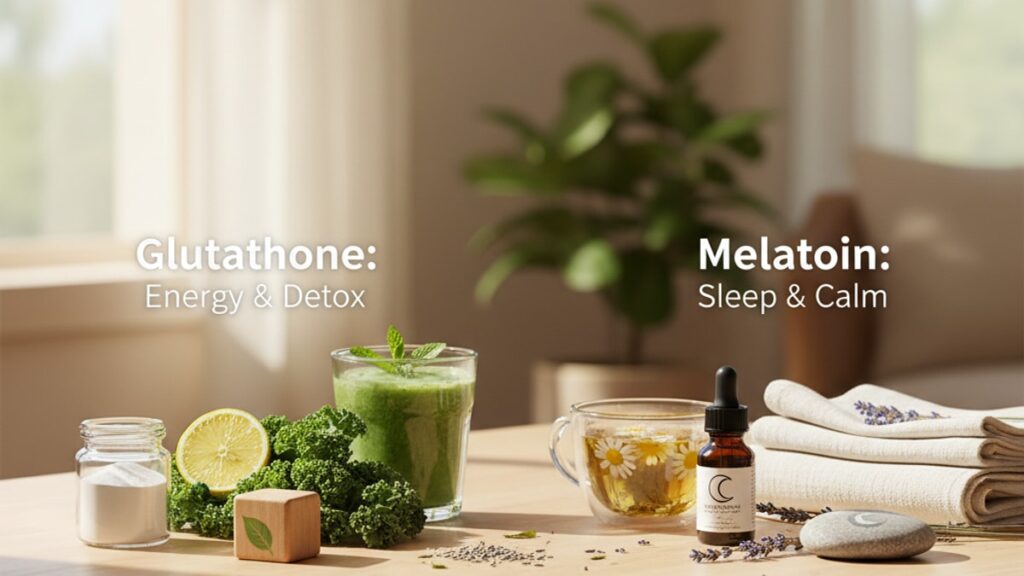
Glutathione vs Melatonin: Which Better for Health?
A 2019 systematic review published in Oxidative Medicine and Cellular Longevity found that glutathione depletion is implicated in over 150 disease states—from Parkinson's to COPD to hepatic failure. Melatonin, meanwhile, shows neuroprotective effects in animal models of Alzheimer's, but its primary validated human application remains sleep regulation. The question isn't which is 'better'—it's whether you're addressing oxidative stress, circadian disruption, or something else entirely.
Our team has worked with research institutions testing both compounds across cellular models. The gap between understanding their distinct mechanisms and trying to rank them as competitors is where most public confusion starts.
What's the difference between glutathione and melatonin?
Glutathione is a tripeptide (gamma-glutamyl-cysteinyl-glycine) synthesised endogenously in every human cell, functioning as the body's primary intracellular antioxidant and detoxification agent. Melatonin is a hormone produced by the pineal gland in response to darkness, regulating sleep-wake cycles via MT1 and MT2 receptors in the suprachiasmatic nucleus. One protects cellular machinery from oxidative damage; the other tells your brain when it's time to sleep. They don't overlap in primary function—comparing them requires specifying the exact biological outcome you're measuring.
The Featured Snippet answers 'what they are'—but that doesn't explain why people pit them against each other in supplement aisles. The confusion stems from both being sold as 'anti-aging' or 'health optimisation' compounds without clarity on what each actually does at the molecular level. Glutathione works inside cells, neutralising reactive oxygen species (ROS) before they damage DNA, proteins, or lipids. Melatonin works on brain receptors, suppressing cortisol and lowering core body temperature to facilitate sleep onset. This article covers their distinct mechanisms, when each compound is actually indicated, and why 'which is better' is an unanswerable question without context.
How Glutathione and Melatonin Function at the Cellular Level
Glutathione exists in two forms: reduced (GSH) and oxidised (GSSG). The reduced form donates electrons to neutralise free radicals—hydrogen peroxide, lipid peroxides, reactive nitrogen species—converting them into stable molecules like water. Once oxidised, glutathione is recycled back to its reduced state by the enzyme glutathione reductase, which depends on NADPH from the pentose phosphate pathway. This cycle is critical: when the GSH:GSSG ratio drops below 100:1, oxidative stress overwhelms cellular defences, triggering inflammation, mitochondrial dysfunction, and eventually apoptosis.
Melatonin operates through an entirely separate mechanism. When darkness is detected by intrinsically photosensitive retinal ganglion cells, the suprachiasmatic nucleus (SCN) signals the pineal gland to convert serotonin into melatonin via the enzymes AANAT and HIOMT. Melatonin then binds to MT1 receptors (inhibiting neuronal firing in the SCN) and MT2 receptors (phase-shifting circadian rhythms). This suppresses wakefulness-promoting neurons in the hypothalamus and drops core body temperature by 0.3–0.5°C—both prerequisites for sleep initiation. Half-life is 20–50 minutes, so timing of supplementation matters more than dose.
What most supplement marketing ignores: glutathione supplementation via oral capsules faces a bioavailability problem. The tripeptide is broken down by intestinal and hepatic peptidases before reaching systemic circulation. Liposomal formulations and N-acetylcysteine (NAC)—a glutathione precursor—bypass this issue by either protecting the molecule during digestion or providing the rate-limiting substrate (cysteine) for endogenous synthesis. Melatonin, by contrast, is lipophilic and crosses the blood-brain barrier easily, but its efficacy depends on circadian timing: taking 5mg at 2pm does nothing for sleep because the SCN isn't primed to respond.
When Glutathione Is Indicated vs When Melatonin Is Indicated
Glutathione depletion is measurable via erythrocyte GSH levels or plasma cysteine:cystine ratios. Clinical indications include acetaminophen overdose (where N-acetylcysteine replenishes hepatic glutathione to prevent liver necrosis), chronic obstructive pulmonary disease (oxidative damage to alveolar tissue), and chemotherapy-induced neuropathy. Research from Emory University demonstrated that intravenous glutathione reduced oxaliplatin-induced peripheral neuropathy severity by 40% compared to placebo, though oral supplementation showed no effect—underscoring the bioavailability issue.
Melatonin is indicated when circadian misalignment is the primary issue: shift work disorder, jet lag across more than three time zones, delayed sleep phase syndrome, or insomnia in adults over 55 (where endogenous melatonin production declines by roughly 50%). A 2013 meta-analysis in PLOS ONE covering 19 trials and 1,683 participants found that melatonin reduced sleep onset latency by 7.2 minutes on average—not a dramatic effect, but statistically significant and clinically meaningful for individuals with genuine circadian disruption. It does not work as a sedative-hypnotic (like benzodiazepines) and won't override acute stress-induced insomnia.
Our experience working with research-grade peptides shows that people often conflate 'antioxidant' with 'general health booster' and assume both compounds serve the same purpose. They don't. If your issue is compromised liver function, chronic inflammation, or exposure to environmental toxins (heavy metals, pesticides, industrial pollutants), glutathione or its precursors are the relevant intervention. If your issue is difficulty falling asleep at a consistent time, waking during circadian troughs, or jet lag recovery, melatonin is the relevant intervention. Supplementing both simultaneously without a specific rationale wastes money and introduces unnecessary variables.
Glutathione vs Melatonin: Research Comparison
| Criterion | Glutathione (GSH) | Melatonin | Clinical Context |
|---|---|---|---|
| Primary Mechanism | Intracellular antioxidant; neutralises ROS via electron donation and glutathione peroxidase pathway | Pineal hormone binding MT1/MT2 receptors in SCN to suppress wakefulness signals and lower core temperature | Glutathione is a defence molecule; melatonin is a circadian signalling molecule |
| Bioavailability (Oral) | Poor—broken down by peptidases; liposomal or NAC precursors required | High—lipophilic, crosses BBB easily; bioavailability 15% due to first-pass metabolism | Glutathione requires delivery workarounds; melatonin does not |
| Half-Life | Intracellular recycling every 2–4 hours; plasma half-life <10 minutes | 20–50 minutes in circulation | Melatonin timing matters more than glutathione timing |
| Validated Clinical Use | IV glutathione for acetaminophen overdose; NAC for COPD and chemotherapy neuropathy | Shift work disorder, jet lag, delayed sleep phase syndrome, age-related insomnia | Glutathione for oxidative pathology; melatonin for circadian pathology |
| Dose-Response | Efficacy depends on achieving intracellular saturation—oral doses 500–1,000mg often ineffective without liposomal delivery | 0.3–5mg effective; higher doses (10mg+) don't improve outcomes and may cause next-day grogginess | More isn't better for either compound |
| Bottom Line | Addresses cellular oxidative damage and detoxification—relevant when ROS load exceeds endogenous defences | Addresses circadian misalignment—relevant when sleep-wake timing is disrupted, not when stress or pain prevents sleep | Use glutathione for oxidative stress; melatonin for circadian disruption. They don't substitute for each other. |
Key Takeaways
- Glutathione and melatonin operate through entirely separate biochemical pathways—one neutralises free radicals inside cells, the other regulates circadian rhythm via brain receptors.
- Oral glutathione has poor bioavailability due to peptidase breakdown; liposomal formulations or N-acetylcysteine (NAC) are more effective for raising intracellular GSH levels.
- Melatonin is effective for circadian misalignment (jet lag, shift work, delayed sleep phase) but does not function as a sedative and won't override acute stress-induced insomnia.
- Clinical indications for glutathione include acetaminophen overdose, COPD, and chemotherapy-induced neuropathy—contexts where oxidative damage is the primary pathology.
- The question 'which is better' requires defining the outcome—glutathione for oxidative stress and detoxification, melatonin for sleep-wake cycle regulation.
- Research from Emory University showed IV glutathione reduced chemotherapy neuropathy by 40%, while a PLOS ONE meta-analysis found melatonin reduced sleep onset latency by 7.2 minutes in circadian disorders.
What If: Glutathione and Melatonin Scenarios
What If I Take Both Glutathione and Melatonin Together?
No pharmacological interaction exists between glutathione and melatonin—they act on different receptors and metabolic pathways. Taking both is safe but only rational if you have both oxidative stress (measurable via biomarkers like elevated malondialdehyde or depleted erythrocyte GSH) and circadian misalignment. Most people don't—supplementing both without specific indications is expensive pattern-matching, not targeted intervention.
What If I Use Melatonin for Anxiety Instead of Sleep?
Melatonin does not bind to GABA receptors or modulate the HPA axis—it won't reduce cortisol or subjective anxiety outside of its sleep-promoting context. Some people report feeling calmer after melatonin, but this is a secondary effect of improved sleep quality over weeks, not an acute anxiolytic action. Compounds like L-theanine or magnesium glycinate target acute stress more directly.
What If Oral Glutathione Doesn't Work—Is IV the Only Option?
N-acetylcysteine (NAC) at 600–1,800mg daily is a validated alternative that bypasses the bioavailability issue. NAC provides cysteine, the rate-limiting amino acid for endogenous glutathione synthesis, and clinical trials in COPD and psychiatric conditions show measurable increases in intracellular GSH within 4–8 weeks. Liposomal glutathione is another option, encapsulating the tripeptide in phospholipid vesicles to protect it from digestive enzymes.
What If I Take Melatonin Every Night—Will My Body Stop Producing It?
No evidence supports exogenous melatonin suppressing endogenous production. The pineal gland's melatonin synthesis is driven by light-dark cycles detected by the retina, not feedback inhibition from circulating melatonin levels. Long-term use (>6 months) at physiological doses (0.3–3mg) does not downregulate MT1/MT2 receptors or alter natural melatonin rhythms, according to studies in Sleep Medicine Reviews.
The Blunt Truth About Glutathione and Melatonin
Here's the honest answer: comparing glutathione and melatonin is like comparing a fire extinguisher to a thermostat. One puts out fires (oxidative damage), the other regulates temperature (circadian rhythm). The question 'which is better' is unanswerable without specifying what's broken. If your mitochondria are under oxidative siege from chronic inflammation or toxin exposure, melatonin won't help—you need glutathione or its precursors. If your sleep-wake cycle is misaligned from shift work or travel, glutathione won't help—you need melatonin timed 60–90 minutes before desired sleep onset. Supplement marketing obscures this by framing both as vague 'anti-aging' compounds. We've reviewed hundreds of research protocols—efficacy always comes down to matching the intervention to the specific biochemical dysfunction. Generic health optimisation doesn't exist at the molecular level.
Both compounds appear in longevity and wellness discussions, but the mechanisms couldn't be more different. Glutathione protects against the cumulative cellular damage that drives aging (oxidised lipids, DNA adducts, protein carbonylation). Melatonin protects against the metabolic consequences of circadian disruption (insulin resistance, elevated cortisol, impaired autophagy during sleep). Taking both without understanding which system is compromised is throwing darts in the dark.
The research-grade peptides and compounds available through Real Peptides reflect this specificity—every molecule is synthesised for a defined biological target, not marketed as a cure-all. Precision matters. If you're addressing oxidative pathology, compounds like NAC or liposomal glutathione belong in your protocol. If you're addressing circadian misalignment, melatonin at the correct dose and timing is the validated intervention. Both can coexist in a protocol if both systems need support—but clarity on which problem you're solving comes first.
Glutathione and melatonin represent two distinct approaches to cellular and systemic health. One addresses damage; the other addresses timing. The question isn't which is superior—it's whether you've identified the biological dysfunction that needs correction before supplementing anything at all.
Frequently Asked Questions
Can I take glutathione and melatonin together safely?
▼
Yes—no pharmacological interaction exists between glutathione and melatonin. They act on separate pathways: glutathione neutralises intracellular reactive oxygen species, while melatonin binds MT1/MT2 receptors in the brain to regulate circadian rhythm. Taking both is safe but only rational if you have documented oxidative stress (measurable via biomarkers like depleted GSH or elevated lipid peroxides) and circadian misalignment. Most people don’t have both conditions simultaneously.
How does glutathione compare to melatonin for anti-aging?
▼
Glutathione and melatonin target different aging mechanisms. Glutathione protects against cumulative oxidative damage—DNA adducts, lipid peroxidation, protein carbonylation—that drives cellular senescence and chronic disease. Melatonin protects against circadian disruption, which impairs autophagy, raises cortisol, and reduces insulin sensitivity. Both are implicated in longevity research, but through unrelated pathways. Glutathione addresses damage accumulation; melatonin addresses metabolic rhythm.
Does oral glutathione work as well as IV glutathione?
▼
No—oral glutathione has poor bioavailability because intestinal and hepatic peptidases break down the tripeptide before it reaches systemic circulation. Intravenous glutathione bypasses digestion and achieves measurable increases in plasma and intracellular GSH within hours. Alternatives include liposomal glutathione (which protects the molecule during digestion) and N-acetylcysteine (NAC), a precursor that provides cysteine for endogenous glutathione synthesis. Clinical trials show NAC at 600–1,800mg daily raises intracellular GSH within 4–8 weeks.
What is the correct dose of melatonin for sleep?
▼
Physiological doses range from 0.3mg to 3mg, taken 60–90 minutes before desired sleep onset. Higher doses (5–10mg) don’t improve efficacy and may cause next-day grogginess or vivid dreams. Melatonin works by signalling circadian timing to the suprachiasmatic nucleus—not as a sedative. Timing matters more than dose: taking melatonin at 2pm won’t induce sleep because the brain’s circadian system isn’t primed to respond. For jet lag, take melatonin at the destination’s local bedtime.
Can melatonin help with anxiety or stress?
▼
Melatonin does not directly modulate the HPA axis or bind to GABA receptors, so it lacks acute anxiolytic effects. Any perceived stress reduction is a secondary consequence of improved sleep quality over weeks—not an immediate calming action. Compounds like L-theanine (which increases alpha brain waves) or magnesium glycinate (which modulates NMDA receptors) are more appropriate for acute stress management.
Who should take glutathione supplements?
▼
Glutathione supplementation (or NAC precursors) is clinically indicated for conditions involving oxidative stress: acetaminophen overdose, COPD, chemotherapy-induced neuropathy, non-alcoholic fatty liver disease, and exposure to environmental toxins like heavy metals or pesticides. It’s not a general wellness supplement—efficacy depends on measurable GSH depletion or elevated oxidative biomarkers. Healthy individuals with normal GSH:GSSG ratios won’t see additional benefit.
Will taking melatonin every night stop my body from making it naturally?
▼
No—exogenous melatonin does not suppress endogenous production. The pineal gland’s melatonin synthesis is triggered by light-dark cycles detected by intrinsically photosensitive retinal ganglion cells, not by circulating melatonin levels. Long-term studies show that nightly melatonin use at physiological doses (0.3–3mg) for over six months does not downregulate MT1/MT2 receptors or alter natural melatonin rhythms.
What happens if I take glutathione without liposomal delivery?
▼
Standard oral glutathione capsules are broken down by peptidases in the small intestine and liver before reaching systemic circulation—resulting in minimal increase in plasma or intracellular GSH. Studies show that non-liposomal oral glutathione raises blood levels by less than 10%, which is clinically insignificant. Liposomal formulations encapsulate glutathione in phospholipid vesicles, protecting it during digestion and improving absorption by 5–10 times.
Can glutathione or melatonin replace prescription medications?
▼
No—glutathione and melatonin are not pharmaceutical replacements. Glutathione addresses oxidative stress but does not treat underlying disease (e.g., it won’t cure liver cirrhosis, though it may reduce oxidative damage in hepatocytes). Melatonin regulates circadian timing but does not address primary insomnia caused by anxiety, pain, or sleep apnea. Both are adjunct interventions—not monotherapies. Discontinuing prescription medications in favour of supplements without medical consultation is dangerous.
How long does it take for glutathione or melatonin to work?
▼
Melatonin’s effects on sleep onset latency appear within 60–90 minutes of administration and are immediate—either it works that night or it doesn’t. Glutathione (or NAC) requires weeks to months to restore intracellular GSH levels and reduce oxidative biomarkers. A study in *Redox Biology* found that NAC supplementation at 1,200mg daily increased erythrocyte glutathione by 30% after eight weeks. Acute glutathione dosing (one-time use) has no measurable effect.
