


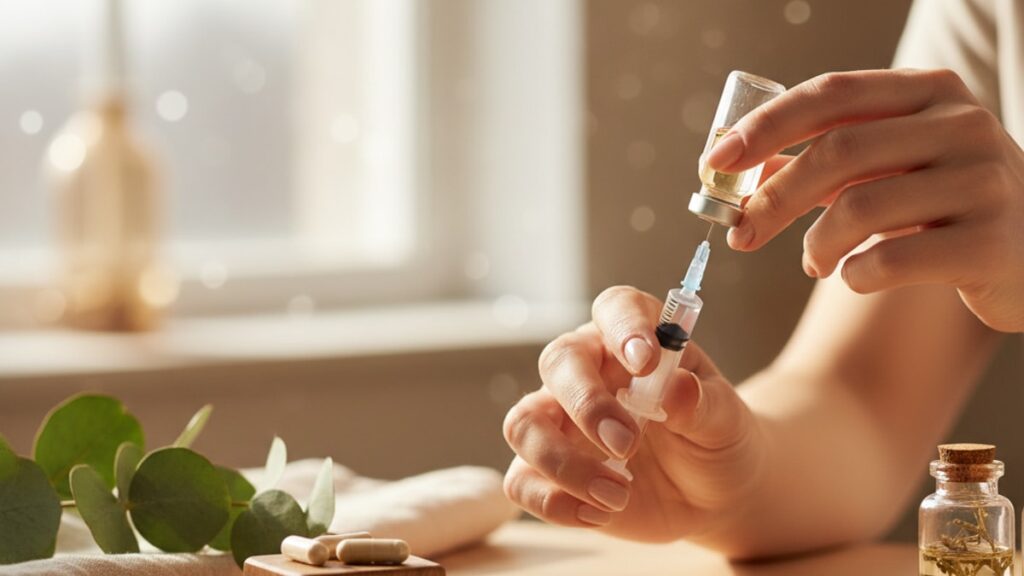
Give Yourself Peptide Injection First Timer Guide
Research from Johns Hopkins Applied Physics Laboratory found that improper reconstitution. Not contamination or dose errors. Accounts for 60–70% of peptide stability failures in home research protocols. The mixing stage determines whether your compound maintains its intended potency or denatures into an inactive solution before you ever load a syringe.
Our team has guided hundreds of researchers through their first peptide protocols. The gap between doing it right and doing it wrong comes down to three things most guides never mention: injection angle, air bubble management during reconstitution, and the order of operations when drawing from a sealed vial.
How do you safely administer your first peptide injection at home?
Self-administering peptides requires reconstituting lyophilised powder with bacteriostatic water at precise ratios, drawing the solution using sterile technique to avoid contamination, and injecting subcutaneously at a 45-degree angle into fatty tissue sites while rotating injection locations to prevent lipohypertrophy. First-time researchers should reconstitute only what they'll use within 28 days and refrigerate mixed solutions at 2–8°C immediately.
Yes, you can safely self-administer research peptides. But the common assumption that 'just add water and inject' oversimplifies three critical failure points. Lyophilised peptides are stable for months at −20°C, but once reconstituted, the clock starts: bacterial contamination risk, protein aggregation from temperature fluctuations, and potency loss from improper pH all accelerate degradation. This guide covers exactly how to reconstitute without introducing air bubbles that oxidise the compound, how to draw a dose without creating positive pressure that pulls contaminants into the vial, and which injection sites minimise discomfort while maximising absorption consistency.
Understanding Peptide Reconstitution Mechanics
Lyophilised peptides arrive as a fine white powder compressed under vacuum. This freeze-dried form is stable because water molecules (which enable hydrolysis reactions that break peptide bonds) have been removed. Reconstitution reverses this: you're reintroducing water to activate the compound for biological use. The ratio matters because peptide concentration affects both absorption kinetics and stability once mixed.
Bacteriostatic water contains 0.9% benzyl alcohol as a bacteriostatic agent, which prevents bacterial growth for up to 28 days after the vial is punctured. Standard reconstitution for most research peptides uses 2–3 mL bacteriostatic water per 5 mg peptide, yielding concentrations of 1.67–2.5 mg/mL. Higher concentrations (less water) increase viscosity and may cause injection site reactions; lower concentrations (more water) require larger injection volumes and accelerate oxidative degradation because more surface area contacts air.
The biggest mistake first-timers make: injecting the bacteriostatic water forcefully into the vial. This creates foam and denatures surface proteins through mechanical shear. Instead, angle the needle against the glass wall and allow the water to run slowly down the side. Let the vial sit undisturbed for 60–90 seconds. The powder will dissolve passively. Swirling gently is acceptable; shaking is not. If particulates remain visible after three minutes, the peptide has aggregated and should not be used.
Sterile Draw Technique and Dose Calculation
Once reconstituted, drawing a dose without contaminating the vial requires understanding pressure dynamics. Every time you insert a needle, you create a sealed system: liquid can't exit unless air enters to replace it. The amateur move is pulling back the plunger immediately. This creates negative pressure that pulls air (and potential contaminants) into the vial through microscopic gaps around the needle.
Proper technique: before inserting the needle into the peptide vial, draw air into the syringe equal to your intended dose volume. Insert the needle, inject that air into the vial (this equalises pressure), then invert the vial and draw the solution slowly. The injected air replaces the liquid volume you're removing, preventing vacuum formation. This also prevents the rubber stopper from bowing inward over repeated draws, which eventually causes stopper particles to shed into the solution.
Dose calculation depends on your reconstitution ratio. Example: 5 mg peptide reconstituted with 2 mL bacteriostatic water = 2.5 mg/mL concentration. For a 250 mcg dose, you need 0.1 mL (which is 10 units on a standard insulin syringe marked in 100-unit increments). Most research peptides use micrograms (mcg), not milligrams. Confusing the two is a tenfold dosing error. Always calculate dose volume before drawing, and double-check your math using the formula: (desired dose in mcg ÷ 1000) ÷ concentration in mg/mL = volume in mL.
Products like Thymalin and Dihexa from Real Peptides ship with reconstitution instructions specific to each compound's molecular weight. Always verify your calculations against the certificate of analysis included with lab-grade peptides.
Subcutaneous Injection Protocol and Site Rotation
Subcutaneous injection targets the fatty tissue layer between skin and muscle. This tissue has slower, more consistent absorption than intramuscular sites and fewer nerve endings. Approved sites include the abdomen (two inches away from the navel in any direction), the outer thigh, and the back of the upper arm. The abdomen is preferred for self-administration because you can see the injection site clearly and pinch tissue easily.
Technique: clean the injection site with an alcohol swab and allow it to dry completely (injecting through wet alcohol burns and increases contamination risk). Pinch a fold of skin to lift the fatty layer away from muscle. Insert the needle at a 45-degree angle. Not perpendicular. A 90-degree angle works only if you have substantial subcutaneous fat; most researchers using short insulin needles (5/16 inch) should angle the needle to avoid hitting muscle. Inject slowly over 3–5 seconds, withdraw the needle, and apply light pressure with a clean gauze pad.
Rotate injection sites with every dose. Injecting the same spot repeatedly causes lipohypertrophy. Localised fat tissue thickening that reduces absorption and creates lumps under the skin. Map your injection sites mentally: if you inject in the right lower abdomen today, use the left lower abdomen next time, then the right thigh, then the left thigh. This rotation cycle prevents tissue damage and maintains consistent absorption kinetics.
After injection, do not massage the site. Peptides absorb through passive diffusion into capillaries. Rubbing increases local blood flow temporarily but also increases the risk of the compound dispersing unevenly or leaking back through the injection track.
Give Yourself Peptide Injection First Timer Guide: Preparation Comparison
| Preparation Step | Correct Technique | Common Mistake | Impact of Error |
|---|---|---|---|
| Reconstitution | Angle needle against vial wall, inject water slowly down the side, allow 60–90 seconds passive dissolution | Inject water forcefully into powder centre, shake vial to mix faster | Mechanical shearing denatures surface proteins, reduces bioavailability by 20–40% |
| Air Pressure Management | Draw air equal to dose volume, inject into vial before drawing liquid | Pull liquid immediately without replacing volume with air | Creates vacuum that pulls contaminants through needle seal, stopper degradation over repeated use |
| Needle Angle | Insert at 45-degree angle into pinched subcutaneous tissue | Insert perpendicular (90 degrees) without assessing fat layer depth | Intramuscular injection increases absorption speed variability, higher bruising risk |
| Injection Speed | Inject over 3–5 seconds, withdraw needle slowly | Rapid injection (under 2 seconds), immediate needle withdrawal | Tissue trauma increases, solution may leak back through injection track before absorption |
| Site Rotation | Rotate between 4+ distinct sites (abdomen quadrants, thighs) across injection schedule | Reuse same convenient site repeatedly | Lipohypertrophy develops, absorption consistency drops 30–50% in affected tissue |
| Bottom Line | Proper technique maintains peptide stability and absorption consistency. Errors compound across a protocol | Single-step mistakes reduce effectiveness, repeated errors make protocols unreliable |
Key Takeaways
- Lyophilised peptides must be reconstituted with bacteriostatic water at precise ratios (typically 2–3 mL per 5 mg) to maintain stability and absorption consistency once mixed.
- The most common reconstitution error is injecting water too forcefully, which denatures surface proteins through mechanical shear and reduces bioavailability by up to 40%.
- Proper sterile draw technique requires injecting air into the vial before drawing liquid. This equalises pressure and prevents contamination from vacuum formation.
- Subcutaneous injection at a 45-degree angle into pinched fatty tissue (abdomen, outer thigh) provides the most consistent absorption and lowest nerve-ending density.
- Rotating injection sites across at least four distinct locations prevents lipohypertrophy, which reduces absorption by 30–50% in repeatedly used tissue.
- Reconstituted peptides remain stable for 28 days when refrigerated at 2–8°C. Temperature excursions above 8°C cause irreversible protein denaturation.
What If: Peptide Injection Scenarios
What If the Reconstituted Solution Looks Cloudy or Has Floating Particles?
Discard it immediately. Cloudiness indicates protein aggregation or contamination. Properly reconstituted peptides should be completely clear and colourless. Aggregated proteins have altered three-dimensional structure and won't bind to target receptors effectively. This usually happens when the lyophilised powder was exposed to heat before reconstitution or when bacteriostatic water was injected too forcefully. Cloudy solutions also increase injection site reaction risk because aggregated proteins trigger localised immune responses.
What If I Accidentally Inject Air Instead of Solution?
A small air bubble (under 0.1 mL) in a subcutaneous injection is harmless. It will dissipate into surrounding tissue and be absorbed without issue. Subcutaneous tissue tolerates small air volumes because it's not in direct contact with the bloodstream like intravenous routes. However, injecting mostly air wastes your dose and creates discomfort. To prevent this: always hold the syringe needle-up after drawing, tap the barrel to move bubbles to the top, and push the plunger until a small droplet appears at the needle tip before injecting.
What If I Miss My Injection Site and Hit Muscle Instead?
Intramuscular absorption is faster and less predictable than subcutaneous absorption. Peptides designed for slow subcutaneous release may peak too quickly if injected into muscle. You'll likely notice increased soreness at the injection site and possibly a faster onset of effects (if the peptide has noticeable acute effects). If this happens, note the time and observe your response. For the next injection, pinch more tissue and use a shallower angle. Most peptides tolerate occasional intramuscular administration without harm, but consistency matters for protocols spanning weeks or months.
The Unfiltered Truth About First-Time Peptide Injection Anxiety
Here's the honest answer: the fear of injecting yourself is usually worse than the injection itself. The needle used for subcutaneous peptide injection (typically 29–31 gauge, 5/16 inch) is thinner than the needle used to draw blood and shorter than an intramuscular injection needle. The subcutaneous fatty layer has fewer nerve endings than the skin surface or muscle tissue. Most researchers report feeling the alcohol swab more than the needle.
The anxiety comes from the novelty and the sense of permanence. Once you push the plunger, you can't undo it. That's valid. But the alternative. Not conducting the research protocol you've planned. Means the peptides you've acquired sit unused while their potency window closes. The first injection is the hardest because your brain hasn't yet learned that the anticipated pain is disproportionate to the actual sensation. By the third injection, the process feels routine.
The evidence is clear: subcutaneous self-injection has been the standard for insulin administration in diabetic patients since the 1980s, with children as young as seven successfully trained to self-inject. The technique is teachable, reproducible, and safe when sterile protocols are followed. If you've prepared your workspace, calculated your dose correctly, and understand the mechanics, you're ready.
Give yourself peptide injection first timer guide protocols succeed when preparation exceeds hesitation. The learning curve is steep only because you're doing it once. After that, it's mechanical. If needle anxiety persists, start with practice injections using sterile saline and an empty vial. The motor skill transfers directly to actual peptide administration, and the psychological barrier drops when you've already performed the motion successfully.
Frequently Asked Questions
How does give yourself peptide injection first timer guide work?
▼
give yourself peptide injection first timer guide works by combining proven methods tailored to your needs. Contact us to learn how we can help you achieve the best results.
What are the benefits of give yourself peptide injection first timer guide?
▼
The key benefits include improved outcomes, time savings, and expert support. We can walk you through how give yourself peptide injection first timer guide applies to your situation.
Who should consider give yourself peptide injection first timer guide?
▼
give yourself peptide injection first timer guide is ideal for anyone looking to improve their results in this area. Our team can help determine if it’s the right fit for you.
How much does give yourself peptide injection first timer guide cost?
▼
Pricing for give yourself peptide injection first timer guide varies based on your specific requirements. Get in touch for a personalized quote.
What results can I expect from give yourself peptide injection first timer guide?
▼
Results from give yourself peptide injection first timer guide depend on your goals and circumstances, but most clients see measurable improvements. We’re happy to share case examples.
