


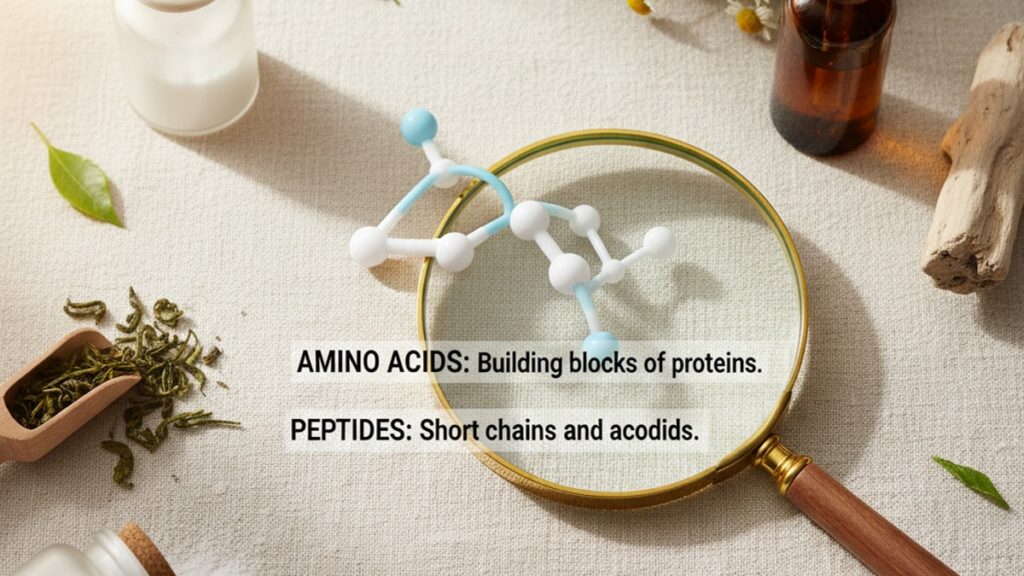
Peptide Terminology Explained — Beginner Dictionary
Research peptides have a reputation for complexity that has nothing to do with the science itself. The barrier is linguistic: amino acid sequencing, lyophilisation, receptor agonism, and half-life calculations all use overlapping terminology from chemistry, pharmacology, and molecular biology without a unified reference framework. A researcher who understands protein synthesis perfectly can still misinterpret a peptide spec sheet if they don't know that 'purity by mass' and 'purity by HPLC' measure different things. We've seen this firsthand. Orders placed based on incorrect assumptions about dosing units, storage protocols applied to the wrong peptide forms, and entire experimental timelines derailed because 'subcutaneous' and 'intravenous' were treated as interchangeable.
Our team at Real Peptides works exclusively with research-grade compounds synthesised through small-batch production with exact amino-acid sequencing. Every peptide we supply includes a certificate of analysis specifying purity, molecular weight, and storage requirements. But those documents assume familiarity with the terminology. This piece covers 40+ essential terms across peptide structure, preparation, storage, administration, and mechanism of action. These are the words that appear in research protocols, supplier specifications, and peer-reviewed literature without glossaries attached. If you're ordering peptides for the first time, designing a dosing protocol, or reviewing a supplier's documentation, this is the baseline vocabulary you need.
What does 'peptide terminology explained beginner dictionary' mean for researchers starting peptide work?
Peptide terminology explained beginner dictionary refers to the foundational language used to describe peptide structure, purity, preparation, administration, and biological activity in research contexts. It includes terms like lyophilisation (freeze-drying), reconstitution (mixing powdered peptide with solvent), receptor agonist (a compound that activates a biological receptor), and half-life (time required for half the peptide to be eliminated from circulation). Understanding these terms prevents dosing errors, storage failures, and misinterpretation of research outcomes. All of which compromise experimental validity.
Here's what most peptide glossaries get wrong: they define terms in isolation without explaining why the distinction matters. Knowing that 'subcutaneous' means 'under the skin' is useless if you don't know that subcutaneous administration produces slower, sustained release compared to intravenous bolus dosing. And that this difference changes the dosing schedule entirely. The rest of this article covers peptide terminology in three layers: structural terms (what peptides are made of), procedural terms (how to handle them), and pharmacological terms (how they work in biological systems).
Peptide Structure and Classification Terms
Peptides are short chains of amino acids linked by peptide bonds. The defining structural feature that separates peptides from proteins is chain length. Peptides contain 2–50 amino acids; proteins contain 50 or more. This isn't arbitrary: shorter chains fold differently, degrade faster, and cross cellular membranes more easily than large proteins. The amino acid sequence. The specific order of amino acids in the chain. Determines the peptide's three-dimensional shape, receptor binding affinity, and biological activity. Change one amino acid in the sequence and the peptide may lose function entirely or gain a completely different mechanism.
Synthetic vs bioidentical peptides: synthetic peptides are manufactured in laboratories through solid-phase peptide synthesis (SPPS), a process that assembles amino acids one at a time in the desired sequence. Bioidentical means the synthetic peptide has the exact same amino acid sequence and structure as the naturally occurring version found in human or animal tissue. Thymalin, for example, is bioidentical to the thymic peptide that regulates immune function. The synthetic version replicates the natural structure with lab-controlled purity.
Lyophilisation is the freeze-drying process that converts liquid peptide solutions into stable powder form. Lyophilised peptides have significantly longer shelf lives than liquid formulations because water accelerates degradation through hydrolysis. The powder is stored at −20°C and remains stable for months or years depending on the specific peptide. Lyophilised form is the standard for research-grade peptides supplied by manufacturers like Real Peptides. It maximises stability during shipping and storage before reconstitution.
Purity by HPLC (high-performance liquid chromatography) measures the percentage of the target peptide in a sample by separating compounds based on molecular properties and detecting the peptide peak. A peptide with 98% purity by HPLC contains 98% of the intended sequence and 2% impurities (truncated sequences, deletion sequences, or solvent residues). Purity by mass, in contrast, measures total peptide content by weight. Including all peptide fragments. A product can be 95% pure by mass but only 90% pure by HPLC if it contains inactive peptide fragments.
Reconstitution and Preparation Terms
Reconstitution is the process of dissolving lyophilised peptide powder in a sterile solvent to create an injectable solution. The most common solvents are bacteriostatic water (sterile water with 0.9% benzyl alcohol to prevent bacterial growth) and sterile saline (0.9% sodium chloride in water). Bacteriostatic water is preferred for multi-dose vials because it inhibits contamination across multiple draws; sterile saline is used for single-dose preparations or peptides incompatible with benzyl alcohol. The reconstitution volume. The total amount of solvent added. Determines the final concentration of the solution.
Concentration and dosing units: peptide doses are expressed in milligrams (mg), micrograms (μg), or international units (IU), and confusion between these units causes the majority of dosing errors. One milligram equals 1,000 micrograms. If a protocol calls for 250μg and the vial contains 5mg of peptide reconstituted in 2mL of bacteriostatic water, the concentration is 2.5mg/mL. Meaning 0.1mL (100 microliters) delivers 250μg. Dosing by IU is peptide-specific: MK 677 (ibutamoren) doses are typically expressed in milligrams, while older peptides like human growth hormone use IU based on bioactivity standardisation.
Osmolality refers to the concentration of solute particles in the reconstituted solution. Peptide solutions with osmolality far outside the physiological range (280–310 mOsm/kg) can cause injection site irritation, tissue damage, or reduced bioavailability. Reconstituting a peptide in plain sterile water creates a hypotonic solution (low osmolality); adding sodium chloride raises osmolality closer to physiological levels. This is why bacteriostatic saline is often preferred over bacteriostatic water for peptides administered subcutaneously at high volumes.
Storage and Stability Terms
Peptide stability is time- and temperature-dependent. Degradation begins the moment the peptide is synthesised and accelerates with heat, light, and moisture exposure. Shelf life is the duration a peptide remains stable at a specified storage temperature, typically measured as the time required for the peptide to degrade to 90% of its original purity. Lyophilised peptides stored at −20°C generally have shelf lives of 12–36 months depending on sequence complexity. Once reconstituted, the same peptide stored at 2–8°C (standard refrigeration) typically remains stable for 28 days in bacteriostatic water.
Temperature excursion is any deviation outside the recommended storage range. For lyophilised peptides, a single excursion above 8°C for more than 24 hours can cause irreversible aggregation. The peptide molecules clump together and lose biological activity. This is undetectable by visual inspection; the powder looks identical before and after degradation. Cold chain refers to the temperature-controlled supply chain required to keep peptides stable from manufacture to end use. Real Peptides ships all lyophilised compounds in insulated packaging with temperature monitoring to prevent excursions during transit.
Photodegradation is peptide breakdown caused by light exposure, particularly UV wavelengths. Peptides containing aromatic amino acids (tryptophan, tyrosine, phenylalanine) are especially photosensitive. Amber vials. The brown glass vials commonly used for peptide storage. Block UV light and significantly slow photodegradation. Reconstituted peptides stored in clear vials under ambient lighting degrade 30–50% faster than those stored in amber vials in the dark.
Administration and Pharmacokinetics Terms
Subcutaneous injection (SC or SQ) delivers peptide into the tissue layer between skin and muscle, where it is absorbed gradually into systemic circulation through capillaries. Subcutaneous administration produces slower onset and longer duration compared to intravenous (IV) injection, which delivers peptide directly into the bloodstream for immediate distribution. Intramuscular (IM) injection delivers peptide into muscle tissue and produces intermediate pharmacokinetics between SC and IV. Route of administration is not interchangeable. A dosing protocol designed for subcutaneous use cannot be directly converted to intravenous without recalculating dose and timing.
Bioavailability is the fraction of administered peptide that reaches systemic circulation in active form. Oral bioavailability of most peptides is near zero because digestive enzymes break peptide bonds in the stomach and intestines before absorption occurs. Subcutaneous bioavailability varies by peptide: small, hydrophobic peptides may achieve 80–90% bioavailability, while larger or more hydrophilic peptides may reach only 50–60%. Cerebrolysin, a neuropeptide preparation, is administered intramuscularly or intravenously because subcutaneous bioavailability would be insufficient for CNS effects.
Half-life (t½) is the time required for plasma concentration of a peptide to decrease by 50% after administration. A peptide with a 4-hour half-life reaches near-complete elimination within 20 hours (five half-lives). Half-life determines dosing frequency: peptides with short half-lives require multiple daily doses to maintain therapeutic levels, while long-acting peptides like Dihexa (reported half-life of several hours with sustained CNS effects) may require only once-daily administration. Terminal half-life refers specifically to the elimination phase after distribution equilibrium is reached.
Mechanism of Action Terms
Receptor agonist describes a peptide that binds to a cellular receptor and activates it, mimicking the effect of the natural ligand. GLP-1 receptor agonists, for example, bind to GLP-1 receptors in pancreatic beta cells and hypothalamic neurons, triggering insulin secretion and satiety signaling. Receptor antagonist, in contrast, binds to a receptor and blocks activation. Preventing the natural ligand from exerting its effect. Affinity refers to the strength of peptide-receptor binding; higher affinity means the peptide binds more tightly and produces effects at lower concentrations.
Selectivity is the degree to which a peptide preferentially binds to its target receptor over other receptors. High selectivity minimises off-target effects. SLU PP 332 Peptide, a mitochondrial uncoupler being studied for metabolic research, demonstrates selectivity for mitochondrial membranes over other cellular structures. This selectivity profile reduces systemic toxicity compared to non-selective uncouplers.
Allosteric modulation occurs when a peptide binds to a site on the receptor distinct from the primary binding site (orthosteric site) and changes receptor activity indirectly. Positive allosteric modulators (PAMs) enhance receptor response to the natural ligand without activating the receptor themselves. Negative allosteric modulators (NAMs) reduce receptor response. This mechanism differs from direct agonism or antagonism and often produces more physiologically nuanced effects.
Peptide Terminology Explained Beginner Dictionary: Research Applications Comparison
| Term Category | Key Terms Covered | Why It Matters | Practical Application | Common Misunderstanding | Professional Assessment |
|---|---|---|---|---|---|
| Structural | Amino acid sequence, bioidentical, lyophilisation, HPLC purity | Determines peptide identity, stability, and dosing accuracy | Reading certificates of analysis, verifying supplier quality | 'Purity by mass' and 'purity by HPLC' measure different aspects. Only HPLC purity indicates sequence accuracy | Structural terminology is the foundation. Errors here cascade through every downstream step |
| Preparation | Reconstitution, bacteriostatic water, concentration, osmolality | Affects solubility, sterility, and injection tolerability | Calculating reconstitution volume and final dose per injection | Plain water vs bacteriostatic water distinction matters only for multi-dose vials. Single-dose vials can use either | Preparation errors are the most common cause of experimental failures in peptide research |
| Storage | Shelf life, temperature excursion, cold chain, photodegradation | Determines how long peptide remains active and viable | Establishing storage SOPs, validating shipping conditions | A peptide that 'looks fine' after temperature excursion may have lost 50%+ activity. Degradation is invisible | Storage discipline separates successful long-term studies from inconsistent results |
| Administration | Subcutaneous, bioavailability, half-life, dosing frequency | Controls pharmacokinetic profile and experimental timing | Designing dosing schedules, selecting administration route | IV and SC are not interchangeable routes. The same peptide produces different plasma curves depending on route | Route selection should match the research question. Chronic exposure studies require different routes than acute dosing |
| Mechanism | Receptor agonist, selectivity, affinity, allosteric modulation | Explains how peptide produces biological effects | Interpreting study results, predicting off-target effects | High affinity does not guarantee high efficacy. A peptide can bind tightly without producing maximal receptor activation | Mechanism vocabulary bridges peptide chemistry and biological outcomes. It's where specifications become predictions |
Key Takeaways
- Peptide purity by HPLC measures sequence accuracy and is the standard for research-grade compounds. Purity by mass includes inactive fragments and is not equivalent.
- Lyophilised peptides stored at −20°C remain stable for 12–36 months; once reconstituted in bacteriostatic water and refrigerated at 2–8°C, stability drops to approximately 28 days.
- Subcutaneous and intravenous administration produce fundamentally different pharmacokinetic profiles. Dosing protocols are route-specific and cannot be directly converted.
- Half-life determines dosing frequency: a peptide with a 4-hour half-life requires multiple daily doses to maintain steady-state plasma levels, while longer half-lives allow once-daily or less frequent administration.
- Temperature excursions above 8°C cause irreversible peptide aggregation that visual inspection cannot detect. Cold chain integrity is non-negotiable for peptide stability.
- Reconstitution volume determines final concentration: a 5mg peptide reconstituted in 2mL produces 2.5mg/mL, meaning each 0.1mL contains 250μg. Dosing errors occur when volume and concentration are confused.
What If: Peptide Terminology Scenarios
What If I Receive a Peptide with Two Different Purity Percentages on the Certificate of Analysis?
Use the HPLC purity figure for dosing calculations and experimental planning. It represents the percentage of correctly sequenced, biologically active peptide in the sample. Purity by mass includes truncated sequences, deletion peptides, and other fragments that contribute to total weight but not to biological activity. If a certificate lists 95% purity by mass and 92% purity by HPLC, the effective dose is based on the 92% figure. This distinction matters most when comparing suppliers: a peptide advertised as '98% pure' without specifying the method may actually be only 90% pure by HPLC.
What If My Reconstituted Peptide Solution Looks Cloudy After Mixing?
Cloudiness indicates incomplete dissolution, aggregation, or contamination. Do not use the solution. Properly reconstituted peptide solutions should be clear and colourless (or faintly straw-coloured for some peptides). Cloudiness after gentle swirling suggests the peptide has aggregated, which occurs when the wrong solvent is used, the peptide was stored incorrectly before reconstitution, or the reconstitution was performed at room temperature instead of refrigerated. Discard the vial and review the reconstitution protocol. Cartalax Peptide and similar short-chain peptides should dissolve completely in bacteriostatic water within 60 seconds of gentle agitation.
What If the Dosing Protocol Specifies 'IU' but My Peptide Vial Lists Only Milligrams?
Contact the protocol author or supplier for the conversion factor specific to that peptide. IU (international units) are bioactivity-based measurements that vary by compound and cannot be universally converted from mass units. For example, growth hormone dosing uses IU standardised against a reference preparation, but Hexarelin doses are expressed in micrograms because no IU standard exists. Attempting to convert milligrams to IU without a validated conversion factor introduces dosing error that compromises the entire study.
The Practical Truth About Peptide Terminology
Here's the honest answer: most peptide terminology confusion isn't caused by complexity. It's caused by inconsistent usage across suppliers, researchers, and publications. The term 'purity' appears on every certificate of analysis, but whether it refers to HPLC purity, mass purity, or crude purity is often unstated. Dosing units shift between milligrams, micrograms, and IU without conversion factors. Storage recommendations vary by supplier even for identical peptides. This isn't a knowledge problem; it's a standardisation problem.
The best defence is specificity. When ordering peptides, request HPLC purity data, not just 'purity'. When designing protocols, specify reconstitution volume, solvent type, and final concentration in the methods section. Not just 'reconstitute per manufacturer instructions'. When reading supplier documentation, verify that temperature ranges, dosing units, and administration routes match your experimental design exactly. We've worked with research teams that lost months of work because 'subcutaneous' was interpreted as 'intradermal' or 'refrigerate' was assumed to mean 'freeze'. Peptide research tolerates no ambiguity in terminology. The compounds are too potent and the margins too narrow.
Research-Grade Peptide Standards and Quality Verification
Research-grade peptides are synthesised to specifications that exceed the minimum purity thresholds used in preliminary screening studies. At Real Peptides, research-grade means ≥98% purity by HPLC, verified molecular weight by mass spectrometry, and sterility testing on every batch. These standards exist because even small impurities. 2–3% of the sample. Can produce off-target effects, alter solubility, or interfere with downstream assays in ways that compromise reproducibility. Certificate of analysis (CoA) documentation includes the peptide's exact molecular weight, HPLC chromatogram showing purity profile, and solvent residue analysis.
Endotoxin testing measures bacterial endotoxin contamination, which triggers inflammatory responses even in peptides that pass sterility testing. Endotoxin levels are expressed in endotoxin units per milligram (EU/mg); research-grade peptides should contain <1.0 EU/mg. Tesofensine, used in metabolic research, requires low endotoxin levels because inflammation affects the metabolic pathways being studied. Undetected endotoxin contamination confounds results.
Sequence verification confirms that the synthesised peptide matches the intended amino acid sequence exactly. This is performed through peptide mapping (enzymatic digestion followed by mass spectrometry analysis of fragments) or direct Edman degradation sequencing. Sequence verification catches synthesis errors like amino acid substitutions, deletions, or additions that would otherwise go unnoticed until the peptide fails to produce expected biological activity. Real Peptides provides sequence verification data on request for custom peptide synthesis orders.
Understanding peptide terminology isn't optional for research work. It's the baseline that separates reliable experimental design from guesswork. The terms covered here appear in every supplier specification sheet, research protocol, and peer-reviewed publication involving peptides. They describe not just what peptides are, but how they behave under different conditions, how they interact with biological systems, and what handling errors compromise their stability and activity. If a peptide fails to produce expected results, terminology gaps are the first place to investigate: wrong solvent, incorrect dosing unit conversion, improper storage, or route mismatch. We've seen all of these failures across hundreds of research collaborations. And in every case, the root cause traces back to terminology that was assumed rather than verified. Peptide research compounds the consequences of small errors exponentially. A 10% dosing miscalculation in a six-week study means six weeks of unusable data. A storage protocol that assumes 'refrigerate' means 'freeze' destroys entire batches. Explore our full peptide collection for research-grade compounds synthesised with exact amino-acid sequencing and comprehensive certificates of analysis. Because terminology matters most when precision is non-negotiable.
Frequently Asked Questions
What is the difference between lyophilised and liquid peptide formulations?
▼
Lyophilised peptides are freeze-dried into powder form, which dramatically extends shelf life by removing water that accelerates degradation through hydrolysis. Liquid formulations are pre-mixed solutions that offer convenience but typically remain stable for only 28–90 days even under refrigeration. Lyophilised peptides stored at −20°C can remain stable for 12–36 months, making them the standard for research-grade compounds where long-term stability and shipping reliability are critical.
Can I use sterile water instead of bacteriostatic water for peptide reconstitution?
▼
Yes, but only for single-dose vials used immediately. Sterile water lacks the bacteriostatic agent (typically 0.9% benzyl alcohol) that prevents bacterial growth in multi-dose vials accessed multiple times over days or weeks. If you reconstitute a peptide in sterile water and draw from the vial across multiple days, contamination risk increases significantly. Bacteriostatic water is the safer choice for any vial that will be used more than once.
How much does research-grade peptide purity affect experimental outcomes?
▼
Purity differences of even 2–3% can introduce off-target effects, alter solubility, or interfere with assays in ways that reduce reproducibility. A peptide that is 95% pure by HPLC contains 5% impurities — truncated sequences, deletion peptides, or synthesis by-products — that may bind to unintended receptors or skew dose-response curves. Research-grade standards (≥98% HPLC purity) exist specifically to minimise these variables and ensure that observed effects are attributable to the target peptide, not contaminants.
What happens if a lyophilised peptide is exposed to room temperature during shipping?
▼
A single temperature excursion above 8°C for more than 24 hours can cause irreversible aggregation — peptide molecules clump together and lose biological activity. This degradation is invisible: the powder looks identical before and after, but potency drops by 30–60% or more. This is why cold chain integrity during shipping is non-negotiable. Reputable suppliers like Real Peptides use insulated packaging with temperature monitoring to prevent excursions during transit.
Why are peptide doses sometimes listed in IU instead of milligrams?
▼
IU (international units) measure bioactivity rather than mass — they reflect how much biological effect the peptide produces in a standardised assay. This unit is used when peptides vary slightly in potency batch-to-batch despite having identical mass, or when comparing synthetic peptides to natural reference standards. Growth hormone, for example, uses IU because early preparations varied in purity. Most modern research peptides use milligrams or micrograms because synthesis quality is now consistent enough that mass equals activity.
How do I convert between subcutaneous and intravenous dosing for the same peptide?
▼
You cannot directly convert — the two routes produce fundamentally different pharmacokinetic profiles. Intravenous administration delivers peptide directly into circulation for immediate peak plasma concentration and rapid elimination, while subcutaneous injection produces slower absorption, lower peak levels, and sustained exposure. A dose optimised for subcutaneous use will be inappropriate for IV use and vice versa. Route-specific dosing must be established through separate pilot studies or derived from published pharmacokinetic data.
What does ‘receptor agonist’ mean in practical terms for peptide research?
▼
A receptor agonist is a peptide that binds to a cellular receptor and activates it, mimicking the effect of the natural signalling molecule. In practical terms, this means the peptide ‘turns on’ specific biological pathways — increasing enzyme activity, triggering hormone release, or activating gene expression. GLP-1 receptor agonists, for example, bind to GLP-1 receptors and stimulate insulin secretion the same way natural GLP-1 does. Understanding agonist vs antagonist mechanism is essential for predicting peptide effects and designing appropriate experimental controls.
Why does peptide half-life determine dosing frequency?
▼
Half-life is the time required for plasma concentration to drop by 50%. A peptide with a 4-hour half-life is nearly eliminated (less than 3% remaining) within 20 hours. To maintain steady therapeutic levels, dosing must occur before significant elimination happens — which for short half-life peptides means multiple doses per day. Longer half-life peptides (8–12 hours) allow once-daily dosing, while very long-acting peptides may require dosing only every few days. Mismatched dosing frequency relative to half-life produces either subtherapeutic troughs or excessive accumulation.
What should I look for in a peptide certificate of analysis?
▼
A complete certificate of analysis should include HPLC purity percentage, confirmed molecular weight (by mass spectrometry), HPLC chromatogram showing the purity profile, endotoxin testing results (typically <1.0 EU/mg for research use), and peptide sequence verification. Look specifically for 'purity by HPLC' rather than generic 'purity' — the HPLC figure represents the percentage of correctly sequenced, biologically active peptide. Certificates that omit chromatograms or sequence verification data cannot be independently verified.
Can peptides be stored long-term after reconstitution?
▼
Most reconstituted peptides in bacteriostatic water remain stable for approximately 28 days when refrigerated at 2–8°C. Beyond this window, degradation accelerates even under proper refrigeration. Lyophilised peptides, in contrast, remain stable for 12–36 months at −20°C. If long-term storage of reconstituted peptide is required, aliquoting the solution into single-use portions and freezing at −20°C or −80°C can extend stability, but freeze-thaw cycles must be minimised — each cycle degrades the peptide incrementally.
How does peptide selectivity affect experimental design?
▼
Selectivity is the degree to which a peptide preferentially binds its target receptor over other receptors. High selectivity minimises off-target effects, allowing cleaner attribution of observed outcomes to the intended biological pathway. Low selectivity means the peptide may activate multiple receptors, producing secondary effects that confound interpretation. When designing experiments, selectivity data helps predict whether observed effects are receptor-specific or result from broader pathway activation — this informs control group design and dosing range selection.
What is the difference between osmolality and concentration in reconstituted peptide solutions?
▼
Concentration measures the amount of peptide per unit volume (e.g., 2.5mg/mL), while osmolality measures the total concentration of all dissolved particles — including the peptide, salts, and preservatives — expressed in mOsm/kg. Osmolality affects injection tolerability: solutions far outside the physiological range (280–310 mOsm/kg) cause tissue irritation and can reduce bioavailability. Reconstituting peptides in bacteriostatic saline rather than plain water raises osmolality closer to physiological levels, improving tolerability for subcutaneous administration at higher volumes.
