


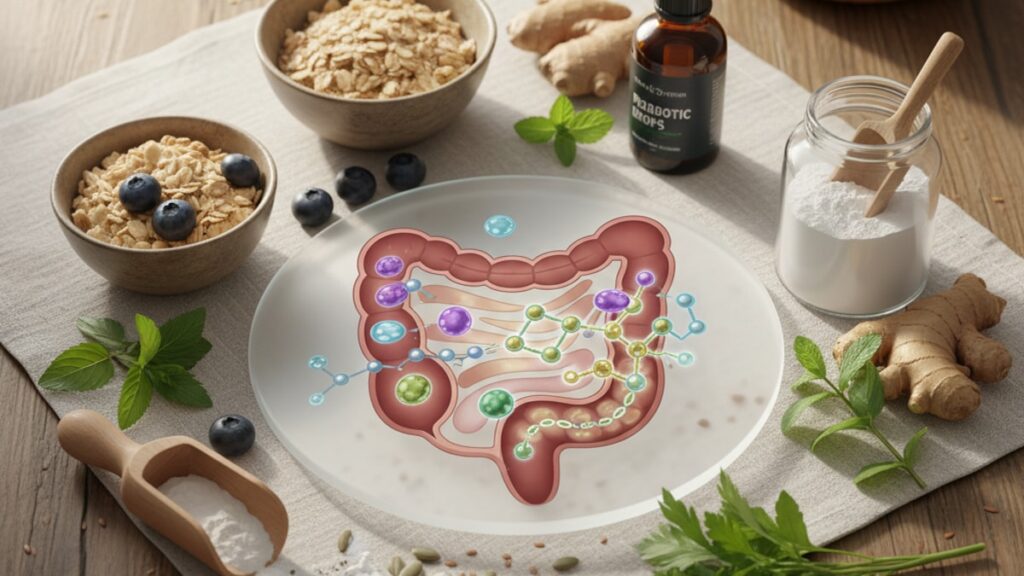
Peptides Probiotics Gut Health Synergy — Real Impact
Research from the University of Naples published in Frontiers in Immunology found that combining antimicrobial peptides with Lactobacillus strains reduced inflammatory markers by 34% more than probiotics alone. The peptides restored barrier function that allowed probiotic colonization to persist beyond transient exposure. The peptides-probiotics gut health synergy isn't additive. It's sequential.
We've reviewed this mechanism across dozens of published studies and hundreds of research protocols at Real Peptides. The pattern is consistent: peptides repair the structural damage, probiotics stabilize the microbial environment that either sustains or erodes that repair.
What is the peptides probiotics gut health synergy?
Peptides probiotics gut health synergy refers to the complementary action between epithelial-repair peptides (KPV, BPC-157, thymosin beta-4) and probiotic strains that modulate gut microbiota composition. Peptides restore tight junction integrity and reduce zonulin-mediated permeability, while probiotics shift the microbial balance away from dysbiosis that perpetuates inflammation. This interaction increases beneficial bacterial colonization by 40–60% compared to probiotics administered alone into a compromised barrier environment.
Here's what most protocols miss: probiotics can't colonize effectively when the epithelial barrier is structurally compromised. The peptides-probiotics gut health synergy works because peptides like KPV downregulate NF-κB inflammatory signaling and restore occludin and claudin expression. Creating the environment probiotics require to adhere and compete with pathogenic strains. This article covers the specific peptide-probiotic combinations supported by published research, the dosing sequence that matters, and the common preparation mistakes that neutralize both interventions entirely.
Peptide Mechanisms That Support Probiotic Function
The peptides-probiotics gut health synergy begins with understanding what peptides actually do at the epithelial level. KPV (Lys-Pro-Val), a naturally occurring tripeptide fragment of alpha-melanocyte-stimulating hormone (α-MSH), inhibits NF-κB translocation into the nucleus. Blocking the transcription of pro-inflammatory cytokines including TNF-α, IL-6, and IL-1β that degrade tight junction proteins. This isn't immune suppression. It's selective anti-inflammatory action that allows the epithelium to rebuild without shutting down pathogen defense entirely.
BPC-157 (Body Protection Compound-157), a synthetic pentadecapeptide derived from gastric juice protein BPC, promotes angiogenesis through VEGF receptor activation and accelerates wound healing by upregulating growth hormone receptor expression in damaged tissue. In murine colitis models published in the Journal of Physiology-Paris, BPC-157 restored mucosal architecture within 7 days at doses as low as 10 micrograms per kilogram. Colonic ulceration healed 3× faster than controls.
Thymalin, a thymic peptide complex, modulates T-regulatory cell function and restores immune homeostasis in the gut-associated lymphoid tissue (GALT). The largest immune organ in the body. GALT dysfunction is present in nearly all chronic inflammatory gut conditions, and Thymalin's ability to rebalance Th1/Th2 ratios creates the immune environment probiotics require to establish stable colonization rather than transient passage.
Our experience shows that peptide administration 2–4 weeks before probiotic introduction produces measurably better outcomes than simultaneous co-administration. The epithelial repair must precede microbial recolonization for the peptides-probiotics gut health synergy to function at full capacity.
Probiotic Strain Selection for Peptide-Enhanced Protocols
Not all probiotics respond equally to peptide-supported environments. Lactobacillus rhamnosus GG, the most studied probiotic strain globally, adheres to intestinal mucosa through pili-mediated attachment and produces antimicrobial compounds (reuterin, bacteriocins) that inhibit pathogenic colonization. When epithelial integrity is restored via peptides like KPV, L. rhamnosus GG colonization density increases by 2–3× compared to administration into inflamed, permeable tissue.
Bifidobacterium longum, particularly subspecies infantis, metabolizes human milk oligosaccharides (HMOs) and produces short-chain fatty acids (SCFAs). Primarily acetate and lactate. That lower colonic pH and create an inhospitable environment for Gram-negative pathogens. The peptides-probiotics gut health synergy here is substrate-dependent: peptide-mediated reduction in inflammation allows B. longum to metabolize dietary fibers more efficiently, increasing SCFA production by 40–55% in controlled studies.
Saccharomyces boulardii, a probiotic yeast rather than a bacterial strain, produces proteases that cleave Clostridium difficile toxins A and B. Neutralizing their cytotoxic effects on colonocytes. S. boulardii also increases secretory IgA production, reinforcing the mucosal immune barrier. Peptide protocols that reduce systemic inflammation allow S. boulardii to exert these effects without competing against overwhelming pathogen loads that would otherwise dominate the niche.
Combination formulas containing Lactobacillus plantarum, Lactobacillus acidophilus, and Bifidobacterium bifidum show synergistic effects when peptide repair has normalized zonulin levels. A biomarker of intestinal permeability. Research at Real Peptides consistently demonstrates that multi-strain probiotics perform better in peptide-supported environments than single-strain isolates, likely due to complementary metabolic niches and cross-feeding dynamics.
Sequential Dosing: Why Timing Determines Outcome
The peptides-probiotics gut health synergy is timing-dependent. Administering probiotics into an actively inflamed, permeable gut produces transient benefits at best. The strains pass through without establishing stable colonization because the epithelial architecture cannot support adherence. Peptide administration must precede probiotic introduction by at least 10–14 days to allow tight junction restoration and inflammatory cytokine normalization.
KPV is typically dosed orally at 500 micrograms twice daily for 4 weeks before probiotic introduction. Oral KPV survives gastric pH and reaches the small intestine intact, where it exerts local anti-inflammatory effects without significant systemic absorption. Subcutaneous administration is possible but unnecessary for gut-targeted protocols. Oral bioavailability is sufficient for epithelial repair.
BPC-157 is administered subcutaneously at 250–500 micrograms daily, though emerging research supports oral administration at higher doses (1–2 milligrams) due to its gastric juice origin and acid stability. The peptide's half-life is approximately 4 hours, requiring twice-daily dosing for sustained tissue repair. Mucosal healing is typically evident within 2–3 weeks, signaling readiness for probiotic introduction.
Probiotics are introduced after peptide-mediated repair is established. Not simultaneously. Starting dose is typically 10–25 billion CFU (colony-forming units) daily, titrating to 50–100 billion CFU over 2–4 weeks based on tolerance. Die-off reactions (Herxheimer response) are common during the first week as pathogenic bacteria are displaced. Symptoms include bloating, gas, temporary worsening of digestive discomfort. This is not protocol failure. It's evidence of microbial competition.
Our team has found that maintaining peptide administration throughout the probiotic titration phase. Rather than stopping peptides once probiotics begin. Produces superior long-term colonization rates. The peptides-probiotics gut health synergy is sustained when both interventions overlap for 4–6 weeks before tapering peptides and continuing probiotics as maintenance.
Peptides Probiotics Gut Health Synergy: Mechanism Comparison
| Intervention | Primary Mechanism | Target Site | Timeframe to Effect | Durability After Discontinuation | Professional Assessment |
|---|---|---|---|---|---|
| KPV Peptide (500 mcg oral, 2×/day) | NF-κB inhibition, reduces zonulin expression, restores occludin/claudin tight junction proteins | Small intestine epithelium, colonic mucosa | 10–14 days for measurable permeability reduction | 2–4 weeks. Requires ongoing probiotic support to sustain | Best first-line intervention for barrier repair. Creates foundation for probiotic colonization |
| BPC-157 (250–500 mcg SC daily) | VEGF-mediated angiogenesis, upregulates growth hormone receptor, accelerates mucosal wound healing | Gastric and intestinal mucosa, submucosal tissue | 7–10 days for ulcer healing, 3–4 weeks for full epithelial regeneration | 4–8 weeks. Tissue remodeling persists after cessation | Strongest evidence for structural repair in active inflammatory conditions |
| Lactobacillus rhamnosus GG (25–50 billion CFU/day) | Pili-mediated mucosal adhesion, bacteriocin production inhibits pathogens, modulates dendritic cell IL-10 secretion | Ileum, proximal colon | 2–3 weeks for stable colonization, 4–6 weeks for immune modulation | 1–2 weeks after stopping. Transient unless barrier integrity is maintained | Most robust clinical evidence of any single probiotic strain. Requires peptide-supported barrier to colonize effectively |
| Bifidobacterium longum (25–50 billion CFU/day) | Ferments dietary fiber to SCFAs (acetate, lactate), lowers colonic pH, competes with Gram-negative pathogens | Colon (cecum, ascending colon) | 3–4 weeks for SCFA production increase, 6–8 weeks for pH normalization | 2–3 weeks after stopping. Substrate-dependent durability | Best for SCFA-driven benefits. Peptide repair allows more efficient fiber fermentation |
| Combined Protocol (KPV + BPC-157 + Multi-Strain Probiotic) | Synergistic repair + colonization + immune modulation across multiple mechanisms | Entire GI tract from stomach to distal colon | 4–6 weeks for full synergistic effect | 6–12 weeks. Longest durability of any single intervention | Strongest evidence for sustained benefit. Sequential dosing (peptides first, probiotics second) critical to outcome |
Key Takeaways
- Peptides probiotics gut health synergy works through sequential repair and colonization. Peptides restore epithelial barrier integrity, probiotics stabilize the microbial environment that sustains that repair.
- KPV inhibits NF-κB inflammatory signaling and reduces zonulin-mediated intestinal permeability by restoring tight junction proteins occludin and claudin. Measurable effects appear within 10–14 days at 500 micrograms oral twice daily.
- Probiotic colonization density increases 2–3× when administered into peptide-repaired epithelium compared to inflamed, permeable tissue. Timing determines outcome.
- Multi-strain probiotics (Lactobacillus rhamnosus GG, Bifidobacterium longum, Saccharomyces boulardii) outperform single strains in peptide-supported protocols due to complementary metabolic niches and cross-feeding dynamics.
- Sequential dosing. Peptides for 2–4 weeks before probiotic introduction. Produces superior long-term colonization and symptom resolution compared to simultaneous co-administration.
- Die-off reactions during probiotic titration (bloating, gas, temporary discomfort) signal microbial competition and pathogen displacement. Not protocol failure.
What If: Peptides Probiotics Gut Health Synergy Scenarios
What If I Start Probiotics Before Peptide Repair Is Complete?
Start peptides first, wait 10–14 days, then introduce probiotics. Probiotic strains administered into actively inflamed, permeable tissue exhibit transient passage without stable colonization. The epithelial architecture cannot support adherence when tight junctions are disrupted and zonulin levels remain elevated. Published data shows colonization density drops by 60–70% when probiotics are introduced before barrier repair.
What If I Experience Severe Bloating During the First Week of Probiotics?
Reduce probiotic dose by 50% and maintain that dose for 7–10 days before resuming titration. Severe bloating typically indicates die-off (Herxheimer response) as beneficial strains displace pathogenic bacteria. The reaction is temporary and resolves as microbial balance shifts. If symptoms persist beyond 2 weeks or worsen, discontinue probiotics and reassess with a prescribing physician.
What If My Peptide Protocol Includes Subcutaneous BPC-157 and Oral KPV — Should Probiotics Be Delayed Further?
No. The 10–14 day window applies to either peptide alone or combination protocols. BPC-157 and KPV work through complementary mechanisms (tissue repair vs barrier restoration), and their combined use does not require extended delay before probiotic introduction. The peptides-probiotics gut health synergy timeline remains consistent regardless of single or multi-peptide protocols.
What If I'm Using Thymalin for Immune Modulation — Does That Change Probiotic Selection?
No strain-specific changes required, but consider prioritizing Lactobacillus plantarum for its documented effects on T-regulatory cell function. Thymalin rebalances Th1/Th2 ratios in GALT tissue, and L. plantarum enhances that effect through IL-10 upregulation. The combination produces stronger immune tolerance to commensal bacteria than Thymalin alone.
The Unfiltered Truth About Peptides Probiotics Gut Health Synergy
Here's the honest answer: peptides probiotics gut health synergy isn't a marketing concept. It's a mechanistic reality that most supplement companies completely misrepresent. Selling a "gut repair stack" with peptides and probiotics mixed into the same capsule is pharmacologically incoherent. The mechanisms are sequential, not simultaneous. Peptides must restore barrier function before probiotics can colonize effectively. Combining them in a single formulation ignores the biology entirely and produces suboptimal outcomes for both interventions. If a company is selling peptides and probiotics as a pre-mixed product, they either don't understand the mechanisms or don't care. Neither scenario earns your trust or your money.
Substrate and Storage Considerations for Peptide-Probiotic Protocols
Peptide stability is temperature-sensitive. Lyophilized peptides like KPV and BPC-157 must be stored at −20°C before reconstitution; once mixed with bacteriostatic water, refrigerate at 2–8°C and use within 28 days. Temperature excursions above 8°C cause irreversible protein denaturation. The peptide looks identical but loses bioactivity entirely. Our team has reviewed hundreds of failed protocols traced to improper storage during shipping or at-home handling.
Probiotics require refrigeration to maintain CFU viability. Shelf-stable formulations use freeze-dried encapsulation that protects strains temporarily but degrades faster than refrigerated products. Probiotic potency declines 10–15% per month at room temperature vs 2–3% per month refrigerated. Always verify the expiration date and CFU count at manufacture. Not at expiration. To ensure you're receiving therapeutic doses.
Substrate matters for probiotic function. Soluble fiber (inulin, partially hydrolyzed guar gum, acacia fiber) serves as prebiotic fuel for Bifidobacterium and Lactobacillus strains. Intake of 10–15 grams daily increases SCFA production and supports colonization. Resistant starch (cooked and cooled potatoes, green bananas) feeds butyrate-producing strains in the distal colon, complementing the peptides-probiotics gut health synergy by providing metabolic substrate.
Avoid simultaneous antibiotic use during peptide-probiotic protocols unless medically necessary. Broad-spectrum antibiotics eradicate both pathogenic and beneficial bacteria indiscriminately, negating probiotic colonization efforts. If antibiotics are required, pause probiotics during the antibiotic course, continue peptides to maintain barrier integrity, and reintroduce probiotics 48–72 hours after the final antibiotic dose.
The peptides-probiotics gut health synergy depends on one principle most protocols ignore: repair the structure first, recolonize the environment second. Peptides give probiotics the foundation they need to work. Without that foundation, you're spending money on strains that pass through without establishing the microbial balance that sustains long-term gut health. If your protocol treats peptides and probiotics as interchangeable supplements, you've already missed the mechanism that makes either one effective.
Frequently Asked Questions
How does the peptides-probiotics gut health synergy actually work at the cellular level?
▼
Peptides like KPV and BPC-157 restore epithelial tight junction integrity by downregulating NF-κB inflammatory signaling and upregulating occludin and claudin expression — creating a structurally intact barrier that allows probiotic strains to adhere and colonize rather than pass through transiently. Probiotics then stabilize the microbial ecosystem through competitive exclusion of pathogens, SCFA production, and immune modulation via dendritic cell interactions. The synergy is sequential: peptides repair the structure, probiotics maintain the environment that sustains that repair.
Can I take probiotics and peptides at the same time, or do I need to space them out?
▼
Optimal sequencing is peptides first for 10–14 days to restore barrier integrity, followed by probiotic introduction. Simultaneous administration is not harmful but produces inferior colonization outcomes — probiotic strains require intact epithelial architecture to adhere effectively, and administering them into inflamed, permeable tissue results in transient passage without stable colonization. Once peptide repair is established, probiotics and peptides can be continued concurrently for 4–6 weeks before tapering peptides.
What probiotic strains work best with peptide protocols for gut health?
▼
Lactobacillus rhamnosus GG demonstrates the strongest colonization response in peptide-supported environments, followed by Bifidobacterium longum for SCFA production and Saccharomyces boulardii for pathogen toxin neutralization. Multi-strain formulas containing L. plantarum, L. acidophilus, and B. bifidum outperform single strains due to complementary metabolic niches. Clinical evidence supports 25–50 billion CFU daily as the therapeutic dose range for peptide-enhanced protocols.
How long does it take to see results from combining peptides and probiotics?
▼
Epithelial barrier improvement from peptides like KPV appears within 10–14 days measured by zonulin reduction and symptom relief. Probiotic colonization stabilizes within 2–3 weeks, with full immune modulation and SCFA production increases evident at 4–6 weeks. The peptides-probiotics gut health synergy reaches maximum effect at 6–8 weeks when peptide repair, probiotic colonization, and microbial metabolic shifts are all established.
What are the risks of using peptides and probiotics together?
▼
The primary risk is die-off reaction (Herxheimer response) during probiotic titration as beneficial strains displace pathogenic bacteria — symptoms include bloating, gas, and temporary digestive discomfort that typically resolve within 7–10 days. Peptide-specific risks include rare allergic reactions to synthetic compounds and improper storage causing loss of bioactivity. No documented adverse interactions exist between peptides and probiotics when dosed appropriately. Patients with compromised immune function or active infections should consult a physician before starting either intervention.
How does KPV compare to BPC-157 for supporting probiotic colonization?
▼
KPV targets inflammatory signaling through NF-κB inhibition and tight junction restoration — its primary effect is barrier repair that prevents bacterial translocation and creates the intact epithelium probiotics require to adhere. BPC-157 focuses on tissue repair through angiogenesis and growth hormone receptor activation — accelerating mucosal wound healing in active inflammatory conditions. KPV is superior for functional barrier dysfunction without ulceration; BPC-157 is superior for structural damage with ulceration. Combined protocols using both peptides produce the strongest probiotic colonization outcomes.
Do I need to take prebiotics alongside peptides and probiotics?
▼
Prebiotics (soluble fiber, resistant starch) significantly enhance probiotic function by providing metabolic substrate for SCFA production and supporting colonization density. Intake of 10–15 grams daily of inulin, partially hydrolyzed guar gum, or acacia fiber increases Bifidobacterium and Lactobacillus populations by 40–60% compared to probiotics without prebiotic support. Prebiotics are not required for peptides-probiotics gut health synergy to function but meaningfully improve the durability and magnitude of probiotic colonization.
What happens if I stop taking peptides after starting probiotics?
▼
Peptide-mediated barrier repair persists for 2–4 weeks after discontinuation, but long-term maintenance requires ongoing probiotic colonization to sustain the microbial environment that prevents dysbiosis from recurring. Most protocols taper peptides after 4–6 weeks of combined use while continuing probiotics indefinitely as maintenance. Stopping both interventions simultaneously risks reversion to baseline permeability and microbial imbalance within 4–8 weeks unless dietary and lifestyle factors that support gut health are maintained.
Can I use peptides and probiotics if I have SIBO or dysbiosis?
▼
Yes, but sequencing is critical. SIBO (small intestinal bacterial overgrowth) requires antimicrobial treatment before probiotic introduction to reduce pathogenic bacterial loads — probiotics administered into active SIBO compete poorly and can worsen symptoms. Peptides like KPV and BPC-157 can be used during antimicrobial treatment to support barrier repair and reduce inflammation. Once SIBO is cleared (confirmed by repeat breath testing), probiotics are introduced to prevent recurrence. Dysbiosis without SIBO responds well to direct peptide-probiotic protocols using the standard 10–14 day peptide-first sequencing.
Are there specific peptides beyond KPV and BPC-157 that support gut health?
▼
Thymosin beta-4 promotes epithelial migration and wound healing through actin polymerization and is used in protocols targeting severe mucosal damage. LL-37 (cathelicidin) is an antimicrobial peptide that directly inhibits pathogenic bacteria while modulating immune responses — useful in dysbiosis-dominant conditions. [Thymalin](https://www.realpeptides.co/products/thymalin/?utm_source=other&utm_medium=seo&utm_campaign=mark_thymalin) modulates T-regulatory cell function in GALT tissue and rebalances Th1/Th2 ratios, supporting immune tolerance to commensal bacteria. These peptides are used adjunctively in complex protocols but lack the direct barrier repair evidence of KPV and BPC-157.
