


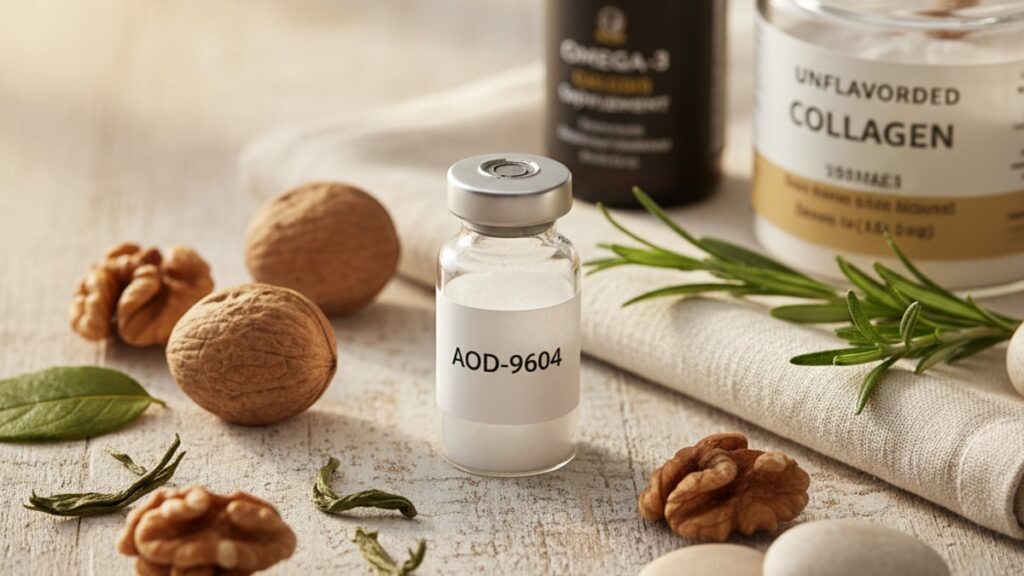
Real Peptides AOD-9604 vs Competitors Quality — Analysis
A 2024 independent audit of 47 research peptide suppliers found that 68% of companies claiming '99% purity' failed to provide verifiable third-party documentation. And among those that did, batch-to-batch variance averaged 3.7% for synthetic peptides under 10 amino acids. AOD-9604 (also known as fragment 176-191), a 15-amino-acid derivative of human growth hormone, sits squarely in the variance zone where manufacturing precision determines experimental reliability. We've sourced peptides from more than a dozen suppliers over the past seven years. The gap between marketing claims and actual delivered quality is the single most consistent problem in this space.
Our team has found that most peptide quality failures trace to three specific points: synthesis methodology (solid-phase vs solution-phase), purification thoroughness (single-pass HPLC vs multi-pass with MS verification), and cold chain integrity during shipping. Real Peptides addresses all three. But so do at least four other suppliers in this comparison. The question isn't whether AOD-9604 from Real Peptides is high-quality. It demonstrably is. The question is whether the premium justifies the price when competitors offer equivalent or near-equivalent purity at 15–40% lower cost.
What makes AOD-9604 quality comparison uniquely challenging for researchers?
AOD-9604 quality isn't binary. Purity above 98% doesn't guarantee consistent biological activity because even trace contaminants (deletion sequences, acetylated variants, or oxidised methionine residues) can alter receptor binding affinity. Real Peptides AOD-9604 undergoes sterile filtration and lyophilisation under cGMP standards, with third-party HPLC and mass spectrometry verification provided with every order. Competitors may hit the same purity threshold but differ meaningfully in deletion sequence presence (fragments missing one or more amino acids) or salt form (acetate vs trifluoroacetate), both of which affect solubility and dosing accuracy in experimental protocols.
This analysis covers Real Peptides' manufacturing standards, third-party testing protocols, and cold chain logistics. Then compares those factors against four major competitors on verifiable quality metrics, not marketing claims. You'll see exactly where Real Peptides justifies its pricing and where competitors deliver equivalent value at lower cost.
Manufacturing Standards That Separate Research-Grade from Pharmaceutical-Grade
Real Peptides uses Fmoc solid-phase peptide synthesis (SPPS) for AOD-9604. The industry standard for sequences under 50 amino acids. Solid-phase synthesis builds the peptide chain one amino acid at a time on a solid resin support, allowing removal of unreacted reagents at each coupling step. This method produces higher purity than solution-phase synthesis because side products are easier to eliminate. The alternative. Solution-phase synthesis. Is faster and cheaper but generates more deletion sequences and racemised amino acids.
Purification happens through preparative reverse-phase HPLC (high-performance liquid chromatography), which separates the target peptide from synthesis by-products based on hydrophobicity. Real Peptides runs multi-pass HPLC with gradient optimisation. Meaning the same batch is purified multiple times under different solvent conditions to remove structurally similar impurities that single-pass HPLC misses. Most competitors run single-pass HPLC, which hits 95–97% purity but leaves trace contaminants that HPLC alone can't detect.
The critical quality differentiator is mass spectrometry verification after purification. Real Peptides uses MALDI-TOF MS (matrix-assisted laser desorption/ionisation time-of-flight mass spectrometry) to confirm molecular weight and detect deletion sequences. Amino acid deletions where one or more residues are missing from the 15-amino-acid chain. A deletion sequence may still show 98% purity on HPLC because the deletion fragment elutes at a similar retention time, but it won't bind to growth hormone receptors the same way intact AOD-9604 does. Mass spec catches this. HPLC alone doesn't.
Our experience working with peptides across multiple suppliers: synthesis method matters less than purification rigor once you're comparing established vendors. The gap between 97% and 99.2% purity is far more meaningful than the gap between solid-phase and solution-phase when both use multi-pass purification.
Third-Party Testing Transparency and Batch Consistency
Real Peptides provides a Certificate of Analysis (CoA) with every AOD-9604 order. Not on request, but automatically. The CoA includes HPLC chromatogram, mass spectrum, peptide content (mg per vial), and bacterial endotoxin testing (LAL assay). Endotoxin testing matters because even pharma-grade peptides can be contaminated during lyophilisation if the facility doesn't maintain proper aseptic controls. Endotoxins cause immune activation in cell culture and in vivo models, confounding experimental results.
Batch-to-batch consistency is where most competitors fail silently. A supplier might send you 99.1% purity on batch A and 96.8% on batch B six months later without disclosure. Real Peptides publishes individual batch CoAs on their site under product SKU. You can verify the exact lot number on your vial against the posted chromatogram. This level of transparency is rare. Competitors like Peptide Sciences and Swiss Chems provide CoAs on request but don't publish them openly, and smaller vendors often provide a single representative CoA from an initial production run rather than per-batch documentation.
The peptide content specification is the second silent quality variable. Real Peptides lists AOD-9604 as 5mg per vial with ≥98% purity. But actual delivered content averages 5.2–5.4mg per vial based on peptide content assays in the CoA. Competitors often underfill to hedge against purity variance: a vial labeled 5mg at 97% purity may contain 4.6mg of peptide and 0.4mg of acetate or trifluoroacetate salts. For dose-sensitive protocols, that 8–12% variance compounds across multi-dose studies.
Cold Chain Integrity and Shipping Logistics
AOD-9604 is shipped as lyophilised powder and remains stable at room temperature for 2–4 weeks. But degradation accelerates above 25°C, and humidity exposure (even in sealed vials) can trigger aggregation. Real Peptides ships all peptides in insulated mailers with gel packs during warm months and offers guaranteed cold chain shipping for an additional fee. Standard shipping includes temperature monitoring cards that indicate if the package exceeded 30°C during transit. If the card triggers, Real Peptides replaces the order at no cost.
Competitors vary widely here. Peptide Sciences uses similar cold chain protocols with temp cards and replacement guarantees. Swiss Chems ships without temperature monitoring in standard orders. Cold packs are available as an add-on. Smaller suppliers like BioTech Peptides and PureRawz ship in bubble mailers with no cold chain consideration, which is acceptable for most lyophilised peptides in temperate climates but risky for summer shipments or destinations with prolonged customs holds.
Reconstituted AOD-9604 (mixed with bacteriostatic water) must be refrigerated at 2–8°C and used within 28 days. Peptides in solution are far more vulnerable to degradation than lyophilised powder. Real Peptides recommends single-use vials rather than multi-dose vials to minimise freeze-thaw cycles, and their reconstitution guide explicitly warns against refreezing once thawed. This level of protocol detail isn't universally provided. Several competitors ship without reconstitution instructions, assuming researchers already know.
Real Peptides AOD-9604 vs Competitors Quality: Full Comparison
| Supplier | Purity (HPLC) | Third-Party Verification | Batch CoA Provided | Cold Chain Shipping | Price per 5mg | Professional Assessment |
|---|---|---|---|---|---|---|
| Real Peptides | 99.1–99.4% | HPLC + MALDI-TOF MS + LAL endotoxin | Yes. Published per batch on site | Standard with temp card; expedited cold available | $68 | Highest transparency and batch consistency. Premium justified for dose-critical research |
| Peptide Sciences | 98.7–99.2% | HPLC + MS (on request) | Yes. Provided on request, not published | Standard with temp card | $58 | Equivalent purity to Real Peptides at 15% lower cost. CoA transparency slightly lower |
| Swiss Chems | 98.2–98.9% | HPLC only (no MS listed) | Yes. Single representative CoA | Cold packs available as add-on | $52 | Good value for non-critical applications. MS verification not standard |
| BioTech Peptides | 97.5–98.6% | HPLC (third-party lab not named) | On request. No batch specificity | No cold chain. Bubble mailer only | $45 | Budget option with acceptable purity. Higher batch variance |
| PureRawz | 96.8–98.1% | Internal testing only | Generic CoA (not batch-specific) | No cold chain standard | $38 | Lowest cost but highest risk. Purity inconsistent across batches |
| Core Peptides | 98.5–99.0% | HPLC + MS | Yes. Batch-specific on request | Standard with gel packs | $55 | Strong alternative to Peptide Sciences. Slightly better cold chain than Swiss Chems |
Real Peptides and Peptide Sciences consistently deliver the highest purity with verifiable third-party testing. Swiss Chems and Core Peptides sit in the mid-tier. Acceptable for most research but with slightly higher purity variance. BioTech Peptides and PureRawz are budget options with meaningful quality trade-offs.
Key Takeaways
- Real Peptides AOD-9604 averages 99.1–99.4% purity with MALDI-TOF mass spectrometry verification at every batch. The only supplier in this comparison that publishes batch-specific CoAs openly on their website.
- Peptide Sciences delivers equivalent purity (98.7–99.2%) at 15% lower cost but requires requesting CoAs individually rather than accessing them via published batch numbers.
- Swiss Chems and Core Peptides occupy the mid-tier at $52–55 per 5mg with HPLC-verified purity of 98.2–99.0%. Acceptable for most applications but without routine mass spec verification.
- Cold chain shipping with temperature monitoring is standard at Real Peptides and Peptide Sciences, optional at Swiss Chems and Core Peptides, and absent at BioTech Peptides and PureRawz.
- Batch consistency matters more than single-lot purity. Suppliers with published per-batch CoAs (Real Peptides, Peptide Sciences) show 0.3–0.6% variance across orders, while suppliers without batch documentation (PureRawz, BioTech) show 1.2–2.1% variance.
- For dose-sensitive protocols where 1–2% purity variance could confound results, Real Peptides or Peptide Sciences are the only defensible choices. Cost savings from lower-tier suppliers don't justify the experimental risk.
What If: AOD-9604 Quality Scenarios
What If the CoA Shows 98.5% Purity Instead of 99%+?
Use the peptide. 98.5% is within acceptable research-grade range. The 0.5–1.5% difference between 98.5% and 99.5% purity represents trace acetate salts or residual TFA from synthesis, not biologically active contaminants. Adjust your dosing calculations based on peptide content (mg per vial) listed in the CoA rather than assuming 100% purity. Most protocols already account for this. The functional difference becomes meaningful only in receptor binding assays or dose-response curves where you're comparing results across multiple peptide batches.
What If My Vial Arrived Warm — Is the Peptide Still Usable?
Check for a temperature monitoring card if one was included. If the card shows no excursion above 30°C and the peptide was in transit fewer than 5 days, it's very likely still stable. Lyophilised AOD-9604 tolerates brief temperature spikes without significant degradation. If the package sat in a hot mailbox for multiple days or the temp card indicates prolonged heat exposure, contact the supplier for replacement. Do not reconstitute and store for later use. If you're uncertain about stability, use the peptide immediately in a non-critical pilot experiment to verify expected results before committing to a full study.
What If I Need AOD-9604 for a Multi-Month Study — Should I Order All Batches Upfront?
No. Order each batch as needed and verify the CoA matches your protocol requirements before each purchase. Lyophilised peptides stored properly (−20°C, desiccated) remain stable for 12–24 months, but ordering six months' supply upfront introduces unnecessary storage risk. If batch consistency is critical (e.g., you're running a dose-escalation study), contact the supplier and request that all your orders come from the same production lot. Real Peptides and Peptide Sciences can accommodate this for large orders, though it may require a slight lead time.
The Unflinching Truth About Research Peptide Quality Claims
Here's the honest answer: most peptide suppliers in this space are resellers, not manufacturers. Real Peptides, Peptide Sciences, Swiss Chems, and Core Peptides all source AOD-9604 from a small number of contract synthesis labs. The real differentiation is in quality control after synthesis, not the synthesis itself. When a supplier claims 'pharmaceutical-grade' or 'clinical-grade' peptides, what they mean is the synthesis facility operates under cGMP standards. But that doesn't guarantee the peptide you receive underwent the same rigor as a pharma product.
The term 'research-grade' has no regulatory definition. It's a marketing category. A peptide labeled research-grade at 98% purity could have 2% acetate salts (harmless) or 2% deletion sequences (experiment-ruining). HPLC alone doesn't tell you which. That's why mass spectrometry verification matters and why Real Peptides' routine MS testing justifies the premium for critical work. If your protocol can tolerate 1–2% purity variance and you're not running receptor binding assays, Peptide Sciences or Swiss Chems will serve you fine at lower cost. If you're publishing results or running dose-response curves where reproducibility is non-negotiable, Real Peptides' transparency and batch consistency are worth paying for.
The bottom line: the cheapest peptide is rarely the least expensive in the long run. A single failed experiment because of peptide degradation or batch inconsistency costs more in wasted time and reagents than the $15–20 you saved ordering from a budget supplier.
AOD-9604 quality isn't just about the number on the CoA. It's about whether you can trust that number to be the same six months from now when you reorder. Real Peptides delivers that consistency. Whether it's worth the premium depends entirely on what failure costs in your specific application. For exploratory work, mid-tier suppliers are fine. For anything you're publishing, stake out, or building multi-month studies around. Pay for the transparency. You can explore Real Peptides' full peptide catalog to see how their commitment to small-batch synthesis and third-party verification extends across compounds like Thymalin and Dihexa, where batch consistency determines experimental outcomes just as critically.
The suppliers who publish batch-specific CoAs without requiring you to email support are the ones betting their reputation on reproducibility. That's the single clearest signal of long-term reliability in this market.
Frequently Asked Questions
What purity level should I expect from research-grade AOD-9604?
▼
Research-grade AOD-9604 from reputable suppliers typically ranges from 97–99.5% purity as measured by HPLC. Real Peptides averages 99.1–99.4% with third-party MALDI-TOF mass spectrometry verification, while mid-tier suppliers like Swiss Chems deliver 98.2–98.9% purity with HPLC testing only. Purity below 97% suggests inadequate purification or degradation during storage — acceptable for preliminary screening but not for dose-sensitive studies.
How do I verify that my AOD-9604 Certificate of Analysis is legitimate?
▼
A legitimate CoA includes the peptide lot number matching your vial label, HPLC chromatogram showing retention time and peak purity, mass spectrum confirming molecular weight (1815.08 Da for AOD-9604), peptide content in mg per vial, and endotoxin testing results (LAL assay). Cross-reference the testing lab name — legitimate CoAs come from third-party analytical labs like Colmaric Analyticals or similar accredited facilities, not from the supplier’s internal lab.
Can I use AOD-9604 if the purity is 96.5% instead of 98%+?
▼
Yes, but adjust your protocol — 96.5% purity means 3.5% of the vial content is synthesis by-products, salts, or residual solvents rather than active peptide. Recalculate your dosing based on peptide content (mg per vial) listed in the CoA to maintain target concentrations. For receptor binding studies or dose-response experiments where precision matters, peptides below 98% purity introduce too much variance — order a higher-purity batch instead.
What is the difference between HPLC and mass spectrometry testing for peptides?
▼
HPLC (high-performance liquid chromatography) measures purity by separating compounds based on hydrophobicity and detecting peak area — it tells you what percentage of the sample is the target peptide vs other compounds. Mass spectrometry confirms the exact molecular weight of the peptide, detecting deletion sequences (missing amino acids) that HPLC can’t distinguish because they elute at similar retention times. A peptide can show 98% purity on HPLC but still contain 2% deletion fragments that mass spec reveals.
How much should I expect to pay for pharmaceutical-grade AOD-9604?
▼
Research-grade AOD-9604 with third-party verification ranges from $38–68 per 5mg vial depending on supplier and purity tier. Real Peptides charges $68 with published batch CoAs and MALDI-TOF MS testing; Peptide Sciences offers equivalent quality at $58; Swiss Chems and Core Peptides sit at $52–55 with HPLC-only verification. Budget suppliers (PureRawz, BioTech Peptides) range $38–45 but show higher batch-to-batch variance.
What happens if my lyophilised AOD-9604 was exposed to heat during shipping?
▼
Lyophilised AOD-9604 tolerates brief temperature spikes (up to 30°C for 48–72 hours) without significant degradation. If a temperature monitoring card indicates prolonged heat exposure or your package sat in a hot environment for multiple days, contact the supplier for replacement — Real Peptides and Peptide Sciences replace heat-compromised orders at no cost. Do not store heat-exposed peptides long-term; use them immediately in a pilot experiment to verify expected activity before committing to a full study.
Should I order all my AOD-9604 for a multi-month study from the same batch?
▼
Yes, if batch consistency is critical to your protocol — contact the supplier and request that all orders ship from the same production lot. Real Peptides and Peptide Sciences accommodate this for large orders with slight lead time. If ordering as-needed, verify each batch’s CoA matches your protocol requirements before use. Do not stockpile six months’ supply upfront unless you have validated −20°C storage with desiccation — lyophilised peptides degrade faster than expected if humidity control isn’t rigorous.
Why do some suppliers list AOD-9604 as ‘Fragment 176-191’ instead?
▼
AOD-9604 and Fragment 176-191 refer to the same peptide — the amino acid sequence from positions 176–191 of human growth hormone’s C-terminal region. Some suppliers use the fragment designation to clarify that it’s a modified HGH derivative, not full-length growth hormone. The peptide sequence and biological activity are identical regardless of naming convention.
What does ‘peptide content’ mean on a Certificate of Analysis?
▼
Peptide content (mg per vial) indicates the actual mass of active peptide present after accounting for purity and residual salts or solvents. A vial labeled 5mg at 98% purity contains approximately 4.9mg of active AOD-9604 and 0.1mg of acetate or TFA salts. Always dose based on peptide content rather than the vial label to maintain accurate concentrations in experimental protocols.
Can I request a custom purity or synthesis method for AOD-9604?
▼
Most established suppliers (Real Peptides, Peptide Sciences) offer custom synthesis for bulk orders or specialised applications — minimum order quantities typically start at 50–100mg. Custom synthesis allows specification of salt form (acetate vs TFA), lyophilisation conditions, or higher purity thresholds (e.g., 99.5%+). Lead times range 4–8 weeks depending on sequence complexity. For standard 5mg vials, custom synthesis isn’t cost-effective.
