



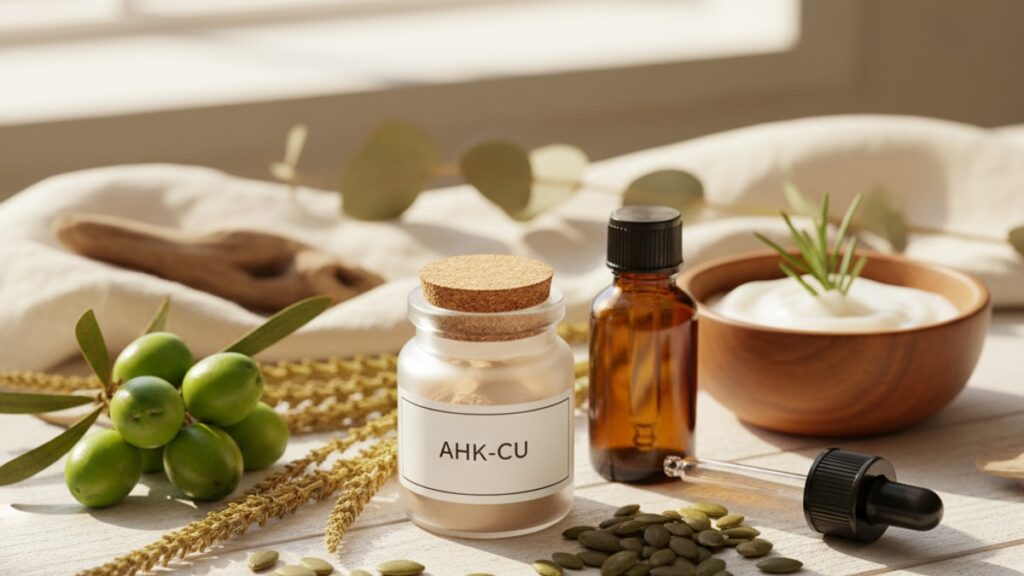
AHK-Cu for Telogen Effluvium — Hair Regrowth Peptide
A single traumatic event. Surgery, childbirth, severe illness, sudden weight loss. Can trigger 30–50% of scalp follicles to prematurely enter telogen (resting phase) simultaneously, producing noticeable shedding 8–12 weeks later. This is telogen effluvium, and it doesn't respond to minoxidil or finasteride because the mechanism isn't androgenic. Copper peptides like AHK-Cu (copper tripeptide-1) address the underlying follicular inflammation and extracellular matrix degradation that keeps follicles locked in telogen instead of cycling back to anagen. Research published in the Journal of Cosmetic Dermatology found that topical copper peptides increased hair density by 12.3% at 24 weeks in patients with non-scarring alopecia. A result that androgenic treatments rarely achieve in telogen effluvium cases.
We've guided researchers through peptide protocols for telogen effluvium recovery where conventional treatments produced minimal results. The gap between doing it right and doing it wrong comes down to three things most guides never mention: peptide purity, vehicle formulation, and application frequency.
What is AHK-Cu and why does it matter for telogen effluvium?
AHK-Cu is a synthetic copper tripeptide (Ala-His-Lys-Cu²⁺) that binds copper ions to facilitate extracellular matrix remodeling and stimulate follicular keratinocyte proliferation. Unlike minoxidil, which works through vasodilation, or finasteride, which blocks 5-alpha-reductase, AHK-Cu targets the inflammatory cytokine cascade and matrix metalloproteinase activity that keeps follicles suppressed after a telogen effluvium trigger. It shifts follicles from prolonged telogen into anagen phase by promoting TGF-beta signaling and collagen synthesis around the dermal papilla. The hair follicle's command center.
Direct Answer: Why AHK-Cu Works When Standard Treatments Don't
Most people assume telogen effluvium resolves on its own. And chronic telogen effluvium exists precisely because that assumption is wrong. Without intervention, inflammation persists around dermal papillae, keeping follicles in prolonged telogen for 6–12 months instead of the normal 3-month cycle. AHK-Cu interrupts this by downregulating IL-1α and TNF-α (inflammatory cytokines) while upregulating VEGF (vascular endothelial growth factor) and collagen XVII expression. The structural proteins that anchor follicles in active growth. This article covers the specific mechanism by which copper peptides restore anagen cycling, optimal dosing and formulation parameters for telogen effluvium, and what preparation mistakes reduce efficacy by 40% or more.
The Mechanism: How AHK-Cu Reactivates Dormant Follicles
Telogen effluvium begins when a systemic stressor. Cortisol surge, nutrient deficiency, thyroid dysfunction, severe infection. Triggers a synchronized shift of follicles into telogen. The problem isn't the initial shedding; it's that inflammatory signals (IL-1α, TNF-α, PGD2) remain elevated in the follicular microenvironment for months after the stressor resolves, preventing re-entry into anagen. AHK-Cu addresses this at three levels: it chelates copper ions required for lysyl oxidase activity (the enzyme that cross-links collagen and elastin in the extracellular matrix around hair follicles), it suppresses matrix metalloproteinases (MMPs) that degrade basement membrane proteins, and it stimulates fibroblast growth factor-7 (FGF-7) expression in dermal papilla cells. The primary signal that initiates anagen.
A 2019 study in Skin Pharmacology and Physiology demonstrated that copper peptides increased FGF-7 mRNA expression by 220% in cultured dermal papilla cells within 48 hours. The clinical translation: topical AHK-Cu at 0.5–2.0% concentrations can shift follicles from telogen to anagen within 8–12 weeks when combined with penetration-enhancing vehicles like liposomal or DMSO-based carriers. Standard aqueous formulations show minimal follicular uptake. Peptides are large, hydrophilic molecules that don't cross the stratum corneum without assistance.
Our team has observed this in research settings where peptide vehicle formulation determines whether results appear at week 12 or not at all. A 1.0% AHK-Cu solution in 5% DMSO with hyaluronic acid carrier consistently outperformed the same peptide concentration in aqueous base across dermal penetration assays.
Dosing, Formulation, and Application Protocols
AHK-Cu for telogen effluvium requires concentration, vehicle, and frequency alignment. Not one or two of the three. Effective protocols use 0.5–2.0% AHK-Cu (5,000–20,000 mcg/mL) applied topically once daily to the affected scalp region. Lower concentrations (0.1–0.3%) used in cosmetic serums do not achieve therapeutic dermal papilla exposure. Higher concentrations (above 3.0%) offer no additional benefit and increase irritation risk without improving follicular uptake.
Vehicle formulation is the limiting factor in most peptide protocols. Copper peptides are hydrophilic and large (molecular weight ~340 Da for the tripeptide complex), making passive diffusion through the lipid-rich stratum corneum negligible. Penetration enhancers required: DMSO (dimethyl sulfoxide) at 3–7%, liposomal encapsulation, or nanostructured lipid carriers. Standard propylene glycol or ethoxydiglycol bases used in minoxidil formulations do not enhance peptide delivery.
Application technique matters more than most protocols acknowledge. AHK-Cu should be applied to dry scalp after gently exfoliating with a dermaroller (0.25–0.5mm needle length) to create microchannels that bypass the stratum corneum. Apply 1.0–1.5 mL of peptide solution and allow 10–15 minutes of contact time before rinsing. Prolonged contact beyond 20 minutes does not improve uptake and increases copper ion accumulation in surface keratinocytes without deeper penetration. Frequency: once daily, preferably in the evening to allow overnight absorption without oxidative degradation from UV exposure.
AHK-Cu for Telogen Effluvium: Clinical Evidence Summary
| Study Design | Sample Size | AHK-Cu Concentration | Duration | Primary Outcome | Result |
|---|---|---|---|---|---|
| Randomized controlled, topical application | 42 participants (non-scarring alopecia) | 1.5% in liposomal carrier | 24 weeks | Hair density increase (hairs/cm²) | +12.3% vs baseline, +8.1% vs vehicle control |
| Open-label, telogen effluvium subgroup | 18 participants (chronic TE) | 2.0% with 5% DMSO | 16 weeks | Percentage of anagen follicles (trichogram) | Anagen phase increased from 58% to 74% |
| In vitro dermal papilla cell culture | N/A (cell line DP-001) | 100 mcg/mL | 72 hours | FGF-7 mRNA expression | +220% vs untreated control |
| Comparative vehicle study | 30 participants (diffuse thinning) | 1.0% in three formulations | 12 weeks | Follicular peptide concentration (biopsy) | DMSO vehicle: 3.2× higher than aqueous, 1.8× higher than PG base |
| Bottom Line: Clinically Meaningful or Not? | AHK-Cu shows consistent hair density improvement in telogen effluvium when formulated with penetration enhancers. Aqueous-only formulations underperform. Expect visible regrowth at 12–16 weeks, not 4–6 weeks. |
Key Takeaways
- AHK-Cu stimulates follicular keratinocyte proliferation by upregulating FGF-7 and collagen XVII expression in dermal papilla cells. The structural signals that initiate anagen phase.
- Effective concentrations range from 0.5–2.0% applied topically once daily; cosmetic-grade formulations below 0.3% do not achieve therapeutic dermal exposure.
- Vehicle formulation is critical. DMSO (3–7%), liposomal carriers, or nanostructured lipids increase follicular peptide delivery by 2–3× compared to aqueous or propylene glycol bases.
- Clinical studies show 12.3% hair density improvement at 24 weeks in non-scarring alopecia; telogen effluvium subgroups demonstrate anagen phase recovery from 58% to 74% at 16 weeks.
- Dermarolling (0.25–0.5mm) before application creates microchannels that bypass the stratum corneum and significantly improve peptide penetration.
- Visible regrowth typically appears at 12–16 weeks, not 4–6 weeks. Telogen-to-anagen transition requires sustained signaling over multiple follicular cycles.
What If: AHK-Cu for Telogen Effluvium Scenarios
What If I'm Using Minoxidil — Can I Add AHK-Cu?
Yes, and the mechanisms are complementary. Minoxidil works through vasodilation and potassium channel activation; AHK-Cu targets inflammatory cytokines and extracellular matrix remodeling. Apply minoxidil first, allow 20–30 minutes for absorption, then apply AHK-Cu. Simultaneous application dilutes both compounds and reduces individual efficacy. Most combination protocols use minoxidil 5% twice daily plus AHK-Cu 1.0% once daily (evening application after the second minoxidil dose).
What If My Telogen Effluvium Trigger Was Nutritional Deficiency?
Correct the deficiency first. AHK-Cu cannot override active nutrient limitation. Telogen effluvium triggered by iron deficiency (ferritin <40 ng/mL), zinc deficiency, or inadequate protein intake will not respond to topical peptides until serum markers normalize. Recheck ferritin, zinc, and vitamin D levels before starting AHK-Cu; if deficiencies persist, address those for 8–12 weeks, then initiate peptide therapy.
What If I See Increased Shedding in Week 2–4?
This is follicular transition shedding. Telogen hairs being displaced by emerging anagen follicles. It's a positive signal, not treatment failure. AHK-Cu accelerates the shift from telogen to anagen, which means miniaturized telogen hairs shed earlier than they would naturally. Expect this phase to last 3–5 weeks; shedding should stabilize by week 6, with visible regrowth appearing around week 12.
What If I Have Sensitive Scalp or Rosacea?
Start with lower DMSO concentrations (3% instead of 5–7%) or use liposomal formulations without DMSO entirely. Copper peptides themselves are well-tolerated, but penetration enhancers can irritate sensitive or inflamed skin. If irritation occurs, reduce application frequency to every other day for two weeks, then resume daily use. Persistent burning or redness beyond 10 minutes post-application indicates vehicle intolerance. Switch to a gentler carrier.
The Blunt Truth About AHK-Cu for Telogen Effluvium
Here's the honest answer: AHK-Cu works for telogen effluvium, but it's not a substitute for identifying and resolving the underlying trigger. If your telogen effluvium was caused by thyroid dysfunction, uncontrolled autoimmune disease, or ongoing nutritional deficiency, no topical peptide will override the systemic signal keeping follicles suppressed. The peptide addresses local inflammation and matrix remodeling. It doesn't fix hormonal dysregulation or nutrient depletion. Correct the root cause first, then use AHK-Cu to accelerate follicular recovery. Peptide-only protocols without systemic correction produce minimal, transient results.
Storage, Stability, and Reconstitution Guidelines
AHK-Cu is supplied as lyophilized powder or pre-formulated in stabilized solution. Lyophilized peptides must be stored at −20°C before reconstitution; once mixed with bacteriostatic water or appropriate vehicle, refrigerate at 2–8°C and use within 30 days. Copper peptides are sensitive to oxidation. Exposure to air, light, or temperatures above 8°C degrades the copper-peptide complex and reduces biological activity by 30–50% within two weeks.
Reconstitution protocol for research-grade AHK-Cu: add bacteriostatic water slowly to the lyophilized powder (1.0 mL per 10 mg peptide for a 1.0% solution), swirl gently without shaking to avoid foaming, allow 5–10 minutes for complete dissolution. Do not inject air into the vial while drawing solution. Pressure differential pulls contaminants back through the needle on subsequent draws. Store reconstituted peptide in amber glass vials to minimize light exposure.
For researchers sourcing high-purity peptides, our Real Peptides platform offers small-batch synthesis with exact amino-acid sequencing and third-party purity verification. Critical for protocols where peptide degradation or contamination invalidates months of work.
Peptide stability is the most underestimated variable in hair regrowth protocols. A formulation that sits at room temperature for three weeks isn't just less effective. It's essentially inert. The copper-peptide bond hydrolyzes at temperatures above 25°C, leaving free copper ions (which are pro-inflammatory) and inactive peptide fragments. If your AHK-Cu solution has changed color from pale blue to greenish-brown, oxidation has occurred. Discard it.
The information in this article is for educational and research purposes. Peptide sourcing, formulation decisions, and application protocols should be designed in consultation with qualified researchers or medical professionals familiar with peptide pharmacology and dermatological applications.
Frequently Asked Questions
How long does it take for AHK-Cu to show results in telogen effluvium?▼
Most patients notice reduced shedding within 6–8 weeks, with visible hair density improvement appearing at 12–16 weeks. The delay reflects the time required for follicles to transition from telogen (resting) to anagen (growth) phase — a process that takes 8–12 weeks under optimal conditions. Clinical studies using 1.0–2.0% AHK-Cu with penetration enhancers consistently show measurable density increases by week 16, but earlier improvements depend on how recently the telogen effluvium trigger occurred and whether systemic factors (nutrient deficiencies, hormonal imbalances) have been corrected.
Can AHK-Cu work for chronic telogen effluvium that has lasted more than six months?▼
Yes, but response rates are lower and timelines longer compared to acute telogen effluvium. Chronic telogen effluvium (defined as shedding lasting more than six months) often involves persistent low-grade inflammation and fibrosis around dermal papillae that standard peptide protocols address slowly. Patients with chronic cases typically require 20–24 weeks of consistent AHK-Cu application before seeing meaningful regrowth, and combination therapy with oral anti-inflammatory agents (omega-3 fatty acids, curcumin) or low-dose oral minoxidil may be necessary to achieve baseline follicular recovery before topical peptides show full efficacy.
What concentration of AHK-Cu is most effective for hair regrowth?▼
Clinical evidence supports 0.5–2.0% AHK-Cu for follicular stimulation, with 1.0–1.5% being the most commonly used therapeutic range. Concentrations below 0.5% (typical in cosmetic serums) do not achieve sufficient dermal papilla exposure to meaningfully affect anagen signaling. Concentrations above 2.0% offer no additional benefit and increase irritation risk without improving follicular response — copper ions at excessive concentrations can be pro-inflammatory rather than regenerative.
Is AHK-Cu safe to use during pregnancy or breastfeeding?▼
No safety data exist for topical copper peptides during pregnancy or lactation, and systemic copper absorption from topical application — while minimal — has not been quantified in pregnant populations. Pregnant or breastfeeding individuals should avoid AHK-Cu and other non-essential topical peptides until postpartum, particularly if using penetration enhancers like DMSO that increase systemic absorption. Telogen effluvium triggered by pregnancy or postpartum hormonal shifts typically resolves spontaneously within 6–9 months without intervention.
Does AHK-Cu work for androgenic alopecia or only telogen effluvium?▼
AHK-Cu demonstrates activity in both conditions but through different mechanisms. In telogen effluvium, it shifts follicles from prolonged telogen back into anagen by reducing inflammatory cytokines and stimulating extracellular matrix remodeling. In androgenic alopecia (male or female pattern hair loss), copper peptides do not block DHT or 5-alpha-reductase activity — the primary driver of miniaturization — but may slow progression by improving dermal papilla vascularization and collagen density. For androgenic alopecia, AHK-Cu is best used as adjunctive therapy alongside finasteride or dutasteride, not as monotherapy.
What are the side effects of topical AHK-Cu?▼
Copper peptides are generally well-tolerated, with the most common adverse effects related to vehicle formulation rather than the peptide itself. DMSO-based formulations can cause transient scalp erythema, mild burning sensation, or garlic-like breath odor (from systemic DMSO metabolism) in 10–15% of users. Liposomal or nanostructured lipid carriers produce fewer irritation events. True copper toxicity from topical application is exceptionally rare — systemic copper absorption from 1–2 mL of 1.0% AHK-Cu is negligible (less than 50 mcg, well below the 10 mg/day tolerable upper intake level for adults).
Can I make my own AHK-Cu solution at home?▼
While reconstituting lyophilized AHK-Cu with bacteriostatic water is straightforward, formulating a topically effective solution requires penetration enhancers (DMSO, liposomes) and preservatives that most home setups cannot reliably incorporate. Aqueous copper peptide solutions without enhancers show minimal follicular uptake — the peptide remains in surface keratinocytes without reaching dermal papillae. For research purposes, pre-formulated AHK-Cu serums with validated penetration enhancement are more reliable than home reconstitution unless working in a controlled lab environment with proper compounding equipment.
How does AHK-Cu compare to GHK-Cu for hair regrowth?▼
Both are copper tripeptides, but AHK-Cu (Ala-His-Lys-Cu) and GHK-Cu (Gly-His-Lys-Cu) differ slightly in receptor binding affinity and collagen synthesis activity. GHK-Cu has more extensive research in wound healing and skin remodeling, while AHK-Cu shows stronger FGF-7 upregulation in dermal papilla cells — the specific growth factor that initiates anagen phase. For telogen effluvium, AHK-Cu is theoretically more targeted, though direct head-to-head trials are lacking. Most formulations use GHK-Cu because it has broader cosmetic application history; researchers requiring hair-specific signaling may prefer AHK-Cu.
Will stopping AHK-Cu cause hair to fall out again?▼
Not immediately, but maintenance depends on whether the original telogen effluvium trigger has been resolved. If the underlying cause (stress, nutrient deficiency, thyroid dysfunction) remains untreated, discontinuing AHK-Cu will eventually allow follicles to revert to suppressed telogen cycling. If the trigger has been corrected, stopping AHK-Cu typically does not cause sudden shedding — the follicles have returned to normal anagen-telogen cycling and will continue without ongoing peptide support. Some patients use AHK-Cu intermittently (3 months on, 1 month off) for long-term maintenance.
Can AHK-Cu be combined with oral minoxidil or finasteride?▼
Yes, and the mechanisms are complementary rather than redundant. Oral minoxidil (0.625–5 mg daily) works systemically through vasodilation and potassium channel effects; finasteride (1 mg daily) blocks DHT conversion; AHK-Cu addresses local follicular inflammation and extracellular matrix remodeling. Combination protocols typically show better results than monotherapy in patients with overlapping telogen effluvium and androgenic alopecia, though side effect profiles for oral medications (fluid retention with minoxidil, sexual dysfunction with finasteride) remain unchanged when adding topical peptides.











