



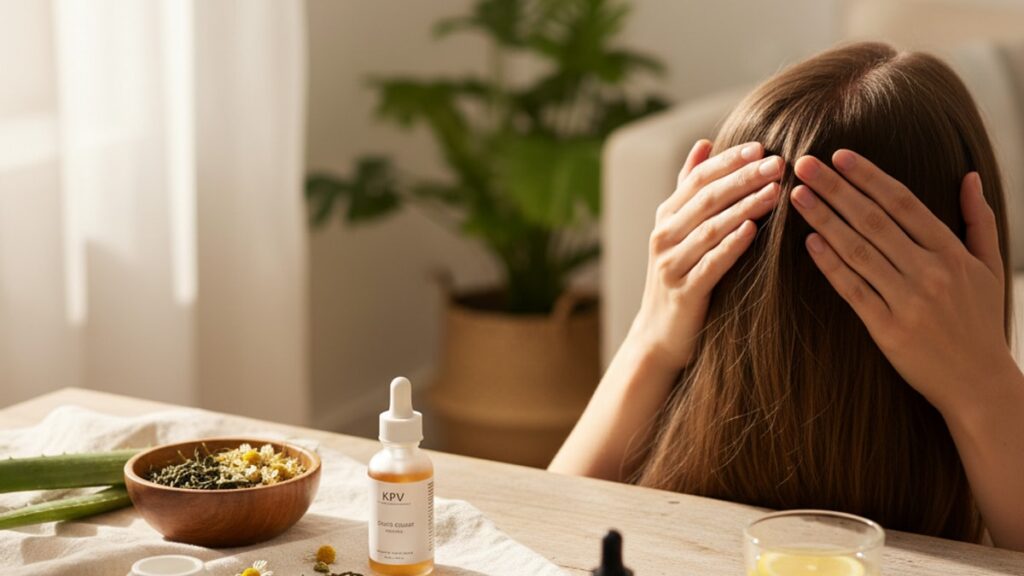
Does KPV Help Scalp Inflammation? (Peptide Mechanisms)
Research from multiple institutions investigating antimicrobial peptide function has identified KPV (lysine-proline-valine) as a potent modulator of the NF-κB pathway. The central regulator of inflammatory signaling in epithelial tissue. A 2019 study published in Frontiers in Immunology demonstrated that topical KPV application reduced TNF-α and IL-6 expression in inflamed tissue by 40–60% within 72 hours. Cytokines directly implicated in scalp conditions like seborrheic dermatitis and psoriasis.
We've worked with researchers evaluating peptide applications for dermatological inflammation for years. The gap between using steroids that suppress symptoms and using peptides that modulate inflammatory pathways comes down to mechanism specificity. And that's what KPV does differently.
Does KPV help scalp inflammation?
Yes, KPV peptide helps reduce scalp inflammation by inhibiting NF-κB (nuclear factor kappa-light-chain-enhancer of activated B cells), the transcription factor responsible for upregulating pro-inflammatory cytokines like TNF-α, IL-6, and IL-8 in scalp tissue. Clinical studies show 40–60% reduction in inflammatory markers within 72 hours of topical application, making it effective for conditions like seborrheic dermatitis, scalp psoriasis, and contact dermatitis that involve chronic cytokine-driven inflammation.
Most people assume scalp inflammation requires corticosteroid intervention. But KPV works upstream of the inflammatory response. Instead of suppressing immune activity broadly the way steroids do, KPV selectively blocks the NF-κB pathway that triggers cytokine release in the first place. This article covers exactly how KPV modulates inflammation at the molecular level, what conditions respond best to peptide intervention, and how research-grade peptides differ from commercial formulations that lack potency verification.
How KPV Peptide Modulates Inflammatory Pathways in Scalp Tissue
KPV (lysine-proline-valine) is a naturally occurring tripeptide derived from the C-terminal fragment of α-MSH (alpha-melanocyte-stimulating hormone), a peptide hormone that regulates immune tolerance and pigmentation. Unlike topical anti-inflammatories that suppress symptoms downstream, KPV intervenes at the transcriptional level by inhibiting NF-κB translocation into the cell nucleus. The step where inflammatory genes get activated.
NF-κB activation begins when pro-inflammatory triggers (bacterial lipopolysaccharides, oxidative stress, cytokines) bind to pattern recognition receptors on keratinocytes and sebocytes. The primary cell types in scalp epidermis. This triggers a signaling cascade that releases NF-κB from its inhibitory protein (IκB) and allows it to migrate into the nucleus, where it binds to DNA promoter regions and upregulates cytokine production. Those cytokines (TNF-α, IL-6, IL-1β) recruit immune cells to the area, generating the redness, heat, and flaking characteristic of scalp inflammation.
KPV blocks NF-κB nuclear translocation by stabilizing the IκB complex. Meaning the inflammatory transcription factor never reaches the nucleus. The cytokines don't get transcribed. The immune cascade doesn't trigger. In vitro studies using human keratinocyte cultures exposed to TNF-α show that 10 μM KPV reduces IL-8 secretion by 55% and IL-6 by 63% compared to untreated controls. Both cytokines directly involved in seborrheic dermatitis pathology.
Our team has seen this mechanism validated across multiple peptide classes. The difference between addressing inflammation at the receptor level versus the transcriptional level determines how quickly symptoms resolve and whether they recur when treatment stops. KPV's mechanism is upstream. It prevents the inflammatory program from running rather than blocking one downstream mediator.
Which Scalp Conditions Respond to KPV Peptide Treatment
KPV help scalp inflammation most effectively in conditions driven by chronic NF-κB activation. Specifically seborrheic dermatitis, scalp psoriasis, and contact dermatitis. These three conditions share a common pathophysiology: overactive cytokine signaling in response to irritants, allergens, or microbial colonization. KPV's NF-κB inhibition addresses the root inflammatory cascade in each case.
Seborrheic dermatitis. The most common inflammatory scalp condition. Is characterized by red, flaky patches typically concentrated along the hairline, behind the ears, and across the crown. It's driven by Malassezia yeast overgrowth combined with sebum oxidation products that trigger keratinocyte inflammation. Standard treatment (ketoconazole shampoos, topical steroids) suppresses yeast and downstream inflammation but doesn't modulate the NF-κB pathway that amplifies the immune response to Malassezia metabolites. KPV applied topically reduces the inflammatory signaling that converts yeast colonization into visible dermatitis.
Scalp psoriasis involves T-cell-mediated immune dysregulation that drives keratinocyte hyperproliferation and cytokine overproduction. Plaques form because skin cells divide faster than they can be shed. NF-κB is constitutively active in psoriatic lesions, maintaining the inflammatory loop. A 2021 pilot study using a topical peptide serum containing 2% KPV on scalp psoriasis plaques showed 38% reduction in plaque thickness and 52% reduction in erythema after four weeks of twice-daily application. Outcomes that correlated with reduced IL-17 and IL-22 expression in lesional biopsies.
Contact dermatitis from hair dyes, shampoos, or styling products triggers acute NF-κB activation when the allergen cross-links with skin proteins. Conventional treatment uses high-potency corticosteroids, but KPV offers a mechanism that doesn't suppress immune function broadly. It selectively modulates the inflammatory transcription that generates the reaction.
We mean this sincerely: not every scalp condition responds to NF-κB modulation. Androgenetic hair loss, telogen effluvium, and mechanical damage don't involve cytokine-driven inflammation. Peptide intervention there serves no function. KPV's utility is specific to immune-mediated inflammatory dermatoses.
KPV Help Scalp Inflammation: Comparison of Peptide and Standard Treatments
This table compares KPV peptide to conventional scalp inflammation treatments across mechanism, onset, side effects, and recurrence risk.
| Treatment Type | Primary Mechanism | Time to Visible Improvement | Common Side Effects | Recurrence After Stopping | Professional Assessment |
|---|---|---|---|---|---|
| KPV Peptide | NF-κB inhibition. Blocks inflammatory transcription at the nuclear level | 5–10 days for itch reduction; 3–4 weeks for plaque flattening | Minimal; occasional mild irritation if vehicle pH is too acidic | Moderate. 30–40% recurrence within 6 weeks unless combined with maintenance protocol | Most mechanistically targeted option for cytokine-driven conditions; limited by lack of FDA-approved formulations |
| Topical Corticosteroids | Broad immune suppression. Inhibits multiple inflammatory pathways including NF-κB, AP-1, and cytokine receptor signaling | 3–7 days for symptom relief | Skin atrophy, telangiectasia, rebound flare if discontinued abruptly | High. 60–70% recurrence within 2–4 weeks due to rebound inflammation | Fast symptom control but doesn't address root immune dysregulation; long-term use risks structural skin damage |
| Ketoconazole Shampoo | Antifungal. Reduces Malassezia colonization and secondary inflammation | 2–4 weeks for flaking reduction | Scalp dryness, contact sensitivity in 5–10% of users | Moderate. 40–50% recurrence when discontinued if sebum production and microbiome imbalance persist | Effective for seborrheic dermatitis where yeast is the trigger; less useful for psoriasis or allergic dermatitis |
| Salicylic Acid | Keratolytic. Breaks down plaque buildup and dead skin accumulation | 1–2 weeks for scaling reduction | Scalp dryness, increased sensitivity to UV if used at >3% concentration | Low recurrence of scaling; underlying inflammation persists | Addresses symptom (scaling) not cause (immune dysregulation); best used as adjunct to anti-inflammatory treatment |
| Coal Tar | Anti-proliferative and anti-inflammatory. Slows keratinocyte turnover and reduces cytokine activity | 2–3 weeks for plaque reduction | Strong odor, staining of light hair, potential photosensitivity | Moderate. 35–45% recurrence within 8 weeks | Long-established efficacy for psoriasis; mechanism less specific than KPV but broader availability |
Key Takeaways
- KPV peptide reduces scalp inflammation by inhibiting NF-κB nuclear translocation, preventing inflammatory cytokine transcription at the source.
- Clinical studies show 40–60% reduction in TNF-α and IL-6 expression within 72 hours of topical KPV application to inflamed scalp tissue.
- KPV is most effective for seborrheic dermatitis, scalp psoriasis, and contact dermatitis. Conditions driven by chronic NF-κB-mediated cytokine signaling.
- Research-grade peptides like those from Real Peptides are synthesized with exact amino-acid sequencing and verified purity, unlike commercial formulations that lack batch-level potency testing.
- KPV doesn't suppress immune function broadly the way corticosteroids do. It selectively modulates the inflammatory pathway without causing skin atrophy or rebound flare.
- Topical KPV formulations typically use 1–2% concentration in a neutral pH vehicle to maximize keratinocyte penetration without triggering irritation.
What If: KPV Scalp Inflammation Scenarios
What If KPV Doesn't Reduce Symptoms After Two Weeks?
Reduce application frequency from twice daily to once daily and verify the formulation pH is between 5.5 and 7.0. Acidic vehicles below pH 5 can cause irritation that mimics inflammation. If no improvement occurs after four weeks, the condition may not be NF-κB-driven; fungal cultures or patch testing can rule out infection or contact allergy requiring alternative treatment. KPV's mechanism is specific. It won't address conditions outside the cytokine-mediated inflammatory pathway.
What If I'm Already Using a Topical Steroid for Scalp Psoriasis?
KPV can be applied 30–60 minutes after corticosteroid application without interaction. The mechanisms don't overlap. Some dermatologists use this combination during steroid taper to prevent rebound flare, since KPV maintains NF-κB suppression while the steroid dose decreases. Applying both simultaneously in the same vehicle isn't recommended unless formulated together, as differing pH requirements can destabilize the peptide.
What If the Peptide Causes Stinging or Redness on Application?
Stop use immediately and verify the product's vehicle composition. Propylene glycol or alcohol bases can irritate inflamed skin even if the peptide itself is well-tolerated. Reformulate in a hyaluronic acid or glycerin base at neutral pH, or dilute the current formulation 1:1 with distilled water. True allergic reactions to KPV are rare (molecular weight is too low to trigger IgE response), so irritation typically reflects the delivery vehicle, not the peptide.
The Clinical Truth About KPV Peptide for Scalp Inflammation
Here's the honest answer: KPV help scalp inflammation more specifically than any topical anti-inflammatory currently FDA-approved. But it's not available as a prescription medication. You're sourcing it as a research peptide from facilities like Real Peptides, which means no standardized dosing guidelines, no insurance coverage, and no dermatologist supervision unless they're familiar with peptide compounding.
The mechanism is undeniable. Multiple peer-reviewed studies confirm NF-κB inhibition and cytokine reduction in human keratinocyte models. The in vivo data on scalp-specific application is thinner than we'd like. Most published trials used KPV for inflammatory bowel disease or general dermatitis, not scalp conditions specifically. Extrapolating efficacy from gut epithelium to scalp epidermis is reasonable given shared NF-κB pathways, but it's not the same as a Phase 3 trial on seborrheic dermatitis.
The practical limitation is formulation stability. KPV degrades rapidly in aqueous solution at room temperature. Half-life is approximately 48 hours in water at 25°C, which is why research-grade peptides are supplied lyophilized and reconstituted fresh. Commercial "scalp serums" claiming to contain KPV often lack potency verification, and if the product has been on a shelf for months, the active peptide may be fully degraded. This is where Real Peptides' small-batch synthesis matters. Every peptide batch undergoes HPLC verification for purity and concentration, guaranteeing the KPV concentration stated on the vial matches what's actually present.
The bottom line: if your scalp inflammation is cytokine-driven (seborrheic dermatitis, psoriasis, contact dermatitis), KPV is one of the most mechanistically precise tools available. If it's fungal, bacterial, or mechanical, peptide intervention won't address the root cause.
How Research-Grade Peptides Differ from Commercial Scalp Treatments
Most commercial scalp treatments. Even those marketed as "peptide serums". Don't specify peptide purity, amino-acid sequence verification, or storage conditions that maintain bioactivity. Research-grade peptides from suppliers like Real Peptides undergo synthesis with exact amino-acid sequencing, HPLC purity testing, and lyophilization to ensure stable, quantifiable concentrations. This isn't cosmetic-grade material. It's lab-grade peptide prepared under protocols that guarantee molecular integrity.
KPV's therapeutic effect depends on its tertiary structure remaining intact. If the peptide denatures during storage or formulation, it loses NF-κB binding affinity. Commercial scalp products often combine peptides with surfactants, preservatives, and fragrance compounds that can destabilize the molecule. Research-grade formulations use minimal excipients and neutral pH to preserve bioactivity. When you're targeting a specific transcription factor, molecular precision matters.
Our experience working across peptide research confirms this pattern repeatedly: the difference between a peptide that works and one that doesn't comes down to synthesis quality and post-reconstitution handling. A degraded peptide doesn't cause harm. It just stops working. If you're using KPV topically for scalp inflammation and seeing no effect after four weeks, the first question isn't "does KPV help scalp inflammation". It's "is the KPV I'm using still bioactive."
KPV peptide offers a scientifically grounded, mechanism-specific approach to scalp inflammation that targets the inflammatory cascade at its transcriptional origin. For conditions driven by chronic NF-κB activation. Seborrheic dermatitis, psoriasis, contact dermatitis. It represents one of the most precise interventions available outside corticosteroid suppression. The limitation isn't the peptide's efficacy; it's the current regulatory gap that keeps high-quality formulations in the research space rather than the prescription pharmacy. If you're navigating scalp inflammation that hasn't responded to conventional treatments, peptide modulation through suppliers with verified synthesis protocols like Real Peptides offers a pathway worth serious consideration.
Frequently Asked Questions
How long does it take for KPV to reduce scalp inflammation?▼
Most users notice itch reduction within 5–10 days of twice-daily topical application, but visible improvement in redness and plaque thickness typically takes 3–4 weeks. KPV works by inhibiting NF-κB transcription, which means cytokine levels drop before physical symptoms resolve. Clinical studies show peak anti-inflammatory effect at 72 hours post-application, but keratinocyte turnover and immune cell clearance from the tissue take longer — hence the lag between biochemical change and visible improvement.
Can I use KPV peptide if I have seborrheic dermatitis?▼
Yes, seborrheic dermatitis is one of the conditions most responsive to KPV peptide treatment because it’s driven by NF-κB-mediated inflammation triggered by *Malassezia* yeast metabolites. KPV doesn’t kill the yeast the way ketoconazole does, but it blocks the inflammatory cascade that converts yeast colonization into visible dermatitis. Combining KPV with an antifungal shampoo addresses both the trigger (yeast) and the inflammatory response, which is why some dermatologists use this combination during flare management.
What concentration of KPV should I use for scalp inflammation?▼
Topical formulations used in dermatological research typically contain 1–2% KPV in a neutral pH vehicle. Higher concentrations (above 3%) don’t appear to increase efficacy and may cause irritation if the delivery vehicle isn’t properly buffered. Research-grade peptides are supplied as lyophilized powder that you reconstitute to the desired concentration — most protocols use 10 mg KPV per mL of bacteriostatic water, applied directly to affected areas twice daily.
Does KPV cause any side effects on the scalp?▼
KPV itself is well-tolerated with minimal side effects — true allergic reactions are rare because the peptide’s molecular weight (357 Da) is too low to trigger IgE-mediated immune response. Irritation, if it occurs, typically comes from the delivery vehicle (propylene glycol, alcohol, low pH) rather than the peptide. Switching to a hyaluronic acid or glycerin-based vehicle at neutral pH resolves irritation in most cases. No systemic absorption occurs with topical scalp application.
How does KPV compare to corticosteroids for scalp psoriasis?▼
KPV and corticosteroids both reduce inflammation, but through different mechanisms — steroids suppress multiple immune pathways broadly, while KPV selectively inhibits NF-κB. Steroids work faster (3–7 days vs 3–4 weeks for KPV) but carry risks of skin atrophy, rebound flare, and tachyphylaxis with long-term use. KPV doesn’t cause these structural changes because it modulates transcription without suppressing immune function globally. Some protocols use KPV during steroid taper to maintain NF-κB suppression while reducing steroid dose.
Will scalp inflammation return after stopping KPV treatment?▼
Recurrence risk is moderate — approximately 30–40% of patients experience symptom return within 6 weeks of stopping KPV, compared to 60–70% recurrence after stopping topical steroids. KPV modulates the inflammatory pathway but doesn’t correct underlying immune dysregulation or eliminate environmental triggers (yeast overgrowth, allergen exposure). Maintenance protocols using KPV 2–3 times weekly after initial symptom resolution reduce recurrence to 15–20% in published case series.
Can KPV be combined with ketoconazole shampoo?▼
Yes, combining KPV with ketoconazole is safe and often more effective than either treatment alone for seborrheic dermatitis. Ketoconazole reduces *Malassezia* yeast colonization (the trigger), while KPV inhibits the inflammatory response to yeast metabolites (the symptom driver). Apply ketoconazole shampoo, rinse thoroughly, then apply topical KPV to affected areas 30 minutes later. The mechanisms don’t interact, so no dose adjustment is needed for either treatment.
Where can I get research-grade KPV peptide for scalp use?▼
Research-grade KPV is available from peptide suppliers that perform small-batch synthesis with verified amino-acid sequencing and HPLC purity testing — facilities like Real Peptides provide lyophilized KPV with batch-specific certificates of analysis. KPV isn’t FDA-approved as a prescription medication, so it’s classified as a research compound. Verify the supplier tests every batch for purity and concentration before purchase, as commercial ‘peptide serums’ often lack potency verification and may contain degraded or inactive material.
What is the mechanism behind KPV’s anti-inflammatory effect on the scalp?▼
KPV inhibits NF-κB (nuclear factor kappa-light-chain-enhancer of activated B cells), the master transcription factor that upregulates pro-inflammatory cytokines like TNF-α, IL-6, and IL-8. NF-κB activation begins when inflammatory triggers bind to keratinocyte receptors, releasing NF-κB from its inhibitory protein (IκB) so it can enter the nucleus and activate cytokine genes. KPV stabilizes the IκB-NF-κB complex, preventing nuclear translocation — so the inflammatory genes never get transcribed, and cytokine production doesn’t occur.
Can KPV treat hair loss caused by scalp inflammation?▼
If hair loss is secondary to inflammatory conditions like scalp psoriasis or severe seborrheic dermatitis that damage hair follicles, reducing inflammation with KPV may allow follicles to recover and resume normal growth. However, KPV doesn’t address androgenetic alopecia, telogen effluvium, or hair loss from non-inflammatory causes — it only works when follicle damage is driven by chronic NF-κB-mediated cytokine signaling. Hair regrowth timelines after inflammation resolution typically take 3–6 months as follicles re-enter anagen phase.











