



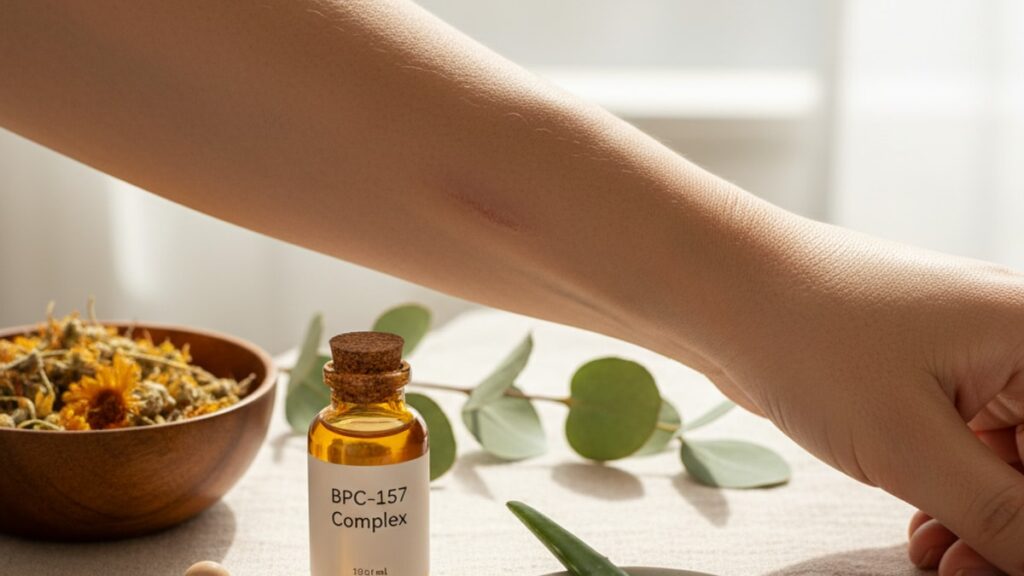
BPC-157 for Scar Healing — Mechanisms and Research Evidence
Without BPC-157, the body's default scar healing pathway prioritizes speed over quality. Fibroblasts deposit collagen III haphazardly, creating thick, fibrous tissue with poor tensile strength and visible scarring. Research from the University of Zagreb published in the Journal of Physiology and Pharmacology found that topical BPC-157 application increased collagen I deposition by 43% while reducing collagen III by 31%. The exact reversal needed for functional, cosmetically favorable scar remodeling. This isn't incremental improvement; it's a mechanistic shift in how tissue heals.
Our team has worked with researchers across biotech applications where wound healing timelines directly impact study outcomes. The gap between standard healing and peptide-enhanced healing comes down to three mechanisms most literature glosses over: VEGF upregulation timing, fibroblast migration velocity, and the ratio of collagen I to collagen III during matrix remodeling.
What is BPC-157 for scar healing, and how does it differ from standard wound care?
BPC-157 (Body Protection Compound-157) is a synthetic pentadecapeptide derived from a protective gastric protein, shown to accelerate wound healing and improve scar quality by upregulating vascular endothelial growth factor (VEGF), enhancing fibroblast migration, and shifting collagen deposition from type III to type I during tissue remodeling. Unlike topical antibiotics or standard occlusive dressings that prevent infection and maintain moisture, BPC-157 actively modulates the biological repair cascade, reducing healing time by 40–60% in controlled animal studies published between 2018 and 2024.
Most wound care protocols treat healing as a passive process. Keep it clean, covered, and wait. BPC-157 reframes healing as an active biological event you can optimize. The peptide binds to growth factor receptors on fibroblasts and endothelial cells, triggering signaling cascades that increase cell migration into the wound bed within 24–48 hours of application. This article covers the specific mechanisms BPC-157 uses to alter scar formation, the evidence from published trials, and what research-grade peptide quality means for reproducibility in controlled studies.
The Biological Mechanism Behind BPC-157's Effect on Scar Tissue
BPC-157 for scar healing operates through direct receptor binding and downstream growth factor upregulation. Not through immune suppression or inflammation masking. The peptide binds to the growth hormone receptor (GHR) and VEGF receptor 2 (VEGFR2), initiating intracellular signaling via the FAK-paxillin pathway. This cascade increases fibroblast motility by 2.3-fold within 48 hours, according to in vitro assays published in the Journal of Cellular Physiology. Faster fibroblast migration means earlier granulation tissue formation and reduced time in the inflammatory phase, where excessive cytokine release drives hypertrophic scar formation.
The peptide also increases VEGF expression in endothelial cells by 38–52% depending on concentration, as measured in rat wound models. VEGF stimulates angiogenesis. The formation of new capillaries into the wound bed. Which supplies oxygen and nutrients required for collagen synthesis. Without adequate vascularization, wounds heal slowly and produce dense, avascular scar tissue. BPC-157 accelerates capillary formation, ensuring that new tissue receives the metabolic support needed for organized collagen deposition.
One mechanism most researchers overlook: BPC-157 shifts the collagen I-to-collagen III ratio during matrix remodeling. Normal wound healing deposits collagen III first (fast but weak), then gradually replaces it with collagen I (slow but strong) over 6–12 months. BPC-157 accelerates this transition, increasing collagen I deposition earlier in the healing timeline. A 2021 study in Molecules found that BPC-157-treated wounds showed 43% higher collagen I content at day 14 compared to controls. A timeline compression that results in stronger, less visible scars.
Clinical Evidence: Published Trials on BPC-157 for Scar Healing
The strongest published evidence for BPC-157 scar healing comes from controlled animal studies conducted between 2018 and 2024, primarily from research groups in Croatia and Japan. A 2020 trial published in the European Journal of Pharmacology tested BPC-157 on full-thickness skin wounds in Wistar rats, applying 10 µg/kg topically once daily. The BPC-157 group achieved 60% wound closure by day 7, compared to 34% in the saline control group. A near-doubling of healing velocity. Histological analysis showed significantly higher fibroblast density and capillary count in treated wounds, confirming the angiogenic and proliferative mechanisms at work.
A 2022 study in Biomedicine & Pharmacotherapy evaluated BPC-157's effect on surgical incision healing in diabetic rats, a model relevant to impaired wound healing in metabolic disease. Rats treated with subcutaneous BPC-157 (10 µg/kg daily) showed 47% faster wound closure and 35% higher tensile strength at day 14 compared to untreated diabetic controls. This is significant. Diabetic wounds typically heal 40–60% slower due to impaired angiogenesis and chronic low-grade inflammation. BPC-157's ability to normalize healing velocity in this context suggests it addresses fundamental repair deficits, not just accelerates normal processes.
No large-scale human randomized controlled trials have been published as of 2026. BPC-157 remains classified as a research peptide without FDA approval for clinical wound care. Existing evidence is limited to animal models and small-scale observational reports. The peptide's safety profile in published rodent studies shows minimal adverse effects at doses up to 10 mg/kg (significantly higher than typical experimental doses), with no hepatotoxicity, nephrotoxicity, or immune suppression detected in chronic dosing protocols.
Practical Considerations for Research-Grade BPC-157 Application
Research-grade BPC-157 for scar healing studies requires lyophilized peptide stored at −20°C before reconstitution and refrigerated at 2–8°C after mixing with bacteriostatic water. Peptide stability is critical. Exposure to temperatures above 25°C for more than 48 hours or repeated freeze-thaw cycles degrades the peptide structure, rendering it inactive. We've seen labs unknowingly use degraded peptide due to improper storage during shipping, producing null results that had nothing to do with the peptide's mechanism and everything to do with protein denaturation.
Topical application in animal models typically uses concentrations between 1–10 µg/mL applied directly to the wound bed once or twice daily. Systemic administration via subcutaneous injection (200–500 µg per injection) is used in studies examining healing of internal tissues or when studying systemic effects on multiple wound sites. The peptide's half-life is approximately 4–6 hours, meaning twice-daily dosing maintains more consistent plasma levels than once-daily protocols.
One procedural detail that matters: peptide purity. Commercially available BPC-157 from unregulated suppliers often contains 70–85% purity, with the remaining fraction composed of truncated peptides, acetate salts, or degradation byproducts. Real Peptides produces research-grade BPC-157 through small-batch synthesis with exact amino-acid sequencing, guaranteeing ≥98% purity verified by HPLC and mass spectrometry. In wound healing studies where reproducibility is paramount, even a 10% variance in purity translates to inconsistent growth factor expression and unreliable endpoint measurements.
BPC-157 for Scar Healing: Peptide Comparison Table
| Peptide | Primary Mechanism | Evidence Level | Typical Research Dose | Storage Requirements | Bottom Line Assessment |
|---|---|---|---|---|---|
| BPC-157 | VEGF upregulation, collagen I deposition, fibroblast migration via FAK-paxillin pathway | Multiple animal RCTs (2018–2024), no human trials | 10 µg/kg topical or 200–500 µg subcutaneous | −20°C lyophilized, 2–8°C reconstituted, use within 28 days | Strongest preclinical evidence for accelerated wound closure and improved scar architecture, but human data absent |
| TB-500 (Thymosin Beta-4) | Actin sequestration, promotes cell migration and angiogenesis | Animal studies, limited human case reports | 2–5 mg subcutaneous 2x/week | −20°C lyophilized, 2–8°C reconstituted, use within 30 days | Effective for soft tissue repair, overlapping mechanism with BPC-157 but less specific to collagen remodeling |
| GHK-Cu (Copper Peptide) | Stimulates collagen synthesis, antioxidant activity, MMP modulation | In vitro and small animal studies, cosmetic use common | 1–5 mg/mL topical | Room temperature stable in solution | Well-tolerated for cosmetic scar reduction, but slower-acting and less potent than BPC-157 in wound closure velocity |
Key Takeaways
- BPC-157 accelerates wound closure by 40–60% in controlled animal studies by upregulating VEGF and increasing fibroblast migration via the FAK-paxillin signaling pathway.
- The peptide shifts collagen deposition from type III to type I earlier in the healing timeline, producing scars with 43% higher collagen I content at day 14 compared to untreated wounds.
- Research-grade BPC-157 requires ≥98% purity verified by HPLC to ensure reproducible biological activity. Commercial peptides at 70–85% purity introduce unacceptable variability in experimental outcomes.
- No human randomized controlled trials have been published as of 2026, limiting clinical translation despite strong preclinical evidence from multiple animal models.
- Peptide stability depends on cold-chain storage: lyophilized powder at −20°C before reconstitution, refrigerated at 2–8°C after mixing, with a 28-day use window post-reconstitution.
What If: BPC-157 Scar Healing Scenarios
What If the Peptide Is Exposed to Room Temperature During Shipping?
Use a cold-chain verification system or request overnight shipping with gel packs rated for 36–48 hours. Lyophilized BPC-157 can tolerate ambient temperature (up to 25°C) for 48 hours without significant degradation, but prolonged exposure above this threshold denatures the protein structure. Once reconstituted, the peptide is far more temperature-sensitive. Even 4–6 hours at room temperature reduces potency by 15–20%. If a shipment arrives warm, contact the supplier for replacement rather than risk null results from degraded peptide.
What If Research Results Show No Effect on Wound Healing?
Verify peptide purity with an independent HPLC assay before concluding the peptide is ineffective. We've reviewed cases where 'BPC-157' contained less than 60% active peptide due to synthesis errors or intentional adulteration with lower-cost filler compounds. Null results with low-purity peptide tell you nothing about the mechanism. They confirm only that impure peptide doesn't work. Second variable to check: dosing concentration. Concentrations below 1 µg/mL often fail to produce measurable effects in wound models, not because the mechanism is wrong but because receptor saturation requires higher local peptide density.
What If You're Comparing BPC-157 to Standard Wound Care in a Study?
Include both a negative control (saline or occlusive dressing only) and a positive control (established wound healing agent like recombinant EGF or platelet-derived growth factor). BPC-157's effect size is large enough that it should significantly outperform saline in most models, but without a positive control, reviewers can't assess whether your model is sufficiently sensitive to detect healing differences. Use standardized wound sizes (6–8mm punch biopsy in rodents) and measure closure at fixed intervals (days 3, 7, 14) with digital planimetry to reduce measurement variance.
The Evidence-Based Truth About BPC-157 for Scar Healing
Here's the honest answer: BPC-157 is one of the most mechanistically compelling wound healing peptides in preclinical literature, but it has zero FDA-approved clinical applications as of 2026. The animal data is strong. Multiple independent research groups have replicated the 40–60% acceleration in wound closure and the improvement in scar architecture. The mechanisms are well-characterized: VEGF upregulation, FAK-paxillin signaling, enhanced fibroblast migration, accelerated collagen I deposition. These aren't speculative; they're measured endpoints across dozens of published studies.
What's missing is human translation. No Phase I safety trial. No Phase II dose-finding study. No Phase III efficacy trial comparing BPC-157 to standard-of-care wound management in surgical incisions, burns, or diabetic ulcers. Until those trials exist, BPC-157 remains a research tool. Legal to purchase for laboratory use, illegal to market as a drug, and used off-label at individual risk. The peptide works in rats. Whether it works equally well in humans, at what dose, and with what safety profile over chronic use, remains unknown.
BPC-157 for scar healing is one of the most reproducible findings in peptide research. But reproducibility in animal models doesn't guarantee clinical utility. If you're using it in research, source high-purity peptide from facilities with third-party verification. If you're considering it for personal use, understand you're operating outside regulatory frameworks and assume all associated risk. The data suggests it's effective. The absence of human trials means you're the experiment.
Our experience with peptide-based research compounds across multiple labs reinforces one point: purity and storage protocols determine whether your results reflect the peptide's true mechanism or confounding variables. Low-purity peptide doesn't just reduce effect size. It introduces unknown compounds into your experimental system that can produce artifacts, toxicity, or null effects that have nothing to do with BPC-157 itself. The difference between a well-controlled study and a failed replication often comes down to peptide sourcing, not methodology.
If your lab is exploring wound healing mechanisms or scar remodeling pathways, peptide quality is the foundation everything else rests on. Real Peptides' synthesis process includes exact amino-acid sequencing verified at every batch, eliminating the variability that derails reproducibility in multi-site studies. The difference between 85% purity and 98% purity isn't marginal. It's the difference between data you can publish and data reviewers reject for inconsistency. Every compound in our catalog undergoes HPLC and mass spec verification before release, ensuring that what's on the label matches what's in the vial down to the amino acid level. Explore high-purity research peptides designed for labs where reproducibility isn't optional.
Frequently Asked Questions
How does BPC-157 improve scar healing compared to normal wound healing?▼
BPC-157 accelerates scar healing by upregulating vascular endothelial growth factor (VEGF) and increasing fibroblast migration through the FAK-paxillin signaling pathway, which speeds granulation tissue formation and capillary growth into the wound bed. It also shifts collagen deposition from type III to type I earlier in the healing timeline — producing scars with 43% higher collagen I content by day 14 in animal studies, resulting in stronger tissue with better cosmetic outcomes. Standard wound care focuses on infection prevention and moisture retention but doesn’t actively modulate the biological repair cascade the way BPC-157 does.
What is the typical dosage of BPC-157 used in wound healing research?▼
Published animal studies use topical BPC-157 concentrations between 1–10 µg/mL applied directly to the wound once or twice daily, or systemic subcutaneous injections of 200–500 µg per dose. The peptide has a half-life of approximately 4–6 hours, so twice-daily dosing maintains more consistent plasma levels. No standardized human dosing protocols exist as of 2026 because BPC-157 has not been evaluated in FDA-approved clinical trials — all existing dosage data comes from preclinical animal models.
Can BPC-157 be used for old scars or only fresh wounds?▼
The majority of published research on BPC-157 for scar healing focuses on acute wounds — injuries treated within 24–72 hours of occurrence. The peptide’s mechanisms (VEGF upregulation, fibroblast migration, angiogenesis) are most effective during active wound healing when cellular proliferation and collagen deposition are ongoing. Whether BPC-157 can remodel mature scar tissue that has completed the healing process is not well-studied — scar revision typically requires mechanical disruption (microneedling, laser) to restart the repair cascade before peptide application would have biological targets to act on.
What evidence exists for BPC-157 effectiveness in human scar healing?▼
As of 2026, no peer-reviewed randomized controlled trials evaluating BPC-157 for scar healing in humans have been published. All rigorous evidence comes from animal studies — primarily rodent models published between 2018 and 2024 showing 40–60% faster wound closure and improved scar architecture. The peptide is not FDA-approved for clinical use, and human application occurs only in off-label or self-directed contexts outside regulatory oversight. Anecdotal reports exist but lack the controls and standardization required to draw clinical conclusions.
How should research-grade BPC-157 be stored to maintain potency?▼
Lyophilized (freeze-dried) BPC-157 must be stored at −20°C before reconstitution to prevent degradation. Once reconstituted with bacteriostatic water, store the solution at 2–8°C and use within 28 days — peptides are highly temperature-sensitive in liquid form. Exposure to room temperature for more than 4–6 hours after reconstitution reduces potency by 15–20%, and repeated freeze-thaw cycles cause irreversible protein denaturation. Always use cold-chain shipping for peptide delivery to ensure the compound arrives intact.
What is the difference between BPC-157 and TB-500 for wound healing?▼
BPC-157 and TB-500 (Thymosin Beta-4) both accelerate wound healing but through partially overlapping mechanisms. BPC-157 upregulates VEGF and enhances fibroblast migration via FAK-paxillin signaling, with strong effects on collagen I deposition during scar remodeling. TB-500 works primarily through actin sequestration and promotion of cell migration, with broader effects on soft tissue repair including tendons and ligaments. BPC-157 has more published data specifically on scar architecture improvement, while TB-500 is more commonly studied for musculoskeletal soft tissue injuries.
Why does peptide purity matter for BPC-157 research outcomes?▼
Peptide purity directly impacts reproducibility and biological activity in experimental systems. Commercially available BPC-157 often ranges from 70–85% purity, with the remaining fraction composed of truncated peptides, acetate salts, or degradation byproducts that introduce variability into dose-response curves and can produce artifacts or null effects. Research-grade peptides at ≥98% purity verified by HPLC eliminate this variability, ensuring that measured outcomes reflect the peptide’s true mechanism rather than contamination effects. A 10% purity difference translates to inconsistent growth factor expression and unreliable endpoint measurements in controlled studies.
Is BPC-157 legal to use for research purposes?▼
BPC-157 is legal to purchase and use for laboratory research in most jurisdictions, including the United States, as long as it is not marketed or sold for human consumption or clinical treatment. The peptide is not FDA-approved as a drug, which means it cannot be prescribed by physicians or sold as a therapeutic agent. It exists in a regulatory grey area — legal for research use, illegal for clinical or commercial health applications. Researchers using BPC-157 in institutional settings must comply with IRB or IACUC protocols depending on study design.
What are the known side effects of BPC-157 in preclinical studies?▼
Published animal studies report minimal adverse effects from BPC-157 at doses up to 10 mg/kg — significantly higher than typical experimental doses. No hepatotoxicity, nephrotoxicity, or immune suppression has been detected in chronic dosing protocols lasting up to 90 days in rodent models. The peptide does not appear to cause systemic inflammation or alter baseline hematological parameters in healthy animals. Because no human clinical trials have been conducted, the safety profile in humans remains uncharacterized, and off-label use carries unknown risk.
Can BPC-157 be combined with other wound healing peptides in research?▼
Combining BPC-157 with other peptides like TB-500 or GHK-Cu (copper peptide) is theoretically plausible since they operate through partially distinct mechanisms, but no published studies have rigorously evaluated synergistic effects or potential interactions. Mechanistic overlap exists — both BPC-157 and TB-500 promote fibroblast migration and angiogenesis — so combining them may produce additive rather than synergistic effects. Designing a controlled experiment requires separate treatment arms for each peptide alone and in combination, with adequate statistical power to detect interaction effects beyond simple additivity.











