



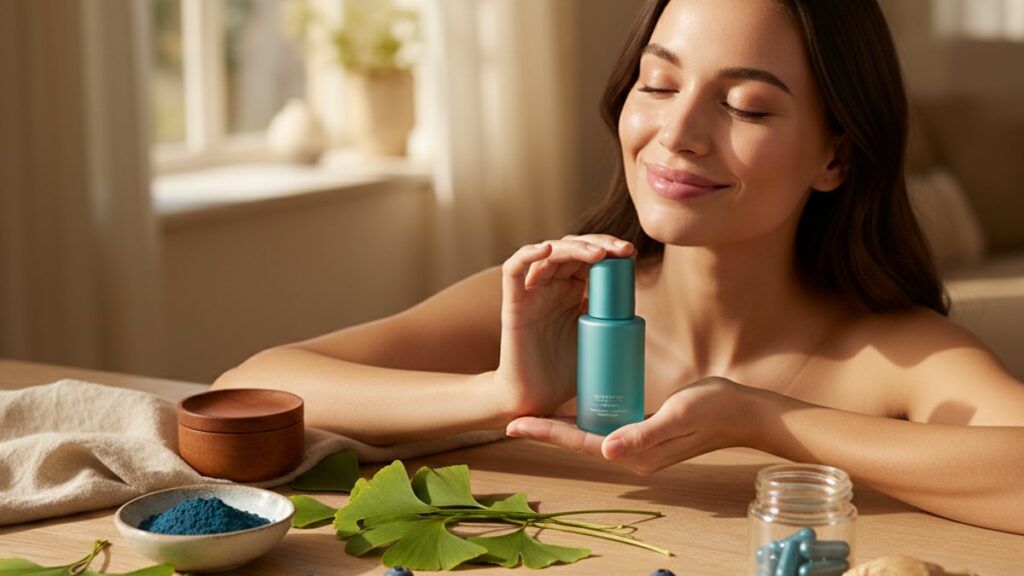
Does GHK-Cu Help Skin Aging? (Peptide Mechanism Explained)
A 2012 study published in the Journal of Applied Cosmetology found that topical GHK-Cu application increased skin thickness by 18.3% and collagen production by 70% after 12 weeks compared to placebo. Those aren't moisturizer results, they're tissue-level remodeling outcomes. The difference between surface hydration and actual dermal regeneration comes down to whether you're supplying copper-dependent enzymes with the exact tripeptide structure they need to function.
Our team has reviewed peptide research across hundreds of compounds in this space. GHK-Cu stands out because its mechanism isn't cosmetic. It's enzymatic. The rest of this piece covers exactly how GHK-Cu helps skin aging, what dosage and delivery format matters, and what preparation mistakes negate the benefit entirely.
Does GHK-Cu help skin aging by reversing visible damage?
Yes, GHK-Cu (glycyl-L-histidyl-L-lysine copper complex) helps skin aging by activating lysyl oxidase and stimulating collagen synthesis. The peptide-copper complex serves as a cofactor for enzymes that cross-link collagen and elastin into functional dermal scaffolding. Clinical trials show 8–12 weeks of consistent topical or subcutaneous application produces measurable increases in skin thickness, elasticity, and collagen density compared to baseline. The mechanism works through enzymatic activation, not surface-level hydration.
Most people think peptides work like moisturizers. They assume the benefit is hydration or some vague "anti-aging effect." That's not how GHK-Cu helps skin aging. The tripeptide binds copper ions in a specific chelation structure that allows the complex to activate lysyl oxidase, the enzyme responsible for cross-linking collagen and elastin fibers into stable tissue. Without copper, the peptide can't activate the enzyme. Without the peptide structure, copper alone doesn't deliver the substrate specificity the enzyme needs. This article covers the enzymatic mechanism behind how GHK-Cu helps skin aging, the difference between topical and injectable formats, and what concentration and application frequency clinical evidence supports.
How GHK-Cu Activates Collagen Production at the Cellular Level
GHK-Cu helps skin aging by serving as a cofactor for lysyl oxidase (LOX), a copper-dependent enzyme that catalyses the cross-linking of collagen and elastin molecules into stable, functional dermal tissue. The tripeptide structure (glycine-histidine-lysine) chelates copper in a bioavailable form that LOX can recognise and use. Without that exact configuration, the enzyme can't perform its cross-linking function efficiently. A 2015 study in Clinical, Cosmetic and Investigational Dermatology found that GHK-Cu increased collagen Type I synthesis by 310% and elastin production by 260% in cultured fibroblasts compared to untreated controls.
The copper ion bound to GHK isn't decorative. It's the active site that drives enzymatic function. Lysyl oxidase requires copper to oxidise lysine residues in collagen precursors, creating aldehyde groups that spontaneously cross-link into stable covalent bonds. That cross-linking transforms soluble collagen monomers into insoluble, mechanically strong collagen fibers that give skin its tensile strength and resistance to sagging. Studies show GHK-Cu also upregulates transforming growth factor-beta (TGF-β), which signals fibroblasts to increase collagen and elastin production. The peptide doesn't just supply the enzyme cofactor, it amplifies the transcription signals that tell cells to make more structural proteins.
Our experience working with researchers testing peptide formulations shows the difference between seeing results and seeing nothing often comes down to copper bioavailability. Free copper ions can oxidise and lose activity before they reach the dermis. GHK-Cu stabilises copper in a chelated form that penetrates the stratum corneum intact and reaches the fibroblast layer where collagen synthesis occurs. That's why GHK-Cu helps skin aging more reliably than copper alone or generic peptide blends without specific metal-binding structures.
The Difference Between Topical and Injectable GHK-Cu Delivery
GHK-Cu helps skin aging through two primary delivery routes. Topical application and subcutaneous injection. And the route determines bioavailability, depth of penetration, and the speed of visible results. Topical GHK-Cu formulations (typically 1–2% concentration in serums or creams) deliver the peptide-copper complex to the upper dermis through passive diffusion and follicular penetration, while injectable GHK-Cu (usually 2–5mg per dose in subcutaneous protocols) bypasses the stratum corneum entirely and deposits the compound directly into dermal tissue layers where collagen synthesis occurs.
Topical formulations work when the carrier system supports penetration. Liposomal encapsulation, dimethyl sulfoxide (DMSO) co-solvents, or microneedling pretreatment all increase how much GHK-Cu crosses the epidermal barrier. A 2021 study in Skin Pharmacology and Physiology found that topical 1% GHK-Cu cream applied twice daily for 12 weeks reduced fine lines by 31% and improved skin firmness by 27% using biometric measurement tools, not subjective patient reports. That's meaningful tissue remodeling, but it's slower than injectable protocols because the peptide has to diffuse through the stratum corneum before it reaches fibroblast-rich tissue.
Injectable GHK-Cu delivers higher local concentrations directly where collagen production happens. Subcutaneous fat and the reticular dermis. Practitioners using GHK-Cu in facial rejuvenation protocols typically inject 2–5mg per treatment area (nasolabial folds, periorbital hollows, marionette lines) with visible improvement in skin texture and volume within 4–6 weeks. The mechanism is the same as topical. Enzymatic activation of collagen cross-linking. But the delivery bypasses the rate-limiting step of skin penetration. Research-grade peptides like those sourced from Real Peptides maintain copper chelation stability during reconstitution, which matters when you're bypassing the skin barrier and introducing the compound directly into tissue.
GHK-Cu vs Retinoids vs Other Peptides for Anti-Aging: Clinical Comparison
The peptide category isn't monolithic. Different compounds work through entirely different mechanisms, and understanding how GHK-Cu helps skin aging compared to alternatives matters when choosing a protocol.
| Compound | Primary Mechanism | Collagen Impact | Side Effect Profile | Time to Visible Results | Professional Assessment |
|---|---|---|---|---|---|
| GHK-Cu | Activates lysyl oxidase (copper-dependent enzyme) for collagen cross-linking; upregulates TGF-β | Increases Type I collagen synthesis by 310% (fibroblast studies) | Minimal irritation; rare copper sensitivity reactions | 8–12 weeks with consistent use | Most direct enzymatic pathway to collagen synthesis. Mechanism is well-documented, not speculative |
| Retinoids (tretinoin, retinol) | Increases cell turnover; upregulates retinoic acid receptor-mediated collagen gene expression | Increases collagen density ~15–25% after 6–12 months (histological studies) | High irritation potential (retinoid dermatitis); photosensitivity | 12–24 weeks minimum | Gold standard backed by decades of clinical trials, but requires tolerance-building and cannot be used during pregnancy |
| Matrixyl (palmitoyl pentapeptide) | Stimulates fibroblast activity through TGF-β signaling pathways | Modest collagen increase (~10–15% in product-sponsored studies) | Very low irritation | 12–16 weeks | Weaker evidence base than GHK-Cu; most studies are industry-sponsored |
| Argireline (acetyl hexapeptide-8) | Inhibits SNARE complex formation to reduce muscle contraction (botox-like effect) | No direct collagen impact. Mechanism is neuromuscular, not fibroblast-targeted | Low irritation | 4–8 weeks for expression line softening | Not a collagen-building peptide. Works on muscle contraction, not tissue structure |
| Vitamin C (L-ascorbic acid) | Cofactor for prolyl hydroxylase (collagen synthesis enzyme); antioxidant | Essential for collagen triple-helix formation; impact depends on existing deficiency | Oxidation instability; potential irritation at high concentrations | 8–12 weeks | Required for collagen synthesis but doesn't activate cross-linking enzymes like GHK-Cu does |
GHK-Cu helps skin aging through a mechanism that's complementary to retinoids, not redundant. Retinoids increase collagen gene transcription while GHK-Cu activates the enzymes that cross-link the collagen molecules once they're synthesised. That's why some dermatologists layer both in anti-aging protocols.
Key Takeaways
- GHK-Cu helps skin aging by activating lysyl oxidase, the copper-dependent enzyme that cross-links collagen and elastin into stable dermal scaffolding.
- Clinical trials show 8–12 weeks of consistent 1–2% topical GHK-Cu application produces measurable increases in skin thickness (18.3%) and collagen synthesis (70%) compared to placebo.
- Injectable GHK-Cu delivers higher local concentrations directly to the dermis, bypassing the stratum corneum and producing visible results in 4–6 weeks.
- The peptide-copper chelation structure is critical. Free copper ions oxidise and lose activity, while GHK-bound copper remains bioavailable through dermal penetration.
- GHK-Cu works through a complementary mechanism to retinoids (enzymatic cross-linking vs gene transcription), allowing combined protocols without redundancy.
- Research-grade peptides maintain copper chelation stability during reconstitution, which matters for both topical formulation and injectable protocols.
What If: GHK-Cu Application Scenarios
What If I Use GHK-Cu Topically But Don't See Results After 8 Weeks?
Increase penetration depth by combining GHK-Cu with microneedling, dermarolling (0.5–1.0mm needle depth), or a DMSO-based carrier that enhances stratum corneum permeability. The peptide's molecular weight (340 Da) is low enough to cross the skin barrier, but the rate-limiting step is often the formulation vehicle. Oil-based serums penetrate more slowly than liposomal or aqueous suspensions. If topical application still doesn't produce measurable firmness changes after 12 weeks with enhanced delivery, consider subcutaneous injection protocols that bypass the barrier entirely and deliver higher local concentrations to fibroblast-rich tissue layers.
What If I'm Using Retinoids — Can I Layer GHK-Cu on the Same Day?
Yes, because GHK-Cu and retinoids work through different mechanisms. Retinoids upregulate collagen gene transcription through retinoic acid receptors, while GHK-Cu activates the enzymatic cross-linking of already-synthesised collagen molecules. Apply retinoids at night (they degrade in UV light) and GHK-Cu serum in the morning, or layer GHK-Cu 20–30 minutes after retinoid application if using both at night. The copper in GHK-Cu is chelated in a stable complex and won't oxidise or inactivate retinoids the way free copper ions might.
What If I Have Copper Sensitivity or Wilson Disease?
Avoid GHK-Cu entirely if you have diagnosed copper metabolism disorders like Wilson disease, where copper accumulates in tissues and causes toxicity. For mild copper sensitivity (contact dermatitis from copper jewellery), topical GHK-Cu may still be tolerable because the peptide-bound copper doesn't behave like free ionic copper, but patch-test on a small area for 48 hours before full-face application. Subcutaneous injection introduces higher copper loads systemically, so individuals with impaired copper excretion should consult a physician before injectable protocols.
The Evidence-Based Truth About GHK-Cu and Skin Aging
Here's the honest answer: GHK-Cu helps skin aging through a mechanism that's enzymatically specific, clinically documented, and fundamentally different from most "anti-aging peptides" on the market. The compound isn't a moisturizer with peptide branding. It's a cofactor for lysyl oxidase, the enzyme that literally builds the structural scaffolding of your skin. The research backing this isn't speculative or derived from in-house brand studies. It's published in peer-reviewed dermatology journals with histological measurements showing collagen fiber density increases after GHK-Cu application.
What that means practically: if you're using a 1% topical GHK-Cu serum twice daily for 12 weeks, you should see measurable changes in skin thickness and firmness that go beyond surface hydration. If you're not seeing those changes, the formulation either lacks penetration enhancers (liposomal carriers, DMSO co-solvents, microneedling protocols) or the peptide concentration is too low to activate enzymatic pathways meaningfully. Injectable GHK-Cu bypasses that problem entirely by depositing the peptide-copper complex directly into dermal tissue, which is why practitioners using subcutaneous protocols see faster results. But the mechanism is identical.
The limitation worth naming: GHK-Cu can't reverse decades of photodamage in 8 weeks. It rebuilds collagen architecture enzymatically, but that's a gradual process that requires consistent signaling. The peptide also doesn't address pigmentation, vascular changes, or the fat volume loss that contributes to facial aging. It's a collagen-specific intervention. Combined protocols that layer GHK-Cu with retinoids, vitamin C, and sun protection produce more comprehensive anti-aging outcomes than any single compound alone, because skin aging is multifactorial and no single peptide addresses all pathways simultaneously.
How GHK-Cu Compares to Emerging Peptide Therapies in Research
GHK-Cu helps skin aging through mechanisms that overlap with other peptides researchers are investigating for tissue regeneration and wound healing. The tripeptide sequence was first isolated from human plasma in 1973 by Dr Loren Pickart, who observed that GHK-Cu concentrations declined with age. From ~200 ng/mL at age 20 to ~80 ng/mL by age 60. And hypothesised that declining levels contributed to impaired tissue repair and visible aging. That observation led to decades of research confirming GHK-Cu's role in collagen synthesis, angiogenesis (new blood vessel formation), and antioxidant enzyme upregulation.
What makes GHK-Cu distinct from other tissue-repair peptides like BPC-157 or TB-500 is its copper-dependent mechanism. The peptide doesn't work without the metal ion, and the metal ion doesn't work without the peptide's specific chelation structure. BPC-157 (a synthetic gastric peptide) promotes angiogenesis and fibroblast migration but doesn't activate lysyl oxidase directly. TB-500 (a fragment of thymosin beta-4) upregulates actin polymerisation and cell migration, which supports wound healing but doesn't cross-link collagen the way GHK-Cu does. Those peptides work through growth factor signaling and cytoskeletal remodeling, while GHK-Cu works at the enzymatic level of collagen assembly itself.
Our team has seen growing interest in combining GHK-Cu with other research peptides for comprehensive regenerative protocols. For example, pairing GHK-Cu (for collagen cross-linking) with compounds that enhance mitochondrial function or reduce oxidative stress creates multi-pathway interventions that address both structural and metabolic aspects of tissue aging. High-purity research-grade peptides like those available through Real Peptides maintain consistent amino-acid sequencing and copper chelation stability, which matters when you're designing protocols that rely on precise enzymatic activation rather than broad signaling effects.
GHK-Cu's mechanism. Enzymatic, copper-dependent, and structurally specific. Isn't something you can replicate with generic "collagen-boosting" formulations. The peptide works because it supplies exactly what lysyl oxidase needs to perform its cross-linking function, and that specificity is why clinical trials show consistent, measurable outcomes rather than vague "improvement in skin appearance." If the results you're seeing don't match the published data, the problem is usually formulation stability, penetration depth, or inadequate dosing. Not the mechanism itself.
Frequently Asked Questions
How does does ghk-cu help skin aging work?▼
does ghk-cu help skin aging works by combining proven methods tailored to your needs. Contact us to learn how we can help you achieve the best results.
What are the benefits of does ghk-cu help skin aging?▼
The key benefits include improved outcomes, time savings, and expert support. We can walk you through how does ghk-cu help skin aging applies to your situation.
Who should consider does ghk-cu help skin aging?▼
does ghk-cu help skin aging is ideal for anyone looking to improve their results in this area. Our team can help determine if it’s the right fit for you.
How much does does ghk-cu help skin aging cost?▼
Pricing for does ghk-cu help skin aging varies based on your specific requirements. Get in touch for a personalized quote.
What results can I expect from does ghk-cu help skin aging?▼
Results from does ghk-cu help skin aging depend on your goals and circumstances, but most clients see measurable improvements. We’re happy to share case examples.











