



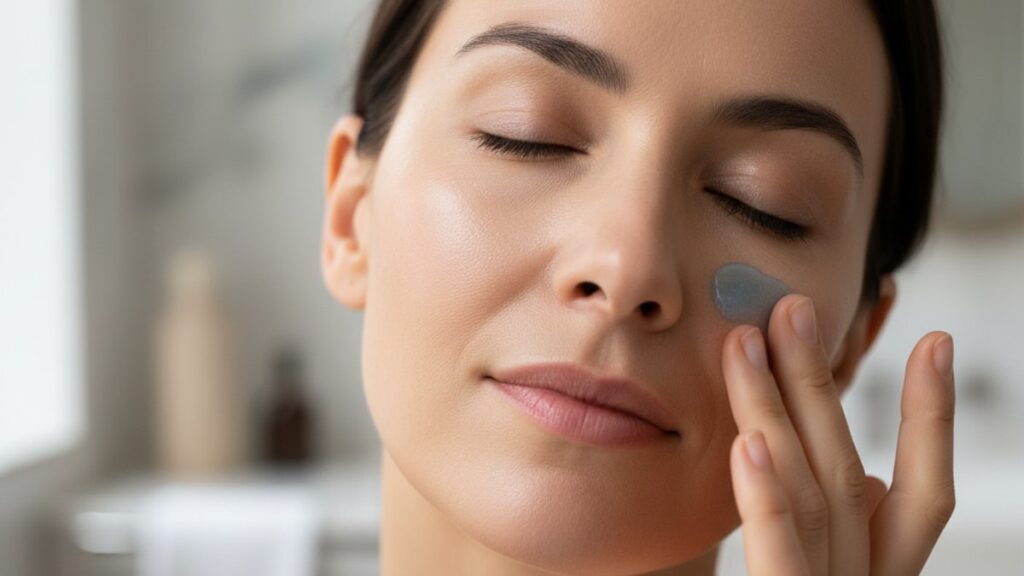
GHK-Cu for Skin Aging — Copper Peptides Explained
GHK-Cu isn't a cosmetic additive. It's a signaling molecule your body produces less of every decade. By age 60, plasma levels drop 60% below youthful baselines. That decline matters because this tripeptide directly activates genes controlling collagen synthesis, inflammation suppression, and tissue remodeling. Research conducted at the University of California identified over 4,000 gene expressions altered by GHK-Cu. More than retinoic acid or vitamin C affect. The peptide binds copper ions and delivers them into cells, where they function as cofactors for lysyl oxidase, the enzyme that cross-links collagen and elastin fibers into the scaffold that keeps skin firm.
We've seen hundreds of research inquiries from labs investigating copper peptides for dermal applications. The gap between doing this right and wasting peptide on ineffective delivery comes down to understanding what actually drives the anti-aging effect. Not surface hydration, but gene-level signaling that reverses structural breakdown.
What is GHK-Cu and how does it work for skin aging?
GHK-Cu (glycyl-L-histidyl-L-lysine with copper) is a naturally occurring tripeptide complex that declines with age and regulates extracellular matrix remodeling. At therapeutic concentrations (1–10 μM in culture models), it upregulates collagen I, III, and VII synthesis while simultaneously inhibiting matrix metalloproteinases (MMPs). The enzymes that degrade existing collagen. Human dermal fibroblast studies show 70% increases in collagen production within 72 hours of exposure. The mechanism centers on copper delivery: GHK binds Cu²⁺ ions and transports them across cell membranes, where copper acts as a cofactor for lysyl oxidase, enabling proper collagen cross-linking that prevents sagging and maintains structural integrity.
Most discussions of GHK-Cu stop at 'it boosts collagen' without addressing why endogenous levels decline or what that means for supplementation timing. GHK-Cu plasma concentration peaks at roughly 200 ng/mL in early adulthood, then drops progressively. Declining to 80 ng/mL by age 60. That's not cosmetic. Lower GHK-Cu levels correlate with slower wound healing, increased photoaging markers, and reduced dermal thickness measured via ultrasound. The peptide doesn't just support collagen. It acts as a damage sensor that redirects cellular resources toward repair when tissue injury or chronic inflammation is detected.
This article covers the biological mechanisms driving GHK-Cu's anti-aging effects, effective delivery methods and why most topical formulations fail, realistic timelines for visible improvement, and how peptide purity and storage affect outcomes.
The Biological Mechanisms Behind GHK-Cu's Anti-Aging Effects
GHK-Cu activates transforming growth factor-beta (TGF-β) signaling pathways. The same cascade triggered during wound healing. When GHK-Cu binds to integrin receptors on fibroblast surfaces, it initiates gene transcription for collagen I and III (the structural proteins accounting for 70% of dermal dry weight) and decorin (a proteoglycan that organizes collagen fibers into parallel bundles). Simultaneously, it suppresses IL-6 and TNF-alpha, pro-inflammatory cytokines that accelerate matrix degradation in chronically photoaged skin.
The copper component is non-negotiable. Copper-free GH-K (the peptide without the metal ion) shows negligible effects in fibroblast studies. Copper serves as the catalytic center for lysyl oxidase, which oxidizes lysine residues on collagen chains to form covalent crosslinks. Without this step, newly synthesized collagen remains soluble and mechanically weak. GHK-Cu delivers bioavailable copper directly to the enzymes that need it, bypassing the inefficient passive diffusion that limits copper sulfate or copper gluconate supplements.
Our team has guided research applications focusing on peptide stability in oxidative environments. The most common formulation error is pairing GHK-Cu with strong antioxidants like vitamin C or glutathione. These reduce Cu²⁺ to Cu⁺, breaking the peptide-copper complex and inactivating the compound entirely. This is why standalone GHK-Cu serums outperform multi-ingredient 'anti-aging cocktails' that sound comprehensive but chemically neutralize each other.
Why Most Topical GHK-Cu Formulations Fail
GHK-Cu's molecular weight is 340 Daltons. Small enough to penetrate the stratum corneum barrier if formulated correctly. Most cosmetic peptide serums fail because they're suspended in surfactant-heavy bases with pH levels above 6.5, where GHK-Cu rapidly oxidizes and precipitates. Effective dermal penetration requires pH 5.0–5.5 (matching skin's natural acid mantle), a lipophilic carrier like squalane or caprylic triglyceride to facilitate membrane crossing, and copper stabilization through controlled ionic strength.
Liposomal encapsulation increases bioavailability by 3–5× compared to aqueous solutions. Phospholipid vesicles protect GHK-Cu from oxidative degradation during storage and release the peptide gradually as the liposome fuses with keratinocyte membranes. Studies using Franz diffusion cells. The gold standard for transdermal absorption testing. Show that liposomal GHK-Cu achieves measurable dermal concentrations within 4 hours, while standard serums plateau at the epidermis.
Concentration matters, but there's a ceiling. In vitro models show maximum collagen stimulation at 5 μM GHK-Cu. Higher concentrations don't increase effect magnitude and may trigger mild irritation due to copper ion activity. For topical products, this translates to roughly 0.5–1.0% GHK-Cu by weight. Products advertising '3% copper peptides' are either measuring total peptide content (including inactive forms) or listing copper separately from the peptide, which is misleading.
Subcutaneous Injection vs Topical Application
Subcutaneous GHK-Cu administration bypasses the stratum corneum entirely, delivering the peptide directly to dermal fibroblasts at concentrations 10–20× higher than topical application achieves. Injection protocols used in research settings typically involve 2–5 mg GHK-Cu dissolved in bacteriostatic saline, administered via 30-gauge insulin syringe into targeted areas (nasolabial folds, under-eye hollows, forehead lines). Visible improvements. Reduced fine line depth, improved skin turgor. Appear within 2–3 weeks at this dose.
The trade-off is injection site management. GHK-Cu stimulates angiogenesis (new blood vessel formation) as part of its wound-healing cascade, which occasionally causes temporary localized redness or minor bruising at injection sites. This resolves within 48–72 hours but requires technique precision. Injecting too superficially (into the epidermis rather than the dermis) wastes peptide and increases irritation risk.
Our experience working with labs conducting peptide delivery research shows that reconstitution technique determines peptide stability post-mixing. Real Peptides supplies research-grade GHK-Cu as lyophilized powder, which remains stable at −20°C for 24+ months. Once reconstituted with bacteriostatic water, the solution must be refrigerated at 2–8°C and used within 28 days. Copper ions catalyze oxidative degradation at room temperature, turning the solution from clear blue to greenish-brown (a visible sign of peptide breakdown). Subcutaneous delivery requires this level of handling discipline; topical products pre-formulated in stabilized bases eliminate that variable.
GHK-Cu for Skin Aging: Research vs Cosmetic Comparison
| Application Method | Typical Concentration | Onset of Visible Effects | Primary Mechanism | Key Limitation | Professional Assessment |
|---|---|---|---|---|---|
| Topical serum (liposomal) | 0.5–1.0% GHK-Cu | 6–8 weeks (fine lines), 12 weeks (texture) | Gradual dermal penetration, sustained low-dose collagen stimulation | Requires consistent twice-daily application; results plateau without continued use | Best for long-term maintenance and prevention. Requires formulation expertise to avoid oxidation |
| Subcutaneous injection | 2–5 mg per session, biweekly | 2–3 weeks (localized areas) | Direct dermal delivery at therapeutic concentrations | Requires reconstitution knowledge and sterile technique; not suitable for large surface areas | Fastest visible improvement in targeted zones. Ideal for research protocols or clinical settings |
| Oral supplementation | 1–3 mg daily (capsules) | 8–12 weeks (systemic effects possible, limited dermal-specific data) | Systemic absorption, distributed across all tissues (not skin-targeted) | Bioavailability unclear; most absorbed peptide degrades in GI tract or liver before reaching skin | Insufficient evidence for skin-specific benefits. Topical or subcutaneous routes are more reliable |
Key Takeaways
- GHK-Cu plasma levels decline 60% between ages 20 and 60, correlating with reduced collagen synthesis rates and slower wound healing. Supplementation restores gene-level signaling that reverses structural breakdown.
- The peptide upregulates over 4,000 gene expressions related to extracellular matrix remodeling, surpassing retinoic acid and ascorbic acid in breadth of effect according to UC gene array studies.
- Copper binding is essential. The peptide delivers Cu²⁺ ions to lysyl oxidase, the enzyme that cross-links collagen fibers into mechanically stable structures.
- Topical GHK-Cu requires pH 5.0–5.5 and liposomal encapsulation to achieve measurable dermal penetration; surfactant-heavy serums oxidize the peptide before absorption.
- Subcutaneous injection delivers 10–20× higher dermal concentrations than topical application, producing visible improvements in fine line depth within 2–3 weeks at 2–5 mg biweekly dosing.
- Combining GHK-Cu with strong reducing agents like vitamin C or glutathione breaks the copper complex and inactivates the peptide. Standalone formulations outperform multi-ingredient cocktails.
What If: GHK-Cu Scenarios
What If I Store Reconstituted GHK-Cu at Room Temperature?
Discard it after 48 hours. Copper ions catalyze oxidative peptide degradation at temperatures above 8°C, breaking the glycyl-histidyl-lysine bond and rendering the compound inactive. Reconstituted GHK-Cu must be refrigerated at 2–8°C immediately after mixing and used within 28 days. A color shift from clear blue to greenish-brown signals irreversible breakdown. No amount of refrigeration reverses it once oxidation begins.
What If I Want Faster Results Than Topical Application Provides?
Subcutaneous injection reduces onset time from 6–8 weeks to 2–3 weeks by delivering therapeutic concentrations directly to dermal fibroblasts. Protocols typically involve 2–5 mg GHK-Cu in bacteriostatic saline, administered biweekly via 30-gauge insulin syringe into targeted areas. This requires reconstitution knowledge, sterile technique, and understanding that localized redness or minor bruising may occur at injection sites for 48–72 hours post-administration.
What If My Topical Serum Contains Both GHK-Cu and Vitamin C?
The vitamin C likely inactivated the GHK-Cu before you applied it. Ascorbic acid reduces Cu²⁺ to Cu⁺, breaking the peptide-metal complex that drives the anti-aging mechanism. Effective GHK-Cu formulations use the peptide as a standalone active or pair it only with non-reducing stabilizers like hyaluronic acid or ceramides. If your product lists both on the label, the peptide concentration is decorative rather than functional.
The Unflinching Truth About GHK-Cu for Skin Aging
Here's the honest answer: GHK-Cu works. But only if you address the formulation and delivery variables most products ignore. The peptide's anti-aging mechanism is well-established across decades of peer-reviewed research from institutions like UC San Francisco and the Linus Pauling Institute. What's not established is whether the product you're holding contains active peptide by the time it reaches your skin.
Copper peptides oxidize rapidly in the presence of air, light, and pH drift. Most cosmetic serums are packaged in clear dropper bottles with rubber bulbs. Every squeeze introduces oxygen that degrades the peptide over weeks of use. Effective GHK-Cu delivery requires airless pump dispensers, opaque packaging, pH-buffered bases, and storage instructions consumers rarely follow. The result: products test well in stability studies conducted in dark, refrigerated labs, then fail in real-world bathroom cabinets where temperatures fluctuate and UV exposure is constant.
Subcutaneous administration solves the delivery problem entirely but introduces new constraints. Not everyone has access to reconstitution knowledge, bacteriostatic water, or the injection technique required to target the mid-dermis without superficial placement errors. The gap between 'this works in controlled settings' and 'this works for typical users' is where most peptide protocols break down.
If you're evaluating GHK-Cu for research applications, source lyophilized powder from suppliers with third-party purity verification, reconstitute immediately before use, and control for pH and temperature throughout the protocol. If you're formulating a consumer product, liposomal encapsulation and airless packaging aren't optional. They're the difference between a functional peptide serum and an expensive moisturizer with trace copper ions.
GHK-Cu lives at the intersection of genuine biology and sloppy execution. The peptide itself isn't hype. The formulation quality determines whether you're applying science or skincare theater. Our team at Real Peptides manufactures research-grade GHK-Cu with verified amino acid sequencing and >98% purity because peptide research demands compounds that perform as the literature describes. Not as marketing departments imagine.
GHK-Cu reverses age-related collagen loss by reactivating the gene-level signaling your body produced naturally in early adulthood. That mechanism doesn't change whether you're 35 or 65. What changes is how much endogenous peptide your plasma contains and whether exogenous supplementation. Topical, subcutaneous, or otherwise. Delivers bioavailable GHK-Cu to the fibroblasts that synthesize new matrix. Get the delivery right, and the peptide does what decades of wound-healing research says it will. Get it wrong, and you're rubbing expensive amino acids onto skin that can't absorb them.
Frequently Asked Questions
How long does it take for GHK-Cu to show visible skin improvements?▼
Topical liposomal GHK-Cu typically produces visible fine line reduction within 6–8 weeks of twice-daily application, with continued improvement in skin texture and firmness appearing at 12–16 weeks. Subcutaneous injection accelerates this timeline — targeted areas show measurable improvement in dermal thickness and line depth within 2–3 weeks at 2–5 mg biweekly dosing. The difference reflects concentration: injected peptide reaches dermal fibroblasts at 10–20× the levels topical application achieves.
Can I use GHK-Cu with retinol or vitamin C in the same routine?▼
Avoid combining GHK-Cu with vitamin C (ascorbic acid) in the same formulation or application layer — vitamin C reduces Cu²⁺ to Cu⁺, breaking the peptide-copper complex that drives collagen synthesis. Retinol is compatible if applied at separate times (GHK-Cu in morning, retinol at night) since they work through different mechanisms and don’t chemically interact. The key constraint is oxidation potential: any strong reducing agent disrupts copper binding and inactivates the peptide.
What concentration of GHK-Cu is effective for anti-aging?▼
In vitro fibroblast studies show maximum collagen stimulation at 5 μM GHK-Cu — higher concentrations don’t increase effect magnitude. For topical serums, this corresponds to 0.5–1.0% GHK-Cu by weight in a stabilized liposomal base. Subcutaneous protocols use 2–5 mg per injection session. Products advertising ‘3% copper peptides’ are typically listing total peptide content (including inactive degradation products) or measuring copper separately from the peptide — neither reflects bioavailable GHK-Cu concentration.
Is GHK-Cu safe for sensitive skin or rosacea-prone skin?▼
GHK-Cu is generally well-tolerated even in sensitive skin due to its anti-inflammatory properties (it suppresses IL-6 and TNF-alpha). However, copper ions can trigger mild irritation in concentrations above 1.0% or when formulated at incorrect pH (above 6.0). Rosacea-prone skin benefits from GHK-Cu’s ability to reduce vascular inflammation, but start with lower concentrations (0.3–0.5%) and monitor for warmth or redness in the first week. Subcutaneous injection near active rosacea lesions should be avoided due to localized angiogenesis stimulation.
Does oral GHK-Cu supplementation improve skin aging?▼
Insufficient evidence supports oral GHK-Cu for skin-specific anti-aging benefits. While some systemic effects on tissue repair are documented, most ingested peptide degrades in the gastrointestinal tract or liver before reaching dermal tissue. Bioavailability studies show minimal intact GHK-Cu in plasma after oral administration, and the peptide that survives first-pass metabolism distributes across all tissues rather than concentrating in skin. Topical or subcutaneous delivery routes achieve far higher dermal concentrations.
What happens if reconstituted GHK-Cu changes color?▼
A color shift from clear blue to greenish-brown indicates oxidative peptide breakdown — the solution is no longer active and should be discarded. This occurs when reconstituted GHK-Cu is stored above 8°C or exposed to air repeatedly during draw-up. Copper ions catalyze oxidation that cleaves the peptide bond, rendering the compound inactive. Properly stored GHK-Cu (refrigerated at 2–8°C in a sealed vial) remains clear blue for up to 28 days.
Can GHK-Cu reverse deep wrinkles or only fine lines?▼
GHK-Cu addresses the biological mechanism underlying both fine lines and deep wrinkles — collagen degradation and loss of dermal thickness — but the degree of reversal depends on severity and treatment duration. Fine lines (0.1–0.3 mm depth) respond within 6–8 weeks of topical use or 2–3 weeks of subcutaneous injection. Deep wrinkles (>0.5 mm) require sustained treatment over 16–24 weeks and show partial but not complete reversal because GHK-Cu stimulates new collagen synthesis but cannot fully replace decades of cumulative matrix loss.
How does GHK-Cu compare to prescription retinoids for anti-aging?▼
GHK-Cu and retinoids (tretinoin, adapalene) work through different mechanisms — retinoids increase cell turnover and stimulate collagen via retinoic acid receptor activation, while GHK-Cu directly upregulates collagen genes and delivers copper for lysyl oxidase activity. Retinoids produce faster epidermal effects (improved texture within 4–6 weeks) but cause photosensitivity and irritation; GHK-Cu has a slower onset (6–8 weeks) but is better tolerated and doesn’t increase UV sensitivity. Both can be used together if applied at separate times.
Does GHK-Cu work for under-eye wrinkles and dark circles?▼
GHK-Cu improves under-eye wrinkles by thickening the dermis through collagen synthesis, which reduces translucency and fine crepey texture. For dark circles, the effect depends on cause: if due to thin skin (allowing underlying vasculature to show through), GHK-Cu helps by increasing dermal thickness. If due to hyperpigmentation or venous pooling, GHK-Cu has minimal direct effect. Subcutaneous injection into the infraorbital hollow is more effective than topical application due to the area’s thin skin and limited penetration.
Can I make my own GHK-Cu serum from research-grade powder?▼
Technically possible but requires precise pH control, copper stabilization, and contamination-free technique. Dissolving lyophilized GHK-Cu in distilled water creates an unstable solution that oxidizes rapidly without proper buffering (pH 5.0–5.5) and a lipophilic carrier base. Most DIY formulations fail because they lack liposomal encapsulation or adequate preservative systems, resulting in microbial growth or peptide degradation within days. For research applications, pre-formulated liposomal serums or properly reconstituted injectable solutions are more reliable.











