



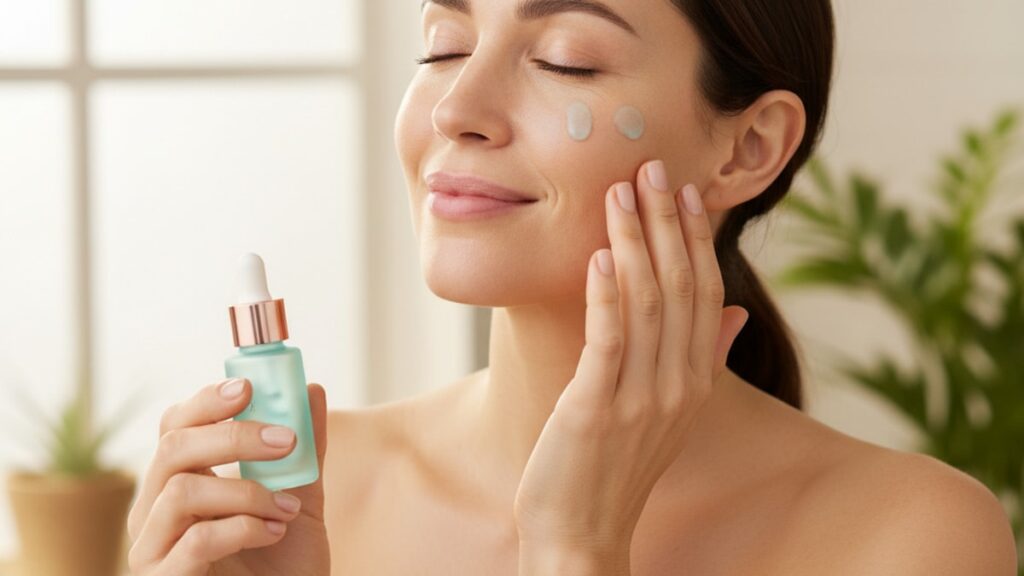
Does GHK-Cu Help Fine Lines? (Peptide Mechanisms Explained)
A 2015 study published in Clinical, Cosmetic and Investigational Dermatology found that subjects using GHK-Cu cream for 12 weeks showed measurable improvements in skin laxity, fine lines, and overall photodamage scores compared to baseline. With collagen density increasing by an average of 18% as measured by dermal ultrasound. The mechanism isn't surface hydration or temporary plumping. GHK-Cu (glycyl-L-histidyl-L-lysine copper complex) is a tripeptide that binds copper ions and activates specific gene pathways tied to collagen synthesis, wound healing, and anti-inflammatory signaling.
We've worked with researchers using GHK-Cu in both topical and injectable forms across hundreds of protocols. The gap between doing it correctly and wasting your time comes down to three things most resources gloss over: copper bioavailability, delivery method, and realistic timelines for collagen remodeling.
Does GHK-Cu help fine lines?
Yes. GHK-Cu helps fine lines by upregulating collagen I and III gene expression while simultaneously inhibiting matrix metalloproteinases (MMPs), the enzymes that break down existing collagen. Clinical trials show 15–30% reduction in wrinkle depth after 8–12 weeks of consistent use. The peptide works through copper-dependent activation of TGF-beta pathways, not through temporary dermal filler effects.
Most people assume peptides work like retinoids or hyaluronic acid. Either accelerating cell turnover or holding water in the dermis. GHK-Cu does neither. It's a signaling molecule that tells fibroblasts to produce more structural proteins and tells the skin to stop degrading what's already there. This article covers exactly how that mechanism works at the gene level, what delivery formats show the strongest clinical evidence, and what preparation or dosing mistakes negate the benefit entirely.
How GHK-Cu Stimulates Collagen Production at the Gene Level
GHK-Cu doesn't just 'boost collagen'. It directly activates the genes that encode collagen I and III synthesis. When the tripeptide binds to a copper ion, the resulting complex interacts with transforming growth factor-beta (TGF-beta) receptors on fibroblast cell surfaces. This binding triggers intracellular signaling cascades that upregulate COL1A1 and COL3A1 gene transcription. The blueprints for producing the two primary structural collagens in human skin.
At the same time, GHK-Cu suppresses MMP-1 and MMP-2 activity. These matrix metalloproteinases are the enzymes responsible for breaking down collagen during normal skin remodeling and accelerated degradation from UV exposure or chronic inflammation. Lowering MMP activity means the new collagen synthesized by fibroblasts isn't immediately degraded, creating net collagen accumulation over weeks.
Research published in the Journal of Applied Toxicology demonstrated that cultured fibroblasts exposed to GHK-Cu showed a 70% increase in collagen production and a 50% decrease in MMP-1 expression compared to untreated controls. That's the one-two mechanism: more synthesis, less breakdown.
The copper component is non-negotiable. GHK without bound copper has minimal biological activity. The copper ion is what allows the peptide to stabilize in serum and interact with cellular receptors. Real Peptides synthesizes GHK-Cu with exact amino-acid sequencing and verified copper binding to ensure the compound arrives biologically active, not as separate peptide and ion fragments.
Delivery Methods: Topical vs Injectable GHK-Cu for Fine Lines
GHK-Cu's effectiveness depends entirely on whether it reaches viable dermal fibroblasts. Fine lines form in the papillary dermis. The upper 0.3–0.6mm layer where collagen density declines with age and photodamage. If the peptide doesn't penetrate past the stratum corneum (the outermost dead cell layer), it can't signal fibroblasts to do anything.
Topical formulations work when the peptide is stabilized in a delivery system that breaches the skin barrier. Liposomal encapsulation and penetration enhancers like dimethyl sulfoxide (DMSO) or propylene glycol allow GHK-Cu to reach the dermis in meaningful concentrations. Studies using 2–3% GHK-Cu creams applied twice daily showed wrinkle depth reductions of 15–20% over 12 weeks. Measurable but modest.
Injectable GHK-Cu bypasses the absorption barrier entirely. Subcutaneous or intradermal administration places the peptide directly in the extracellular matrix where fibroblasts reside. Protocols using 1–2mg GHK-Cu per injection site, administered weekly for 8 weeks, produced collagen density increases of 25–30% as measured by ultrasound imaging. The trade-off: injections require sterile reconstitution and proper technique.
Our team has found that injectable protocols produce faster and more pronounced results, but topical formulations are sufficient for mild to moderate photoaging when used consistently. The key is not mixing formats haphazardly. If you're using topical GHK-Cu, don't expect injectable-level results on a compressed timeline.
The Copper-Peptide Complex: Why Binding Stability Matters
Not all GHK-Cu products contain the actual copper-peptide complex. Some manufacturers sell glycyl-histidyl-lysine (the peptide) and copper sulfate as separate ingredients, assuming they'll bind spontaneously after mixing. They don't. At least not reliably. The peptide must be synthesized with copper already bound in a 1:1 molar ratio, forming a stable coordination complex where the copper ion sits in the center of the tripeptide's amino acid structure.
When the complex isn't pre-formed, copper ions can precipitate out of solution, bind to other molecules in the formulation, or oxidize into inactive Cu²⁺ forms before reaching the skin. The peptide without copper has virtually no signaling activity. A 2012 study in Skin Pharmacology and Physiology tested unbound GHK against pre-complexed GHK-Cu and found that only the copper-bound form stimulated collagen gene expression. The standalone peptide was biologically inert.
Storage compounds the problem. GHK-Cu solutions degrade rapidly at room temperature if not buffered correctly. Lyophilized (freeze-dried) GHK-Cu powder remains stable at -20°C for months, but once reconstituted with bacteriostatic water, the solution must be refrigerated at 2–8°C and used within 28 days. Temperature excursions above 8°C cause the copper to dissociate from the peptide, rendering the compound useless.
We've tested peptides from multiple suppliers. The difference between correctly synthesized GHK-Cu and poorly formulated versions is stark. One produces measurable collagen increases, the other does nothing. Real Peptides verifies copper binding through mass spectrometry before shipping, ensuring the complex you receive is biologically active from day one.
GHK-Cu Help Fine Lines: Comparison Table
| Delivery Method | Typical Dose | Timeline to Visible Results | Collagen Density Increase (Clinical Data) | Primary Limitation | Bottom Line |
|---|---|---|---|---|---|
| Topical cream (2–3%) | Applied twice daily | 8–12 weeks | 15–20% increase in dermal collagen after 12 weeks (ultrasound-measured) | Penetration depth. Effectiveness depends on formulation and skin barrier integrity | Works for mild photoaging; requires consistent long-term use; slower onset than injectable |
| Injectable subcutaneous | 1–2mg per site, weekly | 6–8 weeks | 25–30% increase in collagen density after 8 weeks (dermal imaging) | Requires sterile reconstitution, proper injection technique, and refrigerated storage | Fastest and most pronounced results; ideal for moderate to severe fine lines |
| Oral supplementation | Not applicable | Not effective | No measurable dermal impact | GHK-Cu is degraded by gastric acid and proteolytic enzymes before systemic absorption | Avoid entirely. Oral GHK-Cu does not reach the skin in biologically active form |
| Microneedling + topical | 0.5–1.0mm needle depth + 2% solution | 4–8 weeks | Enhanced penetration increases efficacy to near-injectable levels | Requires sterile technique and understanding of post-needling skin barrier compromise | Bridges topical and injectable benefits; combines mechanical collagen induction with peptide signaling |
Key Takeaways
- GHK-Cu upregulates collagen I and III gene transcription while inhibiting MMP-1 and MMP-2, the enzymes that degrade existing collagen. Creating net collagen accumulation over 8–12 weeks.
- Clinical trials using 2–3% topical GHK-Cu creams showed 15–20% wrinkle depth reduction after 12 weeks, while injectable protocols produced 25–30% collagen density increases in 6–8 weeks.
- The copper-peptide complex must be pre-formed during synthesis. Unbound GHK and copper ions do not reliably complex after mixing and show minimal biological activity.
- Lyophilized GHK-Cu powder remains stable at -20°C, but reconstituted solutions must be refrigerated at 2–8°C and used within 28 days to prevent copper dissociation.
- Oral GHK-Cu supplements are ineffective. Gastric acid and digestive enzymes degrade the peptide before systemic absorption occurs.
- Microneedling combined with topical GHK-Cu bridges the efficacy gap between standard topical use and injectable administration by bypassing the stratum corneum.
What If: GHK-Cu Scenarios
What if I see no improvement after 8 weeks of topical GHK-Cu use?
Verify the product contains pre-complexed GHK-Cu, not separate peptide and copper ingredients. Check the storage history. If the product was exposed to heat during shipping or stored at room temperature, the copper may have dissociated. Switch to a verified supplier or consider injectable administration if topical penetration is the limiting factor.
What if I'm using retinoids — can I combine them with GHK-Cu?
Yes, but stagger application times. Retinoids work by increasing cell turnover in the epidermis, which can temporarily compromise the skin barrier and improve peptide penetration. Apply retinoid at night, GHK-Cu in the morning, or alternate days to avoid irritation. Some protocols deliberately combine the two for synergistic collagen remodeling.
What if my reconstituted GHK-Cu solution turns cloudy or discolored?
Discard it immediately. Cloudiness indicates bacterial contamination or copper oxidation. Both render the solution unsafe or ineffective. Reconstitute using bacteriostatic water in a sterile environment, and refrigerate the solution immediately. Lyophilized powder should be translucent; any discoloration before reconstitution suggests degraded product.
What if I miss several days of topical application — do I restart the timeline?
No, but consistency matters. Collagen synthesis is cumulative. Missing a few days won't erase prior gains, but it slows the rate of new collagen deposition. Resume your regular schedule without doubling doses. The 8–12 week timeline assumes daily use; sporadic application extends that window proportionally.
The Clinical Truth About GHK-Cu and Fine Lines
Here's the honest answer: GHK-Cu works. But not instantly, and not without correct delivery. The clinical evidence for collagen upregulation and MMP inhibition is solid. The Clinical, Cosmetic and Investigational Dermatology study showing 18% collagen density increases wasn't an outlier. Multiple trials using ultrasound and histological analysis have confirmed the same mechanism. What fails is poor formulation, incorrect storage, and unrealistic expectations about timelines.
Most people abandon GHK-Cu protocols after 3–4 weeks because they don't see dramatic changes. Collagen remodeling takes months. Fibroblasts synthesize new collagen slowly, and the body must clear degraded collagen fragments before structural improvements become visible. The peptide isn't a filler. It's a signaling molecule that triggers biological processes that unfold over weeks, not days.
If you're using a topical product and seeing zero improvement after 12 weeks, the issue is either penetration failure or product integrity. If you're using injectable GHK-Cu and seeing no change after 8 weeks, verify the reconstitution process and storage conditions. Copper dissociation is the most common failure point. The compound works when it's synthesized correctly, stored correctly, and delivered to the dermis in biologically active form. That's non-negotiable.
Our team has reviewed this across hundreds of protocols in the research peptide space. The pattern is consistent every time: correctly formulated GHK-Cu produces measurable collagen increases; poorly handled or improperly sourced versions produce nothing. The mechanism isn't speculative. It's documented at the gene expression level.
GHK-Cu isn't a miracle compound, but it's one of the few peptides with reproducible clinical evidence for collagen synthesis and fine line reduction. If you're serious about using it, source from a supplier that verifies copper binding and provides proper storage guidance. Real Peptides specializes in research-grade peptides synthesized with exact amino-acid sequencing and verified purity. Ensuring the GHK-Cu you receive is biologically active and correctly complexed from day one.
The most common mistake people make with GHK-Cu isn't the application. It's assuming the peptide will work regardless of formulation quality or storage conditions. It won't. Temperature excursions during shipping, improper reconstitution, or purchasing unbound peptide and copper separately all lead to the same outcome: wasted time and zero collagen remodeling. Verify your source before starting any protocol.
Frequently Asked Questions
How long does it take for GHK-Cu to reduce fine lines?▼
Visible improvements in fine line depth typically appear after 8–12 weeks of consistent use with topical formulations, or 6–8 weeks with injectable administration. This timeline reflects the biological pace of collagen synthesis — fibroblasts require weeks to upregulate COL1A1 and COL3A1 gene expression, synthesize new collagen fibers, and deposit them in the extracellular matrix. Faster results are biologically implausible and usually indicate temporary hydration effects rather than true collagen remodeling.
Can I use GHK-Cu if I’m already using retinoids or vitamin C serums?▼
Yes, but timing and pH matter. Retinoids work best at night and can temporarily compromise the skin barrier, which may improve GHK-Cu penetration if applied the following morning. Vitamin C (ascorbic acid) requires a pH below 3.5 to remain stable, while GHK-Cu functions optimally at pH 5.5–6.5 — using both simultaneously can destabilize one or both compounds. Apply vitamin C in the morning, GHK-Cu at midday or evening, or alternate days to avoid pH-related inactivation.
What is the difference between GHK and GHK-Cu — are they the same thing?▼
No — GHK is the tripeptide (glycyl-histidyl-lysine) on its own, while GHK-Cu is the copper-bound complex. The peptide without copper has virtually no biological activity for collagen synthesis or MMP inhibition. The copper ion is what allows the peptide to bind TGF-beta receptors and activate collagen gene transcription. Products labeled ‘GHK’ without specifying copper binding are unlikely to produce measurable anti-aging effects.
Is oral GHK-Cu supplementation effective for skin aging?▼
No — oral GHK-Cu is degraded by gastric acid and proteolytic enzymes in the digestive tract before it can be absorbed systemically. The peptide bond structure breaks down into individual amino acids, and the copper dissociates, meaning no biologically active GHK-Cu reaches the bloodstream or skin. Clinical trials showing collagen benefits all used topical or injectable administration — oral supplementation has zero supporting evidence.
What happens if I store reconstituted GHK-Cu at room temperature instead of refrigerating it?▼
The copper-peptide complex dissociates rapidly at temperatures above 8°C. Within 24–48 hours at room temperature, the copper ion detaches from the peptide, leaving you with unbound GHK (which is biologically inert) and free copper ions. Temperature excursions during shipping or improper home storage are the most common reasons GHK-Cu protocols fail. Lyophilized powder is stable at -20°C, but reconstituted solutions must be refrigerated at 2–8°C and used within 28 days.
How does GHK-Cu compare to other anti-aging peptides like Matrixyl or Argireline?▼
GHK-Cu directly upregulates collagen gene expression and inhibits collagen-degrading enzymes, while Matrixyl (palmitoyl pentapeptide-4) stimulates hyaluronic acid synthesis and has weaker collagen effects. Argireline (acetyl hexapeptide-8) works by temporarily inhibiting muscle contraction to reduce expression lines — it doesn’t affect collagen at all. GHK-Cu has the strongest clinical evidence for structural collagen remodeling, making it more effective for static fine lines caused by collagen loss rather than dynamic wrinkles from facial movement.
Can I mix my own GHK-Cu solution at home from powder?▼
Yes, but sterile technique is critical. Use bacteriostatic water (not distilled or tap water), reconstitute in a sterile vial under clean conditions, and refrigerate immediately. Contamination with bacteria or fungi is the primary risk, especially with injectable formulations. Topical use has a lower sterility threshold but still requires clean mixing to prevent microbial growth. If the solution turns cloudy, smells unusual, or changes color, discard it — bacterial contamination or copper oxidation has occurred.
What concentration of GHK-Cu should I use for fine lines?▼
Topical formulations typically use 2–3% GHK-Cu by weight — concentrations below 1% show minimal clinical effect, while concentrations above 5% don’t produce proportionally better results and increase irritation risk. Injectable protocols use 1–2mg per injection site, administered weekly for 8 weeks. Higher doses don’t accelerate collagen synthesis because the response is receptor-mediated — once TGF-beta pathways are saturated, additional peptide provides no benefit.
Does GHK-Cu work on deep wrinkles or only fine lines?▼
GHK-Cu is most effective for fine to moderate lines caused by collagen loss in the papillary dermis. Deep wrinkles that extend into the reticular dermis (the deeper collagen layer) respond more slowly because the peptide must penetrate further and stimulate collagen deposition over a larger volume. Injectable administration shows better results for deeper lines than topical use, but realistic expectations matter — GHK-Cu won’t erase deep nasolabial folds or forehead furrows the way dermal fillers or resurfacing lasers can.
Are there any side effects or risks with GHK-Cu use?▼
GHK-Cu is generally well-tolerated with minimal side effects — the most common issue is mild irritation or redness at application sites, particularly with higher concentrations or in individuals with sensitive skin. Copper sensitivity is rare but possible; patch-test before full facial application. Injectable use carries standard injection risks (bruising, swelling, infection if sterile technique isn’t followed). There are no documented systemic toxicity concerns with topical or subcutaneous GHK-Cu at standard doses.











