





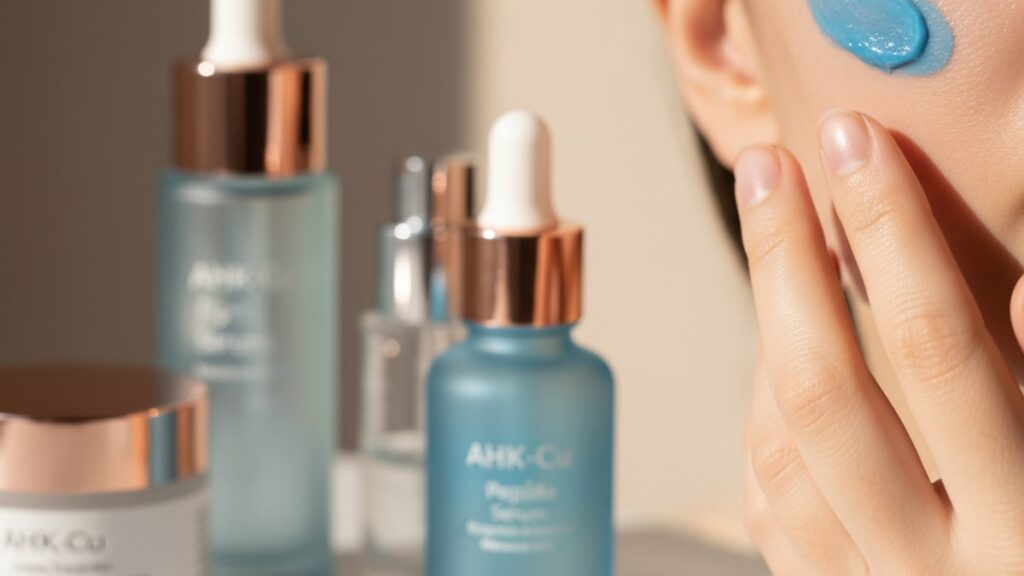
What is AHK-Cu Peptide? A Researcher’s Deep Dive
In the sprawling landscape of peptide research, certain molecules generate a consistent, powerful buzz. They're the ones that appear in study after study, promising new avenues for understanding complex biological processes. For our team, AHK-Cu is one of those molecules. It’s a peptide that clients are increasingly asking about, and for good reason. Its unique structure and relationship with copper place it at the forefront of several exciting research fields.
But with growing interest comes a flood of information—and misinformation. It’s becoming increasingly challenging for researchers to sift through the noise and find clear, scientifically-grounded answers to the core question: what is AHK-Cu peptide, and what does it actually do? That's what we're here to clarify. Drawing from our team's deep expertise in peptide synthesis and our observations from labs across the country, we’re going to break it down. No hype. Just the science, the context, and what you, as a researcher, truly need to know.
So, What Exactly Is AHK-Cu?
Let’s start with the fundamentals. At its core, AHK-Cu is a tripeptide—a chain of three specific amino acids—bound to a copper ion. Simple, right? But the elegance is in the details. The 'AHK' stands for the amino acid sequence: L-Alanine, L-Histidine, and L-Lysine. This specific sequence isn't random; it's what gives the peptide its unique properties and its remarkable affinity for copper.
Think of the AHK peptide as a specialized vehicle, and the copper ion (Cu) as its critical passenger. The peptide's job is to bind, stabilize, and deliver this copper to specific locations within biological systems. Without the copper, the AHK peptide itself has limited biological activity. And without the AHK peptide, copper can be difficult to manage and can even induce oxidative stress if not properly chaperoned. Together, they form a synergistic complex—AHK-Cu—that can interact with cells in ways neither could alone. We've found that researchers who grasp this symbiotic relationship from the start design much more effective experiments. It’s a foundational concept.
This structure is what makes it part of the family of copper-binding peptides, a group renowned for its involvement in tissue repair, regeneration, and inflammatory modulation. But AHK-Cu has its own distinct personality. The specific arrangement of Alanine, Histidine, and Lysine creates a binding site that is exceptionally good at chelating (grabbing and holding onto) copper ions. This high-affinity bond is crucial for its function and stability. We can't stress this enough—the integrity of this bond, which is dependent on the purity of the synthesized peptide, is everything.
The Copper Connection: Why 'Cu' Matters So Much
It’s easy to focus on the peptide part of the name, but honestly, the copper is where so much of the magic happens. Copper is a vital trace element, a non-negotiable cofactor for a host of essential enzymes involved in everything from energy production to antioxidant defense (think superoxide dismutase) and collagen synthesis (lysyl oxidase). The problem is, free-floating copper ions can be reactive and potentially toxic. The body needs a sophisticated delivery system.
That’s where peptides like AHK come in. They act as carriers, ensuring copper gets where it needs to go without causing chaos along the way. When AHK-Cu interacts with a cell, it can effectively modulate the local concentration of copper, delivering it to cellular machinery that needs it. Our team sees this as an elegant biological solution to a complex logistical problem. The peptide isn't just a carrier; it's an intelligent delivery system that influences cellular behavior by regulating access to this critical mineral.
This delivery mechanism is central to its observed effects in research settings. For instance, in studies on wound healing and tissue remodeling, the localized delivery of copper by AHK-Cu is thought to stimulate the expression of collagen and other extracellular matrix (ECM) proteins. It helps orchestrate the complex dance of cellular repair. This isn't just a passive process. It's an active, targeted intervention, and it's a field of study that is absolutely exploding with potential. We've seen a significant, sometimes dramatic shift in research interest toward these mechanisms over the past few years.
AHK-Cu vs. GHK-Cu: The Key Differences Researchers See
If you're familiar with copper peptides, you've definitely heard of GHK-Cu. It's the most studied peptide in this class and, for a long time, was considered the gold standard. AHK-Cu is often seen as a close relative or even a next-generation analogue. So, what’s the difference? The answer lies in that first amino acid.
AHK-Cu has Alanine in the first position, while GHK-Cu has Glycine. A one-amino-acid difference might seem trivial. It's not. That subtle change alters the peptide's three-dimensional structure and, consequently, its biological properties. Our experience, backed by emerging research, shows that this single substitution can lead to significant differences in copper-binding affinity, stability, and cellular interactions.
Here’s what we’ve learned from the data and from conversations with our research partners:
- Copper Binding Affinity: Some studies suggest that AHK may have a slightly different—and in some contexts, potentially stronger—affinity for copper ions compared to GHK. This could mean it’s more efficient at sequestering and delivering copper, though more research is needed to fully map out the implications.
- Stability: The presence of Alanine might confer greater resistance to enzymatic degradation compared to Glycine. In a research model, a more stable peptide can mean a longer duration of action, which is a critical variable in any experiment. This is a huge point of interest for many labs we work with.
- Targeted Effects: While both peptides are involved in ECM remodeling and anti-inflammatory pathways, their specific effects can diverge. Some preliminary research indicates AHK-Cu may have a more pronounced effect on stimulating elastin production compared to GHK-Cu, which is more famously linked to collagen. This makes AHK-Cu a particularly compelling molecule for studies focused on tissue elasticity and hair follicle stimulation.
This isn't to say one is definitively 'better' than the other. They are different tools for different jobs. Choosing between them depends entirely on the specific research question you're asking. And—let's be honest—this is crucial. You need the right molecule for the right hypothesis.
To make it clearer, here’s a breakdown our team often uses to help researchers decide where to focus their efforts:
| Feature | AHK-Cu (Alanine-Histidine-Lysine) | GHK-Cu (Glycine-Histidine-Lysine) |
|---|---|---|
| Primary Amino Acid | Alanine | Glycine |
| Key Research Focus | Hair follicle stimulation, elastin synthesis, skin repair | Collagen synthesis, wound healing, anti-inflammatory effects |
| Reported Stability | Potentially higher resistance to enzymatic degradation | The established benchmark, but may be more susceptible to degradation |
| Copper Affinity | Very high; some evidence suggests it may be higher than GHK | Very high; the most well-studied copper peptide |
| Common Applications | Research into alopecia, skin elasticity, and anti-aging models | Broad research into wound repair, skin regeneration, and nerve regeneration |
| Our Observation | Growing interest from labs focused on highly specific regenerative pathways | Remains the foundational peptide for general tissue repair studies |
Research Applications: Where is AHK-Cu Making an Impact?
Now, this is where it gets really interesting. The unique properties of AHK-Cu have made it a focal point for a number of cutting-edge research areas. While it's crucial to remember this is all preclinical research, the results are compelling and are paving the way for a deeper understanding of human biology.
One of the most prominent areas is hair follicle research. This is, without a doubt, where AHK-Cu has generated the most excitement. The hair follicle is a complex mini-organ with a dynamic cycle of growth (anagen), transition (catagen), and rest (telogen). Studies in this field are investigating how AHK-Cu might influence this cycle. The hypothesis is that by delivering copper and stimulating the ECM around the dermal papilla—the base of the hair follicle—AHK-Cu could help prolong the anagen phase and support the structural integrity of the follicle. Many of our clients researching alopecia and hair growth dynamics have made AHK-Cu a central molecule in their work.
Another major field is skin regeneration and anti-aging research. Skin health is heavily dependent on the quality of the extracellular matrix, which is primarily composed of collagen and elastin. As we mentioned, AHK-Cu is being studied for its potential to stimulate the production of these proteins, particularly elastin. Research models are exploring its role in improving skin elasticity, reducing the appearance of fine lines, and accelerating repair processes. This goes beyond cosmetic applications; it delves into fundamental wound healing and how we can support the body's natural regenerative capabilities. For a visual walkthrough of how peptides interact with cellular structures, checking out educational resources on YouTube channels like MorelliFit can provide excellent foundational knowledge on the topic.
Finally, we're seeing increased use in anti-inflammatory and antioxidant studies. Chronic inflammation and oxidative stress are underlying factors in countless degenerative processes. Because copper is a key component of antioxidant enzymes like superoxide dismutase (SOD), researchers are investigating whether AHK-Cu's ability to modulate copper availability can bolster cellular antioxidant defenses. By promoting a balanced inflammatory response and reducing oxidative damage, AHK-Cu could be a valuable tool for studying a wide range of biological models.
It’s a versatile molecule. That's the key.
The Critical Role of Purity: The Real Peptides Difference
We could talk all day about the theoretical potential of AHK-Cu, but it all means nothing if the peptide you're using in your lab isn't pure. We mean this sincerely—purity is the bedrock of reproducible research.
When you're dealing with molecules that operate at such a precise level, any impurity can throw off your results. A contaminated sample might contain fragmented peptides, leftover reagents from synthesis, or even different peptide sequences altogether. These contaminants can be inactive, reducing the efficacy of your experiment, or worse, they could have their own unintended biological effects, leading you to draw completely wrong conclusions. It can be a catastrophic, often moving-target objective to debug such an experiment.
This is why our entire process at Real Peptides is built around an unflinching commitment to quality. We're not a high-volume, mass-market supplier. Every peptide we produce, including our AHK-Cu, is created through a meticulous small-batch synthesis process right here in the United States. This approach gives us granular control over every step of production.
Here’s what that looks like in practice:
- Exact Amino-Acid Sequencing: We build the peptide one amino acid at a time, ensuring the A-H-K sequence is perfect. There is zero room for error here. This precision is foundational.
- Rigorous Purification: After synthesis, the crude peptide goes through multiple rounds of high-performance liquid chromatography (HPLC). This process separates the full-length, correct AHK-Cu peptide from any shorter fragments or impurities. Our standard is a minimum of 98% purity, but we often exceed that.
- Third-Party Verification: We don't just take our own word for it. Each batch is sent for mass spectrometry and HPLC analysis to confirm its identity, sequence, and purity. We make these lab reports available so you can have complete confidence in what you’re putting into your experiment.
This approach (which we've refined over years) delivers consistency. When you order AHK-Cu from us today and again six months from now, you are getting the exact same high-purity molecule. That's the only way to build a body of research that is reliable and reproducible. For any serious lab, sourcing from a provider that guarantees this level of quality isn't a luxury; it's a critical, non-negotiable element of the scientific method. You can explore our commitment to this process and Get Started Today by browsing our catalog of research-grade peptides on our Home page.
Proper Handling and Reconstitution for Researchers
Getting a high-purity peptide is step one. Handling it correctly is step two. AHK-Cu, like most peptides, is delivered as a lyophilized (freeze-dried) powder to ensure maximum stability during shipping and storage. Improper handling can degrade the product before your research even begins.
Here are the best practices our team recommends to our clients:
- Storage: Upon arrival, store the lyophilized powder in a freezer at -20°C or colder. At this temperature, it will remain stable for an extended period. Avoid repeated freeze-thaw cycles of the powder itself.
- Reconstitution: When you're ready to use it, allow the vial to come to room temperature before opening to prevent condensation from forming inside. For reconstitution, we recommend using bacteriostatic water. The appropriate volume will depend on the desired final concentration for your specific experimental protocol. When adding the solvent, aim the stream down the side of the vial and allow it to gently dissolve the powder. Don't shake it vigorously—swirl or roll the vial gently.
- Storage After Reconstitution: Once in a liquid solution, the peptide is less stable. Store the reconstituted solution in a refrigerator at 2-8°C. Its stability in solution can vary, so it's best to use it within a reasonable timeframe and avoid preparing large stock solutions that will sit for weeks. For longer-term storage of a stock solution, you can aliquot it into smaller volumes and freeze them, but be mindful that repeated freeze-thaw cycles of the solution can also degrade the peptide.
Following these simple steps ensures that the pristine peptide you received maintains its integrity all the way into your assay. It's about controlling variables, and proper handling is one of the easiest variables to control.
The Future of AHK-Cu Peptide Research
The story of AHK-Cu is still being written. While the foundational research is incredibly promising, we're only just scratching the surface of its potential. What does the future hold? Our team sees a few key trends emerging.
We anticipate more research focused on comparative effectiveness—rigorous, head-to-head studies comparing AHK-Cu with GHK-Cu and other peptides across various cell models. This will help the scientific community build a more nuanced understanding of which peptide is best suited for specific applications. We also expect to see more sophisticated studies delving into its precise mechanisms of action. How exactly does it modulate gene expression? Which cellular receptors does it interact with? Answering these questions will unlock the next level of innovation.
Furthermore, as synthesis techniques become even more refined, we may see the development of novel AHK-Cu analogues designed for enhanced stability or even greater target specificity. The field of peptide engineering is dynamic and relentless. It's an exciting time to be involved. As researchers continue to push the boundaries, our commitment at Real Peptides remains the same: to provide the highest-purity, most reliable tools to support that discovery. We believe the insights gained from AHK-Cu research will have a lasting impact on biotechnology and regenerative science.
This journey of discovery is a collaborative one. It's built on meticulous lab work, shared knowledge, and an unwavering commitment to quality. The potential locked within this small, elegant molecule is immense, and we're proud to be the trusted partner for the researchers who are unlocking it. If you're embarking on research involving AHK-Cu, we encourage you to prioritize purity above all else. Your data will thank you for it.
Want to stay updated on the latest in peptide research and see what our team is working on? Connect with us on Facebook for regular insights and company news. We're always sharing information to help the research community thrive.
Frequently Asked Questions
What is AHK-Cu peptide fundamentally?
▼
AHK-Cu is a tripeptide made of the amino acids Alanine, Histidine, and Lysine, which is chelated (bound) to a copper ion. This complex acts as a specialized copper delivery system within biological environments, making it a focus of regenerative and anti-inflammatory research.
What is the main difference between AHK-Cu and GHK-Cu?
▼
The primary difference is the first amino acid: Alanine in AHK-Cu versus Glycine in GHK-Cu. This single change can alter the peptide’s stability, copper-binding affinity, and its specific biological effects, with AHK-Cu being particularly noted in hair follicle and elastin research.
Why is the copper ion important in AHK-Cu?
▼
The copper ion is the primary active component. The AHK peptide’s main role is to safely transport and deliver copper to cells, where it acts as a critical cofactor for enzymes involved in processes like collagen synthesis, antioxidant defense, and tissue repair.
What are the main areas of research for AHK-Cu?
▼
AHK-Cu is heavily researched for its potential role in stimulating hair follicles, promoting skin regeneration by boosting elastin and collagen, accelerating wound healing, and exerting anti-inflammatory effects. All current applications are for preclinical research purposes only.
Is AHK-Cu safe for human use?
▼
AHK-Cu, like all the products we supply at Real Peptides, is intended strictly for in-vitro laboratory research and development purposes. It is not a drug, supplement, or cosmetic and is not approved for human or veterinary use.
Why is peptide purity so critical for research?
▼
Purity is paramount because impurities can lead to inaccurate and irreproducible results. Contaminants can have unintended biological effects or render the peptide inactive, compromising the integrity of your experiment. Our team stresses that verifiable purity is non-negotiable for valid scientific data.
How should I store lyophilized AHK-Cu powder?
▼
For maximum stability, you should store the lyophilized (freeze-dried) AHK-Cu powder in a freezer at -20°C or below. This protects the peptide from degradation over the long term.
What should I use to reconstitute AHK-Cu?
▼
Our team recommends reconstituting AHK-Cu with bacteriostatic water for most research applications. This helps maintain sterility. Always allow the vial to reach room temperature before opening to prevent moisture contamination.
How long does reconstituted AHK-Cu last?
▼
Once in a liquid solution, AHK-Cu is less stable. It should be stored in a refrigerator (2-8°C) and used within a relatively short period. For longer storage, you can freeze aliquots, but avoid repeated freeze-thaw cycles.
Can AHK-Cu and GHK-Cu be used together in research?
▼
While they target similar pathways, their mechanisms can differ. Using them together would introduce multiple variables, making it difficult to interpret results. We recommend researchers study them independently to clearly understand each peptide’s specific effects.
Does Real Peptides test its AHK-Cu for purity?
▼
Absolutely. Every batch of our AHK-Cu undergoes rigorous third-party testing, including HPLC and Mass Spectrometry, to verify its sequence, identity, and purity. We ensure a purity level of at least 98% for reliable and consistent research outcomes.
What does ‘lyophilized’ mean?
▼
Lyophilized means freeze-dried. This process removes water from the peptide under low pressure, turning it into a stable powder. This is the standard method for preserving peptides for shipping and long-term storage.











