


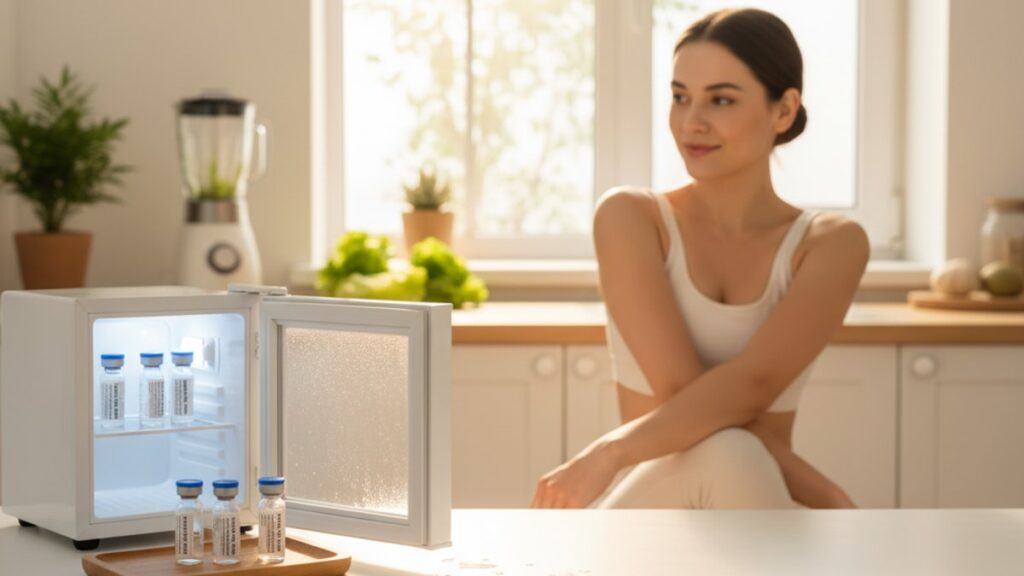
It’s a question that seems simple on the surface, yet it’s one that lands in our inbox with surprising frequency. And honestly, we’re glad it does. The question—"do you refrigerate BAC water?"—sits at the very heart of lab precision and research integrity. Getting this small detail wrong can have cascading, often catastrophic, consequences for your results. It can undermine weeks, or even months, of meticulous work. Our team at Real Peptides believes that mastery is in the details, and this is one detail you absolutely cannot afford to overlook.
We've seen it all. We've consulted on projects where researchers were baffled by inconsistent data, only to trace the problem back to something as fundamental as improper diluent storage. It’s a frustrating, entirely avoidable scenario. So, let's clear the air and provide the definitive, science-backed answer. This isn't just about following a rule; it's about understanding the why behind the protocol. That understanding is what separates good research from groundbreaking discoveries.
What Exactly Is Bacteriostatic Water?
Before we dive into the specifics of temperature, let’s quickly establish a baseline. What are we actually working with here? It’s a critical starting point. Bacteriostatic water—often called BAC water—is not just sterile water. That's a common misconception. It's a highly purified, sterile, non-pyrogenic water solution that contains a crucial addition: 0.9% benzyl alcohol (C₇H₈O).
This isn't just a random ingredient. The benzyl alcohol acts as a bacteriostatic agent. In plain English, it’s a preservative that inhibits—or stops—the growth of most potentially contaminating bacteria. It doesn't necessarily kill them on contact (that would be bactericidal), but it creates an environment where they simply can't reproduce. This is what allows for the multi-use nature of a BAC water vial. You can draw from it multiple times without immediately rendering the entire vial a petri dish of contaminants, provided—and this is a huge caveat—you use impeccable aseptic technique every single time.
Think of it as a security guard for your solution. Its presence is the only thing that makes a multi-use vial a viable concept in a research setting. Without it, you'd be using sterile water, which is strictly for single-use applications. Once you puncture the stopper on a vial of sterile water, anything that gets in is free to throw a party. The benzyl alcohol in BAC water shuts that party down before it even starts. This distinction is non-negotiable for anyone working with sensitive compounds like the research-grade peptides we meticulously synthesize here at Home.
The Big Question: To Refrigerate or Not to Refrigerate?
Alright, here’s the core of the issue. The definitive answer is: it depends entirely on whether the vial has been opened.
This is the single most important variable. Let's break it down into two distinct scenarios, because treating them the same is where the problems begin.
Scenario 1: The Unopened Vial.
An unopened, factory-sealed vial of bacteriostatic water is perfectly fine stored at controlled room temperature, typically between 20°C to 25°C (68°F to 77°F). The vial is a closed, sterile system. The rubber stopper hasn't been punctured, the vacuum seal is intact, and the internal environment is protected from the outside world. The benzyl alcohol is stable, and there’s no pathway for contaminants to enter. Storing it in the fridge at this stage won't harm it, but it's completely unnecessary. It just takes up valuable cold storage space.
Scenario 2: The Opened (Punctured) Vial.
This is where the rules change. Dramatically. The moment you puncture that self-healing stopper with a needle for the first time, you must—we can't stress this enough—store it in the refrigerator. We recommend a temperature range of 2°C to 8°C (36°F to 46°F).
Why the sudden shift? Because you've introduced a variable. Even with perfect technique, you've created a potential (albeit microscopic) pathway for airborne contaminants. The self-healing stopper is fantastic, but it's not magic. More importantly, you're protecting the chemical integrity of the benzyl alcohol preservative. Cold temperatures significantly slow down any potential chemical degradation and further suppress the metabolic activity of any stray microbe that might have found its way in. It’s a critical layer of defense to preserve the solution’s bacteriostatic properties for its intended multi-use lifespan, which is typically cited as 28 days.
Think of it this way: leaving opened BAC water on your lab bench is like leaving milk on the kitchen counter. Sure, it might be fine for an hour or two, but you're starting a clock on its degradation that you really don't want to be running.
The Moment of Truth—After the First Use
Let’s walk through the transition. You have your high-purity peptide and your vial of Real Peptides BAC water. You lay out your sterile materials. You meticulously swab the stopper with an alcohol pad. You draw your required volume. The peptide is reconstituted. Everything is perfect.
Now what?
That vial of BAC water is now considered "in use." Its status has fundamentally changed. The first thing you should do, before even logging your work, is place that vial into the refrigerator. Not later. Not at the end of the day. Immediately. This should be an automatic, ingrained part of your workflow. It's a simple habit that pays enormous dividends in data reliability.
Our team has found that labs with the most consistent and reproducible results are the ones that are absolutely relentless about these seemingly minor procedural steps. They don't cut corners. They understand that the integrity of their most expensive and sensitive reagents (like peptides) is completely dependent on the integrity of the humble diluent they use. The refrigerator is the opened BAC water's best friend, ensuring the benzyl alcohol stays effective and the water remains pristine for the next draw.
Leaving it out invites ambiguity. Did it get too warm? Was it near a window with direct sunlight? Was it left out for two hours or eight? These questions introduce doubt, and doubt has no place in rigorous scientific research. Refrigeration removes that doubt. Simple.
Temperature's Unflinching Impact on Benzyl Alcohol
To truly appreciate why we refrigerate BAC water after opening, we need to look at the chemistry. Benzyl alcohol isn't invincible. Like all organic compounds, it is subject to degradation over time, and this process is accelerated by heat. While room temperature isn't going to cause it to break down instantly, it provides a much more favorable environment for slow, creeping chemical reactions compared to the cold, suppressive environment of a refrigerator.
Refrigeration works on a simple principle of chemical kinetics: lower temperatures slow down the rate of chemical reactions. All of them. This includes the potential oxidation of benzyl alcohol, its interaction with any trace elements, and—most importantly—the metabolic processes of any potential microbial contaminants. A bacterium that might be able to sluggishly reproduce at room temperature, even in the presence of benzyl alcohol, will be brought to a virtual standstill at 4°C.
So, when you put that vial in the fridge, you're doing two things simultaneously:
- Preserving the Preservative: You are maximizing the lifespan and efficacy of the benzyl alcohol, ensuring it remains potent enough to inhibit bacterial growth for the full 28-day use period.
- Creating a Hostile Environment: You are making the solution an even more inhospitable place for bacteria, adding a powerful physical deterrent (cold) to the chemical one (benzyl alcohol).
It's a two-pronged strategy to maintain sterility. And it works. It’s the established best practice for a reason, built on a solid foundation of chemistry and microbiology. Ignoring it means you're willfully compromising the key safety feature of the product.
Can You Freeze BAC Water? A Word of Caution
This is another question we see a lot. If cold is good, is colder (freezing) better? In this case, the answer is a firm no. Our team strongly advises against freezing bacteriostatic water.
There are two primary risks associated with freezing.
The first is purely mechanical. As water freezes, it expands. This expansion can create immense pressure inside the glass vial, potentially causing microfractures or even shattering the vial outright. This would obviously compromise the sterility and lead to a complete loss of the product. It’s a risk not worth taking.
The second reason is more nuanced and chemical in nature. When the solution freezes, the water and the benzyl alcohol can separate. As the water forms ice crystals, the benzyl alcohol can become concentrated in the unfrozen liquid pockets. Upon thawing, it may not reintegrate into a perfectly homogenous 0.9% solution. You could end up with areas of higher or lower concentration, which compromises its efficacy as a consistent bacteriostatic agent. You might draw a dose with 0.5% BA and another with 1.2% BA. This inconsistency is unacceptable for precise research.
So, stick to the sweet spot: refrigeration. Cold, but not frozen. It provides all the benefits of preservation without any of the significant risks that freezing introduces. Don't outsmart the protocol on this one.
Common Mistakes We See in the Lab (And How to Avoid Them)
After years in this industry, we've seen a few recurring procedural errors that compromise research. These are the subtle mistakes that can have a not-so-subtle impact on your outcomes.
- The "I'll Do It Later" Mentality: The most common mistake is simply forgetting. A researcher reconstitutes a peptide, gets distracted by another task, and the BAC water vial sits on the bench for the rest of the day. The best way to combat this is to make refrigeration an immediate, non-negotiable step in your Standard Operating Procedure (SOP).
- Playing Fast and Loose with the 28-Day Rule: The 28-day lifespan for an opened vial is not a suggestion; it's a guideline based on the stability of the benzyl alcohol. We recommend writing the date of first puncture directly on the vial label with a permanent marker. When it hits 28 days, discard it. No exceptions. The cost of a new vial of BAC water is minuscule compared to the cost of compromised data.
- Poor Aseptic Technique: Refrigeration can't save you from sloppy handling. If you fail to properly swab the vial stopper with 70% isopropyl alcohol before every single entry, you're essentially injecting contaminants directly into your sterile solution. Cold temperatures will slow their growth, but you're still fighting a losing battle you started.
- Re-entering with a Contaminated Needle: Using the same needle and syringe for multiple different vials or for drawing and then administering is a cardinal sin of lab work. Always use a fresh, sterile needle and syringe for every single vial puncture. Every time.
Avoiding these common pitfalls is just as important as remembering to refrigerate bac water. They are all part of a holistic approach to maintaining a sterile environment. For a more visual guide on these techniques, we often post tutorials and best-practice videos on channels like our partner's, MorelliFit, which you can find on YouTube. Seeing the process can make all the difference.
Storage Temperatures: A Quick Comparison
To make it crystal clear, our team put together this simple table outlining the storage protocols. This is the guideline we follow internally and recommend to all of our research partners.
| Storage Condition | Unopened Vial | Opened (In-Use) Vial |
|---|---|---|
| Room Temp (20-25°C) | Recommended. Stable and safe for long-term storage until expiration date. | Not Recommended. Significantly increases risk of contamination and preservative degradation. Avoid at all costs. |
| Refrigerated (2-8°C) | Acceptable. No harm, but not necessary. Takes up valuable cold storage space. | Required. This is the non-negotiable standard. Preserves integrity for up to 28 days. |
| Frozen (<0°C) | Strongly Not Recommended. Risk of vial cracking and benzyl alcohol separation. | Strongly Not Recommended. Same risks as unopened, plus guaranteed compromise of the solution upon thawing. |
Why Aseptic Technique is Your Non-Negotiable Partner
We've touched on this, but it deserves its own section because it's that important. Proper storage and proper handling are two sides of the same coin. You cannot have one without the other. Refrigerating a contaminated vial is just… well, it's just storing a contaminated vial in the cold.
Your aseptic technique must be impeccable. Every single time.
- Work Surface: Always begin by cleaning your work area. A simple wipe-down with 70% isopropyl alcohol can dramatically reduce the environmental bioburden.
- The Stopper: This is the gateway. It must be thoroughly swabbed with a sterile alcohol pad and allowed to air dry for about 30 seconds before every puncture. Don't wave it, don't blow on it. Just let it dry.
- Syringes and Needles: These must be sterile and single-use. Never, ever reuse a syringe that has been used for anything else. The moment it's used, it's done.
- Minimize Air Exposure: When the vial is open or you are drawing the liquid, work efficiently. Don't leave caps off or vials open to the air for longer than absolutely necessary.
This meticulous process is the bedrock of reliable, reproducible research. It ensures that the only thing you're introducing into your experiments is what you intend to introduce. It honors the purity of the materials you’re working with, whether it's a peptide synthesized with precise amino-acid sequencing or the bacteriostatic water used to reconstitute it.
Beyond Storage: The Quality of Your BAC Water Matters
Finally, let's talk about the starting material itself. All the perfect storage and handling techniques in the world can't fix a low-quality, contaminated, or improperly formulated product. The integrity of your research begins long before you ever open the box—it begins with your supplier.
You need to be certain that your BAC water is manufactured in a sterile environment, is accurately formulated with 0.9% benzyl alcohol, and is packaged to maintain its integrity during shipping. This is where we, as a company, stake our reputation.
At Real Peptides, we approach our bacteriostatic water with the same relentless commitment to quality as our most complex peptides. It's produced in small batches to ensure maximum quality control and is subjected to rigorous testing to guarantee its purity, sterility, and accurate formulation. Because we know it's not "just water." It's a critical reagent. It's the foundation upon which your peptide research is built. A shaky foundation leads to a collapsed structure. To ensure your foundation is solid from the very start, you can explore our range of lab essentials and Get Started Today.
So, do you refrigerate BAC water? Yes, you absolutely do—but only after it's been opened. This simple, two-part rule is a cornerstone of good lab practice. It's a small detail that protects the bigger picture: the accuracy, reliability, and ultimate success of your research. It’s a habit that costs nothing but pays dividends in confidence and clean data.
Building these habits is what defines a professional research environment. If you found this breakdown helpful, we're always sharing more insights and protocols with our community on our Facebook page. We believe in empowering researchers with the knowledge they need to succeed, from the most complex topics to the foundational questions like this one.
Frequently Asked Questions
What happens if I forget to refrigerate opened BAC water overnight?
▼
A single overnight instance at controlled room temperature is unlikely to cause catastrophic failure, but it’s not ideal. We recommend you immediately place it in the refrigerator and consider shortening its 28-day use period as a precaution. Consistency is key to minimizing variables.
Is it okay to store unopened BAC water in the fridge?
▼
Yes, it’s perfectly safe to store unopened vials in the refrigerator. However, our team finds it’s unnecessary as they are stable at room temperature. It simply consumes valuable cold storage space that could be used for more sensitive reagents.
Can I visually tell if my BAC water has gone bad?
▼
Sometimes, but not always. Obvious signs of contamination include cloudiness, floating particles, or discoloration. However, microbial growth can occur long before it becomes visible to the naked eye, which is why adhering to the 28-day rule and proper storage is critical.
Does the 28-day rule start from the date of manufacture or the date of opening?
▼
The 28-day countdown begins the moment you make the first puncture into the vial’s stopper. We strongly recommend writing this “in-use” date directly on the label to avoid any confusion.
Why is 0.9% benzyl alcohol the standard concentration?
▼
This concentration has been extensively studied and found to be the optimal balance. It’s effective at inhibiting the growth of a wide range of common bacteria without being overly harsh or likely to interfere with the stability of most compounds, like peptides.
What’s the ideal refrigerator temperature for storing opened BAC water?
▼
Our team recommends a standard scientific and medical refrigeration range of 2°C to 8°C (36°F to 46°F). This is cold enough to halt bacterial growth and preserve the benzyl alcohol without any risk of freezing.
Is cloudiness in BAC water always a sign of contamination?
▼
In almost all cases, yes. Any cloudiness or particulate matter in a previously clear solution should be considered a sign of contamination or precipitation. We advise that the vial be discarded immediately and not used for any research.
How many times can I safely puncture a single vial?
▼
There isn’t a magic number, as it depends heavily on your aseptic technique. The self-healing stoppers are durable, but repeated punctures do increase the risk of introducing contaminants or creating small cores. The primary limit remains the 28-day post-opening window.
Does bacteriostatic water expire if it’s never opened?
▼
Yes. Every unopened vial has a manufacturer’s expiration date printed on the label. This date reflects the long-term stability of the solution and the integrity of the vial’s seal. You should never use a product past its printed expiration date.
Can freezing damage the benzyl alcohol preservative?
▼
Freezing can cause the benzyl alcohol and water to separate. Upon thawing, they may not remix into a perfectly uniform solution, leading to inconsistent preservative concentration. This is a key reason our team strongly advises against freezing BAC water.
Is BAC water the same as sterile water for injection?
▼
No, they are different. BAC water contains the preservative benzyl alcohol, making it suitable for multiple uses. Sterile water for injection contains no preservatives and is strictly for single-dose applications only.
Why is proper storage so critical for peptide research?
▼
Peptides are delicate molecules. Using a compromised or contaminated diluent like improperly stored BAC water can degrade the peptide, alter its structure, or introduce variables that make your research data unreliable and impossible to reproduce.
Where can I find reliable, high-purity BAC water?
▼
For research applications, it’s crucial to source from a reputable supplier. At Real Peptides, we provide lab-tested, high-purity bacteriostatic water manufactured to the highest standards to ensure the integrity of your work from day one.
