



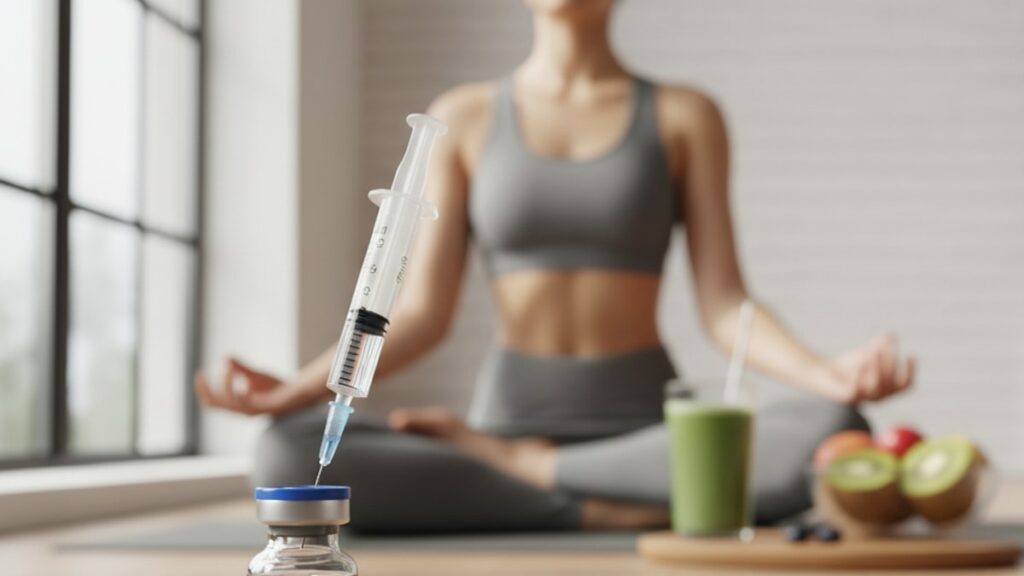
So, you’ve made the investment in high-purity, research-grade peptides. You’re committed to precision, to getting reliable and repeatable results in the lab. That’s a commitment we share deeply here at Real Peptides, which is why we go to such lengths with our small-batch synthesis and exact amino-acid sequencing. But there’s a crucial, often overlooked, partner in your research: the reconstitution solvent. Specifically, bacteriostatic water.
The question our team gets asked constantly is, how long is BAC water good for after opening? It seems simple, but the answer is far more nuanced than a date stamped on a vial. The viability of your BAC water directly impacts the integrity of your peptide and, by extension, the validity of your entire experiment. Using compromised BAC water is like building a skyscraper on a shaky foundation—it doesn't matter how perfect the materials are if the base is flawed. Let's get into it.
What Exactly is Bacteriostatic Water?
Before we can talk about its lifespan, we need to be crystal clear on what we're dealing with. It’s not just water. That's a common misconception. Bacteriostatic Water (or BAC water) is a sterile, non-pyrogenic solution containing two key ingredients: sterile water for injection and a very specific concentration—0.9% (9mg/mL)—of benzyl alcohol.
That second ingredient is the game-changer. Benzyl alcohol is the “bacteriostatic” agent. It doesn't necessarily kill all bacteria on contact (that would be bactericidal), but it prevents them from reproducing and growing. Think of it as a bouncer at a club door. It stops any unwanted guests who might sneak in from throwing a party and ruining the environment. This is absolutely critical because every time you puncture the rubber stopper of the vial to draw out some of the liquid, you’re creating a potential entry point for airborne contaminants. Without that benzyl alcohol, you’d essentially have a petri dish waiting to happen. Simple, right?
The 28-Day Rule: Where Does It Come From?
If you search online, you'll find a nearly universal answer to our main question: 28 days. This is the standard guideline provided by the United States Pharmacopeia (USP) for multi-dose vials after they've been opened or punctured for the first time. This 28-day window is based on the presumed effectiveness of the 0.9% benzyl alcohol preservative under ideal storage and handling conditions.
But that's just the textbook answer.
Our team has seen firsthand that this 28-day rule is a guideline, not an ironclad guarantee. It’s a starting point, a benchmark established under controlled, almost perfect, laboratory conditions. Your lab, my lab, any real-world research setting—it’s not always perfect. And that's where expertise and careful practice come into play. The true shelf life of your opened BAC water is far less about the calendar and far more about a collection of critical variables.
Beyond the Label: Real-World Factors That Change Everything
This is where we move from theory to practice. The 28-day rule assumes you're doing everything perfectly. Let’s be honest—in the middle of complex, multi-stage research, perfection can be a difficult, often moving-target objective. Our experience shows that three major factors can dramatically shorten or (in very rare, ideal cases) slightly extend the usability of your BAC water.
1. Storage, Storage, Storage
We can't stress this enough: how you store the vial is paramount. The moment you open it, it should go into a refrigerator, typically between 2°C and 8°C (36°F and 46°F). This cold environment slows down any potential bacterial metabolism that might overcome the benzyl alcohol and, just as importantly, it helps maintain the chemical stability of the benzyl alcohol itself. Leaving a vial at room temperature for an extended period is a recipe for trouble. The preservative becomes less effective, and the clock on its viability speeds up dramatically. Light is another enemy. Keep it in its box or in a dark part of the fridge to prevent degradation.
2. Your Reconstitution Technique
This is a big one. Every single time you access the vial, you’re interacting with it. The integrity of your technique matters immensely.
- Sterility: Are you swabbing the rubber stopper (the septum) with a fresh 70% isopropyl alcohol pad every single time before puncture? Not just the first time—every time. This simple step removes surface contaminants that could be pushed into the vial by the needle.
- Needle Use: Are you using a fresh, sterile needle for every single draw? Reusing needles is a catastrophic error. It’s the single fastest way to introduce contamination directly into your sterile solution, completely bypassing the protection of the benzyl alcohol.
- Air Pressure: Are you injecting a small amount of air into the vial before drawing the liquid? This equalizes the pressure and prevents a vacuum from forming, which can make it harder to draw an accurate dose and potentially stress the septum. However, this also introduces new air—so your ambient lab environment needs to be clean.
Sloppy technique will render the 28-day rule completely meaningless. We've seen researchers scratch their heads over inconsistent results, only to trace the problem back to a contaminated vial of BAC water caused by poor handling. It undermines everything.
3. Frequency and Method of Puncture
How often are you puncturing that rubber stopper? A vial that’s used once a week is in a very different situation from one that’s accessed multiple times a day. Each puncture is a physical stress on the septum. Over time, this can create micro-tears or a “coring” effect, where tiny pieces of the rubber are pushed into the solution. This not only introduces foreign particulates but also compromises the seal, creating a better entry point for future contaminants.
Using the smallest gauge needle possible for the task helps minimize this damage. A finer needle creates a smaller hole that can reseal more effectively. Consistently puncturing in different spots on the stopper, rather than the same spot over and over, can also help preserve its integrity. For a visual walkthrough of best practices in sterile handling, our team has put together some helpful videos on our YouTube channel that break down these nuanced techniques.
Why Retatrutide is The Most Effective FAT LOSS Peptide
This video provides valuable insights into how long is bac water good for after opening, covering key concepts and practical tips that complement the information in this guide. The visual demonstration helps clarify complex topics and gives you a real-world perspective on implementation.
The Dangers of Pushing the Limits
So what happens if you ignore the signs and use BAC water that's past its prime? The consequences aren't just inconvenient; they can be catastrophic for your research.
First, there’s the risk of contamination. If the benzyl alcohol has degraded or has been overwhelmed by bacteria introduced through poor technique, you’re no longer injecting a sterile solution into your peptide. You’re introducing a foreign variable. This can lead to the degradation of the peptide itself, altering its structure and function. Suddenly, your carefully measured experiment is producing bizarre, unreliable data. The results become unpublishable and, frankly, useless.
Second, you risk complete experimental failure. Imagine spending weeks or months on a study, only to find that your control group and your test group show no differentiation because the peptide was rendered inert by contaminated solvent on day one. It's a silent, costly error.
And—let's be honest—this is crucial. In any research setting, injecting a non-sterile solution can pose significant health and safety risks, leading to potential infections or immune responses that have nothing to do with the peptide being studied. The integrity of your research demands an unflinching commitment to sterility. Using questionable BAC water is a gamble that no serious researcher should ever take. It invalidates the time, the effort, and the financial investment you’ve made—including the investment in premium peptides from a trusted source like Real Peptides.
Our Team's Best Practices for Handling and Storage
We don't just supply the components for research; our team is dedicated to ensuring you can achieve the best possible outcomes. Based on our collective experience, here is a non-negotiable checklist for handling your BAC water after opening.
- Label Everything. Immediately. The moment you puncture a new vial, grab a permanent marker. Write the date of first use directly on the label. Don't rely on memory. This is your primary clock.
- Refrigerate Immediately. After each use, it goes right back into the fridge. No exceptions. Don't leave it sitting on the lab bench while you finish other tasks. Cold is its best friend.
- Inspect Before Every Use. This is a critical habit. Hold the vial up to a light source. Are there any floaters or visible particles? Does the water look cloudy or discolored in any way? If you see anything other than a perfectly clear liquid, discard it immediately. No questions asked. The risk is not worth it.
- Practice Aseptic Technique Religiously. Alcohol swab on the septum, every time. A new sterile needle and syringe for every draw, every time. This is the bedrock of safe and effective use.
- When in Doubt, Throw It Out. This is our company mantra for solvents. If you can't remember when you opened it, or if it was left out of the fridge overnight by accident, or if you have even the slightest suspicion about its integrity—discard it. A new vial of BAC water is a tiny expense compared to the cost of compromised research. It's a simple calculation.
BAC Water vs. Other Solvents: A Quick Comparison
BAC water is fantastic for multi-use vials, but it's not the only reconstitution liquid out there. The peptide you're working with sometimes dictates the solvent required. Here’s a quick rundown of the common options.
| Solvent Type | Key Ingredient(s) | Primary Use Case | Lifespan After Opening |
|---|---|---|---|
| Bacteriostatic Water | Sterile Water + 0.9% Benzyl Alcohol | Multi-dose reconstitution of peptides. | Up to 28 days (with proper handling) |
| Sterile Water | Pure, Sterile H2O | Single-dose reconstitution. No preservative. | Use immediately. Discard any remainder. |
| Acetic Acid (0.6%) | Sterile Water + 0.6% Acetic Acid | Reconstituting specific peptides that require a lower pH for stability. | Varies; treat as a single-use solvent unless otherwise specified. |
As you can see, the major difference is the preservative. Using sterile water is perfectly fine for a situation where you'll reconstitute a peptide and use the entire amount immediately. But if you plan to store the reconstituted peptide and draw from it over time, the lack of a bacteriostatic agent in sterile water means it’s highly susceptible to contamination after that first puncture. It must be treated as single-use only. Acetic acid is a more specialized solvent, and its use should be strictly dictated by the specific peptide's data sheet.
Why Your Choice of Solvent Matters for High-Purity Peptides
At the end of the day, the quality of your research is the sum of its parts. You can source the most impeccably synthesized, highest-purity peptide—like the ones we dedicate ourselves to creating here at Real Peptides—but if you reconstitute it with subpar or expired BAC water, you've compromised the entire chain of quality. You’re essentially introducing an uncontrolled variable into a controlled experiment.
Think about it this way: our small-batch synthesis process is designed to guarantee that the vial you receive has the exact amino-acid sequence, free from impurities, that your research demands. We do our part to ensure perfection. The handling, storage, and reconstitution is your part. Using fresh, properly stored BAC water ensures that the peptide you're studying is exactly the peptide we sent you, maintaining its structure, stability, and biological activity.
So, how long is BAC water good for after opening? The official answer is 28 days. But the professional, expert answer is: it’s good for as long as you can absolutely guarantee its sterility through impeccable storage and handling, but never, ever beyond 28 days. And the moment that guarantee is in question, it’s no longer good at all. If you're ready to ensure every component of your research is held to the highest standard, you can Get Started Today by exploring our catalog of research-grade peptides.
Protect your investment. Protect your data. And always, always prioritize quality at every step of the process. For more tips and to join a community of fellow researchers, connect with us on our Facebook page where we discuss these topics in more detail. Your results depend on it.
Frequently Asked Questions
What happens if I freeze bacteriostatic water?
▼
We strongly advise against freezing BAC water. The freezing and thawing process can cause the benzyl alcohol to separate from the water, potentially leading to an uneven concentration of the preservative. This can create pockets of solution with little to no bacteriostatic properties, compromising safety.
Can I use BAC water that is cloudy but within the 28-day window?
▼
Absolutely not. Cloudiness, discoloration, or any visible particulate matter are immediate signs of contamination or degradation. Regardless of the date, the vial should be discarded immediately. Visual inspection is a critical safety check before every single use.
Is it normal for the rubber stopper to show wear and tear?
▼
Some minor marking from needle punctures is normal. However, if you notice ‘coring’—where pieces of the rubber are visibly missing or floating in the solution—or if the stopper feels loose, its integrity is compromised. We recommend discarding the vial to prevent contamination.
Why is the concentration of benzyl alcohol always 0.9%?
▼
The 0.9% (9mg/mL) concentration is the established standard that effectively inhibits bacterial growth without being harmful in typical injection volumes for research. A lower concentration might not be effective, while a higher one could be unnecessarily harsh or interact with certain compounds.
What’s the difference between Bacteriostatic Water and Saline?
▼
Bacteriostatic water is sterile water with 0.9% benzyl alcohol. Bacteriostatic Sodium Chloride (or saline) is a sterile solution of 0.9% sodium chloride (for isotonicity) *and* 0.9% benzyl alcohol. The choice depends on what’s best for the peptide’s stability; BAC water is generally more common.
Does leaving BAC water at room temperature for an hour ruin it?
▼
A single, short exposure to room temperature for an hour is unlikely to ruin the vial, but it’s a bad habit. The key is consistent refrigeration. Repeated or prolonged exposure to warmer temperatures will absolutely accelerate the degradation of the benzyl alcohol and shorten the vial’s viable lifespan.
Can I make my own bacteriostatic water?
▼
Our team strongly cautions against this. Creating a sterile, pyrogen-free solution with a precise 0.9% concentration of benzyl alcohol requires specialized equipment and a controlled environment. Commercially prepared BAC water is manufactured under strict pharmaceutical standards to ensure safety and efficacy.
How can I tell if my BAC water has gone bad if it looks clear?
▼
Unfortunately, you can’t always see bacterial contamination. This is why the 28-day rule and proper aseptic technique are so critical. If the vial is past 28 days, or you have any doubt about its handling history, you must assume it’s compromised, even if it appears clear.
Does puncturing the vial more often make it expire faster?
▼
Yes, it does. Each puncture is a potential contamination event and physically degrades the rubber septum. A vial punctured 30 times in a week is at a much higher risk than a vial punctured 4 times in a month, even if they were opened on the same day.
Is it safe to use BAC water after the printed expiration date on the vial, even if it’s unopened?
▼
No. The manufacturer’s expiration date on an unopened vial is there for a reason. It guarantees the sterility and stability of the solution up to that point. After that date, the integrity of the seal or the preservative cannot be guaranteed, and it should not be used.
Can I use BAC water for any research peptide?
▼
BAC water is suitable for the vast majority of peptides that require reconstitution. However, some specific peptides may have unique stability requirements and might need sterile water or a dilute acetic acid solution. Always check the technical data sheet for the specific peptide you are working with.
Why is the vial stopper made of rubber?
▼
It’s typically made from a special self-sealing synthetic bromobutyl rubber. This material is chosen for its ability to be punctured by a fine-gauge needle and then reseal itself effectively, maintaining the vial’s sterility over multiple uses. It’s also low in extractables, meaning it won’t leach chemicals into the solution.











