





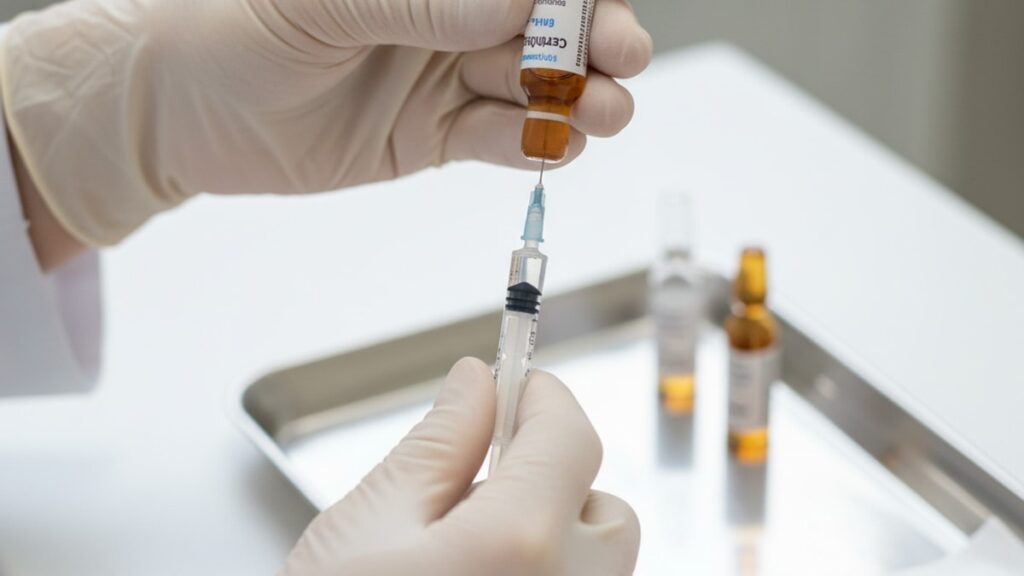
Interest in Cerebrolysin has exploded within the research community, and frankly, it’s easy to see why. The potential for a compound to support neuroprotection and neurogenesis is a formidable area of study, one that could unlock entirely new avenues for understanding cognitive health. But with this surge in interest comes a flood of questions, conflicting information, and—let’s be honest—a significant amount of confusion about how to use Cerebrolysin effectively and responsibly in a research setting.
That's where we come in. Our team at Real Peptides doesn't just supply high-purity compounds; we live and breathe the science behind them. We've seen firsthand how crucial precise protocols are for generating credible, reproducible data. This isn't about chasing trends. It's about rigorous scientific inquiry. This guide is our professional effort to cut through the noise, providing a clear, detailed framework for researchers looking to incorporate Cerebrolysin into their work. We're going to cover everything from sourcing and preparation to the nuanced differences in administration methods. No fluff, just actionable expertise.
What Exactly Is Cerebrolysin? A Nuanced Look
Before you can even think about how to use Cerebrolysin, you need a deep, unflinching understanding of what it is—and what it isn't. It's not a simple, single-molecule compound. And that's a critical distinction.
Cerebrolysin is a unique peptide mixture derived from purified, enzymatically treated porcine brain proteins. Think of it as a complex cocktail of neuroactive substances. This blend primarily consists of low-molecular-weight neuropeptides and free amino acids that are small enough to cross the blood-brain barrier. That’s the key. Its ability to reach the central nervous system is fundamental to its mechanism of action.
Unlike synthetic nootropics that might target a single neurotransmitter pathway, Cerebrolysin’s effects are multimodal. Our experience shows that its power lies in this very complexity. It mimics the action of endogenous neurotrophic factors—like brain-derived neurotrophic factor (BDNF) and nerve growth factor (NGF)—which are essential for neuron survival, growth, and plasticity. It essentially provides the brain with a suite of tools to support its own maintenance and repair processes.
Here’s what we’ve learned from analyzing the data:
- Neurotrophic Regulation: It actively promotes the health and survival of neurons. This isn't just about preventing damage; it's about fostering a robust cellular environment.
- Neuroprotection: It helps shield neurons from catastrophic damage caused by things like ischemia (lack of blood flow) or excitotoxicity (overstimulation).
- Neurogenesis & Plasticity: It supports the formation of new neurons and synapses, which is the structural basis of learning and memory. This is, for many researchers, the most exciting frontier.
Understanding this complex, multi-pronged mechanism is vital. Why? Because it informs every decision you make down the line, from dosage to the duration of your study. You’re not just flipping a single switch; you’re influencing an entire ecosystem. It's a profound responsibility.
Sourcing and Purity: The Non-Negotiable First Step
We can't stress this enough—the source of your Cerebrolysin will make or break your research. Period. In a field this precise, you simply cannot afford to introduce variables like contaminants, improper concentrations, or batch-to-batch inconsistencies. It’s the fastest way to invalidate months, or even years, of hard work.
Let’s be direct. The market is sprawling and filled with providers making lofty claims. But purity isn’t a marketing term; it's a verifiable metric. When you're dealing with a biologically derived product like Cerebrolysin, the potential for impurities or bacterial endotoxins is very real. These don't just skew your data; they can be actively harmful.
This is the core of our mission at Real Peptides. We were founded because our own researchers were frustrated with the lack of reliable, high-purity peptides on the market. Our process of small-batch synthesis and rigorous third-party testing for every single lot isn't a feature—it's our entire philosophy. We believe researchers deserve compounds with impeccable purity and an exact amino-acid sequence, backed by a Certificate of Analysis (CoA) that you can actually trust.
Before you purchase Cerebrolysin from any source, you must demand a current CoA. Scrutinize it. Look for purity levels (typically via HPLC), concentration verification, and screenings for contaminants. If a supplier is hesitant to provide this, it's a massive red flag. Walk away. Your research integrity depends on this critical, non-negotiable element of due diligence.
Essential Tools and Preparation for Your Research
Alright, assuming you've sourced a high-purity, verifiable product, the next phase is about preparation. Proper setup and sterile technique are paramount. Gathering your tools beforehand ensures a smooth, safe, and effective process. Rushing this step is a recipe for mistakes.
Here’s a basic checklist of what our team recommends having on hand:
- Cerebrolysin Ampoules: The compound itself, typically in 2ml, 5ml, or 10ml glass ampoules.
- Sterile Syringes: The size depends on your intended dose. For intramuscular injections, a 3ml or 5ml syringe is usually sufficient. You’ll also need drawing needles (a wider gauge, like 18G, to draw the liquid without dulling the injection needle) and injection needles (typically 23G or 25G).
- Alcohol Swabs: For sterilizing the ampoule neck, injection site, and any vial stoppers.
- Sharps Container: An approved container for safely disposing of used needles and glass ampoules. This isn't optional; it's a fundamental lab safety requirement.
- Gauze or Cotton Balls: To apply light pressure to the injection site afterward.
Get everything laid out on a clean, disinfected surface before you begin. The goal is to move deliberately and methodically. Fumbling for a swab after you’ve already opened an ampoule compromises the sterility of the entire procedure. It's a simple discipline that pays huge dividends in data reliability and safety.
COGNIBIOTICS – PRODUCT Q&A – BiOptimizers Live Stream
This video provides valuable insights into how to use cerebrolysin, covering key concepts and practical tips that complement the information in this guide. The visual demonstration helps clarify complex topics and gives you a real-world perspective on implementation.
Reconstitution and Handling: A Step-by-Step Protocol
One of the most common points of confusion for researchers new to peptides is reconstitution. Many peptides come in a lyophilized (freeze-dried) powder that must be mixed with bacteriostatic water. However—and this is a key point—Cerebrolysin almost universally comes as a pre-mixed, sterile solution in a glass ampoule.
This simplifies the process, but opening a glass ampoule requires its own specific technique to avoid injury or contamination. They are designed to be snapped open cleanly at the neck.
Here's the professional procedure:
- Inspect the Ampoule: Check for any cracks or particulates in the solution. Ensure the expiration date is valid. The solution should be clear and yellowish-brown.
- Gather the Solution: Gently tap the top of the ampoule to ensure all the liquid settles in the bottom chamber.
- Sterilize the Neck: Wipe the neck of the ampoule (the thinnest part, often marked with a dot or line) with an alcohol swab and let it air dry.
- The Snap: This is the crucial part. Most modern ampoules are scored for an easy break. Hold the bottom of the ampoule firmly in one hand. With your other hand, place your thumb on the colored dot and apply firm, even pressure to snap the top off, away from your body. You can wrap a small piece of gauze or an alcohol swab around the neck for a better grip and to protect your fingers. It should be a clean, crisp snap.
- Draw the Solution: Immediately take your syringe with the drawing needle attached and insert it into the open ampoule. Tilt the ampoule as needed and draw up the required dose. Be careful not to touch the rim of the ampoule with the needle.
- Remove Air & Swap Needles: Point the syringe upward and gently tap it to get any air bubbles to rise to the top. Depress the plunger slightly to expel the air. Carefully remove the wide-gauge drawing needle and replace it with your sterile injection needle. Do not touch the new needle to any surface.
Once opened, an ampoule is meant for single use. You cannot reseal it and maintain sterility. Any unused portion should be discarded properly. In terms of storage, unopened ampoules should be kept at room temperature, protected from light. They do not require refrigeration.
Administration Methods: A Comparative Analysis
How you administer Cerebrolysin has a significant impact on its pharmacokinetics—how quickly it's absorbed, how it's distributed, and its overall bioavailability. The method you choose should align directly with the goals of your research protocol. There are three primary methods discussed in the literature, each with distinct advantages and disadvantages.
We've broken them down here.
| Method | Speed of Onset | Bioavailability | Complexity | Common Use Case |
|---|---|---|---|---|
| Intramuscular (IM) | Moderate (30-60 min) | High | Low | General research, consistent systemic delivery, ease of administration. |
| Intravenous (IV) | Very Fast (Immediate) | 100% | High | Clinical settings, requires professional administration, large volume doses. |
| Intranasal (IN) | Fast (Direct to CNS) | Variable | Moderate | Experimental research, bypassing the blood-brain barrier for targeted delivery. |
Let’s unpack these. Honestly, though, for most laboratory research not involving human clinical trials, intramuscular injection is the most practical and common method.
Intramuscular (IM) Injection: This involves injecting the solution directly into a large muscle, allowing it to be absorbed into the bloodstream steadily. Common sites include the deltoid (shoulder), ventrogluteal (hip), or vastus lateralis (thigh). It's relatively simple, provides high bioavailability, and offers a sustained release compared to IV. For doses up to 5ml, this is generally the preferred route. A dose larger than 5ml should be split into two separate injections at different sites to avoid discomfort and ensure proper absorption.
Intravenous (IV) Infusion: This is the gold standard for achieving 100% bioavailability and an immediate effect, but its complexity makes it unsuitable for most research environments outside of a clinical setting. It's not a simple injection. The Cerebrolysin must be diluted in a sterile saline solution and administered as a slow drip over 15-60 minutes. This method is typically reserved for high-dose protocols under medical supervision. We mean this sincerely—do not attempt IV administration without proper medical training and equipment.
Intranasal (IN) Application: This is a fascinating and emerging method. The theory is that by using a nasal spray atomizer, the peptide solution can travel along the olfactory and trigeminal nerves, directly into the brain. This route bypasses the blood-brain barrier, potentially leading to higher concentrations in the CNS with a lower systemic dose. Our team is watching the developments here closely. It's promising, but the research is still in its early stages, and dosing protocols are far from standardized. It requires a specific type of atomizer to create a fine mist—not just any nasal spray bottle will work.
Dosing Protocols: From Foundational to Advanced
Here's where the conversation gets incredibly nuanced. Dosing Cerebrolysin isn't a one-size-fits-all scenario. The optimal protocol depends entirely on the research model and the specific questions being investigated. The following information is based on dosages cited in existing scientific literature and should be viewed strictly through a research lens, not as medical advice.
Standard Range: The most commonly cited dosage range in studies is between 5ml and 10ml per day. Some aggressive protocols in clinical settings for acute events (like stroke) have used up to 30ml, but that is an entirely different context.
Cycle Structure: Cerebrolysin is almost always used in cycles, not continuously. A very common protocol involves daily administration for 5 consecutive days, followed by a 2-day break (the weekend). This 5-on/2-off schedule is often repeated for four weeks, constituting a single course. After a full course, a washout period of at least one to two months is typical before another course would be considered.
Why the cycles? This approach may help prevent receptor downregulation and allows for observation of effects during the off-periods, providing a clearer picture of the compound's impact. Continuous administration could mask the true, lasting changes in neuronal structure and function.
Titration: For any new research protocol, our team always recommends starting with a lower dose (e.g., 2ml or 2.5ml) to establish a baseline. This allows you to carefully observe the response in your model before scaling up to a more standard therapeutic dose. This methodical approach minimizes variables and helps isolate the effects of the compound itself.
And another consideration—stacking. While some advanced researchers explore combining Cerebrolysin with other compounds, we strongly advise against this in initial studies. To get clean, interpretable data, you must isolate the variable. Only after you fully understand the effects of Cerebrolysin on its own should you even consider introducing another agent. Don't muddy the waters from the outset.
Potential Side Effects and Safety Considerations in Research
No responsible discussion about how to use Cerebrolysin would be complete without a transparent look at safety and potential side effects. While it is generally well-tolerated in studies, nothing is without risk. Diligent monitoring and data logging are core components of any professional research project.
Based on published data, the most common side effects are mild and transient:
- A feeling of heat or flushing, especially with rapid injection.
- Dizziness or a mild headache.
- Irritation, redness, or pain at the injection site (this is common with all IM injections).
Less common, but more significant adverse events can include agitation, confusion, or allergic reactions. Because it is a porcine-derived product, there is a theoretical risk of hypersensitivity. Any protocol should have measures in place to monitor for signs of an allergic reaction.
It’s also crucial to be aware of contraindications noted in the literature, which include a history of status epilepticus or seizures, severe renal impairment, and known hypersensitivity to the product. These are not areas for experimentation. Safety must always be the primary concern.
Integrating Video Resources for Visual Learners
Sometimes, reading about a physical process like preparing an injection just isn't enough. We get it. Technique matters, and seeing it done correctly can make all the difference in building confidence and ensuring accuracy. That's why we often point researchers to high-quality visual aids.
For incredibly detailed video walkthroughs on general lab safety, sterile handling of peptides, and proper injection techniques, we highly recommend the content produced by our colleagues over at the MorelliFit YouTube channel. While not specific to Cerebrolysin, the foundational principles they demonstrate are universal and professionally executed. It's a fantastic resource for clarifying these critical hands-on steps, and one we believe adds immense value for any researcher in this field. A visual demonstration can often clear up minor points of confusion that text alone cannot.
If you're ready to put this knowledge into practice and begin your own rigorous investigation into its properties, you can Get Started Today by exploring our catalog of certified-purity compounds, ensuring your research is built on a foundation of quality.
The journey into understanding neurotrophic compounds is both demanding and incredibly rewarding. It requires meticulous attention to detail, a commitment to quality, and an unwavering focus on safety and precision. By approaching your research with a professional methodology—from sourcing to administration—you position yourself to generate meaningful, impactful data that can contribute to this exciting field.
We see ourselves as partners in this endeavor, providing the reliable tools researchers need to push the boundaries of science. For ongoing discussions and the latest findings from the peptide research community, be sure to follow our page on Facebook. We're always sharing insights and connecting with fellow pioneers. The future of cognitive science is being built in labs like yours, one carefully executed experiment at a time.
Frequently Asked Questions
What is Cerebrolysin primarily used for in a research context?
▼
In research, Cerebrolysin is studied for its neuroprotective and neurotrophic properties. It’s investigated for its potential applications in models of neurodegenerative conditions, stroke recovery, and traumatic brain injury (TBI) to understand its effects on neuronal repair and cognitive function.
How is Cerebrolysin different from other nootropics like racetams?
▼
Cerebrolysin is a complex mixture of biologically-derived neuropeptides that mimics natural growth factors to support neuron health. Racetams, in contrast, are synthetic single-molecule compounds that typically modulate specific neurotransmitter systems, like acetylcholine. The mechanisms are fundamentally different.
Is Cerebrolysin legal to purchase in the United States?
▼
Cerebrolysin is not approved by the FDA as a drug or dietary supplement in the U.S. It can be purchased and used for laboratory research purposes only (in-vitro or in-vivo studies) but cannot be sold or marketed for human consumption.
What’s the best way to store Cerebrolysin ampoules?
▼
Unopened glass ampoules of Cerebrolysin should be stored at room temperature (below 25°C or 77°F), protected from direct sunlight. They do not require refrigeration. Once an ampoule is opened, it must be used immediately and any remainder discarded.
Can Cerebrolysin be mixed with other peptides in the same syringe?
▼
Our team strongly advises against mixing Cerebrolysin with other peptides in the same syringe. This can create issues with chemical stability and pH, potentially degrading the compounds and making it impossible to attribute observed effects to a single variable. Always administer peptides separately.
How long does a typical research cycle of Cerebrolysin last?
▼
A common research cycle found in literature is four weeks. This often follows a pattern of daily administration for 5 days, followed by a 2-day break, repeated for the four-week duration. This is typically followed by an extended ‘washout’ period.
What is the difference between the 5ml and 10ml ampoules?
▼
The only difference is the total volume and, therefore, the total amount of the peptide mixture in the ampoule. The concentration of the solution is the same. The choice between them depends entirely on the dosage required for your specific research protocol.
Why is an intramuscular (IM) injection the most common method?
▼
IM injection offers a great balance of high bioavailability, a sustained release profile, and relative ease of administration. It doesn’t require the clinical oversight of an IV infusion but is more reliable and well-studied than experimental methods like intranasal delivery.
Are there any known long-term side effects from Cerebrolysin use?
▼
The existing body of research, primarily from outside the U.S., suggests a favorable long-term safety profile when used in appropriate cycles. However, as with any research compound, comprehensive long-term data is still being gathered, underscoring the need for careful monitoring in any study.
Does Cerebrolysin need to be reconstituted like other peptides?
▼
No, this is a key difference. Unlike many peptides that ship as a lyophilized powder, Cerebrolysin comes as a pre-prepared, sterile liquid solution in a sealed glass ampoule. No reconstitution with bacteriostatic water is necessary.
What should I look for in a Certificate of Analysis (CoA) for Cerebrolysin?
▼
A reliable CoA should clearly state the product identity, concentration, and purity level, typically determined by HPLC. It should also include results from screenings for microbial contaminants and endotoxins. Always ensure the lot number on the CoA matches your product.











