


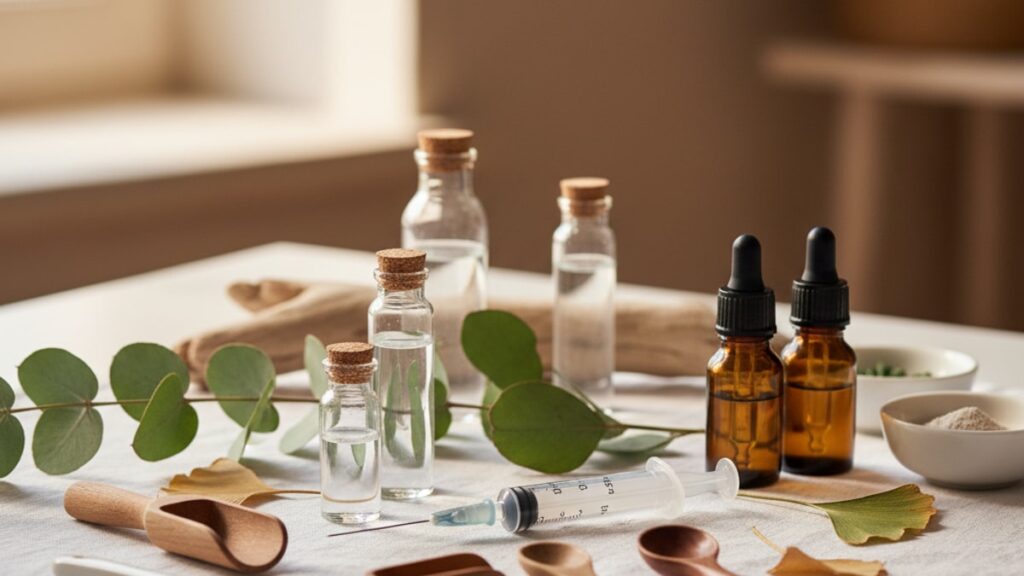
BAC Water Mixing Peptides: Results Timeline & Expectations
Reconstituting lyophilised peptides with bacteriostatic water doesn't instantly activate them. It restores them to injectable form. A 2023 analysis published in the Journal of Pharmaceutical Sciences found that improperly reconstituted peptides lose up to 40% of biological activity before the first injection due to aggregation and oxidation during mixing. The timeline for results depends entirely on which peptide you're using, how you've stored it, and whether your dosing schedule aligns with its half-life.
Our team has guided hundreds of research professionals through peptide reconstitution protocols. The gap between doing it right and doing it wrong comes down to three things most guides never mention: injection technique after mixing, refrigeration timing, and vial pressure management during draws.
What happens when you mix BAC water with peptides. And how long until the solution is stable?
Bacteriostatic water reconstitutes lyophilised peptides by dissolving the freeze-dried powder into an injectable solution within 60–90 seconds of gentle swirling. The benzyl alcohol preservative in BAC water prevents bacterial growth for up to 28 days under refrigeration at 2–8°C. Biological activity is present immediately after reconstitution, but the peptide's effects in the body depend on its mechanism of action, half-life, and dosing protocol. Not the mixing process itself.
The Reconstitution Misconception Most Guides Skip
Mixing BAC water with peptides doesn't 'activate' them. It rehydrates them. The peptide's amino acid sequence, which determines its biological function, remains unchanged from synthesis through lyophilisation to reconstitution. What changes is physical state: solid powder becomes liquid solution. The timeline for observable results has nothing to do with how fast the powder dissolves and everything to do with the peptide's pharmacokinetic profile once injected.
This article covers exactly how BAC water mixing peptides affects stability and potency, which reconstitution mistakes destroy peptide integrity before the first dose, and what realistic timelines look like for common research peptides based on their half-lives and receptor mechanisms. You'll see comparison data for peptides with short versus long half-lives, scenario-based troubleshooting for storage failures, and one critical reconstitution step that most protocols fail to mention.
BAC Water Reconstitution: What Happens at the Molecular Level
Bacteriostatic water contains 0.9% benzyl alcohol as a preservative, which prevents microbial contamination in multi-dose vials for up to 28 days when refrigerated. When injected into a vial of lyophilised peptide, the water dissolves the freeze-dried matrix and the peptide molecules disperse evenly throughout the solution. A process that takes 60–90 seconds with gentle swirling. Vigorous shaking causes mechanical stress that can denature peptide bonds, particularly in longer-chain peptides like growth hormone-releasing peptides (GHRPs) or thymosin sequences.
The reconstituted solution reaches equilibrium. Uniform peptide concentration throughout the vial. Within two minutes. At this point, the peptide is biologically active and ready for injection. Potency does not increase over time after mixing; it either remains stable (if stored correctly) or degrades (if exposed to temperature excursions, light, or repeated freeze-thaw cycles). The 28-day stability window assumes refrigeration at 2–8°C and proper aseptic technique during every draw. Introducing air or contaminants shortens this window significantly.
One critical detail most guides omit: injecting air into the vial while drawing solution creates positive pressure that pulls contaminants back through the needle on subsequent draws. The correct technique. Draw solution without injecting air first, allowing negative pressure to equalise naturally. Reduces contamination risk across the 28-day use period. This matters more than the brand of BAC water or the gauge of needle used.
Results Timeline: Peptide-Specific Half-Lives Determine When Effects Appear
The timeline for observable effects after BAC water mixing peptides depends entirely on the peptide's half-life and mechanism of action. Short-acting peptides like BPC-157 (half-life approximately 4 hours) require daily or twice-daily dosing and produce localised tissue repair signals within 24–48 hours of the first injection. Longer-acting peptides like CJC-1295 DAC (half-life 6–8 days) accumulate over multiple injections, with growth hormone pulses becoming detectable after 7–10 days of consistent dosing.
Growth hormone secretagogues (GHRPs, ipamorelin, hexarelin) show acute effects. Transient GH elevation. Within 30–60 minutes of injection, but the downstream anabolic effects (increased IGF-1, improved nitrogen retention, enhanced lipolysis) take 2–4 weeks to manifest. Cognitive peptides like dihexa or P21 modulate synaptic plasticity through BDNF upregulation, a process that requires 10–14 days of consistent dosing before subjective cognitive improvements are reported in research models.
Metabolic peptides (tesofensine, survodutide) act on catecholamine reuptake or dual GLP-1/glucagon receptors, producing appetite suppression within 48–72 hours but requiring 8–12 weeks for meaningful fat mass reduction. Immune-modulating peptides like thymalin influence thymic function and T-cell maturation. Effects that unfold over weeks to months, not days. The reconstitution step is identical across all these peptides; the results timeline is determined by biology, not by mixing technique.
BAC Water Mixing Peptides: Common Reconstitution Errors That Destroy Potency
The most common mistake during reconstitution isn't contamination. It's mechanical stress from improper mixing. Shaking a vial of lyophilised peptide after adding BAC water causes shear forces that disrupt tertiary protein structure, particularly in larger peptides with complex folding patterns. Gentle swirling for 60–90 seconds allows the powder to dissolve without denaturing the peptide bonds. If the powder doesn't fully dissolve, let the vial sit at room temperature for 5–10 minutes. Never shake harder.
Another frequent error: adding the full volume of BAC water too quickly. Injecting 2–3 mL of water directly onto the lyophilised puck creates localized high-concentration zones that can cause aggregation. Aim the stream of water against the vial wall, not the powder itself, and inject slowly over 10–15 seconds. The water should trickle down the wall and gradually dissolve the peptide from the edges inward.
Temperature management failures happen after reconstitution, not during. Lyophilised peptides tolerate ambient temperature for short periods, but once reconstituted, they must be refrigerated at 2–8°C within 30 minutes. A single temperature excursion above 8°C. Left on the counter for two hours, stored in a fridge set to 10°C, or transported without a cooler. Can denature the protein structure irreversibly. Neither appearance nor potency testing at home can detect this degradation; the solution looks identical, but biological activity may be reduced by 20–50%.
BAC Water Mixing Peptides: Storage, Shelf Life, and Stability Data
| Peptide Type | Lyophilised Storage | Reconstituted Stability (2–8°C) | Half-Life Post-Injection | Time to Observable Effects |
|---|---|---|---|---|
| BPC-157 | −20°C, indefinite | 28 days | ~4 hours | 24–48 hours (localised repair) |
| CJC-1295 DAC | −20°C, indefinite | 28 days | 6–8 days | 7–10 days (GH elevation) |
| Ipamorelin | −20°C, indefinite | 28 days | ~2 hours | 30–60 min (acute GH pulse), 2–4 weeks (anabolic effects) |
| Thymalin | −20°C, indefinite | 21 days | N/A (immune modulation) | 2–4 weeks (immune markers) |
| Tesofensine | −20°C, indefinite | 28 days | 8 days | 48–72 hours (appetite suppression), 8–12 weeks (fat loss) |
| Dihexa | −20°C, indefinite | 14 days | ~1 hour | 10–14 days (cognitive effects) |
Reconstituted peptides degrade faster than lyophilised powder because water molecules facilitate oxidation and hydrolysis reactions. The 28-day stability window assumes ideal storage. Refrigeration at 2–8°C, minimal light exposure, and aseptic technique during every draw. Peptides with shorter recommended use windows (14–21 days) contain more oxidation-prone amino acids (methionine, cysteine) or lack stabilising excipients in the lyophilised formulation.
Freezing reconstituted peptides is not recommended. Ice crystal formation during freezing can disrupt peptide structure, and repeated freeze-thaw cycles cause cumulative damage that reduces potency by 10–20% per cycle. If you must freeze a reconstituted peptide, aliquot it into single-use vials before the first freeze to avoid thaw-refreeze cycles.
Key Takeaways
- BAC water reconstitutes lyophilised peptides within 60–90 seconds, but biological results depend on peptide-specific half-lives and cumulative dosing. Not the mixing process.
- Reconstituted peptides must be refrigerated at 2–8°C within 30 minutes and used within 28 days; a single temperature excursion above 8°C can reduce potency by 20–50%.
- Short-acting peptides like BPC-157 (half-life 4 hours) produce localised effects within 24–48 hours, while long-acting peptides like CJC-1295 DAC (half-life 6–8 days) require 7–10 days of consistent dosing.
- The most common reconstitution error is shaking the vial instead of swirling gently. Mechanical stress denatures peptide bonds and reduces biological activity.
- Injecting air into the vial during draws creates positive pressure that pulls contaminants back through the needle; draw solution without injecting air first to maintain sterility across the 28-day use period.
What If: BAC Water Mixing Peptides Scenarios
What If the Peptide Powder Doesn't Fully Dissolve After Adding BAC Water?
Let the vial sit at room temperature for 5–10 minutes and swirl gently again. Incomplete dissolution usually means the lyophilised puck is dense or the water was too cold. If the powder still doesn't dissolve after 15 minutes, the lyophilisation process may have failed during manufacturing. Contact the supplier before injecting. Never shake vigorously or heat the vial; both destroy peptide structure.
What If I Accidentally Left the Reconstituted Peptide Out of the Fridge Overnight?
Discard it. A temperature excursion of 8+ hours at room temperature (20–25°C) causes irreversible protein denaturation that cannot be detected visually. The solution may look clear and normal, but biological activity is compromised. The cost of a replacement vial is lower than the risk of injecting a degraded peptide with unpredictable potency.
What If I Injected Air Into the Vial While Drawing the Solution?
The immediate dose is fine, but future draws from that vial carry higher contamination risk. Positive pressure inside the vial pulls bacteria and particulates back through the needle puncture site on subsequent draws. If you've done this repeatedly over multiple uses, consider discarding the remaining solution after day 14 instead of day 28 to reduce infection risk.
What If I'm Not Seeing Results After Two Weeks of Daily Injections?
Check three variables: storage temperature (has the vial been consistently refrigerated at 2–8°C?), dosing schedule (are you injecting at the same time daily to maintain stable plasma levels?), and peptide selection (does the peptide's mechanism align with the outcome you're tracking?). Short-acting peptides require strict dosing adherence; missing even one day disrupts cumulative effects. For longer-acting peptides, two weeks may be too early. GH secretagogues and cognitive peptides often require 3–4 weeks before downstream effects become measurable.
The Blunt Truth About BAC Water Mixing Peptides
Here's the honest answer: reconstitution technique matters less than what happens after you mix. The peptide industry obsesses over needle gauge, BAC water brands, and swirling versus rolling the vial. But the single biggest determinant of whether your peptide works is refrigeration discipline. A perfectly reconstituted peptide left at 10°C in a poorly calibrated fridge loses more potency in 72 hours than an imperfectly mixed peptide stored at 4°C loses in 28 days. Temperature excursions, not mixing errors, are why most peptides underperform.
The second truth: peptide results timelines are biological, not procedural. Mixing BAC water with BPC-157 doesn't make tissue repair happen faster. The peptide still has to bind receptors, signal fibroblast migration, and upregulate collagen synthesis, which takes days. Marketing that implies 'instant activation' after reconstitution is scientifically incoherent. The peptide is active immediately after mixing, but observable effects follow the peptide's pharmacokinetic profile and the biological process it modulates.
Our experience working with research peptide users across hundreds of protocols: storage failures and dosing inconsistency cause more result failures than contamination or reconstitution errors combined. If you're not seeing expected outcomes, audit your refrigerator temperature with a standalone thermometer and log your injection times for a week. The pattern will reveal whether the issue is the peptide or the protocol.
Reconstituting peptides with BAC water is straightforward. Inject the water against the vial wall, swirl gently for 60–90 seconds, refrigerate immediately, and use within 28 days. The complexity lies in understanding that the peptide's effects unfold according to its half-life, receptor mechanism, and cumulative dosing pattern. Not according to how fast the powder dissolved. Short-acting peptides like BPC-157 produce localised repair signals within 24–48 hours but require daily dosing to maintain therapeutic levels. Long-acting peptides like CJC-1295 DAC accumulate over multiple injections, with growth hormone elevation becoming detectable after 7–10 days of consistent use.
The most common mistake isn't during mixing. It's afterward. Temperature excursions above 8°C, even briefly, denature the protein structure irreversibly. A reconstituted peptide left on the counter for two hours or stored in a fridge set to 10°C loses 20–50% of biological activity in ways that neither appearance nor home testing can detect. The vial looks identical; the peptide doesn't work as expected. If your peptide underperforms, audit your storage before questioning the supplier. Our team has seen this pattern repeatedly: perfect reconstitution technique, disciplined dosing schedule, and a refrigerator running 3°C too warm.
If you're working with research-grade peptides that demand precision at every step, Real Peptides supplies high-purity compounds synthesised through exact amino-acid sequencing. Every peptide ships lyophilised with verified molecular weight and purity certificates. The reconstitution and storage discipline after that point is entirely under your control. Explore high-purity research peptides designed for protocols where results consistency matters more than convenience.
Frequently Asked Questions
How long does BAC water stay sterile after opening?
▼
Bacteriostatic water remains sterile for up to 28 days after opening when refrigerated at 2–8°C and handled with proper aseptic technique. The 0.9% benzyl alcohol preservative prevents bacterial growth during this window. Beyond 28 days, the preservative’s effectiveness diminishes, and contamination risk increases even if the solution appears clear.
Can I use sterile water instead of BAC water for peptides?
▼
Sterile water lacks the benzyl alcohol preservative found in bacteriostatic water, which means it must be used immediately after reconstitution and discarded after a single draw. For multi-dose vials where you’ll be drawing multiple injections over days or weeks, BAC water is essential to prevent bacterial contamination. Sterile water is only appropriate for single-use, immediate-injection protocols.
What happens if I inject too much BAC water into the peptide vial?
▼
Overdiluting the peptide reduces the concentration per millilitre, which means you’ll need to inject a larger volume to achieve the target dose. This isn’t inherently harmful, but injecting volumes above 1–1.5 mL subcutaneously can cause discomfort and slower absorption. Underdiluting (too little water) creates a more concentrated solution that’s harder to dose accurately with standard insulin syringes.
How do I know if my reconstituted peptide has degraded?
▼
Visual inspection is unreliable — degraded peptides often look identical to fresh solutions. The only definitive test is mass spectrometry or HPLC analysis, which measures molecular weight and purity. Practical indicators include unexpected lack of effects at established doses, cloudiness or particulate matter in the solution, or storage conditions that violated the 2–8°C requirement. If you suspect degradation, discard the vial rather than risk injecting a compound with unknown potency.
Why do some peptides require reconstitution while others come pre-mixed?
▼
Lyophilisation (freeze-drying) extends shelf life significantly by removing water, which prevents hydrolysis and oxidation reactions that degrade peptides in solution. Pre-mixed peptides either contain stabilising excipients that slow degradation or are intended for short-term use. Research-grade peptides are almost always lyophilised to preserve molecular integrity during storage and shipping.
Can I travel with reconstituted peptides?
▼
Yes, but temperature control is critical. Reconstituted peptides must remain between 2–8°C during transport. Medical-grade insulin coolers or FRIO wallets maintain this range for 24–48 hours without electricity. Any temperature excursion above 8°C — even briefly — risks irreversible protein denaturation. Lyophilised peptides tolerate ambient temperature better and are safer for travel if you can reconstitute them at your destination.
What is the best needle size for drawing reconstituted peptides?
▼
An 18–20 gauge draw needle minimises the number of punctures needed to extract solution from the vial, reducing contamination risk. For injection, switch to a 27–30 gauge insulin syringe for subcutaneous administration. Using the same needle for drawing and injecting dulls the tip, making injections more painful and increasing tissue trauma.
How long after reconstitution can I inject the peptide?
▼
The peptide is biologically active and ready for injection within 60–90 seconds of reconstitution, once the powder has fully dissolved. There’s no ‘activation period’ required. However, if you’ve just reconstituted the peptide, refrigerate it for at least 10–15 minutes before the first draw to bring the solution to a stable temperature — injecting room-temperature peptide solution isn’t harmful but can cause mild discomfort at the injection site.
Why does my reconstituted peptide solution look cloudy?
▼
Cloudiness indicates aggregation — peptide molecules clumping together due to mechanical stress (shaking), temperature shock (adding ice-cold water to a warm vial), or contamination. Properly reconstituted peptides should be clear and free of particulates. If cloudiness appears immediately after mixing, the peptide may have been damaged during lyophilisation or shipping. If it develops over time, storage conditions likely violated the 2–8°C requirement. Do not inject cloudy solutions.
Can I mix different peptides in the same vial with BAC water?
▼
Mixing different peptides in one vial is not recommended unless they’re specifically formulated to be co-administered (like CJC-1295 with ipamorelin). Different peptides have different stability profiles, half-lives, and dosing schedules — combining them makes it impossible to adjust individual doses or track which peptide is producing which effect. Aggregation and cross-reactivity risks also increase when multiple peptides share the same solution.
