


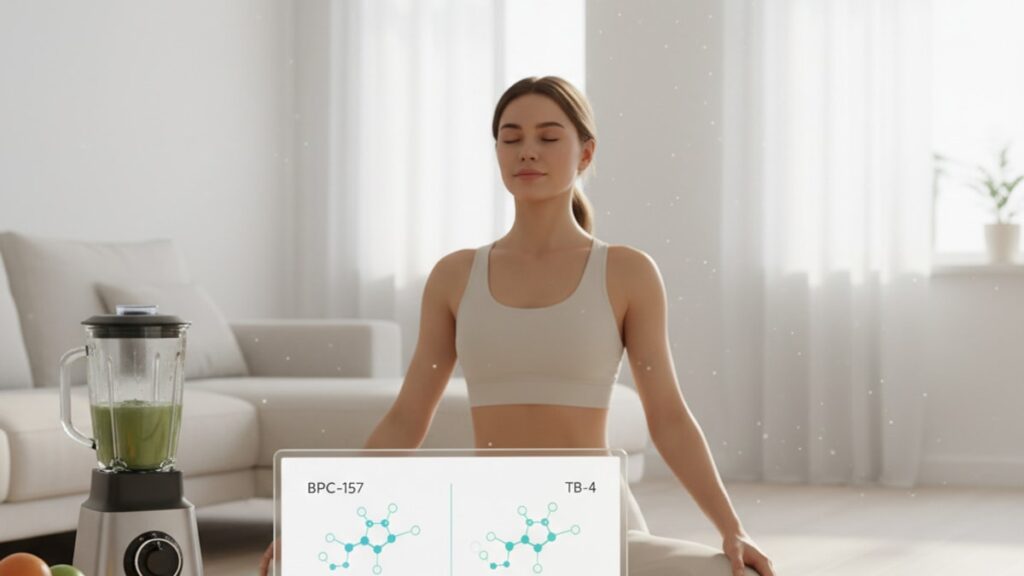
The landscape of peptide research is constantly evolving, isn't it? As we push further into 2026, researchers are increasingly seeking compounds that offer precise, potent effects for regeneration, recovery, and overall biological optimization. Two peptides consistently rise to the forefront of these discussions: BPC-157 and TB-4. They're both powerful, yes, but their mechanisms and optimal applications diverge significantly. Understanding this isn't just helpful; it's absolutely crucial for designing truly effective, targeted research protocols.
At Real Peptides, our team frequently fields inquiries about the specific differences, and the nuanced benefits, inherent in these remarkable compounds. We're committed to providing the highest purity, research-grade peptides, meticulously crafted through small-batch synthesis, and that means we're also dedicated to offering an unflinching, comprehensive look at what sets them apart. This isn't about choosing a 'better' peptide, really. It's about discerning the right tool for the right job, and that often involves a deep dive into the specifics of BPC-157 vs TB-4.
The Regenerative Frontier: What's Driving Peptide Research in 2026?
It's no secret that the scientific community is captivated by the potential of peptides. Think about it: these short chains of amino acids act as signaling molecules, orchestrating complex biological processes with incredible specificity. In 2026, the demand for high-purity, reliable research materials has never been higher. We're seeing groundbreaking studies emerge daily, exploring everything from advanced tissue repair to neuroprotection and immune modulation. Our work at Real Peptides, with our unwavering focus on exact amino-acid sequencing, ensures that researchers have access to the foundational quality they need to make these discoveries. It's a cornerstone of what we do, really.
Now, within this vibrant research ecosystem, BPC-157 and TB-4 have carved out formidable reputations. They're often discussed in tandem, creating a natural curiosity about BPC-157 vs TB-4. Both are celebrated for their regenerative capacities, but that's where the broad similarities largely end. To truly leverage their potential, we've got to peel back the layers and understand their unique biological signatures. It's more complex than a simple 'either/or' choice; it’s about a discerning, informed approach.
Decoding BPC-157: A Closer Look at the Body Protection Compound
Let's talk about BPC-157. This gastric pentadecapeptide, originally derived from human gastric juice, is quite frankly, a marvel. Its primary mechanism of action revolves around promoting angiogenesis (the formation of new blood vessels) and modulating growth factors crucial for healing. Our team has found that it doesn't just patch things up; it actively promotes a more robust, integrated healing response. It's a systemic operator, capable of influencing diverse tissues.
Researchers often explore BPC-157 10mg for an incredibly broad spectrum of applications. We're talking about everything from tendon and ligament repair to muscle damage, bone healing, and even gastric ulcer remediation. It's been studied for its potential to accelerate recovery from various injuries, reducing inflammation and enhancing cellular regeneration. Many researchers appreciate the versatility of BPC-157, often opting for BPC-157 Tablets for convenience in their experimental protocols. The sheer breadth of its potential utility makes the BPC-157 vs TB-4 comparison so compelling for many.
Our experience shows that BPC-157's capacity to upregulate growth hormone receptor expression and enhance nitric oxide production contributes significantly to its profound regenerative effects. It's not just about stopping damage; it's about actively rebuilding and restoring function. This peptide represents a critical, non-negotiable element in many Performance & Recovery Research efforts, a fact we emphasize to researchers looking for truly impactful compounds. When considering BPC-157 vs TB-4, BPC-157 stands out for its profound systemic reparative signals.
Understanding TB-4 (Thymosin Beta-4): More Than Just Recovery
Now, let's shift our focus to TB-4, or Thymosin Beta-4. This naturally occurring peptide is found in virtually all human and animal cells, and it plays a vital role in cell migration, differentiation, and tissue repair. Unlike BPC-157's more systemic, broad-spectrum approach, TB-4 often operates with a focus on actin regulation. That's the key. By influencing actin, it facilitates cell movement, wound closure, and the formation of new blood vessels, albeit through a slightly different pathway than BPC-157.
Researchers routinely turn to TB-500 (thymosin Beta-4) for its exceptional ability to promote tissue regeneration, reduce inflammation, and protect cells from damage. Our clients often explore TB-4 for applications involving skin repair, corneal healing, hair growth, and cardiac protection. We've seen firsthand how its anti-inflammatory properties can be particularly beneficial in scenarios where chronic inflammation impedes healing. The distinction in primary focus is often the first thing we highlight when discussing BPC-157 vs TB-4.
It's becoming increasingly clear that TB-4 isn't just a recovery agent; it's a protector, a facilitator of cellular resilience. Its role in upregulating cell-building proteins and downregulating pro-inflammatory cytokines makes it an indispensable tool for targeted regenerative studies, especially those focusing on Hair & Skin Research. When evaluating BPC-157 vs TB-4, remember TB-4's unique role in cellular motility and protection. This isn't a small detail; it's the very core of its efficacy.
BPC-157 vs TB-4: A Head-to-Head Comparative Analysis
This is where the real insights begin to coalesce, right? When we pit BPC-157 vs TB-4, we're not just comparing two peptides; we're examining two distinct biological strategies for promoting healing and regeneration. While both are potent, their primary modes of action and preferred applications offer researchers clear guidance. It's a nuanced discussion, but one we're well-equipped to navigate.
BPC-157, as we've discussed, is often considered the 'body protection compound' due to its comprehensive role in tissue repair, angiogenesis, and gastric health. Its influence on growth factors and nitric oxide pathways makes it a strong candidate for systemic injury recovery, from joint issues to gut lining integrity. The flexibility of BPC-157 10mg for various research models is truly impressive. The debate of BPC-157 vs TB-4 often starts here: systemic vs. more localized, though both can have far-reaching effects.
TB-4, on the other hand, excels in its capacity to regulate actin, thereby promoting cell migration and accelerating wound closure. Its potent anti-inflammatory and anti-fibrotic properties also make it invaluable for scenarios where tissue scarring or persistent inflammation is a concern. Our clients find TB-500 (thymosin Beta-4) to be incredibly effective for localized tissue regeneration, especially in dermal or cardiac contexts. When you're considering BPC-157 vs TB-4, think about the specific tissue and the type of healing you're aiming for.
Here's a breakdown to help visualize the BPC-157 vs TB-4 distinction:
| Feature | BPC-157 (Body Protection Compound) | TB-4 (Thymosin Beta-4) |
|---|---|---|
| Primary Focus | Systemic tissue repair, gastric health, angiogenesis, growth factor modulation. Broad anti-inflammatory. | Cell migration, wound closure, actin regulation, anti-inflammatory, anti-fibrotic, cellular protection. |
| Mechanism | Upregulates growth factors (VEGF, FGF), enhances nitric oxide, promotes collagen synthesis. | Modulates actin polymerization, promotes cell motility, inhibits inflammation, promotes angiogenesis. |
| Applications | Tendon, ligament, muscle, bone repair; gut integrity (ulcers); neuroprotection. | Skin/wound healing, corneal repair, hair growth, cardiac protection, fibrosis reduction. |
| Key Strengths | Comprehensive, broad-spectrum healing; gut-brain axis influence; anti-inflammatory. | Targeted cellular migration; potent anti-inflammatory and anti-fibrotic; cellular resilience. |
| Synergy Potential | Often combined with peptides for specific growth or recovery. | Often combined for enhanced localized tissue repair and inflammation control. |
It's evident, isn't it? The BPC-157 vs TB-4 conversation isn't about one being inherently superior; it's about understanding their complementary, yet distinct, roles. Many researchers, particularly those delving into Healing & Total Recovery Bundle protocols, find that a combined approach can often yield the most profound results. We recommend a meticulous review of your research objectives to determine which peptide, or combination, aligns best with your goals. Our commitment to high-purity, research-grade peptides means you're always starting with the best possible foundation, regardless of your choice in the BPC-157 vs TB-4 debate.
Strategic Stacking: When to Use Both for Enhanced Outcomes
Now, this is where it gets interesting. While the BPC-157 vs TB-4 comparison highlights their individual strengths, our experience shows that for certain, highly specific research objectives, combining these two powerhouses can unlock synergistic benefits that neither could achieve alone. Think about complex injuries or conditions where both systemic support and targeted cellular migration are critical.
For instance, in studies focusing on severe soft tissue injuries—say, a torn ligament or a deeply damaged muscle—BPC-157 can provide the overarching systemic support, enhancing blood flow and modulating the broader inflammatory response. Simultaneously, TB-4 can be employed to directly facilitate the migration of repair cells to the injury site, accelerating wound closure and promoting organized tissue remodeling. This dual approach, addressing both macro and micro elements of healing, is particularly compelling. It’s an advanced strategy in the ongoing BPC-157 vs TB-4 discussion.
We've found that this strategic stacking is often explored within our Muscle Building & Recovery Bundle research protocols, where the goal isn't just repair, but also a return to peak function and strength. The combined anti-inflammatory effects of BPC-157 and TB-4 can also be a game-changer in managing persistent inflammation that often accompanies chronic injuries. This isn't a one-size-fits-all recommendation, though. It requires a deep understanding of each peptide's unique properties and how they interact. Honestly, though, the potential for augmented results is significant, sometimes dramatic.
When considering a combined protocol, the purity and consistency of your peptides become even more critical. Our small-batch synthesis and rigorous quality control ensure that researchers can trust the integrity of both their BPC-157 10mg and TB-500 (thymosin Beta-4) supplies, minimizing variables and maximizing the reliability of their findings. This commitment is paramount when navigating the complexities of BPC-157 vs TB-4 synergy. It’s about more than just combining compounds; it’s about creating a precisely orchestrated biological environment for optimal outcomes. It's what makes the difference.
The Real Peptides Difference: Purity, Precision, and Partnership
In the dynamic world of biotechnological research, the integrity of your materials isn't just a preference; it's a fundamental requirement. At Real Peptides, this isn't just a slogan; it's the core of our operational philosophy. We understand the grueling road warrior hustle researchers face, the demanding schedules and high expectations. That's why we've built our entire process around ensuring every single peptide we offer meets an impeccable standard of purity and consistency.
When you're delving into complex comparisons like BPC-157 vs TB-4, you simply can't afford to question the quality of your compounds. Our commitment to small-batch synthesis means that each peptide, whether it's BPC-157 Tablets or TB-500 (thymosin Beta-4), undergoes exact amino-acid sequencing. This guarantees not just purity, but also reliable biological activity—something that's often overlooked by less scrupulous suppliers. We mean this sincerely: it runs on genuine connections and trust in the science.
We're not just a supplier; we're a partner in your research journey. Our team is always here to provide insights, answer questions, and ensure you have the highest quality tools for your explorations, whether it's for Longevity Research or Cognitive & Nootropic Research. We believe in empowering researchers with the best. That's the reality. It all comes down to confidence in your results, and that starts with the purity of your peptides. To truly understand the potential of compounds like BPC-157 vs TB-4, you need materials you can depend on, every single time. We can't stress this enough.
We invite you to explore our full range of high-purity research peptides. See for yourself why our dedication to quality sets us apart in the industry. Our comprehensive collection, including our Energy, Mitochondria & Fatigue Elimination Bundle, is designed to support cutting-edge biological research across various domains. It's comprehensive. We've seen it work.
Navigating the Nuances: Informed Choices for Research in 2026
Making an informed decision between BPC-157 vs TB-4, or even opting for a combination, ultimately rests on a clear understanding of your specific research objectives. There's no universal 'best' peptide; there's only the peptide that best suits the intricate demands of your study. This requires careful consideration of the target tissue, the nature of the injury or condition being investigated, and the desired biological outcomes.
For researchers focusing on Gut Health Research, BPC-157's profound influence on gastric integrity might make it the immediate front-runner. Conversely, if your work centers on accelerating wound closure in dermal studies or protecting cardiac tissue, TB-4 often presents itself as the more precisely tailored option. The distinction in BPC-157 vs TB-4 often comes down to these finer points of application.
Our team recommends starting with a meticulously defined research question. What specific biological pathway are you aiming to influence? Which cellular processes are paramount to your study's success? Answering these questions rigorously will illuminate the path forward and clarify whether BPC-157, TB-4, or a thoughtful combination, represents the optimal choice. We're here to help you Find the Right Peptide Tools for Your Lab. It's about precision, not guesswork.
As the field continues its relentless march forward in 2026, the demand for high-quality, dependable research peptides will only intensify. Our commitment at Real Peptides to small-batch synthesis and exact amino-acid sequencing ensures that you're always working with materials that meet the highest standards. This reliability is foundational to producing credible, reproducible results, especially when exploring the intricate dynamics of compounds like BPC-157 vs TB-4. We stand by that. Anyway, here's what makes the difference.
Ultimately, the journey through peptide research is one of discovery and precision. Whether your focus is on the systemic regenerative capabilities of BPC-157 or the targeted cellular migration facilitated by TB-4, understanding their distinct profiles is paramount. We're proud to be a trusted partner in this exploration, providing the uncompromising quality that empowers groundbreaking science. Your research deserves nothing less than the best, and that's precisely what we're dedicated to delivering, every single day. Discover Premium Peptides for Research and elevate your studies.
Frequently Asked Questions
What are the core differences in mechanism between BPC-157 and TB-4?
▼
BPC-157 primarily works by promoting angiogenesis and modulating various growth factors for systemic healing. TB-4, on the other hand, influences actin regulation to facilitate cell migration and wound closure. This is a key distinction in the BPC-157 vs TB-4 discussion.
Which peptide is better for tendon and ligament repair: BPC-157 or TB-4?
▼
While both offer regenerative benefits, BPC-157 is more commonly studied for tendon and ligament repair due to its broad systemic healing properties and influence on growth factors. Our researchers often explore BPC-157 for these specific applications.
Can BPC-157 and TB-4 be used together in research protocols?
▼
Yes, they can. Many researchers explore combining BPC-157 and TB-4 for synergistic effects, particularly in complex injury models where both systemic support and targeted cellular migration are beneficial. We’ve seen this approach deliver real results in our experience.
Is TB-4 effective for skin and hair regeneration studies?
▼
Absolutely. TB-4 (Thymosin Beta-4) is extensively studied for its role in skin repair, wound healing, and promoting hair growth due to its ability to encourage cell migration and reduce inflammation. It’s a strong candidate for [Hair & Skin Research].
What purity standards does Real Peptides maintain for BPC-157 and TB-4?
▼
At Real Peptides, we guarantee high-purity, research-grade peptides for both BPC-157 and TB-4. We achieve this through small-batch synthesis and exact amino-acid sequencing, ensuring consistency and reliability for your critical research.
How does BPC-157 support gut health research?
▼
BPC-157, a gastric pentadecapeptide, is widely studied for its profound benefits on gut integrity, including the healing of ulcers and inflammatory conditions. It helps maintain the mucosal lining and supports overall gastrointestinal function, a critical factor in the BPC-157 vs TB-4 comparison for gut health.
What is the shelf life of BPC-157 and TB-4 from Real Peptides?
▼
When stored properly (typically refrigerated and protected from light), our high-purity BPC-157 and TB-4 have an extended shelf life. We always recommend checking the specific product details and storage instructions provided with your order for optimal longevity.
Are there specific research bundles that include BPC-157 or TB-4?
▼
Yes, we offer various research bundles designed for specific objectives. For example, our [Healing & Total Recovery Bundle] and [Muscle Building & Recovery Bundle] often incorporate compounds like BPC-157 and TB-4 for comprehensive research protocols.
How do researchers typically administer BPC-157 and TB-4 in studies?
▼
Administration methods vary depending on the research design and target tissue. Common routes include subcutaneous injection, oral administration (for BPC-157 tablets), or topical application. Always adhere to strict sterile techniques and research protocols.
Beyond BPC-157 vs TB-4, what other regenerative peptides do you offer?
▼
Our comprehensive catalog includes a wide array of peptides for regenerative research, such as IGF-1 LR3, KPV, and FOXO4-DRI. We invite you to [explore our full range] to find the compounds best suited for your specific research needs.
What differentiates Real Peptides from other peptide suppliers in 2026?
▼
Our distinction lies in our unwavering commitment to small-batch synthesis, exact amino-acid sequencing, and rigorous third-party testing, ensuring unmatched purity and consistency. This guarantees researchers receive only the highest quality, reliable compounds for their studies, setting us apart in the BPC-157 vs TB-4 market and beyond.
Are there specific applications where TB-4 is preferred over BPC-157 for its anti-inflammatory effects?
▼
While both have anti-inflammatory properties, TB-4 is often preferred when the research involves reducing chronic inflammation that impedes cellular migration and wound healing, especially in cardiac or ocular contexts. Its direct influence on cellular resilience provides a distinct advantage.
What should researchers consider when deciding between BPC-157 vs TB-4?
▼
Researchers should consider the specific target tissue, the nature of the injury or condition, and the desired biological outcome. BPC-157 excels in broad systemic repair, while TB-4 is often superior for targeted cellular migration and anti-fibrotic effects. A clear research question is essential.
Does Real Peptides provide resources to help researchers understand peptide applications?
▼
Absolutely. We are dedicated to supporting the research community. Our website features a comprehensive blog and detailed product descriptions, offering valuable insights into the applications and mechanisms of action for compounds like BPC-157 and TB-4, helping researchers make informed decisions.
