It’s a scenario our team has seen play out far too many times. A researcher spends weeks, sometimes months, preparing for a critical experiment. The protocol is flawless, the equipment is calibrated, and the peptides—sourced with meticulous care for purity and sequence accuracy from a supplier like us at Real Peptides—are ready. Everything hinges on this moment. Then, a tiny oversight with a seemingly insignificant component, like the reconstitution liquid, brings the entire effort to a screeching, catastrophic halt.
This brings us to one of the most frequently asked, and genuinely critical, questions we encounter: does bac water expire? The short answer is a resounding yes. But the long answer is far more nuanced and absolutely essential for anyone in the research field to understand. It’s not just about a date stamped on a vial; it’s about the integrity of your work, the validity of your data, and the protection of a significant investment in both time and resources. Honestly, this is one of those foundational details that can make or break a project.
What Exactly Is Bacteriostatic Water?
Before we can really dig into expiration, we need to be crystal clear on what we're dealing with. It’s a common misconception that Bacteriostatic Water (often just called 'Bac Water') is simply sterile water. It’s not. While it starts that way, there’s a critical addition that gives it its name and function.
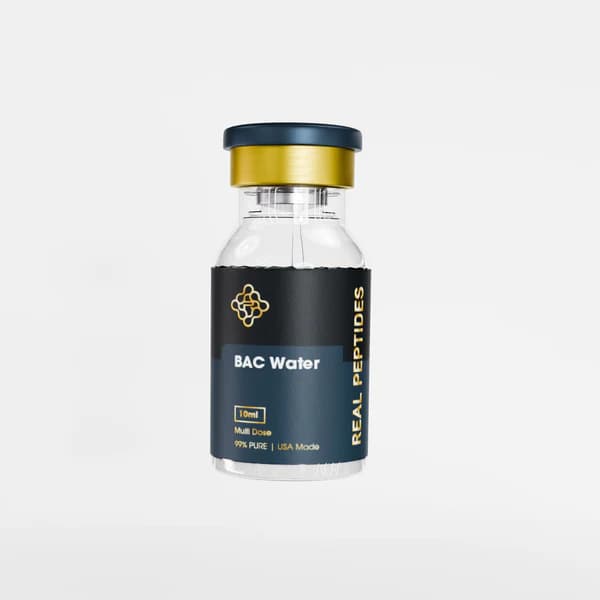
Bacteriostatic Water is a preparation of sterile water for injection that contains 0.9% benzyl alcohol (9mg/mL). That small percentage of benzyl alcohol is the game-changer. It acts as a bacteriostatic preservative. And—let's be honest—this is the part people often misunderstand. A bacteriostatic agent doesn't kill bacteria. It doesn't sterilize a contaminated solution. Instead, it prevents bacteria from multiplying. Think of it as pressing the 'pause' button on microbial growth, which is vital when you're using a multi-dose vial that will be punctured multiple times.
Its primary purpose in a lab setting is for reconstituting lyophilized (freeze-dried) powders, most commonly peptides, into a stable, usable liquid form. The purity and reliability of your peptides are paramount—it's the entire foundation of our work here at Real Peptides—and the diluent you choose is the very first step in preserving that integrity.
The Real Answer: Bac Water Has Two Expiration Dates
Here's where the confusion usually begins. Yes, bac water expires, but you're actually tracking two separate timelines. Ignoring either one is a gamble with your results.
-
The Manufacturer's Expiration Date (Unopened Vial): This is the date printed on the label by the manufacturer. An unopened, factory-sealed vial of Bac Water typically has a shelf life of one to three years. This date guarantees the sterility of the solution and the integrity of the vial's seal as long as it remains untouched. The vial is a closed system, protected from the outside world. The benzyl alcohol is stable, the water is sterile, and everything is as it should be.
-
The Post-Puncture Expiration Date (Opened Vial): This is the one that matters most in a practical, day-to-day lab environment. The moment you puncture that rubber stopper with a needle for the first time, a new clock starts ticking. The universally accepted standard in the scientific and medical communities is that a multi-dose vial of Bacteriostatic Water should be discarded 28 days after the first use.
That’s it. 28 days.
This isn't an arbitrary number. It’s a carefully determined timeframe based on the mechanical limits of the stopper and the efficacy of the preservative. We can't stress this enough—writing the date of first use directly on the vial's label is not just a good habit; it's a critical component of good laboratory practice (GLP).
Why the 28-Day Rule is a Non-Negotiable Standard
Our team has heard the arguments. "It still looks clear." "I've always used it for longer and been fine." But 'getting away with it' isn't a viable research strategy. The 28-day rule exists to mitigate very real risks that can silently and invisibly sabotage your work.
Here’s what’s happening behind the scenes:
-
Compromised Stopper Integrity: The rubber stopper on the vial is designed to be self-sealing. When you insert a sterile needle, the rubber closes back up as you withdraw it. But it's not invincible. Each puncture creates a tiny pathway, and over dozens of punctures, these pathways can start to wear. The stopper's ability to maintain a perfect hermetic seal diminishes, creating an opportunity for airborne contaminants to enter.
-
The Risk of Contamination: Every single time you access the vial, there's a minuscule risk of introducing contaminants. This can happen from the needle itself, from the air, or from swabbing the stopper with a contaminated alcohol pad. While the benzyl alcohol inhibits growth, it can become overwhelmed if a significant number of microorganisms are introduced. It's designed to maintain sterility, not create it from a contaminated base.
-
Preservative Efficacy Declines: Over time and with exposure to air (however brief during draws), the concentration or effectiveness of the benzyl alcohol can theoretically decrease. The 28-day window ensures you're using the solution while the preservative is well within its effective range.
-
Evaporation and Concentration Shifts: Repeatedly puncturing the vial can lead to imperceptible amounts of evaporation. While it might seem small, this can slowly alter the concentration of your reconstituted solution over a period longer than 28 days. For sensitive, dose-dependent research, this lack of precision is unacceptable. You might think you're administering 100mcg of a peptide, but if the diluent is more concentrated, you could be administering more, skewing your data in subtle but significant ways.
Using expired Bac Water fundamentally undermines the very reason you invested in high-purity, accurately sequenced peptides in the first place. It's an unnecessary and easily avoidable risk.
लाखों छात्रों ने छोड़ी परीक्षा | UPSSSC PET Latest News | UP PET Exam Update | TESTBOOK
This video provides valuable insights into does bac water expire, covering key concepts and practical tips that complement the information in this guide. The visual demonstration helps clarify complex topics and gives you a real-world perspective on implementation.
Visual Red Flags: How to Spot Compromised Bac Water
Beyond the 28-day rule, you should always perform a quick visual inspection before every single use. Your eyes are your first and best line of defense against using a compromised solution. It's simple, right? But it's so often overlooked in the rush of lab work.
Here's what our team trains researchers to look for:
-
Cloudiness or Haziness: This is the most obvious sign of trouble. Bacteriostatic Water should be perfectly transparent and clear. Any hint of cloudiness, milkiness, or a hazy appearance strongly suggests widespread bacterial or fungal contamination. Discard it immediately. No exceptions.
-
Particulates or 'Floaters': Hold the vial up to a light source and gently swirl it. You should see nothing but clear liquid. If you see any tiny specks, fibers, or floating particles of any kind, the solution's sterility has been breached. Do not use it.
-
Discoloration: The water should be colorless. Any development of a yellow, brown, or other tint is a catastrophic failure of sterility. This often indicates chemical breakdown or a severe contamination event.
The lab mantra is one we live by, and you should too: When in doubt, throw it out. A new vial of Bac Water is an insignificant expense compared to the cost of invalidating weeks of research.
Storage Best Practices: Maximizing the Integrity of Your Diluent
Proper storage is just as important as adhering to the expiration timeline. Incorrect storage can compromise the diluent even before you use it.
Before First Use (Unopened Vial):
An unopened vial is best stored at a controlled room temperature, typically between 20°C to 25°C (68°F to 77°F). It's also crucial to keep it away from direct sunlight or sources of extreme heat, as this can degrade the rubber stopper and the label over time.
After First Use (Punctured Vial):
Once you've punctured the vial, we recommend storing it in the refrigerator at 2°C to 8°C (36°F to 46°F). The cold temperature dramatically slows down the metabolic processes of any potential microbial contaminants that may have been accidentally introduced, giving the benzyl alcohol a significant advantage in maintaining a static environment.
One thing you must never do is freeze Bacteriostatic Water. Freezing can cause micro-fractures in the glass vial. Even worse, the water and the benzyl alcohol can separate during the freezing process. This can lead to an uneven concentration of the preservative upon thawing and, most critically, can compromise the sterility of the solution. It's a common mistake that can have dire consequences.
Bac Water vs. Other Common Diluents
It's important to recognize that Bac Water isn't the only option for reconstitution, and in some specific research protocols, it may not even be the best one. The choice of diluent is dictated by the chemistry of the compound being studied. Our experience shows that understanding the differences is key to successful experimentation.
| Diluent Type | Key Ingredient(s) | Primary Use | Shelf Life (After Opening) | Key Advantage | Key Disadvantage |
|---|---|---|---|---|---|
| Bacteriostatic Water | Sterile Water + 0.9% Benzyl Alcohol | Multi-dose reconstitution of most peptides | 28 days | Allows for multiple uses, inhibiting bacteria | Benzyl alcohol can degrade certain fragile peptides |
| Sterile Water for Injection | Pure, sterile H₂O | Single-dose reconstitution, immediate use | Discard after one use | No preservatives to interact with compounds | High risk of contamination after opening |
| 0.6% Acetic Acid Solution | Sterile Water + 0.6% Acetic Acid | Reconstituting certain peptides (e.g., GHRPs) | Varies; typically single use | Improves solubility/stability of specific peptides | Can damage peptides not suited for acidic solution |
Choosing the wrong diluent can be just as damaging as using an expired one. Always follow the specific reconstitution protocol for the peptide you are working with. If one isn't provided, reach out to a knowledgeable source—it's a question our support team at Real Peptides is always happy to help with.
The Devastating Ripple Effect of Expired Bac Water on Research
So, what really happens if you ignore the guidelines and use that 45-day-old vial of Bac Water? The consequences aren't always immediate or obvious. They can be subtle, insidious, and can undermine your work in ways that are incredibly difficult to trace back after the fact.
First, you risk peptide degradation. If bacterial contamination occurs, the microbes can alter the pH of the solution. Peptides are complex, folded chains of amino acids, and their structural integrity is often highly dependent on a stable pH environment. A shift in pH can cause the peptide to denature (unfold) or even break apart, rendering it biologically inactive. You think you're studying Peptide X, but you're actually studying its useless, degraded fragments.
Second, there's the problem of direct interaction. Bacterial byproducts, especially endotoxins, can be biologically active themselves. In cellular research, these toxins can trigger unintended immune responses or other cellular signaling cascades, creating a massive confounding variable that completely obscures the effect of the peptide you're trying to measure. Your results will be noisy, irreproducible, and ultimately, meaningless.
Third, as mentioned earlier, is the issue of inaccurate dosing. You lose the precision that is the bedrock of good science. This is a formidable problem for any serious researcher. For a more visual breakdown of why these precise handling techniques are so vital, our team has put together some helpful videos on our YouTube channel that walk through the process step-by-step.
The Real Peptides Standard: Quality From Synthesis to Solution
At Real Peptides, we obsess over quality. Our entire process is built around small-batch synthesis and ensuring exact amino-acid sequencing because we know that researchers depend on that level of impeccable purity for their work. That same relentless commitment to quality must extend to every single step you take in the lab.
Using a high-purity, research-grade peptide with a compromised, out-of-date diluent is like commissioning a master artist to paint a portrait and then handing them a bucket of muddy water. You've invalidated the quality of the primary material before you've even begun. The integrity of your research is a chain, and it's only as strong as its weakest link. Don't let that link be a $10 vial of Bac Water.
Ensuring every single component of your experiment is pristine and within spec is the only way to generate data you can trust. It's the foundation of reproducible science. If you're ready to build your research on a foundation of verified purity and quality, you can Get Started Today by exploring our catalog of research-grade peptides.
So, does bac water expire? The answer is an unequivocal yes. The date on the unopened vial is your guide for storage, but the 28-day clock after the first puncture is the rule you must live by in the lab. It's not about being overly cautious; it's about being a diligent scientist. It’s about respecting the time, effort, and capital you've invested in your work. Mark your vials, inspect them before every use, and never, ever take a chance on a questionable diluent. The integrity of your next discovery could depend on it.
We're passionate about pushing the boundaries of research, and we love connecting with others who share that drive. We discuss topics like this, and much more, with the research community over on our Facebook page. Join the conversation and share your own experiences—we're all in this together.
Frequently Asked Questions
What happens if I use Bacteriostatic Water after the 28-day mark?
▼
Using Bac Water after 28 days significantly increases the risk of contamination. The preservative efficacy of benzyl alcohol may be reduced, and the vial’s stopper integrity could be compromised, potentially leading to inaccurate results or complete failure of your experiment.
Can I tell if my Bac Water is bad just by looking at it?
▼
While visual cues like cloudiness, discoloration, or particles are definite signs of contamination, the absence of these signs does not guarantee sterility. Microscopic contamination can exist in a clear-looking solution, which is why adhering to the 28-day rule is critical.
Does refrigerating Bac Water make it last longer than 28 days?
▼
No, it does not. Refrigeration is recommended *after* opening to slow the growth of any potential contaminants introduced during use, but it does not extend the 28-day expiration period. The 28-day limit is based on stopper integrity and preservative stability.
What is the difference between Bacteriostatic Water and Sterile Water?
▼
Bacteriostatic Water contains 0.9% benzyl alcohol as a preservative, allowing for multiple uses from a single vial. Sterile Water is pure, preservative-free water and is intended for single-use only, as it has no defense against bacterial growth once opened.
Why can’t I freeze Bacteriostatic Water?
▼
Freezing can cause the water and benzyl alcohol to separate, leading to uneven preservative concentration upon thawing. More importantly, it can cause micro-cracks in the glass vial, which compromises the sterility of the entire contents.
Is it safe to make my own Bacteriostatic Water?
▼
Our team strongly advises against this. Creating a truly sterile solution with a precise concentration of benzyl alcohol requires specialized equipment and a sterile environment. Improperly made solutions pose a massive contamination risk to your research.
What’s the white powder at the bottom of my reconstituted peptide vial?
▼
If you see a white powder after reconstitution, it likely means the peptide has not fully dissolved or has ‘crashed’ out of the solution. This can be caused by using the wrong diluent, improper mixing technique, or issues with peptide solubility.
Can I use tap water or bottled water to reconstitute peptides?
▼
Absolutely not. Tap water and bottled water are non-sterile and contain minerals, impurities, and microorganisms that will contaminate and likely degrade the peptide, rendering your research completely invalid. Only use the recommended, appropriate sterile diluent.
Does the brand of Bacteriostatic Water matter?
▼
Yes, quality and consistency matter. We recommend sourcing your Bac Water from a reputable supplier that adheres to stringent manufacturing standards to ensure sterility and the correct concentration of benzyl alcohol.
How should I dispose of expired Bacteriostatic Water?
▼
Expired Bac Water should be disposed of according to your laboratory’s specific protocols for chemical and biomedical waste. Do not simply pour it down the drain or throw it in the regular trash, especially if it has been used to reconstitute research compounds.
Why is benzyl alcohol used as the preservative?
▼
Benzyl alcohol is used because it is an effective bacteriostatic agent at low concentrations (0.9%) and is relatively stable. It effectively inhibits the growth of most common bacteria, preserving the solution for multi-dose use.