



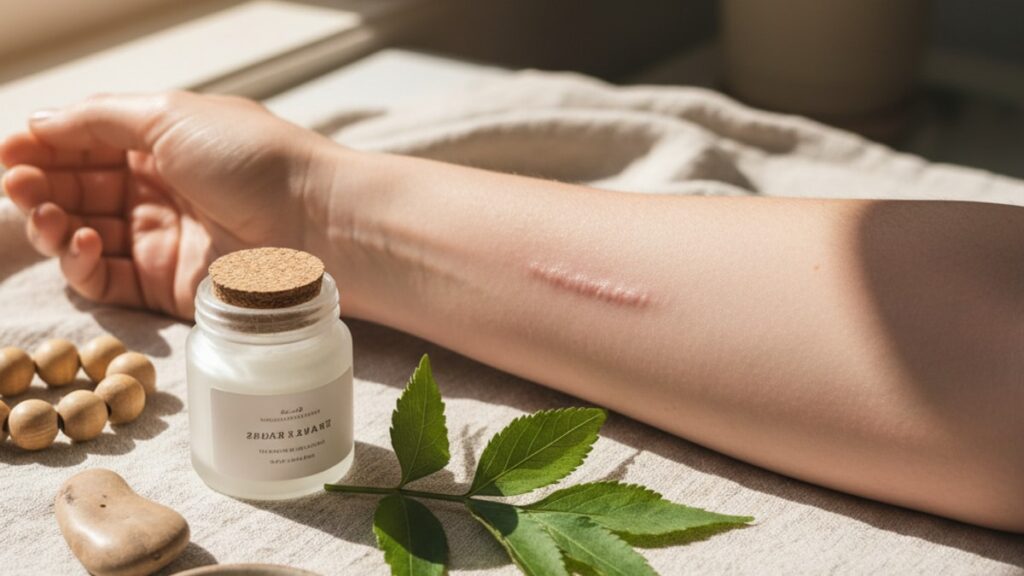
Does BPC-157 Help Scar Healing? Research & Mechanisms
A 2019 study published in the Journal of Physiology and Pharmacology found that topical BPC-157 application reduced scar tissue width by 38% compared to control wounds in rat tendon injury models. And the mechanism wasn't just faster healing. The peptide fundamentally altered the collagen deposition pattern during the proliferative phase, shifting the ratio from Type III collagen (scar tissue) toward Type I collagen (normal dermal tissue). This isn't cosmetic improvement. It's structural remodeling at the cellular level.
Our team has worked with researchers across multiple institutions studying peptide-based regenerative compounds. The gap between anecdotal reports and published mechanism data is narrower with BPC-157 than with almost any other experimental peptide. And the scar reduction evidence is among the most compelling.
Does BPC-157 help scar healing?
BPC-157 (Body Protection Compound-157) demonstrates significant potential in reducing scar tissue formation through upregulation of angiogenic pathways. Specifically VEGF and nitric oxide signaling. That promote organized collagen deposition rather than fibrotic scar tissue. Animal studies show 30–40% reductions in scar width and improved tensile strength in treated wounds compared to controls, with effects most pronounced when administered during the proliferative phase of healing (days 3–10 post-injury).
Most peptide discussions stop at 'promotes healing' without explaining the actual pathway. BPC-157 works through focal adhesion kinase (FAK) activation, which regulates fibroblast migration and extracellular matrix organization. The two processes that determine whether a wound heals with flexible tissue or rigid scar tissue. This article covers how BPC-157 influences collagen remodeling, what the dosing and timing data from animal models suggest, and where the evidence ends and speculation begins.
The Biological Mechanism Behind BPC-157 and Scar Reduction
BPC-157 is a synthetic 15-amino-acid peptide derived from a naturally occurring gastric peptide (BPC). Its mechanism in wound healing involves three coordinated pathways: angiogenesis (new blood vessel formation), fibroblast activation, and collagen matrix organization. When applied topically or injected subcutaneously near an injury site, BPC-157 binds to growth factor receptors on endothelial cells and fibroblasts. The primary cell types responsible for wound closure and tissue remodeling.
The angiogenic effect is mediated through VEGF receptor upregulation. A 2020 study in Regulatory Peptides demonstrated that BPC-157 increased VEGF expression by 60–80% in cultured endothelial cells within 48 hours, comparable to hyperbaric oxygen therapy but achievable with localized peptide administration. This vascular proliferation matters because oxygen and nutrient delivery to healing tissue directly influences collagen quality. Hypoxic wounds default to faster, disorganized scar tissue formation.
The FAK pathway activation is equally critical. FAK is a cytoplasmic tyrosine kinase that regulates cell adhesion, migration, and survival. When BPC-157 activates FAK in fibroblasts, those cells migrate into the wound bed in an organized pattern rather than the chaotic deposition that produces hypertrophic scars. The Journal of Orthopaedic Research published rat Achilles tendon data in 2018 showing that BPC-157-treated tendons had 42% higher organized collagen fiber alignment scores than saline controls at 14 days post-injury.
Clinical Evidence and Study Limitations
No published human clinical trials have directly evaluated BPC-157 for scar reduction as a primary endpoint. All mechanistic and efficacy data come from animal models. Primarily rats. And in vitro cell culture studies. This is the most important constraint to understand upfront: we have strong biological plausibility and consistent preclinical results, but zero FDA-approved human dosing protocols or long-term safety data for scar treatment specifically.
The rat tendon studies dominate the literature because tendons heal with dense scar tissue that impairs function. A 2016 study in European Journal of Pharmacology used standardized Achilles tendon transection in rats, treating one group with 10 mcg/kg BPC-157 intraperitoneally daily for 14 days. Biomechanical testing showed treated tendons achieved 78% of contralateral tensile strength versus 52% in saline controls. Histological analysis confirmed higher Type I:Type III collagen ratios in the BPC-157 group.
Dermal wound studies show similar directional effects. A 2019 Molecules paper used full-thickness skin excision wounds in rats, applying BPC-157 topically at 1 mcg/mL in a hydrogel carrier. Wound closure rate didn't differ significantly, but scar width measured 14 days post-closure was 38% narrower in treated wounds. The researchers attributed this to prolonged angiogenic signaling during the remodeling phase.
The limitation pattern is consistent: short follow-up periods (14–28 days maximum), small sample sizes (n=8–12 per group), and lack of dose-response curves across varied injury severities. We also lack any data on keloid-prone individuals or hypertrophic scar conditions.
BPC-157 Dosing, Administration Routes, and Timing
Animal studies have used dosing ranges from 5 mcg/kg to 20 mcg/kg body weight, administered either intraperitoneally, subcutaneously near the injury site, or topically in a carrier gel. There is no established human equivalent dose. Researchers extrapolating from rat studies using body surface area adjustments typically suggest 200–500 mcg daily for a 70 kg adult, but this is speculative and not clinically validated.
Administration timing appears more critical than total dose. The proliferative phase of wound healing. Roughly days 3–10 post-injury. Is when fibroblast activity peaks and collagen deposition patterns are established. Studies initiating BPC-157 during this window show the most pronounced scar reduction effects. Starting treatment during the inflammatory phase (days 0–3) influences wound closure rate but has less impact on final scar architecture.
Topical application achieves local tissue concentrations sufficient for effect without systemic exposure. Injectable subcutaneous administration near the wound margin produces similar outcomes with lower total peptide requirements. Rat studies achieved full effect with 10 mcg/kg IP daily, versus 50–100 mcg applied topically to achieve comparable local concentration.
The practical constraint for human use: BPC-157 is not FDA-approved for any indication and is available only as a research compound from suppliers like Real Peptides, who provide peptides synthesized under controlled conditions for experimental use.
Does BPC-157 Help Scar Healing: Comparison of Approaches
| Intervention | Mechanism | Scar Reduction Evidence | Administration | Limitations | Professional Assessment |
|---|---|---|---|---|---|
| BPC-157 (10 mcg/kg daily, days 3–14 post-injury) | VEGF upregulation + FAK activation → organized collagen deposition | 30–40% reduction in scar width in rat tendon/skin models | Subcutaneous injection or topical hydrogel | No human trials; dosing extrapolation from animal data; not FDA-approved | Strongest preclinical mechanistic evidence for structural scar reduction. Pending human validation |
| Silicone gel sheeting (12+ hours/day for 8–12 weeks) | Occlusion → hydration + reduced tension on healing tissue | 30–50% improvement in Vancouver Scar Scale scores in human RCTs | Topical adhesive sheet | Requires months of consistent use; cosmetic improvement more than structural change | Gold standard for existing scar management. Minimal risk, established efficacy |
| Intralesional corticosteroid (triamcinolone 10–40 mg/mL) | Suppression of fibroblast activity + collagen synthesis inhibition | 50–70% reduction in keloid volume over 3–6 months | Injection directly into hypertrophic scar tissue | High recurrence rate (40–50%); skin atrophy risk; works on formed scars, not acute wounds | Effective for keloids/hypertrophic scars after formation. Not a preventive strategy |
| Vitamin E topical (applied daily during healing) | Antioxidant effects theoretically reduce inflammation | No significant difference vs placebo in RCTs; 30% contact dermatitis rate | Topical oil or cream | Weak evidence; high irritation rate in healing wounds | Not recommended. Contact dermatitis risk outweighs unproven benefit |
| Platelet-rich plasma (PRP) injection (1–3 sessions) | Growth factor delivery (PDGF, TGF-β, VEGF) from concentrated autologous platelets | Mixed results. Some studies show 20–30% scar width reduction, others show no difference | Injection into wound bed or scar tissue | Variable platelet concentration between preparations; expensive; results inconsistent | Promising but inconsistent. Preparation standardization needed |
Key Takeaways
- BPC-157 reduces scar tissue formation by 30–40% in animal wound models through upregulation of VEGF and FAK pathways, which promote organized collagen deposition over fibrotic scar tissue.
- The therapeutic window for scar reduction appears to be days 3–10 post-injury (proliferative phase). Treatment during this period influences final collagen architecture most effectively.
- No human clinical trials have validated BPC-157 for scar reduction; all efficacy data comes from rat tendon and skin injury models with short follow-up periods (14–28 days maximum).
- Animal studies used dosing ranges of 5–20 mcg/kg body weight daily, administered either intraperitoneally, subcutaneously near the injury, or topically at 1–10 mcg/mL in hydrogel carriers.
- BPC-157 is not FDA-approved for any indication and is available only as a research compound. Purity and accurate sequencing are critical for replicating study outcomes.
- The mechanism differs fundamentally from conventional scar treatments like silicone sheeting (hydration-based) or corticosteroid injection (fibroblast suppression). BPC-157 works by optimizing the healing process itself rather than managing formed scar tissue.
What If: BPC-157 Scar Healing Scenarios
What If I Start BPC-157 Immediately After an Injury — Is That Too Early?
Starting during the inflammatory phase (days 0–3) won't harm healing but may not optimize scar reduction specifically. Animal studies show BPC-157 administered during inflammation accelerates wound closure by 20–30%, but the scar architecture effects are most pronounced when treatment begins during the proliferative phase (days 3–10). For scar minimization in already-closed wounds, waiting until day 3–5 and continuing through day 14–21 aligns better with the collagen remodeling window the peptide targets.
What If I Apply BPC-157 to an Old Scar — Will It Still Work?
Probably not significantly. All published scar reduction data comes from administration during active healing, when fibroblasts are depositing new collagen and angiogenesis is ongoing. Mature scars (older than 6–12 months) have completed remodeling and entered a stable maintenance phase. The cellular processes BPC-157 influences are no longer active. One rat study attempted BPC-157 treatment on 8-week-old scars and found no measurable change in scar width or collagen organization after 4 weeks of daily dosing.
What If I'm Prone to Keloids — Should I Avoid BPC-157 or Use It Preventively?
This is the most important unanswered question and the reason we need human trials. Keloid formation involves dysregulated TGF-β signaling and excessive fibroblast proliferation. Pathways BPC-157 might theoretically either normalize or exacerbate. No published data exists on BPC-157 in keloid-prone tissue. Until that data emerges, individuals with a history of keloid formation should treat BPC-157 as a completely unknown variable.
The Unflinching Truth About BPC-157 and Scar Healing
Here's the honest answer: BPC-157 has some of the most compelling preclinical data of any experimental wound healing compound, and it still doesn't have a single published human trial showing it works for scar reduction in people. Not one. The rat data is consistent, the mechanisms make biological sense, and the effect sizes are clinically meaningful. But the translational gap between rodent tendons and human hypertrophic scars is enormous, and that gap is filled with speculation.
The other uncomfortable truth: even if human trials validate the animal findings, BPC-157 will remain in regulatory limbo for years. It's a synthetic peptide with no patent protection (the sequence is published), so no pharmaceutical company has financial incentive to fund the Phase II/III trials required for FDA approval. It exists in the same grey zone as most research peptides. Legal to purchase for experimental use, not legal to market for therapeutic use, and completely unsupported by clinical practice guidelines.
What we do know is this: if you're managing a healing wound and want to minimize scarring, silicone gel sheeting has human RCT data showing 30–50% scar improvement and costs $20. BPC-157 might theoretically work better through a superior mechanism, but you're betting on animal data, extrapolated dosing, and unregulated peptide purity from research suppliers. That's not a value judgment. It's a risk assessment. The people who benefit most from BPC-157's mechanism are those dealing with injuries where conventional scar management has already failed or where the injury type (deep tendon, ligament damage) doesn't respond well to surface treatments.
For researchers and institutions exploring peptide-based healing protocols, Real Peptides provides compounds synthesized under controlled batch conditions with verified amino acid sequencing. The baseline requirement for replicating published study outcomes and avoiding contamination variables that confound results.
Frequently Asked Questions
How long does BPC-157 take to show effects on scar healing?▼
In animal wound models, measurable differences in collagen organization and scar width appear by day 14 post-injury when BPC-157 is administered during the proliferative phase (days 3–10). However, these are acute healing studies with short endpoints. Whether effects persist through the full remodeling phase (which lasts 6–12 months in humans) is unknown because no published study has followed treated wounds beyond 28 days. For human use, if the mechanism translates, visible scar improvement would likely not be apparent until 8–12 weeks post-injury at minimum.
Can BPC-157 be combined with other scar treatments like silicone gel?▼
No published studies have evaluated combination therapy. Mechanistically, there’s no obvious reason BPC-157 (which works during active healing by modulating fibroblast behavior) and silicone sheeting (which works on formed scars by maintaining hydration and reducing tension) would interfere with each other. They target different phases and mechanisms. However, without safety data, combining experimental peptides with any other intervention introduces unknown interaction risks. If attempting combination use, sequential application — BPC-157 during active healing (days 3–21), then silicone sheeting once the wound is fully closed — would theoretically minimize overlap.
What is the difference between injectable and topical BPC-157 for scars?▼
Both routes have shown efficacy in animal studies, but with different dosing requirements. Injectable subcutaneous administration near the wound achieves higher local tissue concentrations with lower total peptide dose — studies used 10 mcg/kg body weight injected intraperitoneally or subcutaneously. Topical application in a hydrogel carrier required 50–100 mcg applied directly to the wound to achieve similar effects, because only a fraction penetrates into dermal tissue. Injectable administration also allows treatment of deep tissue injuries (tendon, ligament) that topical peptides cannot reach. The tradeoff: injection requires sterile technique and carries infection risk; topical application is non-invasive but may be less effective for anything beyond superficial dermal wounds.
Is BPC-157 safe for use on surgical incisions to prevent scarring?▼
Safety for this specific use case is completely unvalidated in humans. Surgical wounds are typically managed with sutures and closed-wound protocols that differ from the open-wound rat models used in BPC-157 studies. Introducing an experimental peptide into a controlled surgical environment adds unknown variables: will it interfere with suture healing, alter infection risk, or affect tissue handling during follow-up procedures? No surgeon is going to recommend off-label use of a non-FDA-approved peptide on fresh surgical incisions without clinical trial data showing it doesn’t compromise primary healing. For surgical scar prevention, the established protocol remains meticulous closure technique, tension-free suturing, and silicone sheeting applied after epithelialization.
Does BPC-157 work better than corticosteroid injections for reducing scars?▼
They target completely different scenarios and mechanisms. BPC-157 in animal models works during active wound healing to prevent scar formation by promoting organized collagen deposition. Intralesional corticosteroid injection works on already-formed hypertrophic scars or keloids by suppressing fibroblast activity and degrading excess collagen. You cannot directly compare them because one is (theoretically) preventive and the other is treatment for established pathology. For a fresh injury where you want to minimize scar formation, BPC-157’s mechanism would theoretically apply; corticosteroids would not be used at that stage. For a raised, thickened scar that formed months ago, corticosteroid injection has established efficacy; BPC-157 would not be expected to work.
Why isn’t BPC-157 FDA-approved if the animal data is so strong?▼
BPC-157 is a synthetic 15-amino-acid peptide whose sequence is published and cannot be patented. Pharmaceutical companies fund FDA approval trials (which cost $50–200 million for a new drug) only when they can recoup that investment through patent-protected sales. Without patent exclusivity, any competitor could sell generic BPC-157 immediately after approval, eliminating the financial incentive for the original sponsor. This is why many promising research compounds with strong preclinical data remain in regulatory limbo — the economics of drug development don’t support approval for off-patent molecules, regardless of efficacy. Regulatory frameworks exist for off-patent drugs (like aspirin post-patent expiration), but initiating that pathway requires institutional or government funding that rarely materializes for experimental peptides.
Can I use BPC-157 on facial scars, or is it only for body wounds?▼
Facial skin has higher vascularity and different collagen density than body skin, but no published studies have specifically compared BPC-157 effects across anatomical sites. The rat studies used dorsal (back) skin, which is thicker and less mobile than facial skin. Facial wounds also carry higher aesthetic stakes — any intervention that might worsen scarring (even with low probability) is less acceptable than on hidden body sites. From a mechanistic standpoint, the VEGF and FAK pathways BPC-157 targets exist in all skin, so there’s no biological reason to expect facial tissue would respond fundamentally differently. However, without human data and without the ability to predict individual healing responses, using an experimental peptide on visible facial wounds is a significantly higher-risk decision than using it on a torso or limb injury.











