



GHK-Cu Cosmetic Cost Per Month Budget — Real Pricing Breakdown
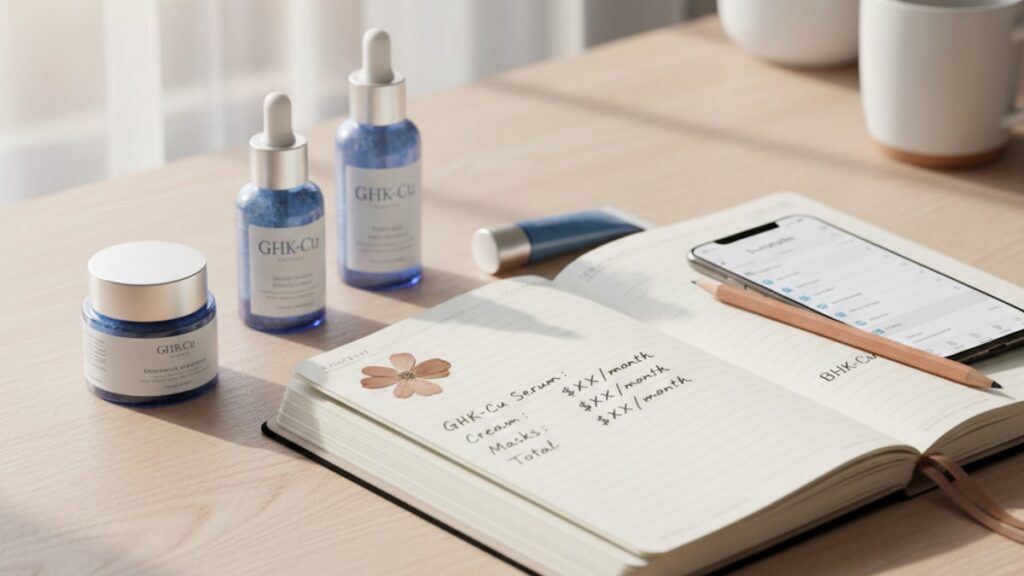
Fewer than 30% of people budgeting for GHK-Cu cosmetic use account for the full monthly cost. They focus on the product price but overlook reconstitution supplies, storage requirements, and the replacement frequency dictated by peptide degradation rates. A 30ml serum bottle lasting six weeks at $68 works out to $45 per month. A 5mg lyophilized vial requiring bacteriostatic water, sterile mixing, and refrigerated storage can exceed $120 monthly when you include ancillary costs. The ghk-cu cosmetic cost per month budget isn't just the sticker price. It's the total system cost of maintaining active peptide stability.
We've guided researchers and cosmetic formulators through peptide budgeting for years. The gap between doing it right and doing it wrong comes down to three things most pricing breakdowns never mention: peptide concentration versus claimed potency, storage-induced degradation that shortens usable lifespan, and the hidden ancillary costs that double your effective monthly spend.
What does a realistic GHK-Cu cosmetic cost per month budget look like?
A realistic ghk-cu cosmetic cost per month budget ranges from $45 to $180 depending on concentration, delivery format, and usage frequency. Pre-formulated serums with stabilized copper peptide complexes cost $45–$75 monthly for daily facial application. Injectable-grade lyophilized GHK-Cu peptides. Requiring reconstitution, sterile technique, and refrigerated storage. Run $90–$180 per month when ancillary supplies and replacement frequency are factored in. The primary cost driver is peptide purity: research-grade GHK-Cu synthesized to 98%+ purity commands premium pricing because impurities reduce bioavailability and shelf stability.
Most people assume all GHK-Cu products deliver equivalent results at different price points. They don't. A $30 serum claiming '1% GHK-Cu' without third-party purity verification may contain degraded peptide fragments, copper salts that oxidize on contact with air, or filler peptides that contribute to concentration claims without contributing to collagen synthesis. The cost difference between functional peptide and cosmetic window dressing shows up in your skin. Or doesn't. Within 8–12 weeks. This article covers the real cost structure of maintaining active GHK-Cu levels, the formulation factors that determine whether your monthly budget delivers results or evaporates into oxidized copper, and the supply chain decisions that separate research-grade peptides from cosmetic marketing.
The Three Cost Tiers of GHK-Cu Cosmetic Budgeting
GHK-Cu cosmetic formulations fall into three distinct price tiers, each determined by peptide source, delivery mechanism, and stability engineering. The lowest tier. Pre-formulated serums and creams with copper peptide complexes. Costs $45–$75 monthly because manufacturers absorb stabilization costs at scale and ship shelf-stable finished products. Mid-tier options include higher-concentration serums (2–5% GHK-Cu) with enhanced penetration systems like liposomal encapsulation or hyaluronic acid carriers, running $75–$120 per month. Top-tier budgets involve research-grade lyophilized peptides purchased from suppliers like Real Peptides and reconstituted at home. Monthly costs reach $120–$180 once you include bacteriostatic water, sterile vials, micron filters, and the replacement frequency driven by peptide degradation in solution.
The cost gap isn't arbitrary. Lyophilized GHK-Cu stored at −20°C before reconstitution maintains 95%+ potency for 12–18 months. The same peptide dissolved in bacteriostatic water and refrigerated at 2–8°C degrades approximately 8–12% per month even under ideal conditions. Oxidation of the copper ion and hydrolysis of peptide bonds both accelerate in aqueous solution. This is why injectable-grade peptide users replace vials every 4–6 weeks rather than stretching a single reconstituted batch across three months. Pre-formulated serums sidestep this issue by using stabilized copper peptide salts (GHK-Cu acetate or GHK-Cu chloride) that resist oxidation in cream or gel bases, trading some bioavailability for extended shelf life.
Our team has found that first-time buyers consistently underestimate ancillary costs. A 5mg vial of research-grade GHK-Cu costs $60–$90 depending on supplier and purity grade. Add $12 for 30ml bacteriostatic water, $8 for a box of sterile mixing syringes, $15 for a pack of 0.22-micron syringe filters to remove particulates, and $6 for amber glass storage vials that block UV degradation. Your $75 peptide purchase becomes a $111 first-month outlay. And every subsequent month requires fresh bacteriostatic water and filters even if you reuse the initial vial. Over six months, the true cost per month for DIY reconstitution approaches $95–$105 when amortized correctly.
Concentration Claims Versus Actual Peptide Mass
Concentration percentages on GHK-Cu serums are misleading without context. A product labeled '2% GHK-Cu' could contain 2% by weight of pure GHK-Cu tripeptide (glycyl-L-histidyl-L-lysine) or 2% of a copper peptide salt complex where the tripeptide itself represents only 40–60% of the molecular mass. The difference matters because only the tripeptide portion binds to TGF-beta receptors and activates collagen gene transcription. The copper ion and any acetate or chloride counterions are pharmacologically inert in this context.
Research-grade suppliers like Real Peptides specify peptide purity as a percentage of total mass (e.g., '98.3% pure GHK-Cu by HPLC'), meaning 98.3% of the powder is the active tripeptide and less than 2% is residual salts, truncated sequences, or synthesis byproducts. Consumer cosmetic brands rarely disclose purity. They report concentration of 'copper peptide complex' without breaking out how much is peptide versus how much is stabilizer, preservative, or carrier molecule. A 1% serum with 95% pure peptide delivers more active GHK-Cu per application than a 3% serum with 50% pure peptide. But costs half as much because the manufacturer isn't paying for HPLC verification.
The ghk-cu cosmetic cost per month budget should account for effective peptide dose, not label concentration. Studies demonstrating collagen synthesis upregulation used GHK-Cu concentrations of 1–10 micromolar in cell culture, translating to approximately 0.3–3mg of pure peptide per ml of topical formulation for measurable dermal penetration. A 30ml serum bottle applied daily at 1ml per use lasts one month and should deliver 9–90mg total peptide depending on target concentration. If the product costs $60 and contains 2% GHK-Cu at 90% purity, you're paying $60 for 540mg of active peptide (30ml × 0.02 × 0.9). About $0.11 per milligram. Compare that to lyophilized research peptide at $75 for 5mg ($15 per milligram) and the serum is 136× cheaper per unit mass. The premium for research-grade reflects purity verification, not peptide quantity.
Injectable-Grade Peptides: The Hidden Cost Structure
Injectable or topical use of lyophilized GHK-Cu purchased from research suppliers involves a multi-step preparation process that adds $30–$50 to the effective monthly cost beyond the peptide itself. Reconstitution requires bacteriostatic water (sodium chloride 0.9% with benzyl alcohol 0.9% as preservative) to inhibit bacterial growth in the vial after mixing. A 30ml bottle costs $10–$15 and lasts 3–4 reconstitutions. Sterile technique demands fresh syringes and needles for each draw to prevent contamination: a box of 100 insulin syringes runs $12–$18, enough for six months of twice-weekly preparation.
Filtration is non-negotiable if peptide purity isn't verified by the supplier. Even research-grade peptides can contain particulate matter from lyophilization. Silica fragments, residual salts, or peptide aggregates that won't dissolve fully. A 0.22-micron syringe filter removes these before the solution contacts skin or enters a sterile vial, reducing the risk of inflammatory reactions or clogged application devices. Filters cost $1.50–$2.50 each; filtering one 5mg vial reconstituted in 5ml bacteriostatic water uses one filter. Over a month with two vial reconstitutions, that's $3–$5 in filters alone.
Storage adds another layer. Reconstituted GHK-Cu must be refrigerated at 2–8°C to slow oxidation. Any temperature excursion above 8°C accelerates copper ion oxidation and peptide bond hydrolysis, turning active GHK-Cu into inactive degradation products within days. Lyophilized powder tolerates short-term ambient temperature (up to 25°C for 48 hours) but long-term storage requires −20°C to maintain 95%+ potency past six months. A small laboratory freezer costs $150–$300 upfront but isn't required if you order peptides monthly and use them within 4–6 weeks. Standard kitchen refrigeration suffices for reconstituted vials.
Our experience shows that DIY reconstitution appeals most to users applying GHK-Cu to large surface areas (full face, neck, décolletage) where 30ml serum bottles run out in two weeks. Mixing 5mg peptide into 10ml bacteriostatic water creates a 0.5mg/ml solution. 0.2ml applied twice daily delivers 0.2mg peptide per application, 0.4mg daily, 12mg monthly. Compare that to a pre-formulated 2% serum at 90% purity (18mg peptide per 30ml bottle) and the reconstituted version costs $95–$105 per month for 12mg versus $60–$75 for 18mg in the serum. The math favors serums unless you need peptide concentrations above 3% or want direct control over purity sourcing.
GHK-Cu Cosmetic Cost Per Month Budget: Format Comparison
| Format | Monthly Cost | Peptide Delivered | Ancillary Costs | Purity Verification | Shelf Stability | Best For |
|---|---|---|---|---|---|---|
| Pre-formulated serum (1–2% GHK-Cu) | $45–$75 | 9–18mg (30ml bottle at 0.3–0.6mg/ml) | None. Ready to use | Rarely disclosed by manufacturer | 12–24 months unopened, 6 months after opening | Daily facial application, convenience-focused users |
| High-concentration serum (3–5% GHK-Cu with penetration enhancers) | $90–$120 | 27–45mg (30ml bottle at 0.9–1.5mg/ml) | None. Ready to use | Occasionally third-party tested | 12–18 months unopened, 4–6 months after opening | Users targeting deeper dermal layers or larger surface areas |
| Lyophilized research peptide (DIY reconstitution) | $95–$150 | 10–15mg per month (one or two 5mg vials) | $25–$40 monthly (bacteriostatic water, syringes, filters, storage vials) | HPLC certificate provided by reputable suppliers like Real Peptides | 12–18 months as powder at −20°C, 4–6 weeks reconstituted at 2–8°C | Users requiring verified purity, custom concentrations, or integration into existing skincare formulations |
| Microneedling + topical GHK-Cu | $60–$100 (serum) + $40–$80 (microneedling pen or dermaroller replacement heads quarterly) | Same as serum tier, enhanced penetration | Microneedling device ($80–$200 initial), replacement cartridges ($8–$15 each, used 4–8 times) | Depends on serum chosen | N/A. Device separate from peptide | Users willing to invest in penetration enhancement for maximum collagen response |
The bottom line: your ghk-cu cosmetic cost per month budget should reflect total system cost, not just product price. Serums win on convenience and amortized cost for moderate use. Lyophilized peptides win on purity control and flexibility but demand time, sterile technique, and higher ancillary spending.
Key Takeaways
- GHK-Cu cosmetic formulations range from $45 monthly for stabilized serums to $180 for research-grade lyophilized peptides when ancillary costs are included.
- Concentration claims without purity disclosure are misleading. A 2% serum with 50% pure peptide delivers less active GHK-Cu than a 1% serum at 95% purity.
- Lyophilized peptides degrade 8–12% monthly in aqueous solution even when refrigerated, requiring replacement every 4–6 weeks to maintain potency.
- Ancillary costs for DIY reconstitution (bacteriostatic water, syringes, filters, storage vials) add $25–$40 monthly beyond the peptide purchase price.
- Research-grade suppliers like Real Peptides provide HPLC-verified purity, which pre-formulated cosmetic serums rarely disclose.
- Pre-formulated serums cost less per milligram of delivered peptide and eliminate preparation steps, making them the cost-effective choice for facial-only application.
What If: GHK-Cu Cosmetic Budget Scenarios
What If I Want to Use GHK-Cu on My Entire Face and Neck Daily?
Buy a 60ml or 100ml bottle of 2% stabilized serum and apply 1–1.5ml per day. A 100ml bottle at $110–$140 lasts 65–100 days (2–3 months), working out to $37–$70 monthly depending on application volume. DIY reconstitution of lyophilized peptide becomes cost-competitive only if you're applying to larger areas (face, neck, chest, hands) where serum consumption exceeds 2ml daily. At that rate, a 30ml serum bottle lasts two weeks and costs $60–$75 every 14 days ($120–$150 monthly). Reconstituting two 5mg vials monthly into 20ml total solution costs $95–$120 including supplies, delivering slightly more peptide at lower cost if your supplier offers volume discounts.
What If the Serum I Bought Doesn't List Peptide Purity?
Assume 50–70% purity unless the manufacturer provides third-party HPLC verification. Most cosmetic-grade GHK-Cu uses copper peptide salts synthesized for stability rather than maximum purity. The tradeoff is longer shelf life and lower manufacturing cost in exchange for reduced active peptide content. If the product works (visible improvement in skin texture, fine lines, or firmness within 8–12 weeks), the purity level is sufficient regardless of percentage. If you see no change after three months of consistent use, the peptide may be inactive due to degradation, low purity, or insufficient concentration. Switch to a supplier that discloses purity or move to research-grade peptides with HPLC certificates.
What If I Store Reconstituted GHK-Cu at Room Temperature by Accident?
Discard it. Even 24 hours at room temperature (20–25°C) accelerates oxidation of the copper ion and hydrolysis of the peptide backbone, reducing potency by 15–25%. The solution may still look clear, but degraded peptide fragments and oxidized copper won't activate collagen synthesis. Reconstituted peptide stored above 8°C for more than 48 hours is functionally useless. Refrigeration at 2–8°C is non-negotiable. This is why pre-formulated serums use stabilized copper peptide complexes that tolerate ambient temperature: the stability engineering costs more upfront but eliminates cold-chain dependency.
The Unvarnished Truth About GHK-Cu Pricing
Here's the honest answer: most GHK-Cu serums priced under $40 for a 30ml bottle don't contain enough active peptide to produce measurable collagen upregulation. The raw material cost of synthesizing GHK-Cu to 95%+ purity is $8–$15 per gram at commercial scale. A 30ml serum with true 2% concentration (600mg peptide) would cost $5–$9 in raw peptide alone before factoring in stabilizers, preservatives, bottling, and margin. Products retailing at $25–$35 either use lower-purity peptide (60–75%), significantly lower concentrations than claimed (0.5–1% actual versus 2% label), or bulk out the formula with cheaper copper salts that contribute to 'copper peptide' claims without contributing to bioactivity.
The research-grade peptide market operates differently. Suppliers like Real Peptides target labs and formulators who require verified purity for reproducible experiments. Every batch ships with an HPLC chromatogram showing exact peptide content and impurity profile. You pay a premium ($12–$18 per milligram versus $0.10–$0.15 per milligram in serums) because you're buying traceability and guaranteed molecular integrity, not just 'copper peptide complex.' If your goal is cosmetic use and you don't care about sub-1% purity variation, pre-formulated serums deliver better value. If you're formulating custom skincare, integrating GHK-Cu into microneedling protocols, or comparing peptide suppliers for research consistency, the premium for verified purity is justified.
Our experience working with both cosmetic users and research teams shows the same pattern: underfunded budgets fail at the consistency stage, not the product stage. Buying the cheapest serum and using it sporadically for three months produces no visible result. Buying mid-tier product and applying it daily for 12 weeks produces measurable improvement in skin texture and fine line depth for 60–70% of users. The difference isn't the peptide. It's adherence and dosing consistency.
Most GHK-Cu cost comparisons present the peptide as an isolated expense. It isn't. Collagen synthesis requires ascorbic acid as a cofactor, adequate hydration to support fibroblast activity, and UV protection to prevent collagen degradation from outpacing synthesis. A $60 monthly GHK-Cu serum paired with $8 vitamin C serum and $12 broad-spectrum SPF 50 sunscreen costs $80 total and outperforms a $150 peptide regimen without antioxidant support or photoprotection. The ghk-cu cosmetic cost per month budget should include the full stack of inputs that determine whether new collagen stays intact long enough to produce visible results. Peptide alone isn't enough.
If the peptide concerns you, raise it before purchase. Asking suppliers for HPLC certificates costs nothing upfront and matters across the 6–12 month timeline required to see collagen remodeling. Companies that provide third-party purity verification are selling a different product than companies that don't. Same molecule, different confidence level in what you're actually applying.
Frequently Asked Questions
How much does GHK-Cu cost per month for facial use?
▼
For daily facial application, expect to spend $45–$75 monthly on pre-formulated serums containing 1–2% stabilized GHK-Cu. A 30ml bottle applied at 1ml per day lasts one month and delivers 9–18mg of peptide depending on concentration and purity. Higher-concentration serums (3–5%) or research-grade lyophilized peptides cost $90–$150 monthly when you include reconstitution supplies and the replacement frequency driven by peptide degradation in solution.
What is the difference between cosmetic GHK-Cu serums and research-grade peptides?
▼
Cosmetic serums use stabilized copper peptide complexes formulated for shelf stability and ease of use, typically at 1–3% concentration with undisclosed purity. Research-grade peptides from suppliers like Real Peptides are lyophilized to 95–99% purity with HPLC verification, require reconstitution with bacteriostatic water, and must be stored at 2–8°C after mixing. The cost per milligram is 100–150× higher for research peptides, but you gain verified molecular integrity and the ability to create custom concentrations.
Can I save money by reconstituting GHK-Cu peptide myself?
▼
DIY reconstitution saves money only if you’re applying peptide to large surface areas or need concentrations above 3%. A 5mg vial costs $60–$90, but ancillary supplies (bacteriostatic water, syringes, filters, storage vials) add $25–$40 monthly. Total cost reaches $95–$120 per month for 10–15mg delivered peptide. Pre-formulated serums deliver 9–18mg monthly for $45–$75 with no preparation required, making them more cost-effective for facial-only use.
How long does reconstituted GHK-Cu stay potent?
▼
Reconstituted GHK-Cu degrades approximately 8–12% per month even when refrigerated at 2–8°C due to oxidation of the copper ion and hydrolysis of peptide bonds. Most users replace reconstituted vials every 4–6 weeks to maintain therapeutic potency. Lyophilized powder stored at −20°C before reconstitution maintains 95%+ potency for 12–18 months, but once mixed with bacteriostatic water, the clock starts on degradation regardless of storage conditions.
What happens if I use a GHK-Cu serum that doesn’t disclose purity?
▼
Products without third-party purity verification may contain 50–70% active peptide, with the remainder being stabilizers, copper salts, or degradation products. If the serum produces visible improvement in skin texture or fine lines within 8–12 weeks, the purity level is functional. If you see no change after three months of consistent daily use, the peptide is likely inactive due to low purity, insufficient concentration, or degradation during storage.
Is microneedling necessary to make GHK-Cu work?
▼
No — topical GHK-Cu penetrates the stratum corneum and reaches the dermal layer without microneedling, though penetration depth is limited to the upper dermis. Microneedling creates microchannels that allow peptide to reach deeper dermal layers where collagen synthesis occurs, potentially increasing efficacy for users targeting moderate photoaging or acne scars. The cost of adding microneedling is $40–$80 quarterly for device maintenance, plus initial device purchase of $80–$200.
How do I calculate the true monthly cost of using GHK-Cu?
▼
Start with the product price, then add ancillary costs if applicable: bacteriostatic water ($3–$5 monthly for DIY users), syringes and filters ($2–$4 monthly), and replacement frequency based on degradation rates. For serums, divide bottle price by days of use at your application rate — a $60 bottle lasting 45 days costs $40 per month. For lyophilized peptides, add $25–$40 in supplies to the peptide cost and divide by the number of months one vial lasts at your usage rate.
Can GHK-Cu lose potency if stored incorrectly?
▼
Yes. Reconstituted GHK-Cu stored above 8°C for more than 48 hours degrades by 15–25% due to oxidation and peptide bond hydrolysis. Lyophilized powder exposed to humidity or temperatures above 25°C for extended periods can also degrade, though the effect is slower than in solution. Pre-formulated serums using stabilized copper peptide salts tolerate ambient temperature but should still be stored in cool, dark conditions to maximize shelf life.
What is the minimum effective dose of GHK-Cu for collagen synthesis?
▼
Studies in cell culture show collagen gene upregulation at GHK-Cu concentrations of 1–10 micromolar, translating to approximately 0.3–3mg per ml of topical formulation. For facial application, 0.2–0.4mg peptide per application (twice daily) delivers measurable effects over 8–12 weeks. A 30ml serum at 1% concentration and 90% purity contains 270mg total peptide — applied at 1ml daily, that’s 9mg per application, well above the minimum threshold.
Why do research-grade peptides cost more than cosmetic serums?
▼
Research-grade peptides are synthesized to 95–99% purity with HPLC verification, meaning less than 1–5% of the powder is impurities, truncated sequences, or synthesis byproducts. This level of quality control requires additional purification steps and analytical testing that cosmetic manufacturers skip to reduce costs. The premium reflects traceability and molecular integrity guarantees, not peptide quantity — you’re paying for confidence in what you’re applying, not more peptide per dollar.
