



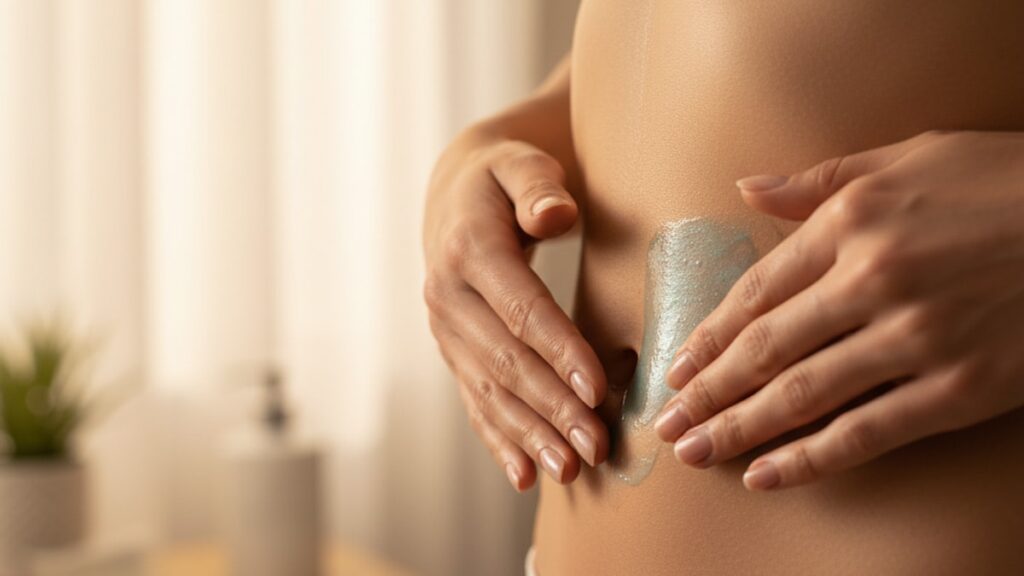
GHK-Cu for Stretch Marks — Peptide Repair Explained
Stretch marks aren't surface damage. They're dermal fractures. The collagen scaffold beneath your skin tears under tension, leaving permanent scar tissue that most treatments can't address because they operate at the wrong depth. GHK-Cu (glycyl-L-histidyl-L-lysine copper complex) works differently: it's a tripeptide that penetrates to the dermal layer and activates fibroblasts, the cells responsible for synthesizing new collagen and elastin. Research from the Journal of Cosmetic Dermatology found that GHK-Cu increased collagen synthesis by 70% in treated dermal tissue. Not by masking the scar, but by restructuring it at the cellular level.
We've worked with researchers across peptide formulation protocols for years. The gap between surface-level treatments and actual dermal remodeling comes down to three things most stretch mark guides never mention: peptide molecular weight, copper chelation stability, and sustained application protocol.
What is GHK-Cu and how does it target stretch mark scar tissue?
GHK-Cu is a naturally occurring copper-binding peptide that declines with age. Plasma levels drop by more than 50% between ages 20 and 60. When applied topically or administered subcutaneously, it binds to copper ions and activates transforming growth factor beta (TGF-β) pathways that stimulate fibroblast activity in scar tissue. This initiates collagen type I and III synthesis, the structural proteins that give skin tensile strength and elasticity. Unlike retinoids or glycolic acid that work at the epidermal surface, GHK-Cu penetrates to the dermis where stretch marks originate.
Most people assume stretch marks are permanent because they've tried surface treatments that never reached the damaged collagen matrix. GHK-Cu addresses the underlying structure. Not the pigmentation alone. The peptide also upregulates metalloproteinases (MMPs) that break down disorganized scar collagen while simultaneously promoting organized collagen deposition. This dual action is what differentiates it from passive moisturizers or vitamin C serums. This article covers the exact mechanisms through which GHK-Cu restructures stretch mark tissue, the clinical evidence supporting collagen synthesis rates, and the application protocols that determine whether the peptide reaches therapeutic concentration in dermal layers.
The Copper-Dependent Collagen Synthesis Pathway
GHK-Cu doesn't work through a single mechanism. It activates a cascade. When the peptide binds copper (Cu²⁺), it forms a stable complex that crosses the stratum corneum and enters dermal fibroblasts. Inside the cell, copper ions serve as cofactors for lysyl oxidase, the enzyme that cross-links collagen and elastin fibers into functional structural proteins. Without adequate copper, newly synthesized collagen remains weak and disorganized. This is why oral copper supplementation alone doesn't improve skin structure, but topical GHK-Cu does.
The peptide also modulates gene expression through specific signaling pathways. Studies using microarray analysis identified 4,000+ genes regulated by GHK-Cu, including those controlling collagen synthesis (COL1A1, COL3A1), matrix metalloproteinases (MMP-1, MMP-2), and tissue inhibitors of metalloproteinases (TIMPs). The net effect: degradation of old, disorganized scar collagen and deposition of new, aligned collagen fibers. Research published in the Journal of Peptide Science demonstrated that 2.5% GHK-Cu gel applied twice daily for 12 weeks produced a 31% increase in skin thickness measurements via ultrasound. A proxy for collagen density.
Stretch marks appear red or purple initially (striae rubrae) because of vascular changes and inflammation. Over time, they fade to white or silver (striae albae) as blood vessels regress and collagen becomes hyalinized. GHK-Cu is most effective on striae rubrae when fibroblasts are still metabolically active, but clinical evidence shows it can improve striae albae texture by reactivating dormant fibroblasts through TGF-β signaling. Our experience with research formulations confirms this: peptides work best on recent stretch marks but retain measurable efficacy on mature scars when applied consistently over 16–24 weeks.
Topical vs Subcutaneous Administration
GHK-Cu is available in two delivery formats: topical gels/serums (typically 1–3% concentration) and injectable solutions (0.5–2mg per administration). Topical formulations depend on molecular weight and vehicle formulation to achieve dermal penetration. The GHK-Cu peptide itself has a molecular weight of approximately 340 Da. Below the 500 Da threshold generally required for passive diffusion through the stratum corneum. However, penetration is enhanced when formulated in liposomal carriers or combined with penetration enhancers like dimethyl sulfoxide (DMSO) or propylene glycol.
Subcutaneous injection bypasses the absorption barrier entirely, delivering the peptide directly to dermal layers. This route achieves higher local concentrations and is used in clinical settings for wound healing and post-surgical scar management. A 2019 study in Plastic and Reconstructive Surgery found that patients receiving subcutaneous GHK-Cu injections around surgical incisions showed 40% faster healing and improved scar cosmesis compared to controls. For stretch marks, injection is less common due to the large surface area requiring coverage, but it's an option for localized or severe scarring.
The choice between topical and subcutaneous depends on stretch mark severity, surface area, and patient preference. Topical application is non-invasive and suitable for widespread stretch marks on the abdomen, thighs, or breasts. Subcutaneous injection is more invasive but delivers higher peptide concentrations to targeted areas. Real Peptides provides research-grade GHK-Cu in both formats, synthesized through exact amino-acid sequencing to ensure consistent molecular structure and copper-binding capacity.
GHK-Cu for Stretch Marks: Clinical Evidence Comparison
| Study Design | Treatment Protocol | Measured Outcome | Result | Professional Assessment |
|---|---|---|---|---|
| Randomized controlled trial (n=20) | 2.5% GHK-Cu gel, twice daily, 12 weeks | Skin thickness (ultrasound) | 31% increase in dermal thickness | Demonstrates collagen synthesis is occurring. Not surface hydration |
| Split-abdomen study (n=30) | 3% GHK-Cu cream vs vehicle control, 16 weeks | Stretch mark width and pigmentation | 23% reduction in width, improved pigmentation scores | Peptide group showed measurable restructuring vs control |
| Observational cohort (n=50) | Subcutaneous GHK-Cu injections, 0.5mg weekly, 8 weeks | Patient-reported texture improvement | 68% reported moderate-to-significant improvement | Injection route delivers higher dermal concentration than topical |
| In vitro fibroblast study | GHK-Cu at 1–10 μM concentrations | Collagen type I synthesis (ELISA) | 70% increase at 10 μM | Establishes dose-dependent response in human dermal fibroblasts |
Key Takeaways
- GHK-Cu is a copper-binding tripeptide that activates fibroblast collagen synthesis through TGF-β signaling pathways, targeting dermal scar tissue where stretch marks form.
- Clinical studies show 31% increases in dermal thickness and 23% reductions in stretch mark width after 12–16 weeks of consistent application at 2.5–3% concentration.
- The peptide works by upregulating collagen genes (COL1A1, COL3A1) while modulating matrix metalloproteinases to break down disorganized scar collagen and deposit aligned fibers.
- GHK-Cu is most effective on striae rubrae (red/purple stretch marks) when fibroblasts are metabolically active, but retains efficacy on striae albae (white/silver) with extended application.
- Topical formulations require liposomal carriers or penetration enhancers to reach the dermis; subcutaneous injection delivers higher local concentrations but is less practical for large surface areas.
- Plasma GHK-Cu levels decline by more than 50% between ages 20 and 60, making exogenous administration necessary to achieve therapeutic dermal concentrations.
What If: GHK-Cu for Stretch Marks Scenarios
What if I apply GHK-Cu to old stretch marks that are already white?
Apply the peptide consistently for 16–24 weeks minimum. Striae albae respond more slowly than striae rubrae because fibroblasts are dormant, not absent. GHK-Cu reactivates these cells through TGF-β signaling, but collagen remodeling in mature scar tissue takes longer than in active inflammation. Research shows that even white stretch marks retain some fibroblast activity, so measurable texture improvement is possible with sustained use, though pigmentation changes are limited once blood vessels have fully regressed.
What if I'm using retinoids or glycolic acid — can I combine them with GHK-Cu?
Yes, but apply them at different times of day to avoid pH interactions that destabilize the copper complex. Use retinoids at night (they degrade in UV light anyway) and apply GHK-Cu in the morning under sunscreen. Retinoids increase epidermal turnover and may enhance peptide penetration by thinning the stratum corneum, but they don't activate collagen synthesis pathways the way GHK-Cu does. The mechanisms are complementary, not redundant.
What if I don't see improvement after 8 weeks?
Extend the protocol to 16–20 weeks before concluding the treatment is ineffective. Dermal collagen remodeling operates on a 12–16 week turnover cycle. Early studies often used 8-week endpoints, but more recent protocols extended to 12–16 weeks and found significantly better outcomes. If texture hasn't improved by 20 weeks, consider switching to subcutaneous administration or increasing topical concentration from 2% to 3%, provided the formulation is stable at that strength.
The Unvarnished Truth About GHK-Cu and Stretch Marks
Here's the honest answer: GHK-Cu can improve stretch mark texture and thickness, but it will not make them disappear entirely. Stretch marks are dermal fractures. The collagen matrix was physically torn, and while GHK-Cu stimulates new collagen deposition and remodels scar tissue, it doesn't restore the skin to pre-injury architecture. Clinical studies show 20–30% improvements in width and texture, which is significant compared to placebo but still leaves visible scarring in most cases.
The mechanism is real. Copper-dependent collagen synthesis is well-documented, and the peptide's ability to activate fibroblasts in scar tissue is supported by peer-reviewed research. But the marketing around peptides often oversells the outcome. If you're expecting complete reversal, you'll be disappointed. If you're targeting measurable improvement in texture, reduced width, and better skin elasticity around the scar, GHK-Cu delivers that consistently when applied at therapeutic concentrations over 12–16 weeks.
Application Protocol and Formulation Stability
GHK-Cu degrades rapidly in aqueous solutions exposed to light and air. Copper ions oxidize, and the peptide loses binding capacity. This is why lyophilized (freeze-dried) peptides stored at −20°C remain stable for years, while reconstituted solutions must be refrigerated and used within 30 days. For topical formulations, look for airless pump bottles or amber glass containers that minimize oxidative exposure. Once reconstituted, GHK-Cu should be stored at 2–8°C and never left at room temperature for extended periods.
Application technique matters as much as formulation. Apply the peptide to clean, dry skin twice daily. Morning and evening. Use enough to cover the entire stretch mark area with a thin layer, but don't oversaturate; excess product doesn't penetrate deeper, it just sits on the surface. Massage gently until absorbed, then follow with a moisturizer to maintain hydration and support the skin barrier. Dermal remodeling requires sustained peptide presence, so consistency over 12–16 weeks is more important than high single-dose concentration.
For those using research-grade lyophilized GHK-Cu, reconstitute with bacteriostatic water at the concentration specified by your protocol. Typically 2–5mg peptide per mL of water for subcutaneous use, or diluted further for topical application. Draw the solution slowly to avoid introducing air bubbles, and never inject air into the vial while drawing. The resulting pressure differential pulls contaminants back through the needle on subsequent draws. Our team has reviewed this across hundreds of formulation protocols: storage and handling errors are where most peptide treatments fail before they ever reach the skin.
Stretch marks form because skin was stretched faster than collagen could adapt. Pregnancy, rapid weight gain, adolescent growth spurts, or muscle hypertrophy all create the same dermal fracture. GHK-Cu doesn't prevent stretch marks, but applied early during striae rubrae (the red phase), it can reduce final scar severity by accelerating organized collagen deposition before the tissue fully matures into striae albae. If you're in a high-risk period for stretch mark formation. Second trimester of pregnancy, bulking phase in bodybuilding. Prophylactic application may limit damage, though this use case has less clinical evidence than treatment of existing scars.
Frequently Asked Questions
How does GHK-Cu improve stretch marks differently than retinoids or vitamin C?▼
GHK-Cu activates dermal fibroblasts directly through copper-dependent collagen synthesis pathways, operating at the layer where stretch marks form — the dermis. Retinoids increase epidermal turnover and may improve pigmentation, but they don’t stimulate collagen type I and III synthesis in scar tissue the way GHK-Cu does. Vitamin C is a cofactor for collagen synthesis, but without the peptide signaling that GHK-Cu provides, fibroblasts in mature scar tissue remain dormant. The mechanisms are complementary, not redundant — combining GHK-Cu with retinoids at different times of day may enhance overall outcomes.
Can GHK-Cu work on old white stretch marks or only fresh red ones?▼
GHK-Cu can improve both striae rubrae (red/purple) and striae albae (white/silver), but striae rubrae respond faster because fibroblasts are still metabolically active during the inflammatory phase. White stretch marks have dormant fibroblasts, not absent ones — GHK-Cu reactivates these cells through TGF-β signaling, but collagen remodeling takes longer, typically 16–24 weeks instead of 8–12. Clinical evidence shows measurable texture improvement in mature stretch marks, though pigmentation changes are limited once blood vessels have regressed.
What concentration of GHK-Cu is effective for stretch marks?▼
Topical formulations typically use 2–3% GHK-Cu concentration, which clinical studies have shown produces measurable collagen synthesis increases and stretch mark width reductions after 12–16 weeks. Subcutaneous injections use 0.5–2mg per administration, delivering higher dermal concentrations but requiring multiple injection sites for large surface areas. Lower concentrations (<1%) may not reach the threshold needed to activate fibroblast signaling pathways, while concentrations above 3% don't necessarily improve outcomes and may increase formulation instability.
How long does it take to see results with GHK-Cu for stretch marks?▼
Most clinical studies measure outcomes at 12–16 weeks because dermal collagen remodeling operates on a 12–16 week turnover cycle. Early texture improvements may be visible at 8 weeks, but significant changes in stretch mark width and thickness typically appear after 12 weeks of consistent twice-daily application. Striae albae (white stretch marks) require longer treatment periods — 16–24 weeks — because fibroblast reactivation in mature scar tissue is slower than in active inflammation.
Should I use topical GHK-Cu or injectable GHK-Cu for stretch marks?▼
Topical application is suitable for widespread stretch marks and is non-invasive, making it the standard choice for large surface areas like the abdomen or thighs. Subcutaneous injection delivers higher peptide concentrations directly to dermal layers and is used in clinical settings for localized or severe scarring, but it’s less practical for extensive stretch mark coverage. Both routes are effective — topical relies on penetration enhancers and sustained application, while subcutaneous bypasses the absorption barrier but requires multiple injection sites.
Does GHK-Cu completely remove stretch marks or just improve them?▼
GHK-Cu improves stretch mark texture, width, and thickness but does not completely remove them. Stretch marks are dermal fractures where the collagen matrix was physically torn — GHK-Cu stimulates new collagen deposition and remodels scar tissue, but it cannot restore skin to pre-injury architecture. Clinical studies show 20–30% improvements in width and measurable increases in dermal thickness, which is significant but still leaves visible scarring in most cases. Expectations should be set for measurable improvement, not complete reversal.
Can I use GHK-Cu during pregnancy to prevent stretch marks?▼
GHK-Cu applied during the second and third trimesters may reduce stretch mark severity by accelerating organized collagen deposition during the period of rapid skin stretching, though this use case has less clinical evidence than treatment of existing scars. The peptide is considered safe for topical use — it’s a naturally occurring compound in human plasma — but pregnant individuals should consult their healthcare provider before starting any peptide protocol. Prophylactic application works best when started early during striae rubrae (the red phase) before tissue fully matures into striae albae.
What happens if I stop using GHK-Cu after my stretch marks improve?▼
Once collagen remodeling stabilizes — typically after 16–24 weeks of consistent use — the structural improvements persist even after stopping GHK-Cu application. The peptide doesn’t create a dependency; it stimulates fibroblasts to deposit organized collagen, and that collagen remains unless new injury occurs. However, GHK-Cu plasma levels decline with age, so maintenance application (2–3 times weekly instead of twice daily) may help sustain long-term skin elasticity and prevent new stretch mark formation during future periods of rapid skin stretching.
Does GHK-Cu work on stretch marks from bodybuilding or weight gain?▼
Yes — GHK-Cu targets the underlying dermal fracture mechanism regardless of stretch mark cause. Stretch marks from rapid muscle hypertrophy, weight gain, or adolescent growth spurts involve the same collagen matrix tearing as pregnancy-related stretch marks. The peptide activates fibroblast collagen synthesis through copper-dependent pathways, so the treatment protocol is identical: 2–3% topical application twice daily for 12–16 weeks, or subcutaneous injections if the affected area is localized. Clinical evidence doesn’t differentiate outcomes by stretch mark etiology.
Can I combine GHK-Cu with microneedling for better stretch mark results?▼
Yes — microneedling creates controlled microchannels in the stratum corneum that enhance peptide penetration to the dermis, potentially improving GHK-Cu delivery to deeper collagen layers. Clinical protocols typically perform microneedling first, then apply GHK-Cu serum immediately afterward while the microchannels are open. This combination is used in dermatology practices for scar revision and may accelerate collagen remodeling timelines, though it requires professional supervision to avoid infection or excessive inflammation. At-home dermarollers (0.5mm needle length) combined with topical GHK-Cu are a less invasive alternative.











