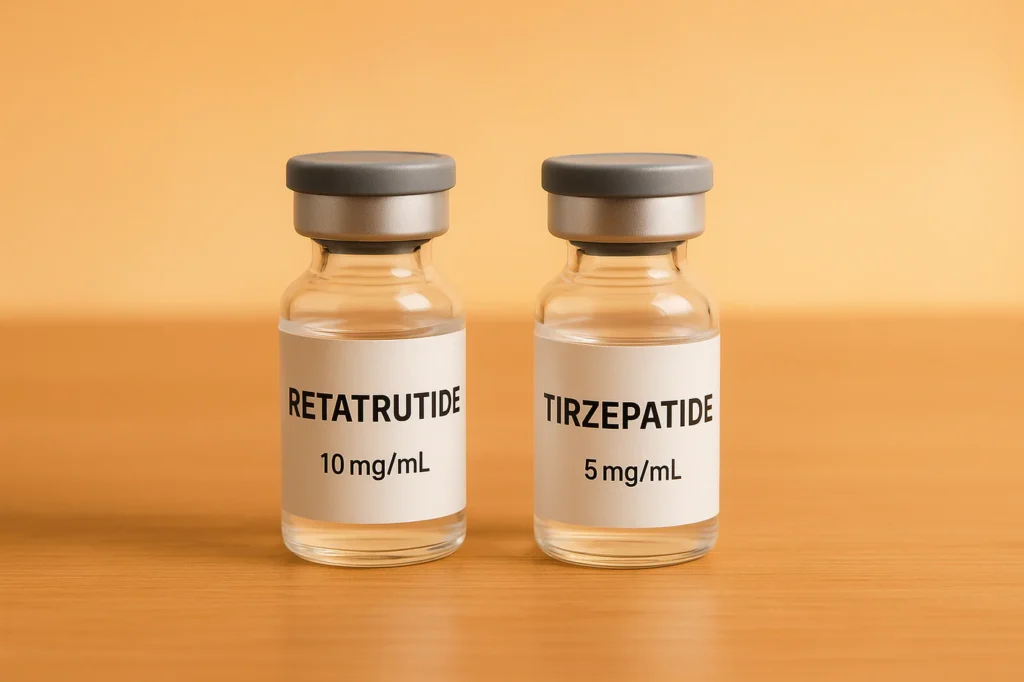
How long takes Retatrutide to kick after Tirzepatide?
Table of Contents
How long takes Retatrutide to kick after Tirzepatide?
How long takes Retatrutide to kick after Tirzepatide?
Switching from tirzepatide to retatrutide involves a gradual adjustment period due to differences in their mechanisms. Tirzepatide targets GIP and GLP-1 receptors, while retatrutide activates GIP, GLP-1, and glucagon receptors, creating a broader metabolic impact. The onset of retatrutide’s effects typically depends on several factors:
Timing: The transition period varies due to the lingering effects of tirzepatide and the time required for retatrutide to fully activate its triple-receptor mechanism.
Washout Period: Researchers often consider a washout period to minimize overlapping effects.
Individual Response: Metabolic conditions, receptor sensitivity, and dosage affect how quickly retatrutide takes effect.
Efficacy: Both drugs are dose-dependent, with retatrutide showing potential for enhanced weight loss and blood sugar regulation over time.
Careful planning and monitoring are essential during this transition to ensure safety and effectiveness. Side effects like nausea and injection site reactions may occur but generally subside with continued use. Further research is needed to refine transition protocols and optimize outcomes.
Tirzepatide vs Retatrutide: Should You Switch Yet?
1. Retatrutide
Retatrutide is an experimental compound gaining attention for its potential in managing metabolic conditions. Researchers exploring advancements in metabolic therapies are closely examining its unique properties.
Mechanism of Action
Retatrutide is designed to target multiple metabolic receptors, setting it apart from treatments with a dual-action mechanism. Early studies suggest it may trigger a broader range of metabolic responses, though the exact pathways remain under investigation. This multi-receptor activation also explains the differing onset of effects when transitioning from tirzepatide.
Onset of Action
Switching from tirzepatide to retatrutide involves distinct timing challenges. As tirzepatide’s effects diminish, retatrutide begins to take hold, with its full impact developing gradually. During this period, there may be some overlap in their activity, making precise management critical to ensure a smooth transition.
Efficacy (Weight Loss and Metabolic Changes)
Research indicates that retatrutide leads to dose-dependent improvements in weight loss and blood sugar regulation. However, these effects vary between individuals and depend on the dosage, emphasizing the need for ongoing studies to fully understand its metabolic impact and optimize its use.
Adverse Effects
Common side effects include nausea, vomiting, and mild injection site reactions. These symptoms generally improve with continued use. Injection site issues, while noted, are typically minor and resolve over time.
For researchers needing high-quality retatrutide for their studies, Real Peptides provides detailed documentation and dependable sourcing through their retatrutide product page, ensuring smooth integration into research efforts.
2. Tirzepatide
Tirzepatide is a dual-action medication targeting both GIP and GLP-1 receptors, making it a key player in metabolic research. By stimulating these receptors, it helps regulate blood sugar levels and manage appetite. This dual approach is particularly relevant when considering a transition to newer medications like retatrutide. Understanding tirzepatide’s effects is crucial for determining the best timing for such a switch.
Mechanism of Action
Tirzepatide improves metabolic function by activating both GLP-1 and GIP receptors. When the medication is discontinued, its influence on these pathways gradually diminishes, leading to a metabolic shift. This change is a critical factor in deciding the ideal transition period to retatrutide, as it ensures a smooth shift without overlapping or diminished effects.
Onset of Action
Patients typically begin noticing tirzepatide’s effects within a few weeks, with its full impact becoming evident over several months. Even after stopping the medication, some residual activity may linger. This makes it essential for researchers to carefully plan the transition period to avoid any overlap in the effects of tirzepatide and retatrutide.
Efficacy: Weight Loss and Metabolic Changes
Tirzepatide has shown dose-dependent benefits in managing weight and controlling blood sugar. These metabolic improvements provide a foundation that can influence how patients respond to retatrutide. However, individual outcomes may vary, highlighting the importance of personalized treatment plans during the transition.
Adverse Effects
Common side effects of tirzepatide include gastrointestinal issues like nausea, diarrhea, and reduced appetite. These symptoms usually subside as the body adjusts to the medication. However, they can play a role in the transition to retatrutide, as some patients may notice changes in their side effect patterns during the switch.
For researchers conducting comparative studies, Real Peptides offers high-quality tirzepatide with detailed product documentation and quality assurance. Their tirzepatide product page provides valuable information for ensuring reliable study results. Understanding tirzepatide’s action timeline is essential for determining the optimal moment to introduce retatrutide.
sbb-itb-9529e2d
Benefits and Drawbacks
When evaluating retatrutide and tirzepatide for clinical study design, it’s essential to weigh their advantages and disadvantages. Both medications are associated with common gastrointestinal side effects, which should be considered during patient monitoring.
However, their clinical profiles differ significantly. Tirzepatide has an established track record, though it comes with notable warnings. These include a boxed warning for thyroid tumors, as well as potential risks of pancreatitis, gallbladder disease, and acute kidney injury caused by dehydration. On the other hand, retatrutide is a newer entrant, and its long-term safety data remain limited, making its risk profile less defined.
For researchers, Real Peptides offers comprehensive documentation on both drugs, enabling detailed comparative studies. This information is invaluable for designing protocols that optimize transitions between tirzepatide and retatrutide.
Conclusion
Shifting from tirzepatide to retatrutide requires careful planning to maintain effectiveness while prioritizing safety. Since both drugs have unique timelines and pharmacokinetics, transition strategies must be customized to account for these differences. Researchers are working to create protocols that align with the specific characteristics of each compound. Close monitoring throughout the process is critical – not just for patient safety, but also to collect data that can shape future clinical guidelines. As highlighted earlier, this transition is a complex process, and continued research will play a key role in refining evidence-based practices.