


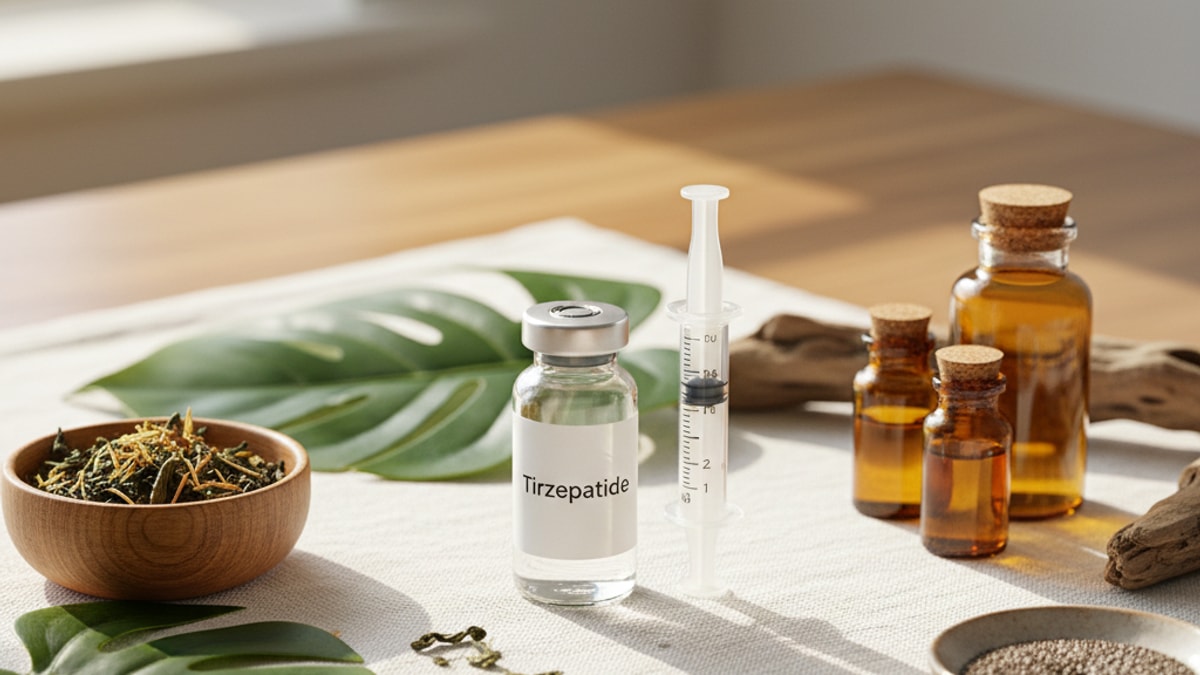
How Many Doses Per Vial of Tirzepatide? (Storage & Mixing)
A standard 5mg lyophilised tirzepatide vial doesn't come pre-portioned into doses—the number of injections you extract depends entirely on two variables: your prescribed dose strength and the volume of bacteriostatic water you use during reconstitution. Mix 5mg of tirzepatide powder with 2mL of sterile water and you create a solution where each 0.2mL contains 0.5mg—giving you ten doses if you're prescribed 0.5mg weekly. But use only 1mL of water for that same 5mg vial and the concentration doubles—now each 0.2mL delivers 1mg, cutting your dose count to five. The math is simple, but the consequences of getting it wrong—underdosing, wasting expensive medication, or contaminating the vial through repeated draws—are anything but.
We've guided hundreds of research teams and patients through peptide reconstitution protocols. The gap between doing it correctly and creating an unusable vial comes down to three things most guides never mention: understanding concentration math before you draw the first dose, knowing the sterility window after mixing, and recognising that tirzepatide's five-day half-life means your injection schedule and vial lifespan must align perfectly.
How many doses are in a vial of tirzepatide?
A 5mg tirzepatide vial yields 5–10 doses depending on prescribed strength: mixing with 2mL bacteriostatic water creates a 2.5mg/mL solution (ten 0.5mg doses at 0.2mL each), while 1mL water produces 5mg/mL concentration (five 1mg doses). The vial size, reconstitution volume, and your specific weekly dosage all determine final dose count—there is no universal answer without knowing these three variables.
The real issue isn't the arithmetic—it's that most tirzepatide patients receive their medication as lyophilised powder requiring reconstitution, not pre-filled pens. That means you're responsible for calculating concentration, maintaining sterility across multiple draws, and using the vial within its 28-day refrigerated stability window. This article covers the concentration math that determines how many doses you'll extract, what reconstitution volume to use for your prescribed strength, and the storage mistakes that turn a perfectly good vial into degraded peptide waste before you reach the final dose.
Tirzepatide Vial Sizes and Standard Concentrations
Tirzepatide vials are sold in three standard sizes: 2.5mg, 5mg, and 10mg of lyophilised peptide powder. The number printed on the vial (5mg, for example) represents total peptide mass—not the concentration after mixing or the number of doses inside. Concentration only exists after you reconstitute the powder with bacteriostatic water, and that concentration directly determines how many doses the vial contains.
Here's the critical math: if you add 2mL of bacteriostatic water to a 5mg vial, you create a solution with 2.5mg of tirzepatide per millilitre (5mg ÷ 2mL = 2.5mg/mL). Each 0.2mL you draw from that vial contains 0.5mg of tirzepatide. If your prescribed dose is 0.5mg weekly, that single 5mg vial yields ten weekly injections. But if you're prescribed 2.5mg weekly—a common maintenance dose—you'd need to draw 1mL per injection, meaning that same 5mg vial only gives you two doses.
Most compounding pharmacies and research peptide suppliers like Real Peptides provide tirzepatide in 5mg or 10mg vials because those sizes align with typical dose escalation schedules: patients start at 2.5mg weekly and titrate up to 5mg, 7.5mg, 10mg, or 15mg over 16–20 weeks. A 10mg vial mixed with 2mL water (5mg/mL concentration) delivers four 2.5mg doses—ideal for one month at starting dose. The same 10mg vial at 1mL reconstitution volume (10mg/mL) gives you ten 1mg doses, useful for ultra-low starting protocols or microdosing research.
The volume of water you add isn't arbitrary—it's dictated by the dose your prescriber specifies and the injection volume you're comfortable administering. Subcutaneous injections are most accurate and least painful between 0.2mL and 0.5mL per dose. Exceeding 1mL per injection increases tissue irritation and reduces absorption consistency.
How Reconstitution Volume Determines Doses Per Vial
Reconstitution is the step where lyophilised tirzepatide powder becomes an injectable solution—and the volume of bacteriostatic water you inject into the vial determines the final concentration and, therefore, how many doses the vial contains. This is the single most critical calculation in peptide preparation, and it's where most errors occur.
The formula: Concentration (mg/mL) = Total Peptide Mass (mg) ÷ Reconstitution Volume (mL). To find doses per vial, divide total peptide mass by your prescribed weekly dose. A 5mg vial with a prescribed dose of 0.5mg yields ten doses (5mg ÷ 0.5mg = 10 doses). But that only works if you reconstitute the vial at a concentration where each safe injection volume—typically 0.2mL to 0.5mL—delivers exactly 0.5mg.
Example: you have a 10mg tirzepatide vial and you're prescribed 2.5mg weekly. If you add 2mL of bacteriostatic water, the concentration becomes 5mg/mL. To draw 2.5mg, you need 0.5mL per injection (2.5mg ÷ 5mg/mL = 0.5mL). That 10mg vial now gives you four doses (10mg ÷ 2.5mg = 4). Add 4mL instead and the concentration drops to 2.5mg/mL—now you need 1mL per injection to get 2.5mg, which is an uncomfortably large subcutaneous volume and still only yields four doses.
Our experience with peptide researchers shows the optimal reconstitution range is 1mL to 2mL for most tirzepatide vial sizes. Going below 1mL risks incomplete dissolution of the lyophilised powder; exceeding 3mL dilutes the peptide so much that you're injecting excessive fluid volume to reach therapeutic dose. Standard protocols for 5mg vials use 2mL water (creating 2.5mg/mL), and 10mg vials use 2mL (5mg/mL) or 4mL (2.5mg/mL) depending on whether the patient is at starting dose (2.5mg) or maintenance dose (5mg+).
Doses per vial isn't a fixed property of the vial—it's a function of prescribed dose and reconstitution math. You control both variables, which means underdosing or running out of medication early is entirely preventable with correct calculation before the first draw.
Tirzepatide Dose Strength Comparison
| Vial Size | Reconstitution Volume | Concentration | Prescribed Weekly Dose | Injection Volume Per Dose | Doses Per Vial | Professional Assessment |
|---|---|---|---|---|---|---|
| 5mg | 2mL | 2.5mg/mL | 0.5mg (starting) | 0.2mL | 10 doses | Ideal for month one of titration—small injection volume, maximum dose count |
| 5mg | 1mL | 5mg/mL | 1mg | 0.2mL | 5 doses | Compact reconstitution for early titration—higher concentration reduces vial access frequency |
| 10mg | 2mL | 5mg/mL | 2.5mg (common maintenance) | 0.5mL | 4 doses | Standard four-week supply at starting maintenance dose—comfortable injection volume |
| 10mg | 4mL | 2.5mg/mL | 2.5mg | 1mL | 4 doses | Lower concentration but requires larger injection volume—no dose advantage over 2mL reconstitution |
| 10mg | 2mL | 5mg/mL | 5mg (mid-titration) | 1mL | 2 doses | Two-week supply at 5mg weekly—acceptable but necessitates frequent vial replacement |
| 15mg | 3mL | 5mg/mL | 7.5mg (advanced maintenance) | 1.5mL | 2 doses | Large injection volume approaching upper comfort limit—consider splitting into two sites |
Key Takeaways
- A 5mg tirzepatide vial reconstituted with 2mL bacteriostatic water yields ten 0.5mg doses or five 1mg doses depending on prescribed strength—the peptide mass stays constant but concentration determines how many injections you extract.
- Reconstitution volume directly controls concentration: 5mg powder + 2mL water = 2.5mg/mL solution, while 5mg powder + 1mL water = 5mg/mL—double the concentration means half the injection volume per dose.
- Once reconstituted, tirzepatide remains stable for 28 days when refrigerated at 2–8°C—this is a hard sterility and potency ceiling, not a conservative estimate.
- Injection volumes above 1mL per dose increase tissue irritation and reduce subcutaneous absorption consistency—optimal range is 0.2mL to 0.5mL per weekly injection.
- Tirzepatide has a five-day half-life, meaning weekly dosing maintains therapeutic plasma levels throughout the injection cycle without requiring more frequent administration.
- Lyophilised tirzepatide powder must be stored at −20°C before reconstitution—any temperature excursion above 8°C after mixing causes irreversible protein denaturation that neither visual inspection nor home potency testing can detect.
What If: Tirzepatide Dosing Scenarios
What If I Miscalculate Reconstitution Volume and the Concentration Is Wrong?
Discard the vial and start over with a new one using correct math. There is no salvage method—adding more water to dilute an over-concentrated solution introduces contamination risk through repeated needle access, and the peptide has already been exposed to non-sterile air. Drawing more volume per dose to compensate for under-concentration works mathematically but burns through your vial faster than planned, meaning you'll run out mid-cycle. Reconstitution errors are expensive but cannot be safely corrected after the fact. Calculate concentration before injecting bacteriostatic water into the vial, write the formula on the vial label in permanent marker, and verify the math with a second person if this is your first time mixing peptides.
What If My Prescribed Dose Changes Mid-Vial?
Your prescriber increases your dose from 2.5mg to 5mg weekly, but you still have two doses left in a 10mg vial reconstituted for 2.5mg doses. The safest approach: finish the current vial at the old dose, then reconstitute the next vial at the new concentration required for 5mg dosing. Attempting to draw double the volume mid-vial to match the new dose works mathematically but disrupts your injection schedule—you'll deplete the vial in one draw instead of two, forcing an off-cycle vial change. Tirzepatide dose escalation is typically planned in four-week increments specifically to align with vial depletion, so mid-vial dose changes are rare in properly managed protocols.
What If I'm Traveling and Need to Carry a Partially Used Tirzepatide Vial?
Reconstituted tirzepatide must remain between 2–8°C at all times—exceeding 8°C for even two hours can denature the peptide structure. Use a medical-grade insulin cooler like the FRIO wallet (evaporative cooling, no electricity required) or a USB-powered medication cooler that maintains refrigeration temperature for 36–48 hours. Unreconstituted lyophilised powder tolerates ambient temperature (up to 25°C) for 24–48 hours, so if your trip is under two days, consider bringing the dry vial and reconstituting it at your destination instead of traveling with a mixed solution. TSA allows syringes and injectable medications in carry-on baggage with a prescription label or physician's letter—pack the vial in an insulated case with documentation.
The Unvarnished Truth About Tirzepatide Vial Lifespan
Here's the honest answer: most patients waste at least one vial during their first three months on tirzepatide—not because the medication failed, but because they didn't understand the 28-day post-reconstitution stability window and tried to stretch a vial beyond its sterility limit. The number printed on the vial (5mg, 10mg) makes people assume it's a one-month supply, but that's only true if your prescribed dose happens to divide evenly into the vial size and you use it within four weeks of mixing.
A 10mg vial at 2.5mg weekly is exactly four doses—perfect for one month. But a 5mg vial at 2.5mg weekly is only two doses, meaning you'll open a second vial mid-month and that second vial now has a 28-day countdown starting from the moment you pierce the stopper with bacteriostatic water. If you're prescribed 7.5mg weekly (common at advanced titration), a 10mg vial gives you one dose with 2.5mg left over—that remaining peptide expires in 28 days whether you use it or not. The expiration isn't the manufacturer being conservative—it's the point where bacterial contamination from repeated needle punctures and peptide degradation from refrigeration exposure make the solution unreliable.
Compounding pharmacies and research suppliers like Real Peptides size their vials for common dose ranges, but dose escalation protocols mean you'll cycle through different vial sizes as your prescription changes. The only way to avoid waste: calculate exactly how many doses your current vial contains before you reconstitute it, compare that to your injection schedule, and if the vial will sit partially used beyond 28 days, request a smaller vial size or adjust your prescription timing to align vial depletion with the sterility window.
Sterility and Multi-Dose Vial Access Limits
Every time you insert a needle into a tirzepatide vial to draw a dose, you introduce potential contamination—even with alcohol swabbing and sterile technique. Bacteriostatic water contains 0.9% benzyl alcohol as a preservative, which suppresses bacterial growth but does not eliminate it entirely. The 28-day post-reconstitution limit exists because benzyl alcohol's antimicrobial effect degrades over time, and repeated needle access increases contamination probability with each draw.
Multi-dose vials are designed for 10–20 accesses maximum under clinical conditions—beyond that, the rubber stopper begins to degrade and the risk of particulate contamination (tiny rubber fragments entering the solution) increases. If your reconstituted 5mg vial yields ten doses and you're injecting weekly, you'll access the vial ten times over ten weeks—well beyond the 28-day safety window. The solution: either use a vial size that depletes within four weeks at your prescribed dose, or prepare for partial vial waste.
Some patients attempt to extend vial life by transferring remaining solution into a new sterile vial after 28 days. This is not recommended—the transfer process itself introduces contamination risk greater than the bacterial growth you're trying to avoid, and tirzepatide's protein structure is sensitive to mechanical stress from syringe ejection. Once the 28-day mark passes, dispose of the vial regardless of remaining volume. The cost of a contaminated injection—infection, abscess, or peptide inactivation—far exceeds the cost of discarding 2mg of unused tirzepatide.
Understanding how many doses your tirzepatide vial contains isn't just arithmetic—it's the foundation of safe, effective peptide therapy. A 5mg vial gives you ten doses at 0.5mg weekly or two doses at 2.5mg weekly, and the only variable between those outcomes is reconstitution volume and your prescribed strength. Calculate concentration before you mix, match vial size to your injection schedule, and respect the 28-day sterility window. The peptide works exactly as intended when handled correctly—but mismanagement at the reconstitution stage turns an effective medication into expensive saline.
If you're working with tirzepatide for research applications and need reliably high-purity peptides with exact amino-acid sequencing, explore our research-grade peptide collection to see how small-batch synthesis and third-party purity verification ensure every vial delivers the consistency your protocols demand.
Frequently Asked Questions
How many doses are in a 5mg tirzepatide vial?
▼
A 5mg tirzepatide vial yields 5–10 doses depending on your prescribed weekly strength and reconstitution volume. If you mix the 5mg powder with 2mL bacteriostatic water (creating 2.5mg/mL concentration) and your dose is 0.5mg weekly, you’ll extract ten doses at 0.2mL each. If your prescribed dose is 1mg weekly, the same vial gives you five doses at 0.2mL per injection. The vial’s peptide mass is fixed—dose count varies with prescribed strength.
How long does a reconstituted tirzepatide vial stay good in the refrigerator?
▼
Reconstituted tirzepatide remains stable for 28 days when stored at 2–8°C in a refrigerator—this is a hard sterility and potency limit, not a conservative guideline. After 28 days, bacterial contamination risk from repeated needle access and peptide degradation make the solution unreliable regardless of remaining volume. Bacteriostatic water’s antimicrobial effect (0.9% benzyl alcohol) degrades over time, and the rubber stopper begins shedding particulates after 10–20 needle punctures.
Can I use a tirzepatide vial for more than one month if I have doses left?
▼
No—once you reconstitute tirzepatide powder with bacteriostatic water, the 28-day sterility window begins immediately and does not pause between injections. If your vial contains unused doses after 28 days, discard it. Attempting to extend vial life by transferring solution to a new sterile vial introduces greater contamination risk than the bacterial growth you’re avoiding, and tirzepatide’s protein structure is sensitive to mechanical stress from syringe transfer.
What happens if I inject tirzepatide from a vial stored at the wrong temperature?
▼
Tirzepatide that exceeded 8°C after reconstitution has likely undergone irreversible protein denaturation—the peptide’s three-dimensional structure collapses, rendering it pharmacologically inactive. This degradation is not visible to the naked eye and cannot be detected without laboratory potency testing. If your vial was left at room temperature for more than two hours or experienced any temperature excursion above 8°C, discard it and use a new vial stored correctly from the start.
How do I calculate the correct reconstitution volume for my prescribed tirzepatide dose?
▼
Use this formula: divide your vial’s total peptide mass (mg) by your desired concentration (mg/mL) to find reconstitution volume in mL. Example: you have a 10mg vial and want 5mg/mL concentration—10mg ÷ 5mg/mL = 2mL bacteriostatic water needed. Then verify: at your prescribed weekly dose, does the resulting injection volume fall between 0.2mL and 0.5mL (optimal range)? If your dose requires more than 1mL per injection, choose a higher concentration by using less water.
Why does my tirzepatide vial have powder instead of liquid?
▼
Tirzepatide is supplied as lyophilised (freeze-dried) powder because peptides degrade rapidly in liquid form at room temperature—lyophilisation removes water to create a stable solid that can be stored at −20°C for months or years without losing potency. You must reconstitute it with bacteriostatic water immediately before use to create the injectable solution. Pre-filled pens like Mounjaro contain pre-mixed liquid tirzepatide stabilised with excipients, but compounded and research-grade tirzepatide always arrives as powder.
What is the difference between tirzepatide vial sizes—2.5mg vs 5mg vs 10mg?
▼
The number indicates total tirzepatide peptide mass in the vial—not concentration, dose count, or liquid volume. A 10mg vial contains twice the peptide of a 5mg vial but yields the same number of doses if your prescribed weekly strength is proportionally higher. Vial size should match your dose escalation phase: 2.5mg or 5mg vials work for starting doses (0.5mg–2.5mg weekly), while 10mg or 15mg vials suit maintenance doses (5mg–15mg weekly) to minimize vial waste and reduce the number of monthly reconstitutions.
Can I mix two tirzepatide vials together to make dosing easier?
▼
No—combining peptide from multiple vials into one container introduces contamination risk far exceeding any convenience gain, violates sterile compounding protocols, and makes dose tracking impossible if the vials had different lot numbers or reconstitution dates. Each vial must be reconstituted and used independently. If you’re using multiple vials per month due to high prescribed doses, work with your provider to source larger vial sizes (10mg or 15mg) instead of combining smaller ones.
How do I know if my reconstituted tirzepatide has gone bad?
▼
Degraded tirzepatide may appear cloudy, discolored (yellow or brown instead of clear), or contain visible particles—but peptide inactivation from temperature excursion or bacterial contamination often occurs without visible changes. If your vial is past 28 days post-reconstitution, was stored above 8°C at any point, or shows any cloudiness or particulates, discard it immediately. The only reliable potency verification is third-party laboratory testing using HPLC (high-performance liquid chromatography), which is not practical for home use.
What should I do if I accidentally draw the wrong dose from my tirzepatide vial?
▼
If you drew too much solution into the syringe but have not yet injected it, do not push it back into the vial—this introduces air bubbles and potential contamination. Discard the overfilled syringe and draw a fresh dose using correct volume. If you already injected an incorrect dose, contact your prescribing provider immediately—tirzepatide overdose (especially more than 2× your prescribed amount) can cause severe nausea, vomiting, and hypoglycemia requiring medical management. Document the error and adjust your next scheduled dose only under provider guidance.
Why does my tirzepatide dose change during treatment and how does that affect vial usage?
▼
Tirzepatide follows a dose escalation protocol to minimize gastrointestinal side effects—patients typically start at 2.5mg weekly and titrate up to 5mg, 7.5mg, 10mg, or 15mg over 16–20 weeks in four-week increments. As your prescribed dose increases, the number of doses you extract from each vial decreases proportionally: a 10mg vial yields four doses at 2.5mg weekly but only one dose at 10mg weekly. Plan vial orders around your escalation schedule to avoid running out mid-cycle or accumulating partially used vials.
Is tirzepatide from a compounding pharmacy the same as brand-name Mounjaro?
▼
Compounded tirzepatide contains the same active peptide molecule as brand-name Mounjaro (both are tirzepatide), prepared by FDA-registered 503B facilities or state-licensed compounding pharmacies under USP standards—it is not ‘fake Mounjaro’. What it lacks is FDA approval of the specific finished formulation, which is granted to Eli Lilly’s manufactured product. Compounded versions are typically 60–80% less expensive and require patient reconstitution from lyophilised powder, while Mounjaro arrives as a pre-filled single-dose pen with liquid tirzepatide already mixed and stabilized with proprietary excipients.
