





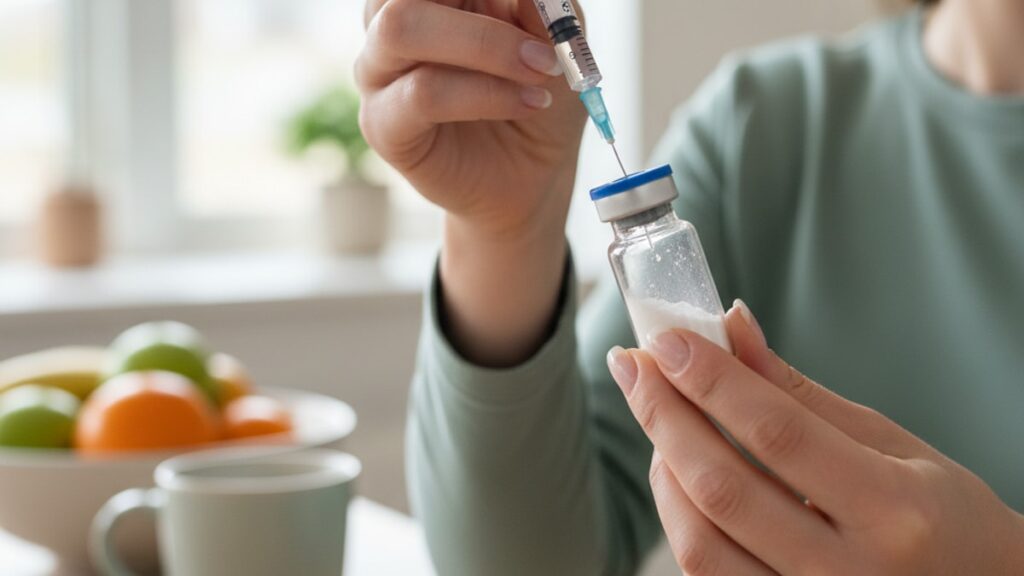
In the world of biological research, precision isn't just a goal; it's the entire foundation upon which credible discoveries are built. You can have the most brilliant hypothesis and the most sophisticated equipment, but if your foundational compounds aren't prepared correctly, the entire experiment can be compromised. This is especially true when working with advanced peptides like tirzepatide. It arrives in a delicate, lyophilized (freeze-dried) state for a reason—stability. But that also means the very first step you take in the lab, the reconstitution, is arguably one of the most critical.
Our team at Real Peptides lives and breathes this stuff. We're not just suppliers; we are partners in research. We obsess over purity, crafting our peptides through small-batch synthesis to ensure exact amino-acid sequencing because we know what's on the line. And because of that, we've seen firsthand how improper handling can undermine even the highest-quality materials. Knowing how to reconstitute tirzepatide isn't a minor detail. It's the gatekeeper to reliable data.
Why Proper Reconstitution is Non-Negotiable
Let's be direct. An improperly reconstituted peptide is, for all intents and purposes, a compromised reagent. The consequences aren't just minor inconveniences; they can be catastrophic to a research timeline and budget. You risk introducing contamination, altering the peptide's molecular structure, or—most commonly—ending up with an incorrect and unknown concentration. Any of these errors invalidates your results before you've even begun.
Imagine spending weeks on a cell culture study, only to discover the inconsistent outcomes were due to degraded tirzepatide from a flawed mixing technique. It’s a frustrating and entirely avoidable scenario. The stability of the lyophilized powder is its greatest strength, but it’s also incredibly fragile once you introduce a liquid. The process demands respect for the molecule's integrity. It's a game of millimeters and meticulousness. And—let's be honest—this is crucial. Every variable you can control is a win, and this is one you can absolutely master.
Gathering Your Essential Supplies
Before you even think about touching a vial, you need to set up your station like a professional. Fumbling for supplies mid-process is a recipe for contamination. Our team recommends a 'Mise en Place' approach, just like a chef. Have everything sterile, laid out, and within reach. It’s not just about efficiency; it’s about maintaining a sterile workflow from start to finish.
Here’s your checklist:
- Your Vial of Lyophilized Tirzepatide: Of course, this is your starting point. We recommend always starting with a high-purity product from a trusted source. When you start with a precisely quantified peptide, like those from Real Peptides, you eliminate a major variable from the outset.
- Reconstitution Diluent: For most research applications involving tirzepatide, Bacteriostatic (BAC) Water is the gold standard. It's sterile water containing 0.9% benzyl alcohol, which acts as a preservative to prevent microbial growth after the vial has been opened. We’ll dive deeper into this choice later.
- Sterile Syringes: You'll need at least one syringe (typically 1mL to 3mL, depending on the volume you're drawing) to transfer the diluent into the peptide vial. Ensure it's new, sterile, and has clear measurement markings.
- Alcohol Prep Pads: Use 70% isopropyl alcohol pads. You’ll need them to sterilize the rubber stoppers on both the diluent vial and the peptide vial. Don't skip this. It's your first line of defense against contamination.
- A Sharps Container: Safety is paramount. Have a designated, puncture-proof container for used syringes and needles. This is a non-negotiable element of responsible lab practice.
Having these items ready prevents the frantic search that can break your sterile field and lead to mistakes. Simple, right?
The Environment: Setting Up Your Sterile Field
Where you perform the reconstitution matters just as much as how you do it. A dusty desk in a high-traffic area is not the place. You need a clean, still, and dedicated space. In a professional lab setting, this would ideally be under a laminar flow hood, which provides a continuous flow of filtered air to sweep away contaminants.
But we know not every research setup has that luxury. So, here's how to create a reliable sterile field in any environment:
- Choose Your Location: Find a quiet area away from open windows, vents, or general foot traffic. Air currents are the enemy—they carry dust and microbes.
- Sanitize the Surface: Thoroughly wipe down your chosen work surface with a disinfectant, followed by 70% isopropyl alcohol. Let it air dry.
- Wash Your Hands: This is basic, but it’s amazing how often it's rushed. Wash your hands thoroughly with soap and water for at least 20 seconds. Dry them with a clean paper towel.
- Wear Gloves: Put on a pair of new, sterile nitrile or latex gloves. They provide an additional barrier and are easier to keep sterile than your hands.
This setup creates a controlled environment where you can work with confidence. It minimizes the invisible threats that can ruin your peptide solution before it's even fully mixed.
A Step-by-Step Protocol to Reconstitute Tirzepatide
Alright, your station is prepped and your supplies are ready. Now for the main event. Follow this protocol precisely. Our team has refined this process over thousands of hours, and we've found this method delivers the most consistent, reliable results. We can't stress this enough—patience is key. Do not rush.
Step 1: Preparation and Inspection
Before opening anything, allow the lyophilized tirzepatide vial and your BAC water to come to room temperature. This prevents condensation from forming inside the vial when you introduce the room-temperature diluent. Inspect the peptide vial. The powder should look like a solid, white, hockey puck-like disc or a fine powder at the bottom. If it appears discolored or clumpy before reconstitution, question its integrity.
Step 2: Sanitization
Take an alcohol prep pad and vigorously wipe the rubber stopper on top of the BAC water vial. Do the same for the tirzepatide vial. Let the alcohol air dry completely. This kills any surface contaminants that could be introduced by the needle.
Step 3: Calculating Your Diluent Volume
This step is where precision is everything. You need to decide on your final desired concentration. This will determine how much BAC water you add.
The math is straightforward:
- Total Peptide Amount (mg) / Desired Concentration (mg/mL) = Volume of Diluent to Add (mL)
For example, if you have a 10mg vial of tirzepatide and you want a final concentration of 5mg per 1mL, your calculation is:
- 10mg / 5mg/mL = 2mL
So, you would need to add exactly 2mL of BAC water to the vial. Double-check your math. Then check it again. An error here will throw off all subsequent measurements in your research.
Step 4: Drawing the Diluent
Uncap your sterile syringe. Pull back the plunger to the exact volume you calculated (e.g., 2mL). This draws air into the syringe. Now, insert the needle through the rubber stopper of the BAC water vial. Invert the vial and inject the air from the syringe into the vial. This equalizes the pressure and makes it much easier to draw the liquid out accurately. Now, slowly pull back the plunger to draw your calculated volume of BAC water. Check for any large air bubbles. If you see any, you can gently flick the syringe to make them rise to the top and then expel them.
Step 5: Injecting the Diluent (The Critical Step)
This is where many people go wrong. Take the syringe filled with BAC water and insert the needle through the center of the tirzepatide vial's stopper. Now, here's the key—do not inject the water directly onto the lyophilized powder. This forceful stream can damage the fragile peptide chains. It can shear the molecules, rendering them ineffective.
Instead, angle the needle so it's touching the inside glass wall of the vial. Slowly and gently depress the plunger, letting the water run down the side of the glass. The water will pool at the bottom and begin to dissolve the powder from below. This is the single most important technique for preserving the peptide's integrity. For a visual demonstration of this technique, we've broken it down with other lab protocols on our YouTube channel, which you can find over at MorelliFit.
Step 6: Mixing—The Gentle Swirl
Once all the diluent is in the vial, carefully remove the syringe and dispose of it in your sharps container. Now, you need to ensure the powder is fully dissolved. What you must not do is shake the vial. Ever. Shaking creates foam and, more importantly, the mechanical agitation will denature the peptide. It’s a protein, and just like shaking an egg white turns it into meringue, shaking a peptide solution can irreversibly damage its structure.
Instead, gently swirl the vial between your fingers or roll it slowly in your palms. Be patient. It may take a few moments, but the powder will dissolve completely. Think of it like gently folding ingredients into a delicate cake batter, not using an industrial mixer.
Step 7: Final Inspection
The final reconstituted solution should be perfectly clear. Hold it up to a light source and look for any cloudiness, floating particles, or sediment. If the solution is not clear, it could indicate a problem with solubility, contamination, or the integrity of the peptide itself. Do not use a solution that is not perfectly clear.
Choosing the Right Diluent: A Deeper Dive
While BAC water is our team's standard recommendation for tirzepatide, understanding the different options is part of developing true expertise. The diluent you choose impacts sterility, stability, and potential use cases. It's not a one-size-fits-all decision.
| Feature | Bacteriostatic (BAC) Water | Sterile Water for Injection |
|---|---|---|
| Composition | Sterile water + 0.9% Benzyl Alcohol | Pure, sterile water |
| Primary Use Case | Multi-use vials; repeated withdrawals | Single-use applications only |
| Preservative | Yes (Benzyl Alcohol) | No |
| Shelf Life After Opening | Up to 28 days (refrigerated) | Must be discarded after a single use |
| Main Benefit | Prevents microbial growth | No preservatives, ideal for sensitive applications |
| Main Drawback | Benzyl alcohol can be an irritant in some very specific cell lines | High risk of contamination after opening |
For nearly all research involving tirzepatide where you'll be drawing from the vial multiple times, BAC water is the superior choice. The benzyl alcohol is a critical bacteriostatic agent, meaning it doesn't kill bacteria outright but prevents them from reproducing. This is what allows you to safely store and reuse the vial for several weeks.
Sterile water is just that—sterile water. The moment you puncture the stopper, you've introduced a potential route for contamination. With no preservative, any microbe that gets inside can flourish. That's why it's strictly for single-dose applications where the entire contents of the vial are used immediately.
Common Pitfalls and How to Avoid Them
We've consulted with countless labs over the years, and we've seen the same handful of mistakes derail promising research. Our experience shows that awareness is the best prevention. Here’s what to watch out for.
- The Aggressive Shake: We've mentioned it twice already, but it's worth a third. It's the most common and most destructive mistake. Always swirl, never shake.
- Math Miscues: Incorrectly calculating the diluent volume is a silent killer of experiments. It leads to a concentration that isn't what you think it is, making your data unreliable. Write down your formula and have a colleague double-check it.
- Ignoring Temperature: Reconstituting a cold vial can cause issues. Let it warm to room temperature first. It’s a small step that ensures a smooth process.
- Poor Sterile Technique: Reusing a syringe, not wiping the stoppers, or working in a messy environment is just asking for bacterial or fungal contamination. Treat every reconstitution like a sterile surgical procedure.
- The Direct Hit: Spraying the diluent directly onto the powder. We've seen this result in cloudy solutions and researchers wondering why their results are off. Let the water run gently down the side of the vial. Every time.
Honestly, though, all of these are avoidable with a little bit of discipline and a solid protocol. That's what separates good research from great research—the relentless consistency in the small details.
Storage and Handling of Reconstituted Tirzepatide
Congratulations, you've successfully reconstituted your tirzepatide. But your job isn't done. Proper storage is just as important as proper mixing to ensure its stability and potency over time.
Once reconstituted, your tirzepatide is now in a less stable state and must be refrigerated. The ideal storage temperature is between 2°C and 8°C (36°F and 46°F). Don't store it in the refrigerator door, where temperatures fluctuate wildly. Place it in the main body of the fridge for a stable environment.
Protect the vial from direct light. Peptides can be sensitive to light, which can accelerate degradation. Keeping it in its original box or a small, opaque container is a great practice.
So, how long does it last? When reconstituted with BAC water and stored correctly, tirzepatide is generally stable for research use for up to 4 weeks. After this point, you risk a gradual decline in potency, which can introduce yet another unwanted variable into your experiments.
What about freezing? While freezing can extend the shelf life of some peptides, it's a nuanced topic. The process of freezing and thawing can itself damage peptide structures. For tirzepatide, which is stable for weeks in the fridge, our team generally recommends against freezing unless you have a very specific long-term storage protocol. For most research timelines, refrigeration is sufficient and safer.
Why Purity Matters from the Start
We've spent all this time discussing the perfect technique, but that technique can only preserve the quality that's already there. If you start with an impure or inaccurately dosed peptide, no amount of perfect swirling will fix it. This is the core philosophy behind everything we do at Real Peptides.
Our commitment to small-batch synthesis and ensuring exact amino-acid sequencing isn't a marketing gimmick; it's a scientific necessity. It means that the 10mg of lyophilized tirzepatide in your vial is actually 10mg of pure, active tirzepatide. This foundation of quality is what makes your reconstitution efforts, and your subsequent research, meaningful. When you know your starting material is impeccable, you can have confidence that your results reflect the true biological activity you're studying. It removes the doubt and allows you to focus on your research questions. If you're ready to build your next project on a foundation of uncompromising quality, you can explore our full range and Get Started Today.
This entire process, from manufacturing to your lab bench, is a chain of custody for quality. Your role in reconstituting it properly is the final, critical link. By following these steps, you're not just mixing a solution; you're upholding the integrity of your research and ensuring that your hard work leads to clear, accurate, and powerful conclusions.
We're passionate about empowering researchers with both the tools and the knowledge to succeed. It's why we put so much effort into not just our products, but also into sharing the expertise our team has gathered over the years. We're always sharing more lab tips, new research highlights, and company insights on our Facebook page—we'd love to connect with you there and continue the conversation.
Frequently Asked Questions
What does ‘lyophilized’ mean and why is tirzepatide prepared this way?
▼
Lyophilization is a freeze-drying process that removes water from the peptide, turning it into a stable powder. This is done to dramatically extend its shelf life and prevent degradation during shipping and storage, ensuring it remains potent until you’re ready to use it.
Can I use sterile water instead of bacteriostatic water to reconstitute tirzepatide?
▼
You can, but only if you plan to use the entire vial’s contents in a single application. Sterile water contains no preservatives, so once opened, the risk of contamination is very high. For multi-use research, bacteriostatic water is the standard for safety and stability.
Why is it so important to not shake the vial after adding the water?
▼
Shaking introduces harsh mechanical energy that can break the delicate bonds holding the peptide’s protein structure together. This process, called denaturation, can render the tirzepatide biologically inactive, completely compromising your research.
My reconstituted tirzepatide solution looks cloudy. What should I do?
▼
A properly reconstituted tirzepatide solution should be perfectly clear. If it’s cloudy or contains visible particles, do not use it. This could indicate contamination, poor solubility, or that the peptide has been damaged. It’s best to discard the vial and start over with a fresh one.
How long will reconstituted tirzepatide last in the refrigerator?
▼
When reconstituted with bacteriostatic water and stored correctly between 2°C and 8°C (36°F – 46°F), away from light, tirzepatide is typically stable for research purposes for up to 4 weeks. Its potency may begin to decline after this period.
What is the best way to draw the liquid from the vial accurately?
▼
To ensure accuracy, first draw an equal amount of air into the syringe as the liquid you intend to draw. Inject the air into the vial to equalize the pressure, then invert the vial and slowly pull the plunger to your desired measurement mark. This prevents a vacuum from forming and allows for a smooth, precise draw.
Is it necessary to let the vials reach room temperature first?
▼
Yes, our team strongly recommends it. Introducing room-temperature diluent into a cold vial can create condensation and pressure changes that are not ideal. Allowing both to equalize to room temperature ensures a smoother, more stable reconstitution process.
Can I use tap water or bottled water for reconstitution?
▼
Absolutely not. Never use non-sterile water like tap or bottled water. These sources contain impurities, minerals, and microorganisms that will contaminate your peptide and render your research invalid and unsafe.
What concentration should I aim for when I reconstitute tirzepatide?
▼
The ideal concentration depends entirely on your specific research protocol and dosing requirements. It’s crucial to determine your target mg/mL concentration first, as this dictates how much diluent you will add to the vial. Always refer to your experimental design.
How do I properly dispose of used syringes and needles?
▼
All used needles and syringes must be immediately placed in a designated, FDA-cleared sharps disposal container. This is a critical safety measure to prevent injury and contamination. Never throw them in a regular trash can.











