





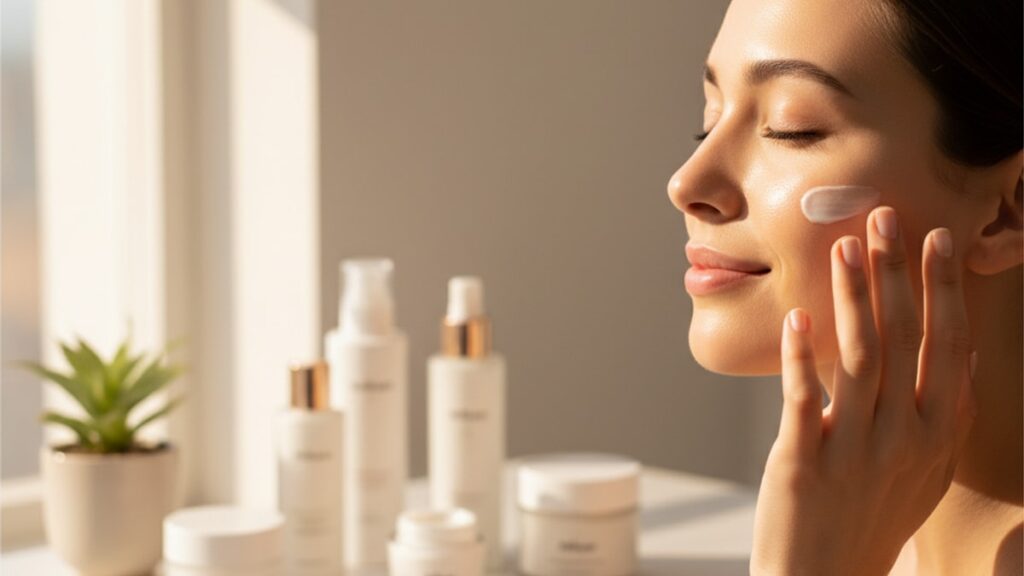
You’ve probably heard the whispers. In forums, on social media, maybe from a friend who’s always one step ahead on wellness trends. The word is glutathione, and it’s being hailed as a miracle worker for skin—promising a brighter, smoother, and more youthful complexion. But with so much noise out there, it’s becoming increasingly challenging to separate marketing hype from solid science. Is glutathione good for skin, really? Or is it just another fleeting fad?
Our team at Real Peptides deals with high-purity compounds every single day. We live and breathe the science of molecules and their biological impact. So, we're not here to sell you on a miracle. We're here to give you an unflinching, professional look at the evidence, the mechanisms, and what our experience shows regarding this formidable antioxidant. We believe that understanding how something works is the first step toward making an informed decision for your health and research. Let’s get into it.
What Exactly Is Glutathione? (And Why We Call It the 'Master')
Before we can even begin to talk about skin, we have to establish what we're dealing with. Glutathione isn't some exotic botanical extract discovered last year. It's a tripeptide, a small protein molecule composed of three amino acids: cysteine, glycine, and glutamic acid. And here's the most critical part: your body produces it naturally. In fact, it's present in virtually every single cell.
That's not an exaggeration. It's everywhere.
We call it the “master antioxidant” for a reason. While other antioxidants like Vitamin C and E are crucial (and we're not downplaying their importance), they often rely on glutathione to be recycled and restored after they've done their job neutralizing free radicals. Glutathione is the CEO of your body's entire antioxidant system, directing traffic and regenerating its own workforce. It's a critical, non-negotiable element of cellular health. Its functions are sprawling, from supporting immune function and neutralizing toxins to regulating cell life and death (a process called apoptosis). So, when we ask if it's good for the skin, we're really asking if one of the most fundamental protective molecules in the human body has an impact on our largest organ. The answer, as you can imagine, is a bit more nuanced than a simple yes or no.
The Big Question: Is Glutathione Good for Skin?
Alright, let’s tackle the main event. When we look at glutathione's potential benefits for the skin, they aren't just one-dimensional. They stem from its core biological roles. Our team has found that its effects can be broadly categorized into three main pathways: profound antioxidant protection, systemic detoxification, and the regulation of melanin production. It's not just doing one thing; it's orchestrating a symphony of protective and restorative actions that manifest visually on the skin's surface.
Think of it this way: your skin is your body's frontline. It's the barrier facing relentless assault from UV radiation, pollution, and environmental chemicals. These aggressors generate unstable molecules called free radicals, which wreak havoc on a cellular level, causing what's known as oxidative stress. This is the primary driver of premature aging—wrinkles, fine lines, sagging, and uneven tone. It’s a catastrophic, slow-motion attack.
This is where glutathione steps in. It's the unflinching bodyguard for your cells, neutralizing these free radicals before they can damage critical structures like collagen, elastin, and DNA. By reducing the overall oxidative burden on the skin, it helps preserve its structural integrity and youthful resilience. It's comprehensive. That's the key.
Unpacking the Antioxidant Powerhouse Effect
Let’s dig a little deeper into this antioxidant idea because it's the foundation for everything else. Imagine a free radical as a tiny, chaotic ball of energy, bouncing around inside your cells and stealing electrons from stable molecules. When it steals an electron from, say, a collagen fiber, that fiber becomes damaged and weakened. Multiply this by billions, and you get visible aging.
Glutathione has a spare electron it can donate without becoming unstable itself. It generously hands it over to the free radical, instantly neutralizing the threat. Problem solved. This happens countless times a second throughout your body. It's a relentless, microscopic battle, and the level of available glutathione determines who's winning.
When your body's glutathione levels are high, your cells have an impeccable defense system. They can fend off damage from the sun (though it's absolutely not a replacement for sunscreen), pollution, and even internal stressors like poor diet or lack of sleep. This translates to skin that looks healthier, plumper, and more resilient. We've seen it work. The skin appears less reactive and inflamed because the underlying cellular stress is being managed effectively. It's not magic; it’s just good cellular maintenance.
But what happens when these levels drop? This happens naturally as we age, and it's accelerated by chronic stress, illness, and environmental toxins. With a depleted defense force, oxidative stress runs rampant. The damage accumulates faster than your body can repair it, and the signs become visible in the mirror. Supporting healthy glutathione levels is, in our professional opinion, one of the most fundamental strategies for long-term skin health.
Holistic Plastic Surgeon: How to Treat Hyperpigmentation Holistically!
This video provides valuable insights into is glutathione good for skin, covering key concepts and practical tips that complement the information in this guide. The visual demonstration helps clarify complex topics and gives you a real-world perspective on implementation.
Glutathione and the Path to Brighter, More Even Skin
Now, this is where the conversation gets really interesting for many people. It’s the reason glutathione has exploded in popularity in the beauty and wellness world: its effect on skin tone and pigmentation. The claim is that it can lighten and brighten the skin, and there is a legitimate scientific mechanism behind this idea.
Your skin's pigment, melanin, comes in two main forms: eumelanin (which is brownish-black) and pheomelanin (which is reddish-yellow). The ratio of these two pigments determines your specific skin tone. The production of melanin is controlled by an enzyme called tyrosinase.
Here’s what the research suggests: glutathione can influence this process in two significant ways. First, it appears to inhibit the tyrosinase enzyme directly, essentially slowing down the production line for melanin. Second, and perhaps more profoundly, it seems to be able to shift the pathway of melanin synthesis, encouraging the cells to produce more of the lighter pheomelanin and less of the darker eumelanin. The result of this biochemical shift, over time, can be a gradual lightening of the skin and a reduction in the appearance of dark spots, hyperpigmentation, and sun damage.
Let's be honest, this is crucial. This is not about changing one's natural skin color in a dramatic or unnatural way. It's about achieving a more even, luminous, and less mottled complexion by addressing the root causes of uneven pigmentation. It’s about restoring clarity. For researchers studying melanogenesis, having access to precisely synthesized compounds is non-negotiable, which is why sourcing high-purity peptides is a cornerstone of reliable study outcomes. This approach (which we've refined over years) delivers real results in a lab setting.
The Detox Connection: How Cellular Cleansing Impacts Your Glow
We can't talk about glutathione without talking about detoxification. It's one of its most celebrated roles. Your liver is your body's primary filtration plant, and glutathione is one of its most important employees. It binds to toxins—heavy metals, pesticides, pharmaceutical byproducts, and other pollutants—making them water-soluble so they can be flushed out of your body through urine or bile.
What does this have to do with your skin? Everything.
When your body's detoxification pathways are overwhelmed, it will look for alternative routes to eliminate waste. One of those routes is your skin. This can lead to a whole host of issues, from acne and breakouts to rashes, inflammation, and a generally dull, congested appearance. It’s a sign that the internal system is under strain.
By supporting efficient liver function and cellular detox, glutathione helps lighten the load on your skin. A cleaner internal system means fewer toxins trying to make an exit through your pores. Our experience shows that a holistic approach is always best. You can't just treat the skin topically and expect a fundamental change if the internal environment is compromised. Supporting your body's natural detoxification processes is a foundational step toward achieving that clear, vibrant glow everyone is after. For a deeper dive into the science of wellness and performance, you can often find great visual breakdowns on platforms like the MorelliFit YouTube channel, which explores the practical side of human biology.
Different Forms of Glutathione: A Professional Comparison
Understanding that glutathione might be beneficial is one thing; figuring out how to effectively increase its levels is another challenge entirely. The delivery method is just as important as the molecule itself, as it dictates bioavailability—how much of the compound actually reaches your cells in a usable form. Here’s what we've learned about the most common methods:
| Method | How It Works | Pros | Cons | Our Team's Take |
|---|---|---|---|---|
| Standard Oral | Capsules or powders of L-Glutathione are ingested and absorbed through the digestive system. | Convenient, accessible, and relatively inexpensive. | Very low bioavailability. Stomach acid and digestive enzymes break down the tripeptide before it can be absorbed effectively. | Generally considered the least effective method for raising systemic glutathione levels directly. Much of it gets wasted. |
| Liposomal Oral | Glutathione is encapsulated in tiny lipid (fat) bubbles called liposomes, which protect it from digestion. | Significantly higher bioavailability than standard oral forms. The liposomes can merge with cell membranes to deliver the glutathione directly. | More expensive than standard capsules. Taste can be a significant issue for some liquid forms. Quality varies wildly between brands. | This is a much more viable oral option. The protective liposome makes a huge difference in absorption, making it a favorite for at-home support. |
| Topical | Creams, serums, or soaps containing glutathione are applied directly to the skin. | Targets the skin directly. Can provide localized antioxidant benefits and may help with surface-level pigmentation. | Poor penetration into the deeper layers of the skin where it's most needed for systemic effects. The molecule is generally too large to be absorbed effectively through the epidermis. | Good for surface-level antioxidant protection, but it's unlikely to produce the significant brightening or systemic effects seen with other methods. Think of it as a supportive player. |
| Intravenous (IV) | A solution of glutathione is administered directly into the bloodstream by a medical professional. | 100% bioavailability. It bypasses the digestive system entirely, delivering a high dose directly to the cells. | The most expensive and invasive option. Requires a clinical setting and professional administration. Effects are potent but can be temporary. | This is the gold standard for rapidly and dramatically increasing systemic glutathione levels. It's often used in clinical settings for its powerful, immediate effects. |
What Does the Research Actually Say?
As a company rooted in science, we always come back to the data. The enthusiasm for glutathione is immense, but what does the body of scientific literature tell us? The evidence is promising but still evolving, particularly when it comes to human clinical trials on skin aesthetics.
In vitro (test tube) and animal studies have consistently demonstrated glutathione's powerful antioxidant, anti-melanogenic, and detoxification properties. There's little debate about its fundamental mechanisms of action on a cellular level. This is where the foundation of our understanding is built.
The challenge is translating that to real-world human outcomes. A number of small-scale human clinical trials have been conducted, particularly on oral and topical applications for skin lightening. Some of these studies, published in journals like the Journal of Dermatological Treatment, have shown statistically significant reductions in melanin index and improvements in skin brightness after several weeks of supplementation. Participants often report improvements in skin smoothness and wrinkle reduction as well.
However, many of these studies are small, and the results can be inconsistent. The scientific community generally agrees that more extensive, long-term, and large-scale double-blind, placebo-controlled trials are needed to draw definitive conclusions. We can't stress this enough: quality is paramount in research. The purity and stability of the compound being studied can dramatically affect the outcome. It's why at Real Peptides, we focus on small-batch synthesis to guarantee the exact amino-acid sequencing and purity required for reliable, reproducible scientific investigation.
Boosting Your Body’s Own Glutathione Production
Supplementing isn't the only way to increase your glutathione levels. In fact, one of the most sustainable strategies is to give your body the raw materials and the right environment it needs to produce more on its own. It's a powerful and often overlooked approach.
Here's what you can do:
-
Eat Sulfur-Rich Foods: The amino acid cysteine is the rate-limiting factor in glutathione synthesis, and it contains sulfur. Loading up on sulfur-rich foods gives your body the essential building blocks. Think cruciferous vegetables (broccoli, cauliflower, Brussels sprouts), allium vegetables (onions, garlic, shallots), and high-quality whey protein.
-
Support with Cofactors: Your body needs other nutrients to run the glutathione production and recycling machinery. Selenium is a critical cofactor for the enzyme glutathione peroxidase. You can find it in Brazil nuts, sardines, and grass-fed beef. Vitamin C also helps keep glutathione in its active, reduced state.
-
Incorporate Regular Exercise: Consistent physical activity has been shown to boost glutathione levels and enhance the body's antioxidant defenses. Both cardio and strength training seem to be effective. It’s a way of conditioning your body to handle oxidative stress more efficiently.
-
Prioritize Sleep: This is non-negotiable. Your body does most of its repair and regeneration while you sleep. Chronic sleep deprivation is a major source of oxidative stress and has been shown to deplete glutathione levels. Aim for 7-9 hours of quality sleep per night.
Our Professional Take: Managing Expectations and Safety
So, is glutathione good for skin? The evidence strongly suggests that by supporting cellular health from the inside out, it offers significant potential benefits for skin resilience, clarity, and overall appearance. It is not, however, a magic bullet or an overnight fix.
Here’s what we advise based on our professional experience. First, manage your expectations. Any approach that works on a deep, cellular level takes time. You’re not just masking a symptom; you’re changing the underlying environment. This means results are gradual and cumulative, typically becoming noticeable after several weeks or even months of consistent use. Patience is key.
Second, safety and quality are everything. The supplement market is notoriously unregulated, and the purity and dosage of products can vary wildly. This is where you must do your due diligence. For any compound you're considering, whether for personal use or for research, you must demand transparency and verification of purity. It's the only way to ensure safety and efficacy. When you're ready to explore the possibilities of high-purity compounds for your research, we invite you to Get Started Today.
Finally, think holistically. Glutathione is one powerful piece of a very large puzzle. The most dramatic and lasting results will always come from a comprehensive approach that includes a nutrient-dense diet, consistent sun protection, stress management, and adequate sleep. You can’t out-supplement a poor lifestyle. It's the synergy of all these factors that creates truly healthy, vibrant skin.
Ultimately, the conversation around glutathione and skin is a perfect example of the shift towards understanding beauty from a cellular health perspective. It’s about moving beyond surface-level treatments and focusing on building a resilient, well-defended internal system. The glow you're looking for isn't found in a jar; it's built, cell by cell, from the inside out. We think that's a pretty powerful idea.
If you want to stay in the loop with our latest findings and expert insights, be sure to connect with us on Facebook. We're always sharing new information to help you stay at the forefront of biological research and wellness.
Frequently Asked Questions
How long does it take for glutathione to work on skin?
▼
Results are not immediate as it works on a cellular level. Most clinical studies and anecdotal reports suggest visible changes in skin tone and texture can take anywhere from 4 to 12 weeks of consistent use, depending on the individual and the delivery method.
Is oral glutathione effective?
▼
Standard oral glutathione has very low bioavailability due to breakdown in the digestive tract. However, liposomal glutathione, which encases the molecule in a protective lipid layer, has significantly better absorption and is considered a much more effective oral option.
What’s the difference between reduced and oxidized glutathione?
▼
Reduced glutathione (GSH) is the active, antioxidant form that can donate an electron to neutralize free radicals. After it does its job, it becomes oxidized glutathione (GSSG). Your body must then recycle GSSG back into active GSH to maintain its antioxidant capacity.
Can I get enough glutathione from food alone?
▼
While some foods contain glutathione, it is poorly absorbed. A better strategy is to eat foods rich in the precursors your body uses to make its own glutathione, such as sulfur-rich vegetables (broccoli, garlic) and high-quality protein.
Are there any side effects of taking glutathione?
▼
Glutathione is generally considered safe, as it’s a natural substance in the body. However, some people may experience mild digestive upset. Long-term use of high-dose IV glutathione has been anecdotally linked to lower zinc levels, but more research is needed.
Does topical glutathione actually work?
▼
Topical glutathione can provide surface-level antioxidant benefits, helping to protect the skin from environmental damage. However, due to its large molecule size, it has poor penetration into the deeper skin layers, limiting its ability to produce significant systemic or brightening effects.
Who should not take glutathione?
▼
While generally safe, individuals who are pregnant, breastfeeding, or undergoing chemotherapy should consult with their healthcare provider before starting any new supplement, including glutathione. People with asthma should also be cautious, as inhaled glutathione has been linked to bronchial constriction.
Is glutathione permanent for skin whitening?
▼
No, the effects are not permanent. Glutathione’s influence on melanin production depends on its continued presence in the body. If supplementation is stopped, the skin’s pigment production will gradually return to its natural state.
What is the best form of glutathione to take?
▼
The ‘best’ form depends on your goals and budget. For maximum bioavailability and rapid results, IV administration is unparalleled. For effective and convenient at-home use, liposomal oral glutathione is widely considered the superior choice over standard capsules.
Can glutathione help with acne?
▼
Potentially, yes. By reducing systemic inflammation and supporting the body’s detoxification processes, glutathione can help create a better internal environment. This may lead to a reduction in inflammatory acne breakouts for some individuals.
Does glutathione protect against sun damage?
▼
Glutathione helps protect cells from the oxidative stress caused by UV radiation. However, it is absolutely not a substitute for sunscreen. It acts as an internal defense mechanism, but you still need external protection from a broad-spectrum SPF.
How does glutathione affect the liver?
▼
Glutathione is essential for liver health. It is the primary detoxifier in the liver, binding to harmful substances to neutralize them and prepare them for excretion. Supporting glutathione levels helps the liver perform its critical functions more efficiently.
What is liposomal glutathione?
▼
Liposomal glutathione is a form where the glutathione molecules are encapsulated within tiny, fat-based particles called liposomes. This protective layer shields the glutathione from being destroyed by stomach acid, allowing for much greater absorption into the bloodstream compared to standard supplements.
Is it safe to use glutathione long-term?
▼
For oral and topical forms, long-term use is generally considered safe for most healthy individuals. Long-term, high-dose intravenous use should be monitored by a healthcare professional to ensure there are no adverse effects, such as on mineral levels like zinc.











