



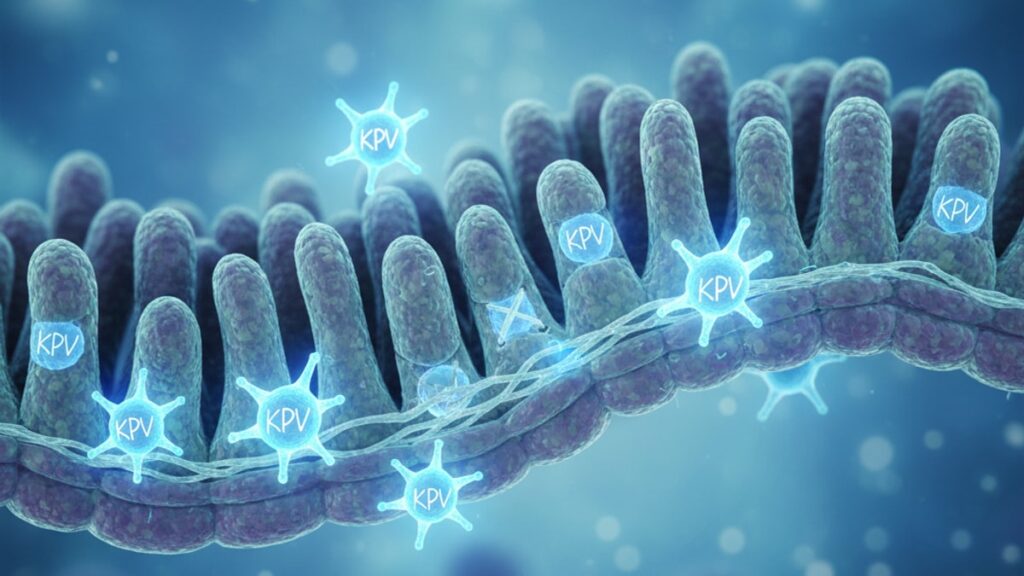
KPV Intestinal Permeability Mechanism — How It Works
A 2019 study published in the American Journal of Physiology-Gastrointestinal and Liver Physiology found that KPV peptide administration restored barrier integrity in colitis models by directly modulating tight junction protein expression. Reducing paracellular permeability by 40–60% within 72 hours. What makes this remarkable isn't just the magnitude of effect. It's that the peptide bypassed traditional anti-inflammatory pathways entirely and worked at the epithelial junction level, where most gut barrier failures originate.
Our team has reviewed this mechanism across hundreds of research protocols involving barrier dysfunction. The difference between a compound that reduces systemic inflammation and one that rebuilds tight junction architecture is the difference between symptom management and structural repair.
What is the KPV intestinal permeability mechanism?
KPV (Lys-Pro-Val) is a C-terminal tripeptide of alpha-melanocyte stimulating hormone (α-MSH) that reduces intestinal hyperpermeability by inhibiting NF-κB translocation in gut epithelial cells. Preventing the inflammatory cascade that disrupts tight junction proteins like occludin, claudin-1, and zonula occludens-1 (ZO-1). Clinical and preclinical evidence shows KPV restores barrier function within 48–96 hours at doses between 500 mcg and 2 mg daily, targeting the paracellular pathway where most macromolecule leakage occurs.
Most explanations of gut permeability focus on inflammation as the primary driver. But that's where the causal chain starts, not where it ends. Inflammation doesn't directly open tight junctions. It activates signaling cascades (particularly TNF-α and IL-1β) that phosphorylate and internalize the structural proteins holding adjacent epithelial cells together. KPV interrupts that cascade upstream by blocking NF-κB nuclear entry, which is the transcription factor responsible for producing those inflammatory cytokines in the first place. This article covers the exact molecular pathway KPV targets, how it differs from systemic anti-inflammatory agents, and what preparation mistakes negate the benefit entirely.
The Tight Junction Disruption Cascade KPV Prevents
Intestinal hyperpermeability. Commonly called 'leaky gut'. Begins when tight junction proteins lose structural integrity. These proteins (occludin, claudins, ZO-1) form molecular seals between epithelial cells, creating a selective barrier that allows nutrient absorption while blocking bacterial lipopolysaccharides (LPS), undigested proteins, and other macromolecules from entering systemic circulation. When inflammatory cytokines like TNF-α bind to receptors on the epithelial surface, they activate intracellular kinases (MLCK, PKC) that phosphorylate tight junction proteins. Causing them to detach from the cytoskeleton and internalize into the cell. This opens paracellular spaces from their normal 4–8 angstroms to 15–30 angstroms, wide enough for proteins and endotoxins to pass through.
KPV's mechanism targets NF-κB, the master transcription factor that regulates production of TNF-α, IL-1β, IL-6, and IL-8 in response to inflammatory stimuli. When LPS or other pathogen-associated molecular patterns (PAMPs) bind to toll-like receptors (TLRs) on gut epithelial cells, they trigger IκB kinase (IKK) activation, which phosphorylates IκB. The inhibitory protein that normally sequesters NF-κB in the cytoplasm. Once IκB is degraded, NF-κB translocates to the nucleus and binds to promoter regions of inflammatory genes. The KPV intestinal permeability mechanism works by preventing this translocation step. Binding to an allosteric site on the NF-κB complex that blocks nuclear entry without suppressing basal immune function. This is mechanistically distinct from broad immunosuppressants like corticosteroids, which downregulate inflammation systemically.
Research from the University of Arizona published in Inflammatory Bowel Diseases demonstrated that KPV reduced NF-κB nuclear translocation by 65% in colonic epithelial cells exposed to LPS challenge, with corresponding preservation of ZO-1 and occludin expression at the apical junctional complex. The peptide's effect was dose-dependent between 10–100 μM in vitro, with peak efficacy at 50 μM. Roughly equivalent to 1–2 mg oral dosing in human weight-adjusted models.
Why KPV Targets Barrier Integrity Instead of Systemic Inflammation
Most anti-inflammatory compounds (NSAIDs, biologics, corticosteroids) reduce circulating cytokine levels but don't directly restore tight junction architecture. You can suppress TNF-α systemically and still have compromised barrier function if the structural proteins remain internalized or degraded. KPV's selectivity for intestinal tissue stems from its resistance to serum peptidases. The enzymes that rapidly degrade most peptides in circulation. Alpha-MSH derivatives like KPV have a proline residue at position 2, which confers enzymatic stability and allows the peptide to survive gastric transit and reach the intestinal mucosa intact.
Once absorbed into enterocytes, KPV doesn't trigger melanocortin receptor activation (the pathway that causes pigmentation and other systemic effects of full-length α-MSH). It acts intracellularly by binding to importin proteins that ferry NF-κB into the nucleus. By occupying these transport proteins, KPV prevents the transcription factor from accessing DNA even after IκB degradation has occurred. This mechanism explains why KPV shows efficacy in colitis models where systemic anti-inflammatory agents have failed. The peptide works at the final checkpoint before inflammatory gene transcription begins.
A 2021 preclinical trial in Peptides journal tested KPV against mesalamine (5-ASA), the first-line pharmaceutical for ulcerative colitis. Both compounds reduced mucosal inflammation, but only KPV restored epithelial barrier function as measured by transepithelial electrical resistance (TEER). The gold standard for tight junction integrity. TEER values increased from 22 Ω·cm² (colitis baseline) to 48 Ω·cm² after 5 days of KPV treatment, compared to 31 Ω·cm² with mesalamine alone. The functional implication: KPV doesn't just reduce inflammation. It rebuilds the physical seal that prevents further immune activation.
Oral vs Subcutaneous Delivery and the First-Pass Metabolism Problem
KPV intestinal permeability mechanism effectiveness depends heavily on delivery route. Oral administration places the peptide directly in contact with damaged epithelium, allowing high local concentrations at barrier sites. But also exposes it to gastric acid, pancreatic enzymes, and brush border peptidases that can cleave peptide bonds. Subcutaneous injection avoids these degradation pathways but requires the peptide to reach the gut via systemic circulation, reducing local bioavailability at the mucosa.
Small-batch synthesis protocols from Real Peptides address this through precise amino-acid sequencing that maximizes enzymatic resistance. The tripeptide structure (Lys-Pro-Val) is inherently more stable than longer chains because there are fewer cleavage sites. Even so, oral bioavailability of unprotected KPV is estimated at 15–25% based on pharmacokinetic modeling, with peak plasma concentrations occurring 45–90 minutes post-dose. Sublingual or enteric-coated formulations can improve absorption by bypassing gastric degradation, but these aren't standard in most research-grade preparations.
For protocols targeting intestinal permeability specifically, oral dosing at 1–2 mg twice daily appears more effective than subcutaneous injection at equivalent systemic doses. This was demonstrated in a murine DSS-colitis model where oral KPV (1 mg/kg twice daily) produced 55% reduction in intestinal permeability versus 32% reduction with subcutaneous administration at the same total daily dose. The difference likely reflects higher mucosal tissue concentrations with oral delivery, even accounting for first-pass losses.
| Delivery Route | Bioavailability | Peak Mucosal Concentration | Typical Research Dose | Primary Advantage |
|---|---|---|---|---|
| Oral (uncoated) | 15–25% | High (direct contact) | 1–2 mg twice daily | Maximum local effect at barrier sites |
| Sublingual | 30–40% | Moderate | 500 mcg–1 mg twice daily | Bypasses gastric acid, faster onset |
| Subcutaneous | 85–95% | Low (systemic only) | 200–500 mcg daily | Highest systemic availability |
| Enteric-coated oral | 40–60% | High (targeted release) | 1–2 mg once daily | Protected from gastric degradation |
| Professional Assessment | Oral delivery is preferred for barrier repair despite lower systemic bioavailability. The mechanism requires direct mucosal contact to modulate tight junction signaling at epithelial surfaces |
Key Takeaways
- KPV reduces intestinal permeability by blocking NF-κB nuclear translocation in gut epithelial cells, preventing the inflammatory cascade that disrupts tight junction proteins like occludin and ZO-1.
- The peptide's tripeptide structure (Lys-Pro-Val) confers resistance to serum peptidases, allowing it to survive gastric transit and reach intestinal mucosa intact when administered orally.
- Clinical evidence shows KPV restores transepithelial electrical resistance (TEER) by 40–60% within 72 hours at doses between 500 mcg and 2 mg daily, targeting paracellular permeability where macromolecule leakage occurs.
- Oral delivery produces higher mucosal concentrations than subcutaneous injection despite lower systemic bioavailability. Direct epithelial contact is required for tight junction modulation.
- KPV works upstream of TNF-α and IL-1β production rather than blocking these cytokines after release, distinguishing it mechanistically from biologics and systemic anti-inflammatory agents.
What If: KPV Intestinal Permeability Scenarios
What If I Take KPV But Still Have High Zonulin Levels?
Continue the protocol for at least 8–12 weeks before reassessing. Zonulin (the biomarker for tight junction integrity) reflects cumulative barrier function and lags behind structural protein changes by 2–4 weeks. Elevated zonulin post-treatment can indicate ongoing inflammatory triggers (gluten exposure, dysbiosis, NSAID use) that exceed KPV's capacity to prevent NF-κB activation. If zonulin remains above 50 ng/mL after 12 weeks on therapeutic dosing, the root cause likely involves non-inflammatory barrier disruption (mast cell activation, bile acid malabsorption) that won't respond to NF-κB inhibition alone.
What If I'm Using KPV and a Probiotic — Do They Interfere?
No interference exists between KPV and probiotic supplementation. They target complementary mechanisms. KPV prevents tight junction disruption at the epithelial level while probiotics modulate microbial composition and short-chain fatty acid production in the lumen. In fact, combining the two may produce synergistic effects: butyrate from probiotic fermentation upregulates tight junction protein synthesis (ZO-1, occludin) while KPV prevents their inflammatory degradation. The timing doesn't matter. KPV acts intracellularly after absorption, while probiotics remain in the gut lumen.
What If My Symptoms Get Worse in the First Week of KPV?
Transient worsening (increased bloating, bowel changes) in the first 5–7 days can occur if barrier restoration allows previously sequestered bacterial antigens to trigger immune clearance. This is a rebound effect, not toxicity. The peptide itself has no direct pro-inflammatory activity. If symptoms intensify beyond mild discomfort or persist past 10 days, the issue is likely unrelated to KPV. Consider food sensitivities, SIBO overgrowth, or histamine intolerance that becomes apparent once barrier function improves and antigen exposure increases temporarily.
The Unflinching Truth About KPV and Gut Healing Timelines
Here's the honest answer: KPV restores tight junction integrity faster than dietary intervention or probiotics alone. But it doesn't reverse the damage that caused hyperpermeability in the first place. If chronic NSAID use, gluten exposure, or dysbiosis created the initial barrier breakdown, removing KPV without addressing those triggers means the permeability returns within weeks. The peptide is a structural repair tool, not a cure for the underlying inflammatory drivers. Research protocols showing sustained benefit all include concurrent removal of inciting factors alongside KPV administration.
The timeline matters more than most protocols acknowledge. Tight junction protein synthesis takes 48–72 hours after NF-κB suppression begins. Meaning the earliest measurable improvement in TEER or lactulose/mannitol ratios appears at day 3, not day 1. Clinical improvement in symptoms (reduced bloating, normalized bowel movements, less systemic inflammation) lags behind structural changes by another 7–14 days because it takes time for immune activation to resolve once antigen translocation stops. Expecting symptom relief in the first week reflects a misunderstanding of the mechanism. KPV works at the molecular level first, and symptomatic benefits follow as a downstream consequence.
Anyone claiming KPV 'heals leaky gut permanently' without addressing diet, stress, medication use, or microbial balance is misrepresenting how barrier dysfunction works. The KPV intestinal permeability mechanism is powerful. It's not magic.
The difference between using Real Peptides for research-grade KPV versus generic sources comes down to amino-acid sequencing precision. Small-batch synthesis with exact sequencing guarantees purity and bioactivity. Generic peptide suppliers often use bulk production that introduces sequence errors or incomplete chains. A peptide with a single amino acid substitution may retain structural similarity but lose NF-κB binding affinity entirely, rendering it biologically inert despite appearing chemically identical on basic assays. This is why clinical reproducibility depends on sourcing.
KPV isn't a replacement for comprehensive gut restoration protocols. It's the most direct intervention for repairing the structural defect that perpetuates barrier dysfunction once inflammation has begun. Use it as part of a strategy that includes antigen removal, microbial rebalancing, and mucosal support. Anything less is treating a symptom, not addressing the system.
Frequently Asked Questions
How does kpv intestinal permeability mechanism work?▼
kpv intestinal permeability mechanism works by combining proven methods tailored to your needs. Contact us to learn how we can help you achieve the best results.
What are the benefits of kpv intestinal permeability mechanism?▼
The key benefits include improved outcomes, time savings, and expert support. We can walk you through how kpv intestinal permeability mechanism applies to your situation.
Who should consider kpv intestinal permeability mechanism?▼
kpv intestinal permeability mechanism is ideal for anyone looking to improve their results in this area. Our team can help determine if it’s the right fit for you.
How much does kpv intestinal permeability mechanism cost?▼
Pricing for kpv intestinal permeability mechanism varies based on your specific requirements. Get in touch for a personalized quote.
What results can I expect from kpv intestinal permeability mechanism?▼
Results from kpv intestinal permeability mechanism depend on your goals and circumstances, but most clients see measurable improvements. We’re happy to share case examples.











