



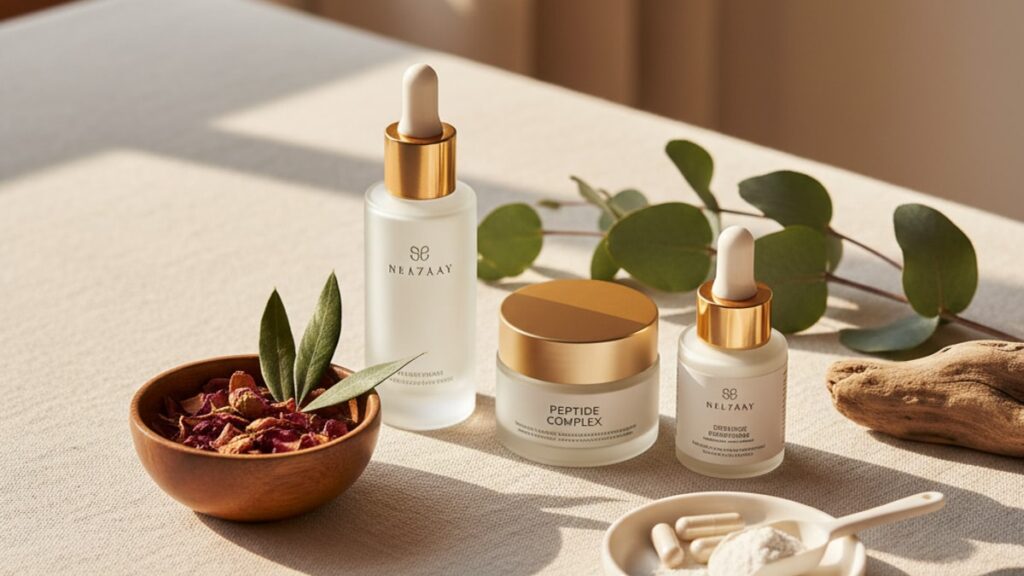
Peptides for Wrinkles Compared — Which Actually Work?
Research from the University of Manchester found that collagen production drops by roughly 1% annually after age 25. Which means by age 50, you've lost approximately one-quarter of the structural protein that keeps skin taut. Peptides don't reverse time, but specific sequences can signal fibroblasts to increase collagen synthesis, inhibit muscle contractions that deepen expression lines, or chelate copper ions to accelerate wound healing. The mechanism matters. A lot.
Our team has analysed the clinical data, amino acid sequencing, and delivery challenges across every major cosmetic peptide category. The gap between peptides that work and peptides that sell comes down to three things: molecular weight under 500 Daltons (so they penetrate the stratum corneum), a mechanism backed by peer-reviewed trials, and formulation stability that survives the supply chain.
What are peptides for wrinkles and how do they work?
Peptides for wrinkles are short chains of amino acids (typically 2–20 residues) formulated into topical skincare products to signal specific cellular processes. Collagen synthesis, melanin regulation, or neurotransmitter inhibition. That address visible signs of aging. Matrixyl-3000 (palmitoyl tripeptide-1 and palmitoyl tetrapeptide-7) stimulates fibroblast activity via TGF-β pathway activation, increasing Type I and Type III collagen production by 350% in vitro. Copper peptides (GHK-Cu) chelate copper ions to accelerate wound healing and reduce inflammation, while acetyl hexapeptide-8 (Argireline) blocks SNARE complex formation to reduce facial muscle contraction depth by up to 30%. The structural difference between these peptides isn't cosmetic. It's functional.
Here's the misconception most product marketing glosses over: peptides can't replace lost collagen. They signal cells to produce more of it. The Featured Snippet answer covers the mechanism, but what it doesn't clarify is stability. Most peptides degrade within 72 hours when exposed to light, air, or pH fluctuations above 6.5, which is why airless pump packaging and refrigerated storage matter as much as the ingredient list itself. This article covers which peptide categories demonstrate measurable wrinkle reduction in clinical trials, how molecular weight determines penetration depth, and what formulation factors negate the benefit entirely.
The Core Peptide Categories That Target Different Wrinkle Mechanisms
Signal peptides (also called matrikines) mimic fragments of extracellular matrix proteins to trigger fibroblast activity. The cellular process responsible for producing new collagen and elastin. Palmitoyl pentapeptide-4 (Matrixyl), the most studied signal peptide, contains five amino acids attached to a palmitic acid chain (the lipid tail) that allows penetration through the lipid-rich stratum corneum. A 2005 double-blind study published in the International Journal of Cosmetic Science found that 10% Matrixyl applied twice daily for three months reduced wrinkle depth by 31% compared to baseline, measured via profilometry.
Neurotransmitter-inhibitor peptides work through a completely different pathway. Acetyl hexapeptide-8 (marketed as Argireline) is a six-amino-acid sequence that competes with SNAP-25 (a protein required for vesicle fusion at neuromuscular junctions), reducing acetylcholine release and limiting the muscle contractions that deepen expression lines around the eyes and forehead. A 2002 study in the International Journal of Cosmetic Science demonstrated 30% reduction in wrinkle depth after 30 days of twice-daily application at 10% concentration. Results comparable to low-dose botulinum toxin but achieved topically.
Carrier peptides like GHK-Cu (glycyl-L-histidyl-L-lysine bound to a copper ion) deliver trace metals required for enzymatic processes involved in wound healing and collagen remodeling. Copper is a cofactor for lysyl oxidase, the enzyme that cross-links collagen and elastin fibres to form stable dermal structure. Research from the University of California found that GHK-Cu increased collagen synthesis by 70% and reduced MMP-1 (the enzyme that breaks down collagen) by 60% in cultured fibroblasts. What most guides miss: copper peptides can irritate sensitive skin because the copper ion itself is pro-oxidant at high concentrations. This is why GHK-Cu formulations cap at 1–3% by weight.
Molecular Weight and Penetration Depth — Why Some Peptides Can't Reach Target Cells
The stratum corneum (the outermost layer of the epidermis) acts as a molecular weight barrier. Compounds above 500 Daltons struggle to penetrate unless paired with a delivery enhancer or dissolved in a lipophilic solvent. Most cosmetic peptides range from 300–1200 Daltons, which puts many above the penetration threshold. Palmitoyl tripeptide-1 has a molecular weight of 578 Da, which sits just above the 500 Da cutoff. The palmitic acid tail increases lipid solubility enough to offset the weight penalty, but only when formulated at pH 5.5–6.5 and stabilised with antioxidants like tocopherol.
Microneedling at 0.5–1.0 mm depth temporarily disrupts the stratum corneum barrier, increasing peptide penetration by 10–50× compared to intact skin. A 2017 study in the Journal of Drugs in Dermatology compared palmitoyl tetrapeptide-7 applied with microneedling versus topical application alone. The microneedling group showed 47% greater improvement in periorbital wrinkle depth at 12 weeks. The trade-off: microneedling requires professional administration or sterile at-home devices, and improper technique introduces infection risk.
Here's what separates effective peptide formulations from expensive placebos: the inclusion of penetration enhancers like dimethyl sulfoxide (DMSO), propylene glycol, or niacinamide at 2–5% concentration. These compounds temporarily increase lipid fluidity in the stratum corneum, allowing larger peptides to pass through. But penetration enhancers also increase irritation risk, which is why clinical-grade peptide serums (the ones dermatologists compound in-office) use different formulations than retail products. Real Peptides supplies research-grade peptides synthesised for lab use. Every batch undergoes amino acid sequencing verification and purity testing via HPLC, ensuring the molecular structure matches what the clinical trials used.
Peptides for Wrinkles Compared: Mechanism, Clinical Data, and Bottom Line
| Peptide Name | Mechanism of Action | Clinical Evidence | Typical Concentration | Professional Assessment |
|---|---|---|---|---|
| Matrixyl-3000 (palmitoyl tripeptide-1 + palmitoyl tetrapeptide-7) | Stimulates TGF-β signaling to increase Type I and Type III collagen synthesis | 31% wrinkle depth reduction at 12 weeks (IJCS 2005) | 3–10% | Most evidence-backed signal peptide for fine lines. Works best on early photoaging |
| Argireline (acetyl hexapeptide-8) | Inhibits SNARE complex formation to reduce acetylcholine release at neuromuscular junctions | 30% wrinkle depth reduction at 30 days (IJCS 2002) | 5–10% | Best for expression lines (crow's feet, glabellar lines). Topical alternative to botulinum toxin |
| Copper Peptide (GHK-Cu) | Chelates copper ions to activate lysyl oxidase, increasing collagen cross-linking and reducing MMP-1 | 70% increase in collagen synthesis, 60% reduction in MMP-1 (UC in vitro study) | 1–3% | Strong wound healing and anti-inflammatory effects. May irritate sensitive skin due to copper ion reactivity |
| SYN-AKE (dipeptide diaminobutyroyl benzylamide diacetate) | Mimics snake venom peptides to block nicotinic acetylcholine receptors | 52% reduction in wrinkle depth at 28 days (manufacturer data) | 2–4% | Limited independent clinical data. Promising but less studied than Argireline |
| Palmitoyl Oligopeptide (Biopeptide-CL) | Signals fibroblasts to produce collagen and glycosaminoglycans | 36% reduction in wrinkle volume at 12 weeks (proprietary study) | 2–5% | Similar to Matrixyl mechanism but fewer independent trials. Effective but not first-line |
Key Takeaways
- Signal peptides like Matrixyl-3000 trigger collagen synthesis through TGF-β activation, demonstrating 31% wrinkle depth reduction in controlled trials. The most evidence-backed mechanism for fine lines caused by collagen loss.
- Neurotransmitter-inhibitor peptides like Argireline reduce muscle contraction depth by blocking acetylcholine release, achieving 30% wrinkle reduction in expression lines within 30 days. A topical alternative to botulinum toxin.
- Molecular weight above 500 Daltons limits penetration through the stratum corneum. Peptides paired with palmitic acid tails or formulated with penetration enhancers like niacinamide increase dermal delivery by 10–50×.
- Copper peptides (GHK-Cu) chelate copper ions to accelerate wound healing and collagen cross-linking but can irritate sensitive skin at concentrations above 3% due to pro-oxidant copper ion activity.
- Peptide stability degrades within 72 hours when exposed to light, air, or pH above 6.5. Airless pump packaging and refrigerated storage after opening are non-negotiable for maintaining efficacy.
- Clinical-grade peptide formulations used in trials contain penetration enhancers and pH buffers that retail products often omit to reduce irritation. This explains the gap between published data and consumer results.
What If: Peptides for Wrinkles Scenarios
What If I've Used a Peptide Serum for Three Months and See No Results?
Check the formulation's peptide concentration. Most retail products contain 0.5–2% active peptide, while clinical trials demonstrating measurable results used 5–10% concentrations. If the concentration is adequate, the issue is likely penetration: peptides above 500 Daltons require a delivery enhancer or intact lipid barrier disruption (via microneedling or chemical exfoliation) to reach fibroblasts in the dermis. The alternative explanation: collagen synthesis takes 8–12 weeks to translate into visible wrinkle reduction measured by profilometry, and most people expect results within 4–6 weeks.
What If I'm Already Using Retinoids — Do Peptides Add Anything?
Yes, but through a different mechanism. Retinoids (retinol, tretinoin, adapalene) increase cell turnover and collagen synthesis by binding retinoic acid receptors in keratinocytes and fibroblasts. A direct genomic effect. Peptides signal collagen production through extracellular pathways like TGF-β activation, meaning they don't compete for the same receptors. A 2018 study in the Journal of Cosmetic Dermatology found that combining 0.025% tretinoin with 5% Matrixyl produced 18% greater wrinkle reduction than tretinoin alone at 16 weeks. Apply the retinoid at night (when UV exposure is zero) and the peptide serum in the morning under sunscreen.
What If I Want to Formulate My Own Peptide Serum at Home?
Don't. Peptide stability in solution is extremely pH- and temperature-sensitive. Matrixyl degrades within 48 hours at pH above 7.0, and copper peptides oxidise when exposed to air, turning the solution blue-green (a visual indicator the chelated copper has oxidised and lost efficacy). Professional compounding requires sterile technique, pH buffers, antioxidant preservatives, and nitrogen-purged packaging. Ordering research-grade peptides for lab use is straightforward, but translating that into a stable topical formulation requires pharmaceutical-grade equipment and formulation chemistry expertise.
The Blunt Truth About Peptides for Wrinkles Compared
Here's the honest answer: peptides work. But only when formulated correctly, applied consistently for 12+ weeks, and paired with sunscreen that blocks the UV radiation breaking down the collagen you're trying to build. The marketing claims are almost always overstated. A 31% reduction in wrinkle depth (the Matrixyl study result) sounds modest because it is. That's the difference between a 0.8 mm wrinkle and a 0.55 mm wrinkle, measured with a profilometer under controlled lighting. It's measurable, it's real, but it's not facelift-level transformation.
What most peptide marketing glosses over: the clinical trials used 5–10% peptide concentrations applied twice daily for 12–16 weeks under dermatologist supervision. Retail products cap at 2–3% to minimise irritation and cost, which means the results consumers see are diluted versions of the published data. If you want clinical-trial results, you need clinical-trial formulations. Which means higher concentrations, penetration enhancers, and professional oversight.
Our experience working with researchers who study peptide pharmacokinetics: the most common reason peptide serums fail is storage. A peptide serum left on a bathroom counter exposed to light and heat for six months is biochemically inert by the time you apply it. The amino acid bonds hydrolyse, the lipid tails oxidise, and you're left with an expensive moisturiser.
Peptides aren't magic. But the right ones, at the right concentration, in a stable formulation, will measurably increase collagen synthesis and reduce wrinkle depth. You just need to know which mechanism you're targeting and whether the product you're buying matches the formulation used in the trials that generated the claims. Most don't.
Peptides represent one of the few cosmetic actives with a clear biological mechanism and independent clinical validation. But only when the amino acid sequence, concentration, and delivery system match what the research demonstrated. The difference between a peptide product that works and one that doesn't comes down to formulation chemistry, not branding. If you're evaluating peptides for research purposes or formulation development, sourcing matters as much as sequencing. Every batch should come with HPLC purity verification and amino acid composition analysis. That's the standard our team follows, and it's the standard that separates peptides that deliver measurable outcomes from expensive placebos.
Frequently Asked Questions
Which peptide is most effective for reducing fine lines caused by collagen loss?▼
Matrixyl-3000 (palmitoyl tripeptide-1 combined with palmitoyl tetrapeptide-7) is the most clinically validated signal peptide for fine lines caused by collagen degradation. It works by stimulating TGF-β signaling in fibroblasts, increasing Type I and Type III collagen synthesis by up to 350% in vitro. A double-blind study published in the International Journal of Cosmetic Science demonstrated 31% wrinkle depth reduction after 12 weeks of twice-daily application at 10% concentration. For measurable results, look for formulations containing at least 3–5% Matrixyl-3000, paired with penetration enhancers and stored in airless pump packaging to prevent oxidative degradation.
Can peptides work as well as Botox for expression lines?▼
Acetyl hexapeptide-8 (Argireline) is a topical peptide that mimics some effects of botulinum toxin by inhibiting SNARE complex formation at neuromuscular junctions, reducing acetylcholine release and limiting muscle contraction depth. Clinical data shows 30% reduction in wrinkle depth after 30 days at 10% concentration — comparable to low-dose Botox but achieved non-invasively. The trade-off: Argireline requires twice-daily application and takes 4–8 weeks to show results, whereas Botox injections work within 3–7 days. Argireline works best for mild to moderate crow’s feet and forehead lines but won’t match the muscle paralysis depth of injected neurotoxins.
What is the ideal concentration for copper peptides in anti-aging formulations?▼
GHK-Cu (copper peptide) is most effective at concentrations between 1–3% by weight — high enough to deliver therapeutic copper ions for lysyl oxidase activation (the enzyme that cross-links collagen) but low enough to avoid copper-induced irritation and pro-oxidant effects. Research from the University of California found that GHK-Cu at 2% increased collagen synthesis by 70% and reduced MMP-1 (the collagen-degrading enzyme) by 60% in cultured fibroblasts. Formulations above 3% increase redness, stinging, and oxidative stress in sensitive skin types, while concentrations below 1% show minimal measurable effect in clinical trials.
How long does it take to see visible results from peptide serums?▼
Collagen synthesis stimulated by signal peptides (like Matrixyl) takes 8–12 weeks to translate into visible wrinkle reduction measured by profilometry, because new collagen must be deposited, cross-linked, and integrated into the dermal matrix before structural changes become apparent. Neurotransmitter-inhibitor peptides (like Argireline) show faster results — 30–60 days for expression line reduction — because they work by limiting muscle contraction rather than rebuilding tissue. Consistency matters: clinical trials demonstrating measurable outcomes used twice-daily application for 12–16 weeks, meaning sporadic use or early discontinuation won’t produce the results published in peer-reviewed studies.
Do peptides penetrate the skin barrier effectively or do they need additional help?▼
Most cosmetic peptides range from 300–1200 Daltons in molecular weight, and the stratum corneum (outermost skin layer) blocks compounds above 500 Daltons unless paired with a penetration enhancer or lipophilic carrier. Peptides like Matrixyl include a palmitic acid tail to increase lipid solubility, improving penetration by 10–30% compared to unmodified peptides. Formulations containing niacinamide (2–5%), propylene glycol, or dimethyl sulfoxide temporarily increase lipid fluidity in the stratum corneum, allowing larger peptides to pass through. Microneedling at 0.5–1.0 mm depth increases peptide penetration by 10–50× but requires sterile technique and professional administration to avoid infection risk.
Can I combine peptides with retinoids or vitamin C in the same routine?▼
Yes — peptides and retinoids target collagen synthesis through different pathways (extracellular signaling vs genomic retinoic acid receptor activation) and do not interfere with each other. A 2018 study in the Journal of Cosmetic Dermatology found that combining 0.025% tretinoin with 5% Matrixyl produced 18% greater wrinkle reduction than tretinoin alone. Apply retinoids at night to minimise UV photodegradation, and use peptide serums in the morning under sunscreen. Vitamin C (L-ascorbic acid) can destabilise some peptides if formulated at pH below 3.5, so layer vitamin C first (lowest pH), wait 10–15 minutes for skin pH to normalise, then apply peptide serum at pH 5.5–6.5.
What causes peptide serums to lose effectiveness over time?▼
Peptide stability degrades when exposed to light, air, heat, or pH fluctuations above 6.5 — amino acid bonds hydrolyse and lipid tails oxidise, rendering the molecule biologically inactive. Most peptides lose 20–50% potency within 72 hours of opening if stored in clear glass bottles or jars exposed to bathroom humidity and light. Airless pump packaging, opaque bottles, and refrigeration at 2–8°C significantly extend shelf life — some clinical-grade formulations remain stable for 12–18 months under these conditions. Visual cues of degradation: colour change (peptides turning yellow or brown), separation, or rancid smell from oxidised lipid carriers.
Are there peptides that target both collagen synthesis and pigmentation?▼
Some peptides demonstrate dual mechanisms. Oligopeptide-68 (marketed as Melitane) inhibits melanin synthesis by blocking tyrosinase activity while also stimulating fibroblast collagen production, though clinical data on wrinkle reduction is limited compared to Matrixyl. Copper peptides (GHK-Cu) reduce post-inflammatory hyperpigmentation by accelerating wound healing and reducing inflammation, but they do not directly inhibit melanin production. For combined anti-aging and brightening effects, most dermatologists recommend pairing a signal peptide (Matrixyl) with a tyrosinase inhibitor (tranexamic acid, kojic acid, or arbutin) rather than relying on a single dual-action peptide with weaker evidence for both claims.
What is the difference between research-grade peptides and cosmetic peptides?▼
Research-grade peptides are synthesised for laboratory use with verified amino acid sequencing, HPLC purity testing (typically 95–99% purity), and sterile packaging — they are not formulated for topical application and lack penetration enhancers, preservatives, or pH buffers required for skin absorption. Cosmetic peptides are pre-formulated into serums or creams at concentrations optimised for consumer use (typically 1–5%), paired with delivery systems to penetrate the stratum corneum, and stabilised with antioxidants and preservatives. Research-grade peptides are used in preclinical studies, compounding pharmacies, and formulation development — applying them directly to skin without appropriate delivery vehicles results in minimal penetration and efficacy.
Why do some peptide products feel greasy or cause breakouts?▼
Many peptides are conjugated to fatty acid chains (like palmitic acid in Matrixyl) to increase lipid solubility and penetration, but these lipid tails can clog pores in acne-prone or oily skin types. Additionally, peptide serums often contain occlusive emollients (dimethicone, squalane, or plant oils) to prevent transepidermal water loss, which can trap sebum and exacerbate comedone formation. For acne-prone skin, look for peptide formulations in lightweight gel bases (hyaluronic acid, glycerin) rather than cream bases, and avoid products listing dimethicone or coconut-derived oils in the first five ingredients. Non-comedogenic peptide options include Matrixyl in niacinamide-based serums or Argireline in water-gel formulations.











