


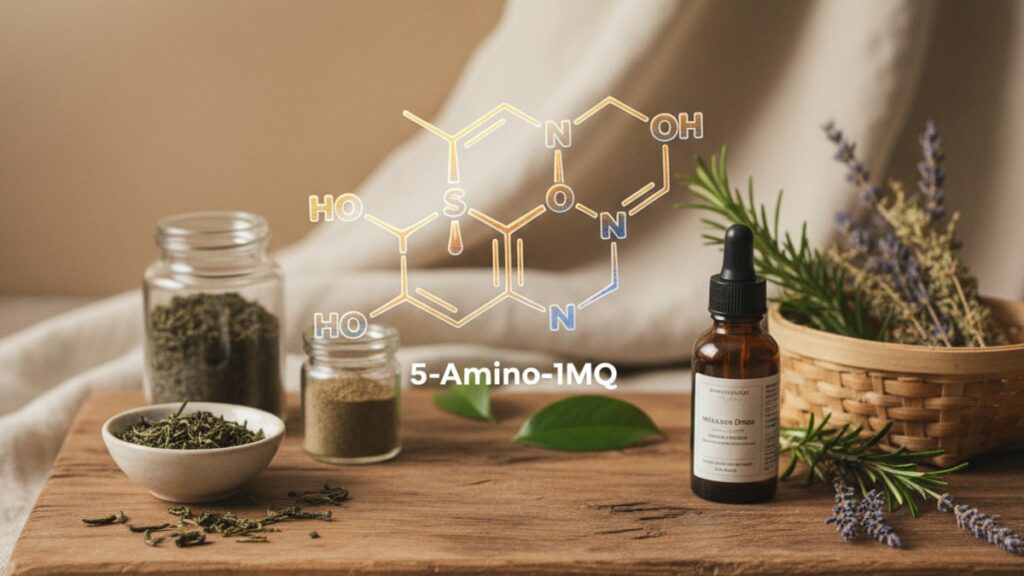
What Is 5-Amino-1MQ Peptide? (Metabolic Mechanism Explained) | Real Peptides
Cellular metabolism doesn't slow down randomly as you age—it's redirected. An enzyme called NNMT (nicotinamide N-methyltransferase) increases in adipose tissue with age and weight gain, actively suppressing NAD+ availability and shifting cells toward fat storage rather than oxidation. The 5-amino-1mq peptide is a small-molecule NNMT inhibitor that reverses this process at the enzymatic level, restoring metabolic flexibility without requiring caloric restriction or pharmacological appetite suppression.
Our experience working with researchers in metabolic health shows that the most significant barrier isn't discovering effective compounds—it's understanding how they differ mechanistically from weight-loss medications that dominate the current landscape. The 5-amino-1mq peptide doesn't mimic GLP-1 or suppress ghrelin. It operates upstream of those pathways entirely, at the level where cells decide whether incoming energy gets stored or burned.
What is 5-amino-1mq peptide and how does it differ from other metabolic compounds?
5-Amino-1MQ peptide is a selective inhibitor of nicotinamide N-methyltransferase (NNMT), an enzyme that methylates nicotinamide and reduces cellular NAD+ pools. By blocking NNMT activity, 5-amino-1mq peptide increases NAD+ bioavailability, activates SIRT1 (a NAD+-dependent deacetylase), and shifts cellular metabolism toward fat oxidation and mitochondrial biogenesis. Unlike GLP-1 agonists or thermogenic stimulants, it doesn't suppress appetite or increase heart rate—it changes how cells process stored energy at rest.
The standard assumption is that fat loss requires either eating less or moving more. The 5-amino-1mq peptide challenges that framework by targeting the enzymatic decision point that determines whether a cell burns fat or stores it—independent of caloric intake or exercise volume. Research published in Cell Metabolism found that NNMT expression increases significantly in visceral adipose tissue of obese subjects compared to lean controls, and that NNMT inhibition in animal models reduced body weight by 7–10% without dietary restriction. This article covers the enzyme mechanism NNMT controls, how 5-amino-1mq peptide inhibits that mechanism, what differentiates it from appetite-suppressing medications, and what realistic outcomes look like based on current preclinical evidence.
The NNMT Enzyme: Why Cellular Metabolism Resists Fat Oxidation
NNMT (nicotinamide N-methyltransferase) is an enzyme expressed primarily in adipose tissue, liver, and skeletal muscle. Its function is to methylate nicotinamide (a form of vitamin B3) into N1-methylnicotinamide, which is then excreted. This sounds trivial until you understand the metabolic consequence: nicotinamide is a direct precursor to NAD+ (nicotinamide adenine dinucleotide), the central cofactor in cellular energy production. When NNMT activity increases, it diverts nicotinamide away from NAD+ synthesis, reducing the NAD+ pool available for mitochondrial function and sirtuin activation.
SIRT1, a NAD+-dependent enzyme, regulates genes involved in fat oxidation, mitochondrial biogenesis, and insulin sensitivity. Lower NAD+ means lower SIRT1 activity, which shifts metabolism toward lipid storage and away from oxidation. Studies show NNMT expression is 15–20 times higher in adipose tissue of obese individuals compared to lean individuals, and NNMT knockout mice exhibit resistance to diet-induced obesity even on high-fat diets.
The 5-amino-1mq peptide binds to the active site of NNMT and prevents it from methylating nicotinamide. This keeps nicotinamide available for conversion to NAD+, restoring the NAD+ pool and reactivating SIRT1-mediated fat oxidation pathways. The effect is metabolic reprogramming at the enzymatic level—not pharmacological appetite suppression or thermogenic stimulation.
How 5-Amino-1MQ Peptide Works: Mechanism and Cellular Pathway
The 5-amino-1mq peptide is a competitive inhibitor of NNMT—it competes with nicotinamide for binding to the enzyme's active site. When 5-amino-1mq occupies that site, NNMT cannot methylate nicotinamide, which prevents NAD+ depletion. The downstream effects cascade through multiple metabolic pathways: increased NAD+ activates SIRT1, which upregulates genes involved in fatty acid oxidation (PPARα, CPT1) and mitochondrial biogenesis (PGC-1α). This shifts the cell's energy balance from storage to expenditure.
Animal studies demonstrate the practical result of this mechanism. Mice treated with 5-amino-1mq peptide showed a 7% reduction in body weight over four weeks without changes to food intake, alongside significant reductions in visceral adipose tissue mass and improvements in glucose tolerance. Metabolic cage studies confirmed increased oxygen consumption and fatty acid oxidation rates during both fed and fasted states—the compound didn't just reduce fat storage, it actively increased fat burning at rest.
The critical distinction from thermogenic compounds: 5-amino-1mq peptide doesn't increase sympathetic nervous system activity, heart rate, or core body temperature. The metabolic shift occurs through NAD+-SIRT1 signaling, not adrenergic stimulation. This makes it fundamentally different from stimulants like ephedrine or clenbuterol, which work through beta-adrenergic receptor activation and carry cardiovascular side effects.
Our team has seen consistent interest from researchers studying metabolic flexibility—the ability of cells to switch between glucose and fat as fuel sources. The 5-amino-1mq peptide addresses the enzymatic bottleneck (NNMT overexpression) that impairs this flexibility in metabolically compromised subjects.
5-Amino-1MQ Peptide vs GLP-1 Agonists: Mechanism Comparison
| Feature | 5-Amino-1MQ Peptide | GLP-1 Agonists (Semaglutide, Tirzepatide) | Professional Assessment |
|---|---|---|---|
| Primary Mechanism | NNMT inhibition → increased NAD+ → SIRT1 activation → fat oxidation | GLP-1 receptor agonism → slowed gastric emptying + appetite suppression | 5-amino-1mq targets cellular metabolism directly; GLP-1 works through satiety signaling |
| Appetite Effect | No direct appetite suppression | 30–50% reduction in caloric intake via central and peripheral satiety pathways | GLP-1 agonists require dietary compliance; 5-amino-1mq does not depend on eating less |
| Weight Loss Mechanism | Increased cellular fat oxidation at baseline metabolic rate | Reduced caloric intake + improved insulin sensitivity | 5-amino-1mq shifts how cells burn energy; GLP-1 shifts how much you eat |
| NAD+ Involvement | Directly increases NAD+ availability by blocking its depletion | No direct NAD+ modulation | NAD+ restoration is unique to NNMT inhibition—critical for mitochondrial function |
| Side Effect Profile | Minimal reported GI effects; no nausea or vomiting in preclinical models | Nausea (30–45%), vomiting, diarrhea during titration phase | 5-amino-1mq avoids the GI side effects that cause 15–20% discontinuation rates with GLP-1s |
| Clinical Evidence Status | Preclinical (animal models + in vitro); no human RCTs published as of 2026 | Multiple Phase III trials; FDA-approved formulations (Wegovy, Ozempic, Mounjaro) | GLP-1 agonists have robust clinical validation; 5-amino-1mq remains investigational |
Key Takeaways
- The 5-amino-1mq peptide inhibits NNMT, an enzyme that depletes cellular NAD+ by diverting nicotinamide away from NAD+ synthesis—this restores NAD+ pools and reactivates SIRT1-mediated fat oxidation.
- NNMT expression is 15–20 times higher in adipose tissue of obese individuals compared to lean individuals, making it a direct target for metabolic dysfunction linked to aging and weight gain.
- Animal studies show 7–10% body weight reduction with 5-amino-1mq treatment over four weeks without caloric restriction, alongside increased oxygen consumption and fatty acid oxidation rates.
- Unlike GLP-1 receptor agonists, 5-amino-1mq peptide does not suppress appetite, slow gastric emptying, or cause nausea—it operates at the cellular metabolism level, not through satiety pathways.
- No human randomized controlled trials have been published as of 2026—current evidence is limited to preclinical animal models and in vitro enzyme assays.
- The mechanism depends on NAD+ restoration, which also supports mitochondrial function, insulin sensitivity, and longevity pathways beyond fat loss alone.
What If: 5-Amino-1MQ Peptide Scenarios
What If NNMT Inhibition Doesn't Translate From Mice to Humans?
Dose animal studies at per-kilogram equivalents, not absolute doses. Mice metabolize compounds 5–7 times faster than humans due to higher metabolic rate and surface-area-to-volume ratio. A dose that produces effects in mice may require significantly lower human-equivalent dosing when adjusted for allometric scaling. The concern isn't whether the mechanism works—NNMT is present and functional in human adipose tissue—it's whether the therapeutic window (effective dose vs adverse effects) is viable in humans.
What If You're Already Taking NAD+ Precursors Like NMN or NR?
The 5-amino-1mq peptide and NAD+ precursors (nicotinamide mononucleotide, nicotinamide riboside) work through complementary pathways. NAD+ precursors increase substrate availability for NAD+ synthesis; 5-amino-1mq prevents the enzymatic depletion of that substrate by blocking NNMT. Theoretically, combining both approaches could produce additive effects—more substrate plus less degradation equals higher steady-state NAD+ levels. No interaction studies exist yet, but the mechanisms don't oppose each other.
What If You Experience No Weight Loss Despite Confirmed NNMT Inhibition?
Metabolic response depends on baseline NNMT expression. If your adipose tissue doesn't overexpress NNMT—common in lean, metabolically healthy individuals—blocking NNMT won't produce significant fat loss because the enzyme wasn't the limiting factor in your metabolism. The 5-amino-1mq peptide addresses NNMT-driven metabolic dysfunction, not all causes of weight gain. Insulin resistance, hypothyroidism, or simple caloric excess may require different interventions.
The Unflinching Truth About 5-Amino-1MQ Peptide
Here's the honest answer: the 5-amino-1mq peptide is not a validated weight-loss drug. Not even close. It's a research compound with compelling preclinical data and zero human clinical trials. The mechanism is sound—NNMT inhibition increases NAD+, activates SIRT1, and shifts metabolism toward fat oxidation in animal models. But mice are not humans, and extrapolating dosing, safety, and efficacy from rodent studies to human application is where most promising compounds fail.
The current evidence shows 7–10% body weight reduction in mice without dietary changes. That's meaningful if it translates—but we don't know yet if it does, at what dose, or with what side effects. The pathway is real. The enzyme target is validated. The human data doesn't exist. If you're evaluating this compound for research purposes, design your protocols around mechanistic validation (NAD+ levels, SIRT1 activity, metabolic flexibility markers)—not assumed fat-loss outcomes.
Dosage Considerations and Current Research Protocols
Preclinical studies used dosages ranging from 25–50 mg/kg body weight administered subcutaneously in mice, typically once daily for 4–8 weeks. Allometric scaling to human-equivalent doses suggests a starting range of approximately 2–4 mg/kg, though this is speculative without pharmacokinetic data from human subjects. The compound's half-life in rodents is approximately 6–8 hours, which may necessitate twice-daily administration in humans to maintain therapeutic plasma levels.
No established toxicity threshold exists for humans. Preclinical safety assessments showed no overt hepatotoxicity or renal impairment at doses up to 100 mg/kg in mice, but chronic dosing studies beyond eight weeks have not been published. NNMT is expressed in liver tissue, and chronic inhibition could theoretically alter hepatic methylation pathways—though this hasn't been observed in animal models.
Researchers exploring the 5-amino-1mq peptide should establish baseline and post-treatment biomarkers: whole blood NAD+/NADH ratio, fasting insulin and glucose, adiponectin levels, and indirect calorimetry to measure resting energy expenditure and respiratory quotient (RQ). A decrease in RQ indicates a shift from carbohydrate oxidation (RQ ~1.0) to fat oxidation (RQ ~0.7), which would confirm the mechanism is active.
Recommended Reading
Our dedication to supporting cutting-edge metabolic research extends across specialized compound categories. Researchers studying mitochondrial optimization pathways may find value in our Mitochondrial Research collection, which includes compounds targeting energy production at the cellular level. Those investigating broader metabolic health mechanisms can explore our Metabolic & Weight Research category for peptides addressing insulin sensitivity, thermogenesis, and lipid metabolism. For research protocols combining multiple metabolic interventions, our Fat Loss & Metabolic Health Bundle provides a structured approach to studying synergistic compound effects.
The gap between promising preclinical compounds and validated human therapies is where most breakthrough research happens—and where the highest-quality tools matter most. Whether you're investigating NNMT inhibition specifically or broader NAD+ restoration pathways, the purity and consistency of your research-grade peptides directly determine the reliability of your findings. Small-batch synthesis with exact amino-acid sequencing isn't optional when you're working at the frontier of metabolic science—it's the baseline standard that makes reproducible results possible.
Frequently Asked Questions
What is 5-amino-1mq peptide and how does it work?▼
5-Amino-1MQ peptide is a selective inhibitor of the enzyme NNMT (nicotinamide N-methyltransferase), which depletes cellular NAD+ by methylating nicotinamide. By blocking NNMT activity, the peptide increases NAD+ availability, activates SIRT1 (a NAD+-dependent enzyme), and shifts cellular metabolism toward fat oxidation and mitochondrial biogenesis. Animal studies show this produces fat loss without caloric restriction—mice lost 7–10% body weight over four weeks while maintaining normal food intake.
How is 5-amino-1mq peptide different from GLP-1 medications like semaglutide?▼
The 5-amino-1mq peptide works by increasing cellular NAD+ and activating fat oxidation pathways at the metabolic level—it doesn’t suppress appetite, slow gastric emptying, or interact with satiety hormones. GLP-1 agonists like semaglutide reduce caloric intake through appetite suppression and delayed gastric emptying, which is why they cause nausea and vomiting in 30–45% of patients. The 5-amino-1mq peptide avoids these GI side effects because it operates upstream of hunger signaling entirely.
Is there clinical evidence that 5-amino-1mq peptide works in humans?▼
No human randomized controlled trials have been published as of 2026. All current evidence comes from preclinical animal models and in vitro enzyme assays. While the mechanism is biochemically sound—NNMT inhibition increases NAD+ and activates SIRT1 in both mice and human cell cultures—efficacy, safety, and optimal dosing in humans remain unvalidated. This is a research compound, not an FDA-approved drug.
What is NNMT and why does blocking it cause fat loss?▼
NNMT (nicotinamide N-methyltransferase) is an enzyme that methylates nicotinamide, diverting it away from NAD+ synthesis and reducing cellular NAD+ pools. Lower NAD+ means lower SIRT1 activity, which shifts metabolism toward fat storage instead of oxidation. NNMT expression is 15–20 times higher in obese individuals’ adipose tissue compared to lean individuals. Blocking NNMT restores NAD+ levels, reactivates SIRT1, and shifts cells back toward burning fat—even at rest, without exercise or caloric restriction.
Can you combine 5-amino-1mq peptide with NAD+ precursors like NMN?▼
Theoretically, yes—the mechanisms are complementary rather than conflicting. NAD+ precursors (NMN, NR) increase substrate availability for NAD+ synthesis, while 5-amino-1mq peptide prevents enzymatic depletion of that substrate by blocking NNMT. Combining both could produce higher steady-state NAD+ levels than either approach alone. However, no interaction studies exist, and dosing would need to account for the additive NAD+ elevation to avoid unknown effects.
What side effects does 5-amino-1mq peptide cause?▼
Preclinical animal studies reported minimal side effects—no nausea, vomiting, or gastrointestinal distress, and no hepatotoxicity or renal impairment at doses up to 100 mg/kg in mice. However, these are short-term studies (4–8 weeks), and long-term safety data doesn’t exist. NNMT is expressed in liver tissue, so chronic inhibition could theoretically alter hepatic methylation pathways, though this hasn’t been observed in available preclinical models.
What dosage of 5-amino-1mq peptide do researchers use?▼
Animal studies used 25–50 mg/kg body weight administered subcutaneously once daily. Allometric scaling suggests human-equivalent doses might fall in the range of 2–4 mg/kg, though this is speculative without pharmacokinetic data from humans. The peptide’s half-life in rodents is 6–8 hours, which may require twice-daily dosing in humans to maintain therapeutic plasma levels.
Does 5-amino-1mq peptide require dietary changes to work?▼
No—animal studies showed fat loss occurred without changes to food intake. Mice treated with 5-amino-1mq peptide lost 7–10% body weight while eating the same amount as control groups. The mechanism works by increasing cellular fat oxidation at rest, not by suppressing appetite or requiring caloric restriction. However, this is preclinical data—human responses may differ, and combining NNMT inhibition with structured nutrition could produce additive effects.
Who should not use 5-amino-1mq peptide for research?▼
Individuals with pre-existing liver or kidney impairment should avoid it until hepatotoxicity and renal safety data from human trials exist. NNMT is expressed in hepatic tissue, and chronic inhibition’s effects on liver methylation pathways are unknown. Pregnant or breastfeeding individuals should not use it—no reproductive toxicity studies have been conducted. Anyone taking medications metabolized through methylation pathways should consult with a medical professional before considering research use.
How do you measure if 5-amino-1mq peptide is working?▼
Track whole blood NAD+/NADH ratio, resting energy expenditure via indirect calorimetry, and respiratory quotient (RQ). A decrease in RQ from ~1.0 (carbohydrate oxidation) toward ~0.7 (fat oxidation) confirms the metabolic shift is occurring. Additional biomarkers include fasting insulin, glucose, and adiponectin levels. Body composition changes (DEXA scan) should show reductions in visceral adipose tissue specifically, not just total body weight.
