





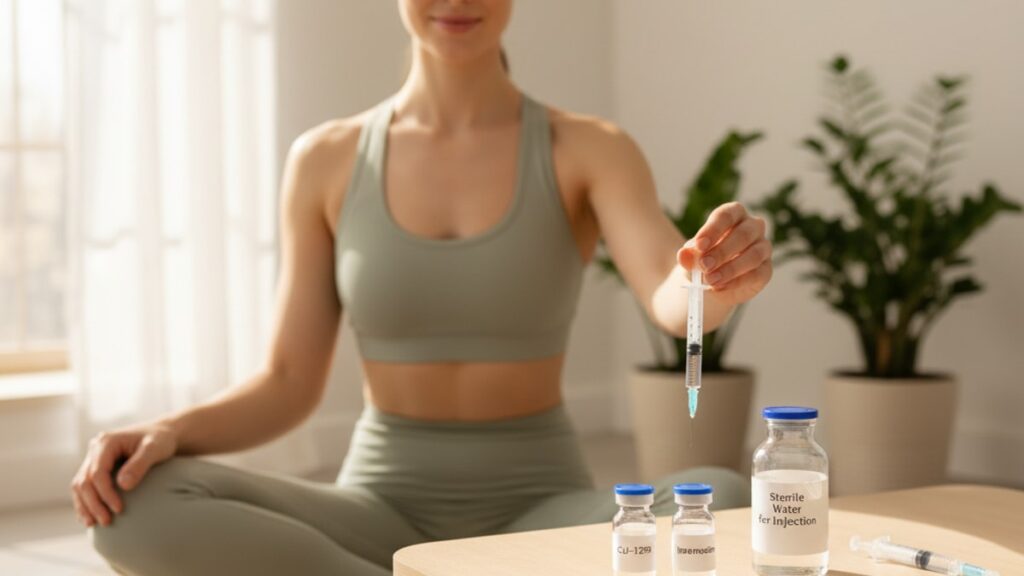
You’ve made a significant investment in your research. You’ve sourced high-purity peptides, understanding that the quality of your starting materials dictates the reliability of your results. Now comes the moment of truth, the critical, non-negotiable step that stands between that pristine lyophilized powder and a usable solution: reconstitution. It sounds simple, but our team has seen firsthand how this one procedure can make or break a study. Getting it wrong isn't just an inconvenience; it can compromise the entire project.
Let's be honest, the instructions that sometimes accompany research peptides can be cryptic at best and catastrophically vague at worst. That’s why we’re here. At Real Peptides, our expertise doesn't end when the product leaves our facility. We believe in empowering researchers with the knowledge to handle these delicate compounds with the precision they deserve. This isn't just a guide; it's our direct, professional protocol for how to reconstitute CJC 1295 Ipamorelin 5mg, refined over years of hands-on laboratory experience.
What Exactly is Reconstitution? (And Why It Matters So Much)
Before we dive into the 'how,' let's quickly solidify the 'what' and 'why.' Peptides, like the CJC 1295 / Ipamorelin 5mg/5mg blend we meticulously synthesize, are shipped in a lyophilized state. Think of it as freeze-dried. This process removes water and makes the peptide a stable, lightweight powder, perfect for shipping and long-term storage. It's incredibly effective at preserving the delicate amino acid chains.
Reconstitution is simply the process of reintroducing a liquid—a diluent—to this powder to bring it back into a solution for use. Simple, right?
Not quite. The process is a minefield of potential errors. The type of diluent matters. The volume of diluent matters. The technique you use to mix it matters. We can't stress this enough: peptides are fragile. They are complex, folded chains of amino acids. Aggressive handling, the wrong pH, or bacterial contamination can denature them, rendering them completely useless. Your precision in this step is paramount. It ensures that the peptide's structural integrity is maintained, its bioavailability is maximized, and your research data is untainted by procedural error. It's the moment you activate the potential of the compound, and it demands your full attention.
Gathering Your Essential Supplies
Proper preparation is half the battle. Walking into this process without the right tools is like trying to perform surgery with a butter knife—it’s just not going to end well. Our experience shows that having everything laid out and sterilized in a clean environment dramatically reduces the risk of contamination or mistakes. It’s a simple step that professionals never skip.
Here’s what you absolutely need:
- Your Lyophilized Peptide: In this case, a vial of CJC 1295 / Ipamorelin. The quality of your source is the foundation of your work. Our vials at Real Peptides are sealed to maintain sterility and purity from our lab to yours.
- Bacteriostatic Water: This is the industry-standard diluent for most peptides. It’s sterile water containing 0.9% benzyl alcohol, which acts as a preservative to prevent bacterial growth after the vial has been opened. We strongly recommend using a high-quality Bacteriostatic Water to maintain the sterility of your solution.
- A Mixing Syringe: A 3mL or 5mL syringe with a needle (typically 21-23 gauge) is ideal for accurately drawing and transferring the bacteriostatic water.
- Alcohol Prep Pads: For sterilizing the vial stoppers. This is non-negotiable. Never assume a surface is clean enough.
- A Clean, Uncluttered Workspace: A dedicated area, wiped down with a disinfectant, where you can work without interruption.
- Gloves: Protect your peptide from you, and you from your peptide. It's just good lab practice.
Having these items ready prevents you from scrambling mid-process, which is when mistakes often happen. Take a few minutes to set up your station properly. It’s a hallmark of disciplined research.
The Reconstitution Calculation: Getting the Math Right
This is where many researchers feel a flicker of anxiety. But the math is more straightforward than it appears. The goal is to create a solution where you know exactly how much peptide (in micrograms, mcg) is in a given volume (in milliliters, mL, or units on an insulin syringe). Correctly calculating your concentration is fundamental for accurate dosing in your research.
Let's break it down using our standard CJC 1295 Ipamorelin 5mg/5mg vial.
Step 1: Know Your Total Peptide Amount
- The vial contains 5mg of CJC 1295 and 5mg of Ipamorelin.
- Total Peptide = 10mg.
- Since dosing is usually in micrograms (mcg), let's convert it: 1mg = 1000mcg.
- Total Peptide = 10mg * 1000 = 10,000mcg.
Step 2: Choose Your Diluent Volume
This is up to you and depends on your desired concentration. Using more diluent makes the solution less concentrated (fewer mcg per unit), which can make measuring smaller doses easier. Using less diluent makes it more concentrated. Let's use 2mL of bacteriostatic water as a common example.
Step 3: Calculate the Concentration
- You have 10,000mcg of peptide in your vial.
- You are adding 2mL of bacteriostatic water.
- So, your final solution has a concentration of 10,000mcg per 2mL.
To simplify this for dosing with an insulin syringe (which measures in units, where 100 units = 1mL):
- Total Volume = 2mL = 200 units.
- Concentration = 10,000mcg / 200 units = 50mcg per unit.
So, with this mixture, every single unit mark on your insulin syringe contains 50mcg of the peptide blend. If your research protocol calls for a 500mcg dose, you would draw 10 units.
To make this even clearer, here's a comparison table our team put together showing how different volumes of bacteriostatic water affect the final concentration in a 10mg vial. This is a powerful illustration of why your choice of diluent volume is so important.
| Diluent Volume Added | Total Peptide Content | Concentration per 0.1mL (10 units) | Concentration per 0.01mL (1 unit) |
|---|---|---|---|
| 2 mL | 10,000 mcg | 500 mcg | 50 mcg |
| 4 mL | 10,000 mcg | 250 mcg | 25 mcg |
| 5 mL | 10,000 mcg | 200 mcg | 20 mcg |
| 10 mL | 10,000 mcg | 100 mcg | 10 mcg |
As you can see, adding 10mL of water results in a much lower concentration, which might be perfect for protocols requiring very small, precise doses. For most applications, 2mL to 4mL is a functional sweet spot. Double-check your math. Then check it again. It's the bedrock of your entire study.
I Stacked Retatrutide and MOTS-c for 60 Days and THIS Happened!
This video provides valuable insights into how to reconstitute cjc 1295 ipamorelin 5mg, covering key concepts and practical tips that complement the information in this guide. The visual demonstration helps clarify complex topics and gives you a real-world perspective on implementation.
Step-by-Step Reconstitution Protocol: The Real Peptides Process
Alright, you've got your supplies, you've done the math, and your workspace is sterile. Now for the main event. Follow these steps precisely. This is our in-house method, designed to protect the integrity of the peptide at every stage.
1. Prepare the Vials
First things first. If your peptide and bacteriostatic water vials have plastic caps, pop them off. You'll see a rubber stopper underneath. Take an alcohol prep pad and vigorously wipe the top of both stoppers. Don't be shy. You want to remove any potential contaminants. Let them air dry for about 30-60 seconds. Don't blow on them or wipe them dry—that just reintroduces contaminants.
2. Draw the Bacteriostatic Water
Take your 3mL mixing syringe. Pull back the plunger to the mark of the volume you calculated earlier (e.g., 2mL). This draws air into the syringe. Now, insert the needle through the center of the rubber stopper of the bacteriostatic water vial. Inject the air into the vial. This equalizes the pressure, making it much easier to draw the liquid out. If you skip this, you’ll be fighting a vacuum. Once the air is in, invert the vial and slowly pull back the plunger to draw your desired amount of water.
3. Inject the Water (The Critical Step)
This is the most delicate part of the whole process. That lyophilized powder looks sturdy, but it's not. You cannot, under any circumstances, blast the stream of water directly onto the peptide cake. That's a catastrophic error. The force can shear the peptide bonds, destroying the compound.
Here’s the correct technique: Take your syringe filled with bacteriostatic water and insert the needle through the rubber stopper of the peptide vial. Angle the needle so that the tip is touching the inside glass wall of the vial. Now, slowly—and we mean slowly—depress the plunger. Let the water gently run down the side of the glass and pool at the bottom. The goal is to introduce the water as peacefully as possible.
4. Mix Gently. Very Gently.
Once all the water is in, remove the syringe. Now you need to dissolve the powder. Your first instinct might be to shake it like a protein shake. Don't. You must never, ever shake a peptide vial.
Instead, gently roll the vial between your palms. You can also lightly swirl it with your fingers. The powder will dissolve quite easily. It might take a minute or two, but be patient. This gentle agitation is all that's needed to create a homogenous solution without damaging the peptide molecules. For those who are visual learners, seeing these techniques in action can be invaluable. Our team often breaks down similar lab protocols on platforms like YouTube, and we highly recommend seeking out visual guides if you're unsure. You can see how experts handle these compounds on channels like the one from our friends at MorelliFit.
5. Inspect the Final Solution
Once the powder is fully dissolved, hold the vial up to a light source. The solution should be perfectly clear. Crystal clear. If you see any cloudiness, discoloration, or floating particles, something is wrong. It could indicate a contamination issue or a problem with the peptide itself. At Real Peptides, our quality control is so stringent that this is exceptionally rare, but it's a critical safety check regardless of your source.
6. Label and Store Immediately
Your peptide is now in its active, but much less stable, liquid form. Use a marker to label the vial with the date of reconstitution and the final concentration (e.g., "500mcg/10 units"). Immediately place it in the refrigerator. Do not leave it sitting out.
And that's it. You've successfully and safely reconstituted your peptide. You’ve taken a crucial step in ensuring your research is valid and repeatable.
Understanding Your Diluent: A Quick Comparison
While we almost always recommend bacteriostatic water, it's worth understanding the alternatives so you know why it's the superior choice for this application.
-
Bacteriostatic Water: As we've covered, this is sterile water with a small amount of benzyl alcohol. The alcohol is a bacteriostatic agent, meaning it prevents bacteria from reproducing. This is absolutely essential for multi-use vials. Every time you puncture the stopper, you introduce a small risk of contamination. BAC water mitigates that risk, keeping your solution safe for use over several weeks.
-
Sterile Water: This is simply purified water that has been sterilized. It contains no preservative. While it’s perfectly fine for reconstituting a peptide, it's only suitable if you plan to use the entire contents of the vial in a single session. Without a preservative, any bacteria introduced will happily multiply, quickly rendering your solution unsafe.
-
Acetic Acid: You might see this mentioned in some research circles. A very dilute acetic acid solution is required for a small subset of peptides, like certain IGF-1 variants, that are not soluble in water. It is absolutely not necessary or recommended for CJC 1295 / Ipamorelin. Using it would alter the pH and likely damage the peptides.
For CJC 1295 / Ipamorelin, the choice is clear. Bacteriostatic water provides the safety and stability needed for a typical research protocol.
Storage and Stability: Protecting Your Investment
How you store your peptides, both before and after reconstitution, directly impacts their lifespan and efficacy. Think of them as sensitive biological instruments that need to be protected from their enemies: heat, light, and time.
Before Reconstitution (Lyophilized Powder):
- Long-Term Storage: For periods longer than a few weeks, the lyophilized powder should be stored in a freezer (around -20°C or -4°F). In this state, it's incredibly stable and can last for years.
- Short-Term Storage: If you plan to use it within a few weeks, storing it in a standard refrigerator (2°C to 8°C or 36°F to 46°F) is perfectly acceptable.
After Reconstitution (Liquid Solution):
This is when the clock really starts ticking. The peptide is now far more susceptible to degradation.
- Always Refrigerate: The reconstituted solution must be kept in the refrigerator at all times. Never leave it out at room temperature for any extended period.
- Protect from Light: While most lab refrigerators are dark, it's good practice to store the vial in its original box or another container to protect it from light, which can also degrade peptides over time.
- Expected Shelf-Life: When reconstituted with bacteriostatic water and stored properly, your CJC 1295 / Ipamorelin solution should remain stable and effective for at least 30 to 45 days. Beyond this, its potency may begin to decline.
Treating your peptides with this level of care ensures that the last dose of your study is just as potent as the first. If you're ready to ensure your research is built on a foundation of quality and precision, you can Get Started Today by exploring our verified peptide offerings.
Our Commitment to Purity
We've spent this entire article talking about the importance of precision and avoiding contamination on your end. But it all starts with us. The most impeccable reconstitution technique in the world can't fix an impure or improperly synthesized peptide. That's why we're so relentless about our process at Real Peptides.
Our commitment isn't just a marketing slogan; it's the core of our operational philosophy. We utilize small-batch synthesis, a more meticulous and controlled process that ensures consistency from vial to vial. Every single batch has its amino acid sequence verified, guaranteeing that what's on the label is exactly what's in the vial. This unflinching dedication to purity is what gives researchers the confidence to build their studies on our compounds, from well-known peptides like BPC 157 to more specialized ones. You can explore our full range of peptides to see the breadth of our work.
When you know you're starting with a product that is guaranteed to be pure and accurately dosed, the reconstitution process becomes less about hoping for the best and more about executing a precise scientific protocol. You can focus on your technique, confident that the compound itself is perfect.
Ultimately, the care you take in this single step—reconstitution—directly reflects the quality and validity of your entire research project. It's a small procedure with massive implications, bridging the gap between a stable powder and a powerful research tool. By following these steps, you’re not just mixing a solution; you’re upholding the standards of excellent science.
Frequently Asked Questions
How much bacteriostatic water should I use for a 5mg/5mg CJC 1295 Ipamorelin vial?
▼
The amount depends on your desired concentration. A common choice is 2mL of bacteriostatic water, which results in a concentration of 500mcg per 0.1mL (10 units). Using more water, like 4mL, will make the solution less concentrated (250mcg per 0.1mL), which can be useful for smaller, more precise dosing protocols.
What happens if I accidentally shake the vial?
▼
Shaking the vial can damage the fragile peptide chains through mechanical stress, a process called shearing. This can denature the peptides, breaking them apart and rendering them ineffective. Always mix by gently rolling or swirling the vial.
My reconstituted peptide solution is cloudy. What does this mean?
▼
A properly reconstituted peptide solution should be perfectly clear. Cloudiness can indicate a few problems: bacterial contamination, poor quality peptide that didn’t dissolve properly, or a reaction with an incorrect diluent. We advise against using any solution that is not clear.
How long is reconstituted CJC 1295 Ipamorelin good for?
▼
When reconstituted with bacteriostatic water and stored consistently in a refrigerator (2-8°C), the solution should remain stable and potent for at least 30-45 days. Its potency may begin to decline after this period.
Can I use sterile water instead of bacteriostatic water?
▼
You can, but only if you plan to use the entire contents of the vial immediately. Sterile water has no preservative, so once the stopper is punctured, it can easily become contaminated with bacteria. Bacteriostatic water contains a preservative, making it safe for multi-use vials.
Do I need to let the vials warm up to room temperature before mixing?
▼
Yes, it’s good practice to let both the peptide vial and the bacteriostatic water come to room temperature before reconstituting. This helps ensure the powder dissolves easily and reduces the risk of damaging the compound with a sudden temperature change.
The amount of powder in my vial looks very small. Is this normal?
▼
Yes, this is completely normal. Lyophilized peptides are extremely lightweight and potent. An amount like 10mg is a tiny speck of white powder, often barely visible at the bottom of the vial. The rest of the vial is a vacuum to ensure stability.
Is it okay to pre-load syringes for the week?
▼
Our team generally advises against this. While convenient, storing peptides in plastic syringes can lead to degradation over time as the solution interacts with the plastic and rubber plunger. It’s always best to draw each dose from the glass vial immediately before use.
What is the ideal temperature for refrigerating my reconstituted peptides?
▼
The ideal temperature range for a refrigerator storing peptides is between 2°C and 8°C (36°F and 46°F). It’s crucial to ensure the vial does not freeze, as the freeze-thaw cycle can damage the peptide structure.
Is it normal for there to be a vacuum inside the peptide vial?
▼
Yes, it is. Our peptides are often sealed under a vacuum to preserve the lyophilized powder and protect it from oxidation and moisture during shipping and storage. This is a sign of proper manufacturing and sealing.
Where can I find high-quality bacteriostatic water?
▼
For convenience and to ensure compatibility and quality, we offer lab-tested [Bacteriostatic Water](https://www.realpeptides.co/products/bacteriostatic-water/) directly on our site. This ensures you have a sterile, reliable diluent for your research needs.











