





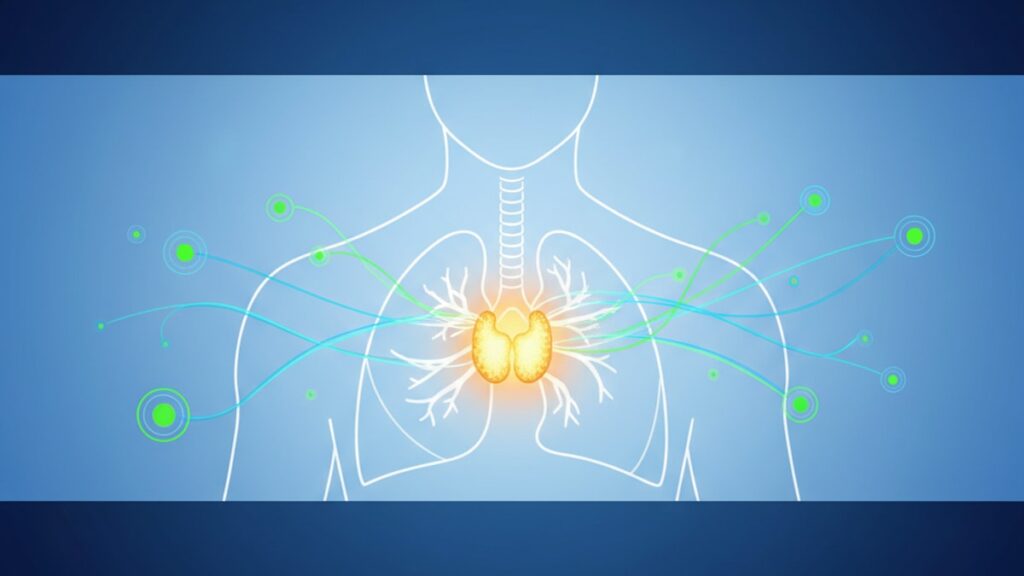
It’s one of the most fundamental questions in immunology, yet one that often gets a simplified answer. You're here because you want to know: what endocrine gland secretes thymosin? The short answer is the thymus gland. But honestly, stopping there would be a massive disservice to the incredible complexity and importance of this small, often-overlooked organ.
Here at Real Peptides, our team is immersed in the world of biological research every single day. We don’t just supply high-purity peptides; we partner with researchers who are pushing the boundaries of science. We've found that understanding the why behind a biological process is just as critical as knowing the what. So, let's move beyond the simple answer and explore the thymus, the thymosin family of peptides, and why this system is a focal point for some of the most exciting research happening today, from aging to immune recovery.
The Thymus Gland: More Than Just a Name
So, the thymus. What is it, really?
It’s a specialized primary lymphoid organ located right behind your sternum and in between your lungs. You might be surprised to learn it has a fascinating lifecycle. In infants and children, the thymus is large and incredibly active. It’s working overtime, building the foundational architecture of the immune system. But as we age, a process called thymic involution begins. The gland gradually shrinks and is replaced by fatty tissue, leading to a significant drop in its function. This isn't just a random biological quirk; it has profound implications for health and longevity, something we'll get into shortly.
Let’s be honest, this is crucial. The thymus isn't just another gland; it’s a dual-purpose powerhouse. It functions as part of both the lymphatic system and the endocrine system. As a lymphatic organ, it's the primary site for the maturation of a special type of white blood cell. As an endocrine gland, it produces and secretes several hormones—or more accurately, peptide hormones—collectively known as thymosins. These peptides are the chemical messengers that orchestrate the gland's primary mission.
That mission? To train and develop T-lymphocytes, or T-cells. These are the elite special forces of your immune system, responsible for directly killing infected cells, activating other immune cells, and regulating the entire immune response. Without a properly functioning thymus, you don't have a properly functioning adaptive immune system. It's that critical.
Unpacking the Thymosin Family
Now, this is where it gets interesting. The term “thymosin” is a bit of a catch-all. It doesn’t refer to a single molecule but rather a whole family of distinct peptides, each with a unique structure and function. Think of it less like a single key and more like a master key ring. For the research community, two members of this family have garnered the most attention due to their specific and powerful biological activities: Thymosin Alpha 1 and Thymosin Beta 4.
Our experience shows that clarity here is paramount for designing effective studies. They are not interchangeable.
Thymosin Alpha 1 (TA1) is primarily known as an immune modulator. It acts as a potent regulator of T-cell function, enhancing the immune system's ability to respond to threats. In research settings, TA1 is investigated for its potential to restore immune function, act as a vaccine adjuvant, and support the body's response against various pathogens. It's a peptide that helps fine-tune the immune system's readiness and response. For researchers exploring immunomodulation, our high-purity Thymosin Alpha 1 Peptide provides the consistency and reliability needed for reproducible results.
Thymosin Beta 4 (TB4), on the other hand, is a different beast altogether. While it has some immune-modulating effects, its claim to fame is its profound role in tissue repair, regeneration, and wound healing. It's a key player in cell migration, blood vessel formation (angiogenesis), and reducing inflammation. This makes it a formidable subject of study in areas like cardiovascular repair, musculoskeletal injury, and wound care. Scientists leveraging our TB 500 Thymosin Beta 4 are exploring mechanisms that could redefine recovery and repair. We've seen it work in countless preclinical models.
Understanding this distinction is a non-negotiable element for any serious researcher. You wouldn't use a screwdriver to hammer a nail, and you wouldn't use TA1 when your primary research goal is angiogenesis. The precision of the tool matters.
T-Cell University: How the Thymus Trains Its Soldiers
To truly appreciate what thymosin does, we need to zoom in on the process it governs: T-cell maturation. It's one of the most elegant and ruthless quality control systems in all of biology.
Immature T-cells, called thymocytes, are born in the bone marrow. From there, they migrate to the thymus to attend what can only be described as a biological boot camp or an incredibly exclusive university. The thymus provides a unique microenvironment where these thymocytes are educated and tested. The thymosin peptides act as the signaling hormones—the drill sergeants and professors—that guide this entire process.
The curriculum involves two critical exams:
-
Positive Selection: First, the thymocytes are tested on their ability to recognize the body's own major histocompatibility complex (MHC) molecules. These are proteins on the surface of cells that present antigens (like pieces of a virus) to T-cells. If a thymocyte can't recognize the body's own MHC, it's useless. It can't receive signals. So, it fails the exam and is instructed to die via a process called apoptosis (programmed cell death). Only about 2% of thymocytes pass this test. Yes, a 98% failure rate. It's intense.
-
Negative Selection: The survivors then face the second, arguably more important, exam. They are tested to see if they react too strongly to the body's own self-antigens when presented on MHC molecules. If a T-cell attacks the body's own tissues, it can cause autoimmune disease. These self-reactive cells are a catastrophic liability. They also fail the exam and are eliminated through apoptosis.
Only the thymocytes that pass both tests—those that can recognize the body's MHC but don't attack its own cells—are allowed to graduate. They become mature, effective T-cells that are then released into the bloodstream to patrol the body for pathogens and cancer cells. This whole intricate dance is orchestrated by the peptides secreted by the thymus. Without them, the system collapses.
The Great Decline: Thymic Involution and Immunosenescence
We mentioned earlier that the thymus shrinks with age. This process, thymic involution, is a central feature of aging and a major contributor to what scientists call immunosenescence—the age-associated decline of the immune system.
As the thymus atrophies, its ability to produce new, naive T-cells plummets. Your body is left relying on the pool of memory T-cells it created when you were younger. While these memory cells are great at fighting off pathogens they've seen before, the immune system becomes less and less equipped to handle new threats. A novel virus, a new bacterial strain, or a cancerous cell that evades old defenses can become a much more formidable opponent.
This has very real consequences. It's why older adults are often more susceptible to infections like influenza and pneumonia, respond less effectively to vaccines, and have a higher incidence of certain cancers. The decline of the thymus isn't just an anatomical curiosity; it's a fundamental driver of age-related vulnerability. And this, right here, is why thymic peptides are at the forefront of longevity and immunology research. Scientists are asking a powerful question: can we support or even partially reverse the effects of immunosenescence by studying the very molecules the youthful thymus produces?
This isn't science fiction. It's the tangible, difficult, often moving-target objective of labs around the world—labs that we are proud to support.
The Research Frontier: Where Thymic Peptides Are Making Waves
Given everything we've discussed, it's no surprise that thymic peptides are a hotbed of scientific inquiry. The potential applications being explored in preclinical and clinical research are sprawling and ambitious.
Our team has found that researchers are primarily focused on a few key areas:
- Immune Reconstitution: For patients whose immune systems have been compromised (for example, by chemotherapy or certain diseases), there is intense interest in using peptides like Thymosin Alpha 1 to help rebuild and accelerate the recovery of the T-cell population.
- Vaccine Adjuvants: How can we make vaccines more effective, especially in older populations whose immune systems don't respond as robustly? TA1 is being studied as an adjuvant—a substance that enhances the immune response to an antigen—to potentially boost vaccine efficacy.
- Tissue Regeneration: The potential for Thymosin Beta 4 to accelerate healing is a vast field of study. From helping repair heart tissue after a heart attack to speeding up the healing of skin wounds and protecting against neurological damage, the therapeutic avenues are incredibly diverse.
- Anti-Inflammatory Effects: Chronic inflammation is a hallmark of many diseases. Both TA1 and TB4 have demonstrated anti-inflammatory properties in various research models, making them interesting candidates for studies on autoimmune conditions and chronic inflammatory states.
To help clarify the focus for research applications, we've put together a simple comparison.
| Feature | Thymosin Alpha 1 (TA1) | Thymosin Beta 4 (TB4 / TB-500) |
|---|---|---|
| Primary Research Area | Immune modulation, T-cell function enhancement | Tissue repair, wound healing, angiogenesis, anti-inflammatory |
| Main Mechanism | Upregulates helper T-cells (Th1), activates dendritic cells | Promotes actin polymerization, cell migration, cell survival |
| Key Investigated Uses | Vaccine adjuvant, immune restoration, antiviral support | Cardioprotection, musculoskeletal repair, dermal wound healing |
| Molecular Size | Smaller peptide (28 amino acids) | Larger peptide (43 amino acids) |
| Our Product Focus | Thymosin Alpha 1 Peptide | TB 500 Thymosin Beta 4 |
This kind of research demands impeccable tools. When you're studying subtle changes in cellular behavior or immune function, you simply cannot afford to have impurities or incorrect peptide sequences in your compounds. It's the fastest way to get confounding data and waste months of effort. It's a catastrophic failure point.
Sourcing for Science: Why Purity is Everything
This brings us to a point we can't stress enough. The success of any study involving peptides hinges on the quality of the peptides themselves. This isn't a place to cut corners. It’s the bedrock of your entire experiment.
At Real Peptides, this is our entire philosophy. We are a U.S.-based supplier, and every peptide we offer is crafted through small-batch synthesis with exact amino-acid sequencing. Why? Because we know that our clients—leading researchers in their fields—require absolute purity and consistency. When your study calls for Thymosin Alpha 1, you need to be 100% certain that's what's in the vial, free from contaminants and with the precise structure required for biological activity.
We've seen the difference it makes. Reliable data comes from reliable tools. Whether you're investigating the immunomodulatory effects of TA1, the regenerative potential of TB4, or the mechanisms of any of the other cutting-edge compounds in our full peptide collection, you can trust that our commitment to quality is unwavering. For more in-depth discussions on these topics, we often break down complex concepts on our platforms; in fact, you can check out our YouTube channel for more visual content and expert insights.
It all comes down to enabling good science. That's our goal. When you're ready to take your research to the next level with compounds you can depend on, we're here. You can explore our offerings and Get Started Today.
The journey from asking "what endocrine gland secretes thymosin?" to understanding the intricate world of T-cell maturation and immunosenescence is a perfect example of how a simple question in biology can unfold into a universe of complexity and potential. The thymus may shrink with age, but its importance in the scientific community is only growing. As researchers continue to unlock the secrets of thymic peptides, they are paving the way for new frontiers in health, recovery, and longevity. And we're honored to be a part of that journey, providing the foundational tools for discovery, one high-purity peptide at a time.
Frequently Asked Questions
What is the primary function of the thymus gland?
▼
The primary function of the thymus gland is to serve as the maturation site for T-lymphocytes (T-cells). It’s essentially a specialized training ground where immature T-cells from the bone marrow develop into functional, mature T-cells that can distinguish between self and non-self.
So, is thymosin a single hormone?
▼
No, it’s not. ‘Thymosin’ refers to a family of several different hormone-like peptides secreted by the thymus. The most extensively researched members are Thymosin Alpha 1, known for its immune-modulating effects, and Thymosin Beta 4, known for its role in tissue repair.
Why does the thymus gland shrink as we get older?
▼
This process is called thymic involution, and it’s a natural part of aging. The exact reasons are complex, but it’s driven by changes in hormonal signals and the cellular environment. This shrinking leads to a reduced output of new T-cells, contributing to age-related immune decline.
What are T-cells and why are they so important?
▼
T-cells are a type of white blood cell that play a central role in the adaptive immune system. They are critical for identifying and destroying infected cells, activating other immune cells, and maintaining immunological memory. Without effective T-cells, the body cannot mount a targeted defense against new pathogens.
What is the difference between Thymosin Alpha 1 and Thymosin Beta 4?
▼
While both are thymic peptides, their primary research applications differ. Thymosin Alpha 1 is studied mainly for its ability to modulate and enhance immune function. Thymosin Beta 4 (often researched as TB-500) is primarily investigated for its potent effects on tissue regeneration, wound healing, and angiogenesis.
Are there other glands that produce thymosin-like peptides?
▼
The thymus is the principal source of thymosins involved in T-cell maturation. However, some peptides, particularly Thymosin Beta 4, are expressed in many other tissues and cell types throughout the body, reflecting its widespread role in cellular maintenance and repair.
What is ‘immunosenescence’?
▼
Immunosenescence refers to the gradual deterioration of the immune system brought on by natural age advancement. It involves changes to both the adaptive and innate immune responses and is a key reason why elderly individuals are more susceptible to infections and have a reduced response to vaccinations.
How are research peptides like those from Real Peptides made?
▼
Our peptides are created through a process called solid-phase peptide synthesis. This laboratory method allows us to build peptides by adding amino acids one by one in a precise sequence, ensuring the final product is structurally identical to the natural molecule and has exceptionally high purity for reliable research.
Can the function of the thymus be restored?
▼
This is a major area of ongoing research in the field of geroscience. Scientists are investigating various strategies, from hormonal therapies to studying thymic peptides, to see if it’s possible to slow, halt, or even partially reverse thymic involution and restore some youthful immune function.
Is the thymus part of the endocrine system or the lymphatic system?
▼
It’s both! It’s considered a primary lymphoid organ because it’s where lymphocytes mature. It’s also an endocrine gland because it secretes hormones (the thymosin peptides) that regulate this process, making it a unique bridge between these two critical systems.
What is ‘negative selection’ in the thymus?
▼
Negative selection is a critical quality-control step during T-cell maturation. It’s the process by which the thymus identifies and eliminates T-cells that react too strongly against the body’s own proteins (self-antigens). This prevents the development of autoimmune diseases.
Why is peptide purity so important for scientific research?
▼
Purity is non-negotiable because contaminants or improperly sequenced peptides can produce misleading or inaccurate results, potentially invalidating an entire experiment. For reproducible and reliable data, researchers must use compounds, like those we supply at Real Peptides, with guaranteed purity and structural accuracy.











