


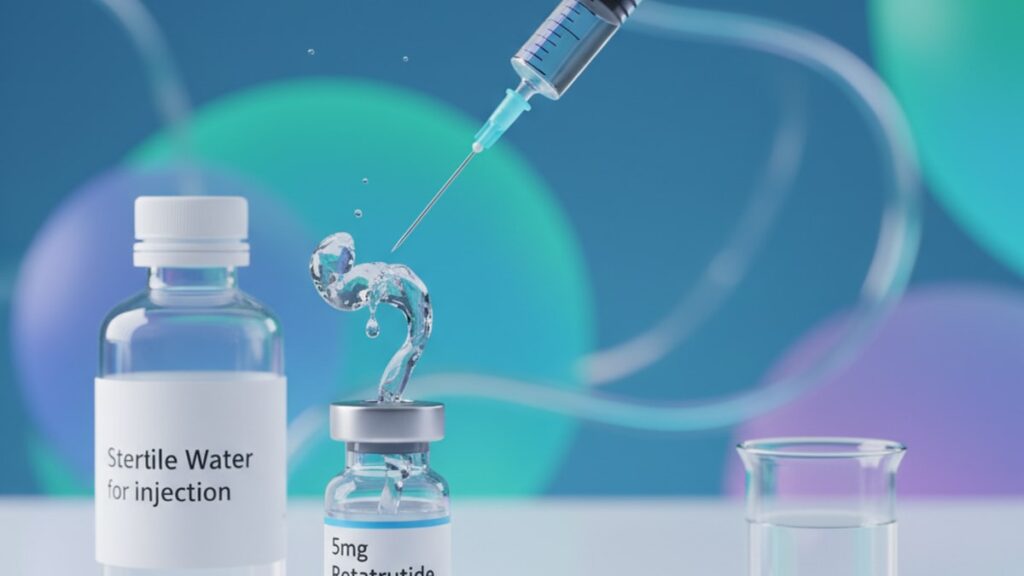
In the world of cutting-edge biological research, precision isn't just a goal; it's the entire foundation. Every variable, from temperature control to timing, can influence an outcome. Yet, our team has found that one of the most fundamental procedures—the reconstitution of lyophilized peptides—is often where critical errors can silently creep in, potentially compromising weeks or even months of work. It’s a make-or-break moment for your study's integrity.
That's why we're dedicating this space to one specific, crucial process: how to reconstitute 5mg Retatrutide. This isn't just a set of instructions. It's a protocol born from our collective experience in peptide synthesis and handling. At Real Peptides, we obsess over purity from the moment of creation, employing small-batch synthesis to guarantee exact amino-acid sequencing. But that initial purity means little if the peptide is mishandled in the lab. This is our definitive guide to ensuring the Retatrutide you use in your research maintains its structural integrity and delivers the reliable, repeatable data you depend on.
Why Proper Reconstitution is Non-Negotiable
Let's be direct. The process of turning a stable, freeze-dried peptide powder into a usable liquid solution is a delicate chemical procedure. It’s not just 'adding water.' Far from it. When you reconstitute a peptide, you are reintroducing it to an aqueous environment where its complex, folded structure becomes vulnerable. Do it wrong, and you risk denaturing the very compound you intend to study.
What does that actually mean for your research? Catastrophic failure. A denatured peptide is essentially a broken key—it no longer fits the lock it was designed for. Its biological activity can be drastically reduced or eliminated entirely. This leads to skewed, unreliable, and non-reproducible results. Imagine trying to build a conclusion on a faulty foundation; the entire structure is worthless. Our experience shows that inconsistent data is frequently traced back not to the quality of the peptide itself, but to inconsistencies in lab preparation. It’s a frustrating, often-overlooked variable.
Furthermore, improper technique can introduce contamination, altering the pH of the solution or introducing bacteria that can degrade the peptide over time. This is a critical, non-negotiable element of lab work. Every step, from the choice of diluent to the motion you use to mix the solution, matters immensely. We can't stress this enough: the care you take in these first few minutes dictates the potential of the research that follows.
Gathering Your Essential Lab Supplies
Before you even think about opening a vial, you need to have the right tools laid out on a clean, sterile surface. Attempting to do this on the fly is a recipe for error. Think of it like a surgeon preparing for an operation. Every instrument has a purpose.
Here’s what our team recommends as the absolute baseline for reconstituting 5mg Retatrutide:
-
Your Vial of Lyophilized Retatrutide: This should be at room temperature before you begin. Taking a vial straight from a cold fridge or freezer can cause condensation to form around the seal, creating a potential pathway for contaminants. We recommend letting it sit out for 15-30 minutes.
-
Bacteriostatic (BAC) Water: This is the industry standard for reconstituting peptides for research. It's sterile water that contains 0.9% benzyl alcohol, which acts as a preservative. This small addition prevents bacterial growth within the vial after reconstitution, dramatically extending its usable life in refrigerated storage. Using simple sterile water is an option, but only if you plan to use the entire vial immediately, as it lacks a preservative. For any multi-use protocol, Bacteriostatic Water is the only professional choice.
-
Alcohol Prep Pads: You'll need several. Sterility is paramount. You'll use these to wipe the rubber stopper on your Retatrutide vial and the top of your BAC water vial. Don't skip this. Ever.
-
An Appropriately Sized Syringe: For reconstitution, a 3mL or 5mL syringe is typically ideal. For drawing your research doses later, you'll want a much smaller insulin syringe (e.g., 1mL/100 units) for accurate measurement. Ensure it's new, sterile, and sealed in its original packaging.
Having these items ready prevents rushing and ensures you can maintain an aseptic technique throughout the process. It seems simple, but this preparation is what separates amateur work from professional, reliable research.
The Step-by-Step Reconstitution Protocol
Alright, you've got your supplies and a clean workspace. Now, it's time for the procedure itself. Follow these steps meticulously. There are no shortcuts to good science.
Step 1: Prepare and Sanitize
First things first. Wash your hands thoroughly. Put on a fresh pair of lab gloves. Pop the plastic protective caps off both your vial of Retatrutide and your vial of Bacteriostatic Water. Don't assume the rubber stoppers underneath are clean. Take an alcohol prep pad and vigorously wipe each stopper. Let them air dry for a moment. This quick step kills any surface contaminants.
Step 2: Calculate and Draw Your Diluent
This is where precision begins. You need to decide on your final concentration. For a 5mg vial of Retatrutide, a common and straightforward approach is to add 2mL of BAC water. This creates a solution that is easy to dose for research purposes.
Uncap your 3mL syringe. Pull the plunger back to the 2mL (or 200 units) mark, drawing 2mL of air into the syringe. This is important—it helps equalize the pressure in the BAC water vial, making the liquid easier to draw. Now, insert the needle through the rubber stopper of the BAC water vial. Inject the air into the vial, then turn the vial upside down and slowly draw 2mL of the liquid into the syringe. Check for any large air bubbles. If you see them, gently tap the syringe to make them rise to the top and carefully push them out while the needle is still in the vial. Ensure you have exactly 2mL.
Step 3: Introduce the Diluent Correctly
This is the most delicate part of the entire process. Peptides are long chains of amino acids with a specific, fragile structure. A high-pressure jet of water can physically tear them apart, rendering them useless.
Take your syringe filled with 2mL of BAC water and carefully insert the needle through the sanitized rubber stopper of the Retatrutide vial. Here's the critical part: Do not inject the water directly onto the lyophilized powder. This is a catastrophic mistake. Instead, angle the needle so the tip is touching the inside glass wall of the vial. Now, slowly and gently push the plunger, allowing the BAC water to run down the side of the glass and pool at the bottom. The powder will begin to dissolve on its own. This gentle introduction is non-negotiable for preserving the peptide's integrity.
Step 4: The Gentle Swirl (Absolutely No Shaking!)
Once all the BAC water is in the vial, carefully remove the syringe. You'll notice the powder dissolving. To help it along, you must resist every instinct to shake the vial. Shaking creates shearing forces that can denature the peptide. Instead, gently roll the vial between your fingers or swirl it with a light, slow wrist motion. Be patient. It might take a minute or two, but the peptide will fully dissolve into the solution.
Step 5: Final Visual Inspection
The final solution should be perfectly clear. Hold it up to a light source and look for any undissolved particles, cloudiness, or floaters. A properly reconstituted, high-purity peptide like those from Real Peptides will result in a crystal-clear liquid. If you see any haze or particulate matter, it could indicate a problem with either the reconstitution process or, in very rare cases, the product itself. In our experience, cloudiness almost always stems from an error in technique or the use of a non-ideal diluent.
And that's it. You've successfully reconstituted your 5mg of Retatrutide. Simple, right? It is, but only when done with deliberate care.
Reconstitution Math: A Deeper Dive for Researchers
Understanding the math behind your solution's concentration is fundamental for accurate dosing in your research. It’s not complex, but it requires careful attention. The basic formula you need to know is:
(Total Peptide in Vial) / (Total Volume of Diluent) = Concentration per mL
Let's apply this to our 5mg Retatrutide vial. Remember, 5mg is the same as 5000mcg (micrograms), which is often a more useful unit for dosing calculations.
- If you add 1mL of BAC water: 5000mcg / 1mL = 5000mcg per mL.
- If you add 2mL of BAC water (our recommended volume): 5000mcg / 2mL = 2500mcg per mL.
- If you add 5mL of BAC water: 5000mcg / 5mL = 1000mcg per mL.
Why does this matter so much? Because it determines how much volume you need to draw into your insulin syringe for a specific research dose. An insulin syringe is typically marked in units, where 100 units equals 1mL. This allows for incredibly precise measurements.
Here’s a handy comparison table to illustrate how your choice of diluent volume impacts the final concentration and dosing. We've found that visualizing this helps researchers solidify the concept.
| BAC Water Added | Resulting Concentration per mL | Concentration per Unit (on a 100-unit syringe) | Volume for a 500mcg (0.5mg) Dose |
|---|---|---|---|
| 1 mL (100 units) | 5000 mcg/mL | 50 mcg/unit | 10 units (0.1 mL) |
| 2 mL (200 units) | 2500 mcg/mL | 25 mcg/unit | 20 units (0.2 mL) |
| 5 mL (500 units) | 1000 mcg/mL | 10 mcg/unit | 50 units (0.5 mL) |
As you can see, adding more BAC water results in a less concentrated solution. This isn't necessarily a bad thing; in fact, for smaller research doses, a more dilute solution can make it much easier to measure accurately. Using 2mL of water often hits the sweet spot—it provides a concentration that is easy to calculate and measure without requiring minuscule, hard-to-read volumes in the syringe.
Common Mistakes We See (And How to Avoid Them)
Our team consults with research labs of all sizes, and over the years, we've seen a few common, preventable errors pop up repeatedly during peptide reconstitution. Honestly, avoiding these pitfalls is just as important as following the correct steps.
-
Using the Wrong Diluent: This is a big one. Never, ever use tap water. It's full of impurities and is not sterile. Sterile water is acceptable for immediate, single use, but as we mentioned, it lacks a preservative. For any research protocol requiring multiple draws from the same vial, Bacteriostatic Water is the only way to ensure the solution remains viable and uncontaminated.
-
Shaking the Vial: We mentioned it before, but it bears repeating. We've seen researchers treat a peptide vial like a bottle of salad dressing. This is a catastrophic error. The agitation and shearing forces created by shaking can break the delicate peptide bonds. Always swirl or roll gently.
-
Incorrect Storage: Once reconstituted, peptides become sensitive to heat and light. Leaving a vial out on the lab bench for hours is a surefire way to degrade it. It must be stored properly in a refrigerator.
-
Sloppy Aseptic Technique: Forgetting to wipe the stoppers, reusing a syringe, or touching the needle tip can introduce bacteria. This not only contaminates your current vial but can also cross-contaminate other materials in your lab. Be meticulous. Every single time.
-
Injecting Directly onto the Powder: The mental image of a firehose hitting a sandcastle is apt here. The force of the water jet can physically damage the lyophilized peptide 'puck.' Let the water run gently down the side of the glass. It's a small detail with a huge impact on the final quality of your solution.
Storage and Handling of Your Reconstituted Retatrutide
Your job isn't done once the powder is dissolved. Proper storage is essential to maintain the peptide's potency for the duration of your study.
Once you've reconstituted your Retatrutide with BAC water, it must be stored in a refrigerator, typically between 2°C and 8°C (36°F and 46°F). Do not freeze it. While freezing works for some peptides, for others it can cause the peptide to fall out of the solution or be damaged by ice crystal formation. For Retatrutide, refrigeration is the gold standard.
Keep the vial in its original box or wrap it in foil to protect it from light, as prolonged light exposure can also contribute to degradation. When stored correctly, a vial reconstituted with BAC water can remain stable and potent for several weeks (typically up to 4 weeks, though you should always refer to specific research guidelines).
Each time you draw a dose, remember to re-sanitize the rubber stopper with a fresh alcohol pad. This maintains the sterility of the solution and prevents the introduction of contaminants with each use. Think of the vial as a sterile environment that you must protect.
The Real Peptides Purity Promise
We've spent this entire article focused on your technique in the lab, and for good reason. It’s that important. But the entire process rests on the quality of the peptide you start with. You can have the most impeccable reconstitution technique in the world, but if the lyophilized powder is impure or has an incorrect sequence, your research is compromised from the start.
This is where our commitment at Real Peptides makes a tangible difference. We don't mass-produce. We utilize a painstaking, small-batch synthesis process for every peptide we offer, from our Retatrutide to other advanced compounds like Tesamorelin or BPC-157. This allows us to maintain unflinching control over quality, ensuring the amino-acid sequence is exact and the purity levels meet the highest research-grade standards. When you receive a vial from us, you're receiving a product built on a foundation of precision.
This philosophy extends across our entire catalog of peptides. We believe that empowering groundbreaking research means providing tools that are undeniably reliable. Your work is too important to be derailed by questions of product integrity. When you're ready to Get Started Today, you can be confident that the foundation of your study is solid.
Ultimately, the partnership between a high-quality peptide supplier and a meticulous researcher is what drives discovery. We handle the molecular precision on our end, so you can focus on the scientific precision on yours. Following the correct reconstitution protocol is the critical handshake between our lab and yours, ensuring the potential we build into the peptide is fully realized in your results.
Frequently Asked Questions
What is lyophilized powder and why is Retatrutide in this form?
▼
Lyophilization, or freeze-drying, is a process that removes water from the peptide, rendering it into a stable powder. This dramatically increases its shelf life and protects its delicate structure from degradation during shipping and storage. It’s the standard for preserving complex biological molecules.
Can I use sterile water instead of bacteriostatic water?
▼
You can, but we strongly advise against it unless you plan to use the entire vial in a single session. Sterile water contains no preservative, so once the seal is punctured, bacteria can begin to grow. Bacteriostatic water contains 0.9% benzyl alcohol, which inhibits this growth, keeping the solution safe for multiple uses when refrigerated.
How long is reconstituted Retatrutide good for?
▼
When reconstituted with bacteriostatic water and stored correctly in a refrigerator (2°C to 8°C), Retatrutide is generally stable for up to four weeks. Always check for any changes in clarity or color before use, as this can indicate degradation or contamination.
What happens if I accidentally shake the vial?
▼
Shaking can damage the peptide’s complex three-dimensional structure through a process called mechanical shearing. This can denature the peptide, significantly reducing or eliminating its biological activity. If you’ve shaken it vigorously, the integrity of your research data could be compromised.
Why is the powder sometimes a small puck and other times loose?
▼
The appearance of the lyophilized powder can vary depending on the specific peptide and the details of the freeze-drying process. It does not indicate a difference in quality or quantity. Whether it’s a solid ‘puck’ or a fine powder, the amount of peptide in the vial is the same.
What temperature should I store the reconstituted vial at?
▼
Reconstituted Retatrutide must be stored in a standard refrigerator at a temperature between 2°C and 8°C (36°F and 46°F). Do not store it in the freezer door, where temperatures can fluctuate, and never freeze the solution.
Is it normal for a vacuum to be in the peptide vial?
▼
Yes, it is very common. Our vials are often sealed under vacuum to ensure sterility and stability during transport. You may feel a slight pull when you first insert the needle, which is a good sign that the vial’s seal has remained intact.
How do I know if my peptide solution is contaminated?
▼
A properly reconstituted, high-purity peptide solution should be perfectly clear. Any signs of cloudiness, haziness, color change, or visible floating particles are indicators of potential contamination or degradation. If you observe any of these, the solution should be discarded.
Can I pre-load syringes with Retatrutide for later use?
▼
Our team strongly advises against this practice. The plastic and rubber components of a syringe are not designed for long-term storage of peptide solutions. Pre-loading can lead to a loss of potency as the peptide may adhere to the plastic over time. It’s always best to draw each dose immediately before use.
What is the difference between mcg and mg?
▼
These are both units of mass. One milligram (mg) is equal to 1,000 micrograms (mcg). It’s crucial to pay close attention to these units when calculating research doses, as confusing them can lead to a 1,000-fold error in dosing.
Why does the diluent need to be injected so slowly?
▼
Injecting the diluent slowly and down the side of the vial minimizes the physical stress on the lyophilized peptide. A high-pressure stream can act like a jet, physically breaking the delicate bonds of the peptide structure. A gentle introduction allows the powder to dissolve passively, preserving its integrity.
Can I freeze my reconstituted Retatrutide?
▼
We do not recommend freezing reconstituted Retatrutide. The process of freezing and thawing can damage the peptide’s structure and may cause it to fall out of the solution. Proper refrigeration is the correct storage method to maintain stability and potency.
