


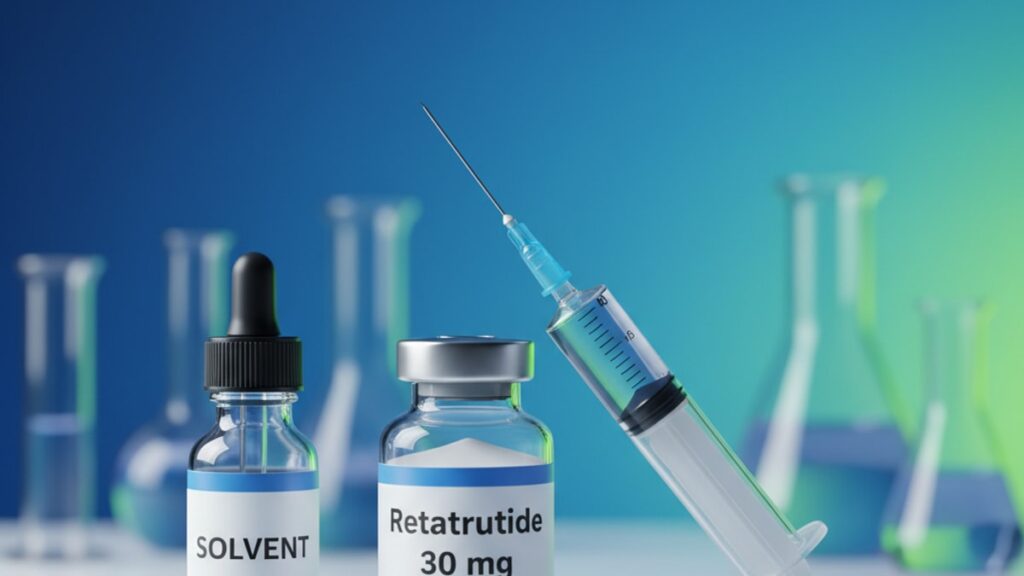
When you're working with a sophisticated research compound like Retatrutide, precision isn't just a goal; it's the entire foundation of your work. The data you generate, the conclusions you draw, and the potential breakthroughs you uncover all hinge on getting the fundamentals absolutely perfect. One of the most critical—and honestly, one of the most frequently mishandled—fundamentals is reconstitution. It sounds simple, but the nuances can make or break an entire experimental series.
Our team has seen it all. We've consulted with labs that struggled with inconsistent results, only to discover their reconstitution technique was the culprit. A little too much agitation, the wrong diluent, or a simple miscalculation can render a high-purity peptide ineffective, fundamentally skewing your data. That’s why we’re putting our collective experience on paper. This isn't just a guide; this is the protocol we trust, refined through years of hands-on work with peptides that demand impeccable handling.
Why Meticulous Reconstitution is Non-Negotiable
Let's be honest, that small vial of white, lyophilized powder doesn't look like much. But its form is a marvel of biochemical engineering designed for one primary purpose: stability. Lyophilization, or freeze-drying, removes water from the peptide, locking its complex, folded structure in a state of suspended animation. In this solid state, it's incredibly stable, resistant to degradation during shipping and storage. It’s the gold standard for preserving fragile biological molecules.
The moment you introduce a liquid—the process of reconstitution—you 'wake it up.' You're returning it to its biologically active state, but you're also starting a ticking clock on its stability. This is where the process becomes so critical. How you introduce that liquid, what that liquid is, and how you handle the vial immediately after determines the integrity of the peptide's structure. Break that structure, and you don't have Retatrutide anymore; you have a vial of expensive, broken amino acid chains.
Think of it like this: a perfectly folded protein is a key. It's designed to fit a specific lock (its receptor) to trigger a biological action. If you reconstitute it improperly—say, by shaking it violently—you can denature it. You've essentially bent the key. It might look similar, but it will no longer fit the lock. Your experiment will fail not because the hypothesis was wrong, but because your primary tool was compromised from the very beginning. We can't stress this enough: your data is only as reliable as your preparation technique.
Gathering Your Essential Toolkit: What Our Lab Pros Use
Before you even think about popping the cap off a vial, you need to set up your workspace for success. A clean, organized environment minimizes the risk of contamination, which is paramount for any serious research. We recommend laying everything out on a sterile surface or a clean lab bench.
Here’s the essential checklist our team uses every single time:
- Vial of Lyophilized Retatrutide (30 mg): The star of the show. Always start with a high-purity product. The quality of your starting material dictates the ceiling for your results. At Real Peptides, our commitment to small-batch synthesis and exact amino-acid sequencing ensures you're beginning with a compound you can trust. Our 30 mg Retatrutide provides a substantial amount for comprehensive study.
- Diluent: This is the liquid you'll use to dissolve the peptide. The choice here is crucial, and we'll dive deeper into it in the next section. Our unwavering recommendation for multi-use research vials is Bacteriostatic Water.
- Sterile Syringe: A 3mL or 5mL syringe is typically ideal for adding the diluent. You'll also need smaller insulin syringes (calibrated in IU or mL) for accurately drawing your research doses.
- Alcohol Prep Pads: For sterilizing the vial stoppers. Never skip this step. Contamination is the silent killer of good data.
- Sharps Container: Safety is non-negotiable. Proper disposal of all used needles is a fundamental lab practice.
Having everything within arm's reach before you start prevents scrambling and potential mistakes. It’s a simple habit that pays massive dividends in consistency and safety.
The Diluent Debate: Bacteriostatic Water vs. Sterile Water
It's a question our team gets all the time: "Can I just use sterile water?" The answer depends entirely on your protocol, but for a multi-use vial like a 30 mg Retatrutide, our answer is a firm no. You need a bacteriostatic agent.
Let's break down the options.
| Diluent Type | Key Component | Primary Use Case | Shelf Life After Mixing | Our Recommendation |
|---|---|---|---|---|
| Bacteriostatic Water | Sterile Water + 0.9% Benzyl Alcohol | Multi-use vials. The alcohol inhibits bacterial growth after the rubber stopper is punctured. | Up to 28 days (refrigerated) | Strongly Recommended for research requiring multiple draws from one vial. |
| Sterile Water for Injection | Pure, sterile H2O | Single-use vials only. Once the seal is broken, there is no preservative to prevent contamination. | Use immediately; discard any remainder. | Not advised for multi-use vials like a 30 mg Retatrutide. |
| Acetic Acid (0.6%) | Sterile Water + Acetic Acid | Specific peptides that have solubility issues in water. | Varies by peptide; check specific data sheets. | Only use if explicitly required for a specific peptide. Not needed for Retatrutide. |
Why are we so insistent on Bacteriostatic Water? Every time you puncture the rubber stopper of the vial with a syringe, you create a potential entry point for airborne microorganisms. Without the benzyl alcohol acting as a preservative, bacteria could begin to colonize the solution. This not only compromises the peptide but introduces a dangerous variable into your experiment. Using BAC water is a simple, effective insurance policy for the integrity and safety of your reconstituted solution over its intended use period.
The Real Peptides Step-by-Step Reconstitution Protocol
Alright, you've got your tools, you understand the 'why,' and you're ready to go. Follow these steps precisely. Don't rush. The entire process should take only a few minutes, but those few minutes of focused effort are everything.
Step 1: Preparation and Sanitization
Remove the plastic caps from both your Retatrutide vial and your Bacteriostatic Water vial. You'll see a rubber stopper underneath. Take an alcohol prep pad and vigorously wipe the top of each rubber stopper. Let them air dry for a moment. This is a critical, non-negotiable element of aseptic technique.
Step 2: Drawing the Diluent
Take your 3mL syringe and draw up your desired amount of Bacteriostatic Water. How much should you use? This depends on your desired final concentration. A common practice for a 30 mg vial is to add 3 mL of BAC water. This creates a very straightforward concentration of 10 mg per 1 mL, which simplifies dosage calculations immensely. We'll cover the math in more detail shortly. Before drawing the water, inject an equal amount of air into the BAC water vial to equalize the pressure and make drawing the liquid easier.
Step 3: Introducing the Diluent to the Peptide
This is the most delicate part of the whole procedure. Push the needle of the syringe containing the BAC water through the center of the Retatrutide vial's rubber stopper. Now, here's the key: do not inject the water directly onto the lyophilized powder. This can cause mechanical stress and potentially damage the peptide. Instead, angle the needle so the stream of water runs gently down the inside wall of the glass vial. Slowly, and I mean slowly, depress the plunger, allowing the water to trickle down and pool at the bottom.
This gentle introduction is paramount.
Step 4: The Dissolving Process (No Shaking!)
Once all the diluent is in the vial, carefully remove the syringe. You'll now have a pool of liquid with the powder cake. Your first instinct might be to shake it to mix it. Don't. You must never, ever shake a peptide solution. Shaking creates shearing forces that can denature the delicate protein structures.
Instead, you have two options. The best method is to simply let it sit for a few minutes; most peptides will dissolve on their own. If it needs a little help, you can very gently swirl the vial in a slow, circular motion. An even better technique our team prefers is to gently roll the vial between your palms. The warmth from your hands and the gentle rolling action is more than enough to encourage the peptide to fully dissolve.
Step 5: Inspect for Clarity
The final solution should be perfectly clear. Look at it against a light source. There should be no floaters, no cloudiness, and no visible particles. If the solution is cloudy or contains particulates, the peptide may not have dissolved properly or, in rare cases, could indicate a problem with the product. A properly reconstituted solution from a high-purity source like ours will be indistinguishable from water.
That's it. You've done it. Simple, right? The magic is in the details and the deliberate, gentle handling.
Calculating Your Dosage: A Primer on Precision
Now that you have a reconstituted solution, you need to be able to accurately draw your desired dose for research. The math is simple, but it requires you to know three things:
- Total amount of peptide in the vial (e.g., 30 mg)
- Total volume of diluent you added (e.g., 3 mL)
- Your desired research dose (e.g., 2 mg)
First, calculate the concentration of your solution. The formula is:
Concentration (mg/mL) = Total Peptide (mg) / Total Diluent (mL)
Using our example: 30 mg / 3 mL = 10 mg/mL. This means every 1 milliliter of solution in your vial contains 10 milligrams of Retatrutide.
Next, calculate the volume you need to draw for your specific dose. The formula is:
Volume to Draw (mL) = Desired Dose (mg) / Concentration (mg/mL)
Continuing our example for a 2 mg dose: 2 mg / 10 mg/mL = 0.2 mL.
So, you would use a smaller, more precise syringe (like an insulin syringe) to draw exactly 0.2 mL from the vial for your experiment.
Let's try another common scenario. What if you added 6 mL of BAC water to the 30 mg vial?
- Concentration: 30 mg / 6 mL = 5 mg/mL
- Volume for a 2 mg dose: 2 mg / 5 mg/mL = 0.4 mL
Our experience shows that keeping the math simple is the best way to prevent errors. That's why we often recommend diluent volumes that result in easy-to-manage concentrations like 10 mg/mL or 5 mg/mL. It just makes life in the lab that much easier.
Common Pitfalls and How to Sidestep Them Like a Pro
We've seen brilliant researchers get tripped up by simple mistakes. Here are the most common ones we've observed and how to avoid them.
- The Vial Shake: We've mentioned it before, but it bears repeating. Shaking is the number one peptide killer. It's a catastrophic error that physically breaks the molecules. Always roll or swirl gently.
- Using the Wrong Diluent: Using sterile water for a multi-use vial is asking for contamination. Stick with Bacteriostatic Water. It's the professional standard for a reason.
- Direct Injection onto Powder: Blasting the powder with a stream of water from the syringe is a form of mechanical stress. It's not as violent as shaking, but it's not ideal. Letting the diluent run down the side of the vial is the gentlest, most effective method.
- Ignoring Temperature: Reconstituting a peptide that is still ice-cold from the freezer can sometimes cause solubility issues. We recommend letting the vial sit at room temperature for 15-20 minutes before you begin the process.
- Measurement Errors: Using the wrong syringe or misreading the volume markings can throw off your entire experiment. Double-check your calculations and use the smallest appropriate syringe for measuring your final dose to maximize accuracy.
Avoiding these common blunders comes down to discipline and following a proven protocol. It's about respecting the delicate nature of the compound you're working with.
Storage Secrets: Preserving Peptide Integrity Post-Reconstitution
Once you've reconstituted your Retatrutide, the clock is ticking. While BAC water extends its life, it doesn't make it immortal. Proper storage is crucial.
Refrigerate Immediately: The reconstituted vial must be stored in a refrigerator, typically between 2°C and 8°C (36°F and 46°F). Never freeze a reconstituted peptide, as the freeze-thaw cycle can damage the molecular structure.
Protect from Light: Many peptides are light-sensitive. Storing the vial in its original box or in a dark part of the refrigerator provides an extra layer of protection against degradation.
Mind the Shelf Life: With Bacteriostatic Water, a reconstituted peptide is generally stable for up to 4 weeks when refrigerated. We advise labeling the vial with the date of reconstitution so you can accurately track its age. Using a peptide beyond its recommended window is a risky proposition for data integrity.
Purity Matters: How Your Starting Material Dictates Your Results
We can provide the most flawless protocol in the world, but it means nothing if you're starting with a subpar product. The purity, accuracy of sequence, and correct folding of the peptide are established long before it ever arrives at your lab. This is where your choice of supplier becomes the most important variable in your research.
At Real Peptides, this is our obsession. We don't mass-produce. We utilize a small-batch synthesis process that allows for meticulous quality control at every stage. We verify the exact amino-acid sequencing to ensure you're getting precisely the molecule you ordered, whether it's a complex multi-agonist like Retatrutide, a potent metabolic researcher like Tirzepatide, or a targeted regenerative compound like BPC 157 Peptide.
This relentless focus on quality ensures that when you follow the correct reconstitution protocol, the solution in your vial is exactly what it's supposed to be—a pure, potent, and reliable tool for your research. When your results depend on molecular precision, you can't afford to gamble on your source material. We encourage you to explore our full range of peptides and see the difference that a commitment to purity makes.
Properly learning how to reconstitute Retatrutide 30 mg is more than just a task; it's a fundamental skill that demonstrates a commitment to scientific rigor. By embracing a meticulous, gentle, and precise approach, you ensure that the powerful potential locked within that lyophilized powder is fully realized in your experiments. You honor the investment in your research and set the stage for generating clean, reliable, and impactful data. Get Started Today with the confidence that you're prepared for success.
Frequently Asked Questions
What should a properly reconstituted Retatrutide solution look like?
▼
A correctly reconstituted solution should be completely clear and free of any particles or cloudiness. It should look just like water. If you notice any discoloration or floaters, you should not use the solution as it may indicate a problem with reconstitution or product integrity.
Can I use tap water or bottled water to reconstitute my peptide?
▼
Absolutely not. You must use a sterile, appropriate diluent. Our team strongly recommends [Bacteriostatic Water](https://www.realpeptides.co/products/bacteriostatic-water/) for multi-use vials as it contains a preservative to prevent bacterial growth. Using non-sterile water will contaminate your research peptide and render it unusable.
What happens if I accidentally shake the vial of Retatrutide?
▼
Shaking the vial can cause the delicate peptide chains to break apart or denature, rendering the compound ineffective. This mechanical stress is irreversible. Unfortunately, if you’ve vigorously shaken a vial, its integrity is compromised and it should not be used for reliable research.
How long is reconstituted Retatrutide stable in the refrigerator?
▼
When reconstituted with Bacteriostatic Water and stored properly in the refrigerator (between 2°C and 8°C), Retatrutide is typically stable for up to 28 days. We always recommend labeling the vial with the date of reconstitution to keep accurate track.
Why is my peptide not dissolving completely?
▼
This can happen for a few reasons. Ensure the vial was at room temperature before adding the diluent. Be patient and allow it to sit, or gently roll it between your hands. If it still doesn’t dissolve, it could, in very rare instances, indicate a manufacturing issue.
Is it better to add more or less diluent to the 30 mg vial?
▼
The amount of diluent determines the final concentration. Adding less water (e.g., 1.5 mL) creates a more concentrated solution, while adding more (e.g., 6 mL) makes it more dilute. We find that adding 3 mL is a great balance, as it creates an easy-to-calculate concentration of 10 mg/mL.
Can I pre-load syringes with my doses for the week?
▼
Our team does not recommend this practice. Peptides are most stable in the glass vial. Some peptides can adhere to the plastic of the syringe over time, which can alter the actual dose administered. It’s always best to draw each dose fresh from the vial right before use.
Does the temperature of the Bacteriostatic Water matter?
▼
Using room-temperature diluent is best practice. Injecting very cold liquid into the vial can sometimes cause minor issues with solubility. Letting both the peptide vial and the BAC water sit at room temperature for 15-20 minutes before mixing is ideal.
What’s the difference between mg and mL on a syringe?
▼
This is a critical distinction. ‘mg’ (milligrams) is a unit of mass—it tells you how much of the peptide you have. ‘mL’ (milliliters) is a unit of volume—it tells you how much liquid you have. You use calculations to determine how many mL of liquid you need to draw to get your desired mg dose.
Why can’t I freeze my reconstituted Retatrutide?
▼
Freezing a reconstituted peptide is not recommended. The process of ice crystal formation and subsequent thawing can damage the complex folded structure of the peptide molecule, a process known as freeze-thaw damage. This can significantly reduce its biological activity.
Is it normal for a vacuum to be present in the vial?
▼
Yes, it is very common for lyophilized peptide vials to be sealed under a slight vacuum to ensure sterility and stability. When you first puncture the stopper with a needle, you may hear a faint hiss of air entering, which is completely normal.
Can I mix two different peptides in the same syringe?
▼
We strongly advise against this unless a specific research protocol calls for it. Mixing different peptides can lead to unknown interactions, changes in pH, and potential degradation of one or both compounds. It introduces too many variables and compromises data integrity.
