





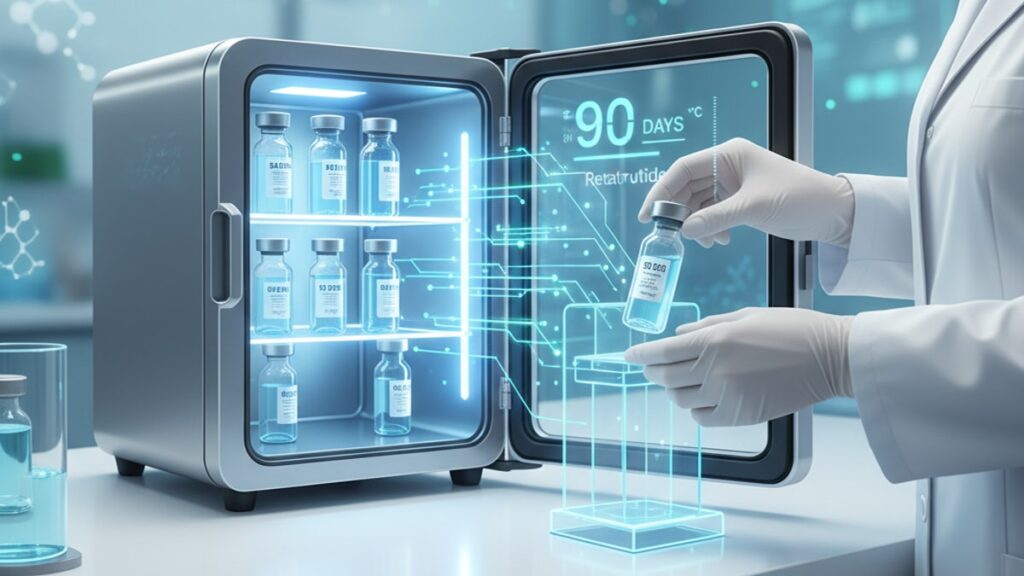
It’s a question our team hears all the time, and honestly, it’s one of the most important questions a researcher can ask. You’ve invested resources, time, and intellectual energy into your project. The last thing you want is for it all to be compromised by something as seemingly simple as improper storage. The integrity of your data—the very foundation of your work—hinges on the stability of your compounds. And when it comes to sophisticated peptides like Retatrutide, precision isn't just a goal; it's a requirement.
We get it. You're juggling multiple protocols, analyzing data, and planning your next experimental phase. It’s easy to overlook the finer points of peptide handling. But our experience shows that the most successful research outcomes are born from meticulous attention to detail, starting from the moment you receive your vial. This isn't just about following a checklist; it's about understanding the 'why' behind the 'how.' Why does temperature matter so much? What actually happens to a peptide molecule when it degrades? Answering these questions is key to protecting your investment and ensuring your results are valid and reproducible.
Why Proper Peptide Storage is Non-Negotiable
Let’s be direct: peptides are delicate. They are complex chains of amino acids, and their specific sequence and three-dimensional structure are what give them their biological activity. Think of it like a very intricate, very tiny key designed to fit a specific lock. If that key gets bent, rusted, or broken—even slightly—it won't work anymore. The same is true for peptides.
Environmental factors are the enemy of peptide stability. Heat, light, oxygen, and even physical agitation can cause the peptide to denature, aggregate, or oxidize. This process is often irreversible. Once a peptide degrades, its efficacy is diminished or completely lost. For a researcher, this is a catastrophic failure. It means your experiment could yield false negatives, inconsistent data, or results that are simply not reproducible. You could spend weeks or months chasing a phantom outcome, all because the compound you started with wasn't what you thought it was. We can't stress this enough: your entire study relies on the molecular integrity of your reagents. It’s the first domino in a long chain of scientific inquiry.
Understanding Retatrutide: A Quick Primer
Before we dive into storage specifics, it helps to appreciate what we're working with. Retatrutide is a formidable molecule. It's a multi-agonist peptide, targeting not just one but three receptors: GLP-1, GIP, and glucagon. This triple-action mechanism makes it a subject of intense interest in metabolic research. Its structure is significantly more complex than simpler peptides, involving a precise sequence of amino acids modified to enhance its stability and half-life in a biological system.
But that engineered complexity also contributes to its sensitivity in a vial. The very modifications that make it potent also create more opportunities for things to go wrong outside of its ideal environment. That's why starting with an impeccably pure product is so critical. Here at Real Peptides, our small-batch synthesis focuses on achieving that exact amino-acid sequence, ensuring you begin your work with a compound that is structurally perfect. From there, preservation becomes your responsibility.
The Two States of Retatrutide: Lyophilized vs. Reconstituted
This is the most critical distinction to understand when discussing peptide storage. Your Retatrutide will arrive in one of two states, and their storage requirements are vastly different.
-
Lyophilized (Freeze-Dried) Powder: This is the most stable form. The lyophilization process removes water from the peptide, putting it into a state of suspended animation. By removing the aqueous environment, we dramatically slow down the chemical reactions that lead to degradation. A lyophilized peptide is relatively resilient, but it's not invincible.
-
Reconstituted (Liquid) Solution: This is the state after you've added a diluent, typically Bacteriostatic Water, to the lyophilized powder. The moment you add liquid, you start a clock. The peptide is now in an aqueous solution where it is biologically active but also far more susceptible to degradation. Water acts as a medium for hydrolysis and microbial growth, making proper handling absolutely essential.
Thinking these two states are the same is the single biggest mistake we see researchers make. They are not. Their shelf lives are worlds apart.
How Long is Lyophilized Retatrutide Good For in the Fridge?
Let's tackle the powder first. When stored as a lyophilized powder, Retatrutide is quite stable. If you place the unopened vial in a standard refrigerator (around 2°C to 8°C or 36°F to 46°F), it can remain stable for many months, often up to a year or more. The key is keeping it consistently cold and dark.
But here’s a pro tip from our labs: for long-term storage of lyophilized powder (meaning you don't plan to use it for several months), a freezer is even better. Storing it at -20°C (-4°F) can extend its stability significantly, often for several years. The crucial caveat here is to avoid freeze-thaw cycles. Every time you thaw and re-freeze the powder, you introduce moisture condensation, which can compromise the peptide's integrity. If you're going to freeze it, commit to it. Don't pull it out just to 'check on it.' When you're ready to use it, let the vial come to room temperature before opening it to prevent condensation from forming inside.
So, for the fridge? You're looking at months of stability for the powder. Safe, simple, and effective for most research timelines.
The Game Changer: Reconstitution and Its Impact on Stability
Everything changes the moment you add liquid. Reconstitution is the process of preparing your peptide for use, and it's the point of no return for its long-term stability. The choice of diluent is important. Our team overwhelmingly recommends using sterile Bacteriostatic Water. It contains 0.9% benzyl alcohol, a bacteriostatic agent that prevents the growth of bacteria in the vial after reconstitution. This is a non-negotiable element for maintaining sterility over multiple uses.
When you reconstitute, you're not just dissolving a powder. You're reintroducing the peptide to an environment where it can fold, move, and, unfortunately, break down. The stability clock is now ticking, and it moves much, much faster.
The Core Question: How Long is Reconstituted Retatrutide Good For in the Fridge?
This is the answer everyone is looking for. Once reconstituted with bacteriostatic water and stored properly in a refrigerator at 2°C to 8°C, Retatrutide is generally considered stable and effective for research purposes for approximately 4 to 6 weeks.
Could it last longer? Possibly. Could it degrade faster? Absolutely. This 4-to-6-week window is a widely accepted guideline based on the typical degradation rates of complex peptides in a refrigerated, sterile solution. Pushing beyond this timeframe introduces a significant risk of using a less potent, partially degraded compound, which will directly impact the reliability of your experimental data. For the sake of reproducibility and scientific accuracy, our team strongly advises adhering to this timeframe.
It's also crucial to label your vial with the date of reconstitution. It's a simple habit that prevents costly errors. Don't trust your memory when the integrity of your research is on the line.
Factors That Wreck Peptide Stability (And How to Avoid Them)
Knowing the timeframe is only half the battle. You also need to know what to avoid. Several environmental factors can accelerate degradation and shorten that 4-to-6-week window dramatically. Think of these as the villains of your lab fridge.
- Temperature Fluctuations: A stable temperature is key. The door of your refrigerator is the worst place to store peptides. It experiences the most significant temperature swings every time it's opened. Place your vials in the back of the main compartment, where the temperature is most consistent.
- Light Exposure: Peptides, particularly certain amino acids within their structure, are sensitive to UV light. Light can trigger photo-oxidation and other degrading reactions. This is why peptides are shipped in vials that are often amber or are packaged in light-blocking containers. Always store your reconstituted solution in the dark. A simple cardboard box inside the fridge works perfectly.
- Physical Agitation: Don't shake your peptide vial. Ever. Vigorous shaking or vortexing can cause shearing forces that physically break the delicate peptide bonds or cause aggregation (clumping). When you reconstitute, gently roll the vial between your palms or slowly invert it a few times until the powder is dissolved. Treat it with mechanical respect.
- Contamination: This is a huge one. Every time you puncture the vial's stopper with a syringe, you create a potential entry point for bacteria. Always swab the stopper with an alcohol pad before each use. Use a new, sterile syringe for every single extraction. Never introduce any unsterilized equipment to your stock solution. This is where using bacteriostatic water provides an extra layer of defense, but it doesn't make you immune to poor sterile technique.
Avoiding these four pitfalls is just as important as keeping the peptide cold. A peptide stored at the right temperature but constantly exposed to light and agitation will degrade much faster than one stored meticulously.
A Step-by-Step Protocol for Storing Your Retatrutide
Let's put this all together into a practical workflow. Here’s the protocol our own experts follow to ensure maximum stability and research integrity.
-
Upon Arrival: Inspect the package. Your lyophilized Retatrutide should arrive as a solid, white, puck-like cake at the bottom of the vial. Immediately place it in the refrigerator (for short-term storage) or the freezer (for long-term storage).
-
Ready for Reconstitution: When you're ready to begin your experiment, remove the vial from the cold. Allow it to sit at room temperature for 20-30 minutes before opening. This prevents condensation from forming inside the vial on the powder.
-
The Reconstitution Process: Gently pop the plastic cap off. Swab the rubber stopper with an alcohol pad. Using a sterile syringe, slowly inject the correct volume of Bacteriostatic Water into the vial. Aim the stream of water against the side of the glass, not directly onto the peptide powder, to minimize foaming.
-
Dissolving the Peptide: Do not shake it. Gently roll the vial between your hands. The powder should dissolve into a clear solution. If it doesn't dissolve immediately, let it sit in the refrigerator for a bit and try rolling it again later.
-
Labeling: This is critical. Use a permanent marker to write the date of reconstitution and the final concentration on the vial.
-
Refrigerated Storage: Place the now-reconstituted vial in a dark container (like its original box) in the back of the refrigerator (2°C to 8°C). It is now ready for use within its 4-to-6-week stability window.
-
Each Use: Before drawing a dose, swab the stopper with alcohol. Use a fresh, sterile syringe every time. Return the vial to the fridge immediately after use. Minimize the time it spends at room temperature.
Following this protocol diligently is your best insurance policy against peptide degradation.
Comparison Table: Common Storage Mistakes vs. Best Practices
To make it even clearer, we've put together a table outlining the common pitfalls we've seen and the professional best practices you should adopt.
| Common Mistake | Best Practice |
|---|---|
| Storing reconstituted peptides in the fridge door. | Store in the back of the main refrigerator compartment for stable temperature. |
| Shaking the vial vigorously to mix it. | Gently roll or swirl the vial to dissolve the powder without causing mechanical stress. |
| Leaving the vial out on the lab bench. | Return the vial to the refrigerator immediately after drawing a dose. Minimize room temperature exposure. |
| Reusing syringes or failing to use alcohol swabs. | Use a new, sterile syringe for every extraction and always clean the stopper with alcohol first. |
| Exposing the vial to light. | Keep the vial in its original box or another light-blocking container at all times. |
| Forgetting when it was reconstituted. | Clearly label the vial with the date of reconstitution and concentration. |
| Using sterile water instead of bacteriostatic water. | Use bacteriostatic water to inhibit microbial growth over the course of multiple uses. |
Recognizing the Signs of a Degraded Peptide
Even with the best practices, it's wise to know the warning signs. How can you tell if your Retatrutide might have gone bad? Visually inspect your solution before every single use. A properly reconstituted, stable peptide solution should be perfectly clear and colorless.
Look for these red flags:
- Cloudiness or Haziness: The solution should not be milky or opaque. Cloudiness often indicates bacterial contamination or that the peptide has begun to aggregate and fall out of solution.
- Discoloration: Any change in color, such as a yellow or brownish tint, is a sign of chemical degradation.
- Particulates: You should not see any floating specks, strings, or sediment in the liquid.
If you observe any of these signs, do not use the peptide. The risk of inaccurate results or adverse effects is too high. It's a tough pill to swallow, but you must discard the vial and start fresh. Your research integrity demands it.
The Real Peptides Commitment: Purity from Our Lab to Yours
We've spent a lot of time discussing how you can preserve your peptide, but the truth is, stability starts long before the vial ever gets to you. It begins with the synthesis process itself. You can have the best storage protocol in the world, but if you start with an impure or improperly synthesized compound, you're already fighting a losing battle.
This is where our commitment at Real Peptides makes a tangible difference. We focus on small-batch synthesis, a meticulous process that allows for unparalleled quality control. Each batch is crafted to ensure the exact amino-acid sequence and structure, verified through rigorous testing. This guarantees that the lyophilized powder you receive is of the highest possible purity and stability. When you Get Started Today with a product from our extensive collection of research peptides, you're not just buying a compound; you're investing in a reliable foundation for your work.
Ultimately, the partnership between a quality supplier and a diligent researcher is what leads to breakthrough discoveries. We provide the impeccably pure tool; you provide the meticulous handling and brilliant inquiry. Together, we can ensure that the science is sound, the data is trustworthy, and the results are meaningful. Proper storage isn't just a chore; it's an essential part of the scientific method.
Frequently Asked Questions
What is the ideal temperature to store reconstituted Retatrutide?
▼
The ideal temperature is between 2°C and 8°C (36°F to 46°F). We recommend storing it in the main body of a refrigerator, not the door, to ensure a stable temperature.
Can I pre-load syringes with Retatrutide for the week?
▼
Our team strongly advises against this practice. Peptides can be less stable in plastic syringes compared to glass vials, and the risk of contamination and dosage inaccuracy increases significantly. It’s always best to draw each dose immediately before use.
What happens if I accidentally leave my reconstituted Retatrutide out overnight?
▼
A single instance of being left at room temperature for 8-10 hours may not completely ruin the peptide, but it will certainly accelerate degradation and shorten its overall lifespan. We would recommend shortening your usage window and monitoring the solution closely for any changes.
Why is my reconstituted Retatrutide solution cloudy?
▼
A cloudy solution is a major red flag. It can indicate bacterial contamination, improper reconstitution, or that the peptide has begun to aggregate and fall out of solution. We advise that you discard any vial that appears cloudy.
Can I use sterile water instead of bacteriostatic water to reconstitute Retatrutide?
▼
While you can use sterile water, it’s not recommended for multi-use vials. Sterile water contains no preservative, so the risk of bacterial growth after the first puncture is very high. Bacteriostatic water contains a preservative to keep the solution sterile over weeks of use.
How long is the unopened, lyophilized Retatrutide powder good for?
▼
When stored in a refrigerator (2-8°C), the lyophilized powder is stable for many months, often over a year. For long-term storage of several months or years, storing it in a freezer at -20°C is the best practice.
Does it matter if I shake the vial to mix it?
▼
Yes, it matters immensely. You should never shake a peptide vial. Shaking can cause mechanical damage to the peptide molecules, leading to aggregation and loss of potency. Always gently roll or swirl the vial to dissolve the powder.
Can I freeze my Retatrutide after it has been reconstituted?
▼
We generally do not recommend freezing reconstituted peptides. The freeze-thaw cycle can damage the complex structure of the peptide molecule, reducing its efficacy. It’s best to reconstitute only the amount you plan to use within the 4-6 week refrigerated window.
How can I tell if the rubber stopper on the vial is still sterile?
▼
The best way to ensure sterility is to vigorously wipe the rubber stopper with a sterile alcohol prep pad before every single time you puncture it with a syringe. This simple step is critical for preventing contamination.
Is it normal for the powder to look like a small, hard disk in the vial?
▼
Yes, that is perfectly normal. The lyophilization (freeze-drying) process typically results in the peptide forming a solid, white ‘puck’ or cake at the bottom of the vial. It should dissolve into a clear liquid upon proper reconstitution.
What’s the best way to transport reconstituted Retatrutide?
▼
If you need to transport it, use an insulated container with a cold pack to maintain a refrigerated temperature. Minimize agitation and protect it from light. The goal is to replicate the stable conditions of your lab refrigerator as closely as possible.
Does the purity of the peptide affect its stability in the fridge?
▼
Absolutely. A higher purity peptide, like those we produce at Real Peptides, will have fewer impurities that can catalyze degradation reactions. Starting with a high-purity product provides a more stable foundation for your research from day one.











