


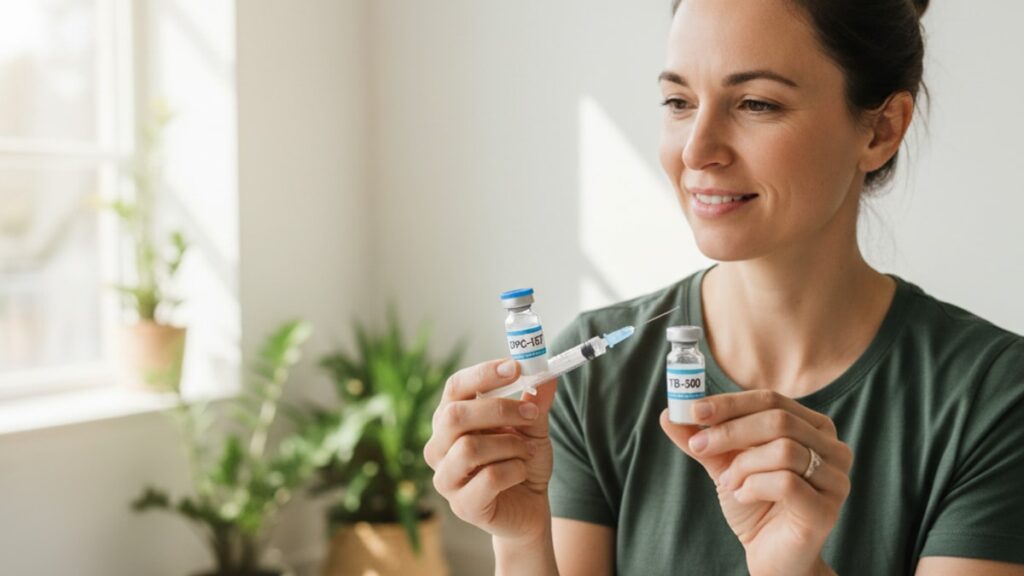
The world of peptide research is moving at a breakneck pace. We’re seeing a significant, sometimes dramatic shift in how scientists approach cellular biology, repair mechanisms, and systemic wellness. Among the sprawling catalog of research compounds, two names consistently appear in tandem: BPC 157 and TB-500. Their potential synergistic relationship in laboratory settings has made them a focal point for researchers aiming to understand the body's intricate recovery pathways.
But here’s the unvarnished truth we've learned after years in this industry: the most promising research compounds are only as good as the protocol used to handle them. A brilliant hypothesis can be completely invalidated by simple mistakes in preparation or administration. That’s why we’re here. Our team at Real Peptides isn't just a supplier; we're partners in research. We believe that providing exceptionally pure peptides is only half the battle. The other half is ensuring you have the knowledge to use them correctly. This is our definitive walkthrough on how to inject BPC 157 and TB-500, designed for the meticulous researcher who understands that details make all the difference.
First, A Quick Refresher on BPC 157 and TB-500
Before we dive into the mechanics, let's briefly touch on what these molecules are and why they're often studied together. It’s important context. Understanding the 'why' makes the 'how' much more intuitive.
BPC 157 Peptide is a synthetic peptide chain, a fragment of a protein found naturally in human gastric juice. In research, it’s often investigated for its profound cytoprotective and regenerative properties. Studies have explored its effects on everything from tendon and ligament healing to gut health and systemic inflammation. It's known for its stability and broad range of observed activities in preclinical models.
Then there's TB 500 Thymosin Beta 4. This is a synthetic version of a naturally occurring protein called Thymosin Beta-4. It’s a major actin-sequestering molecule in cells, meaning it plays a fundamental role in cell structure, migration, and differentiation. Researchers are particularly interested in its ability to promote endothelial and keratinocyte migration, modulate inflammation, and encourage angiogenesis (the formation of new blood vessels). It’s a key player in the wound-healing cascade.
So, why the combination? Researchers often pair them because they appear to work on different but complementary pathways. Think of it like this: BPC 157 is often studied for its direct, localized repair signaling, while TB-500 is investigated for its systemic role in cellular mobility and inflammation control. When studied together, as in our popular Wolverine Peptide Stack, the goal is often to observe a more comprehensive and robust regenerative response in a research setting. The two seem to create a powerful one-two punch in preclinical models of injury and recovery.
The Non-Negotiable Starting Point: Sourcing Purity
Let’s be honest, this is crucial. You can have the most impeccable protocol in the world, but if your starting material is flawed, your research is dead on arrival. The peptide market is, frankly, a bit of a minefield. It’s flooded with products that suffer from low purity, incorrect amino acid sequences, or contamination with fillers and byproducts from sloppy synthesis.
This isn't just a minor issue; it's a catastrophic one for research integrity.
Contaminants can produce their own biological effects, muddying your data and making it impossible to attribute observed outcomes to the peptide itself. An incorrect sequence means you aren't even studying the molecule you think you are. Our team at Real Peptides was founded on this principle. We saw the need for an unwavering commitment to quality. That's why we focus on small-batch synthesis, which allows for meticulous quality control at every stage. Every single batch we produce is backed by third-party testing to verify its purity, sequence, and concentration. It’s the only way to guarantee that what's on the label is exactly what's in the vial.
We can't stress this enough: your entire process, from reconstitution to injection, rests on this foundation. Don't compromise on it.
Gathering Your Supplies: The Researcher's Toolkit
Proper preparation prevents poor performance. It's a cliché, but it's absolutely true in a lab setting. Before you even think about handling the peptides, you need to have your toolkit assembled and ready. Here’s what we recommend having on hand:
- Lyophilized Peptides: Your vials of BPC 157 Peptide and TB 500 Thymosin Beta 4. They will arrive as a solid, white, lyophilized (freeze-dried) puck or powder at the bottom of the vial.
- Bacteriostatic Water: This is sterile water mixed with 0.9% benzyl alcohol, which acts as a preservative to prevent bacterial growth after the vial has been opened. Using anything else (like sterile water or, heaven forbid, tap water) is a serious breach of protocol. You absolutely must use Bacteriostatic Water for multi-use vials.
- Insulin Syringes: A 1mL insulin syringe with a 29-31 gauge, 1/2 inch needle is the standard for subcutaneous injections. The markings (units) make measuring small, precise doses straightforward.
- Alcohol Prep Pads: For sterilizing the tops of the vials and the injection site. This is a simple but critical step in preventing contamination.
- A Sharps Container: A designated, puncture-proof container for safely disposing of used needles. Safety first, always.
Having all these items laid out on a clean surface before you begin ensures a smooth, sterile, and error-free process.
Reconstitution: The Delicate Art of Preparation
Reconstitution is the process of mixing your lyophilized peptide with bacteriostatic water to prepare it for administration. This step is delicate. The long amino acid chains that make up peptides can be damaged by rough handling. Rushing this is the single most common mistake we see.
Here's the meticulous, step-by-step process our team follows:
-
Preparation and Sterilization: Start by washing your hands thoroughly. Pop the plastic caps off your peptide and bacteriostatic water vials. Vigorously wipe the rubber stoppers on top of both vials with an alcohol prep pad and let them air dry. Don't skip this.
-
Calculate Your Water Volume: This is where precision begins. You need to decide how much water to add to create a simple concentration for dosing. A common and easy-to-manage method is to add 2mL of bacteriostatic water to a 5mg vial of peptide. Let's do the math:
- 5mg of peptide = 5000mcg
- You add 2mL of water.
- Concentration = 5000mcg / 2mL = 2500mcg per mL.
- Since a 1mL insulin syringe has 100 units, each unit would contain 25mcg of the peptide (2500mcg / 100 units).
This makes calculating a 250mcg dose incredibly simple—it's just 10 units on the syringe.
-
Drawing the Water: Take a new, sterile syringe. Pull the plunger back to the 2mL mark (or your chosen volume) to draw air into the barrel. Insert the needle through the rubber stopper of the bacteriostatic water vial and inject the air. This pressurizes the vial and makes drawing the water out much easier. Now, turn the vial upside down and slowly pull the plunger back to draw 2mL of water into the syringe.
-
Injecting the Water into the Peptide Vial: This is the most critical part. Do not—we repeat, do not—just blast the water directly onto the peptide powder. This can damage the fragile molecules. Instead, insert the needle into the peptide vial and angle it so the water runs slowly down the inside wall of the glass. Depress the plunger gently and steadily until all the water is in the vial.
-
Gentle Mixing: Once the water is in, remove the syringe. You'll notice the peptide powder starting to dissolve. To help it along, gently swirl the vial or roll it between your palms. Never shake it vigorously. Be patient. It should dissolve completely into a clear liquid within a minute or two. If you see any cloudiness or particles after it should be fully dissolved, it may indicate a problem with the product. High-purity peptides from a source like Real Peptides should always dissolve into a perfectly clear solution.
-
Storage: Your peptide is now reconstituted and active. It must be stored in the refrigerator immediately. It is now light and temperature-sensitive. Properly stored, it will remain stable for several weeks.
You'll repeat this exact process for both your BPC 157 and TB-500 vials, keeping them separate.
Can You Combine BPC 157 and TB-500 in One Syringe?
Yes, and for research purposes, this is often the preferred method to minimize the number of administrations. It's perfectly acceptable to draw up both reconstituted peptides into the same syringe right before injection.
Here’s how it’s done:
- Reconstitute both BPC 157 and TB-500 in their separate vials using the method described above.
- Decide on your research dose for each. For example, let's say 250mcg of BPC 157 and 500mcg of TB-500.
- Using our previous concentration example (25mcg/unit), you would first draw 10 units of the BPC 157 solution into your insulin syringe.
- Then, using the same syringe, you would carefully insert the needle into the TB-500 vial and draw an additional 20 units (for your 500mcg dose), bringing the total volume in the syringe to 30 units.
Now you have a single syringe containing the full dose of both peptides, ready for administration. Do not mix them in the vial itself; only mix them in the syringe immediately prior to use.
Administration Methods: Subcutaneous vs. Intramuscular
Where you administer the peptide matters, and there are two primary methods used in research: subcutaneous (SubQ) and intramuscular (IM). For BPC 157 and TB-500, which both work systemically, the choice is usually straightforward. Our experience shows that for 99% of research applications involving these peptides, subcutaneous is the way to go. It's simpler, less invasive, and provides excellent bioavailability for systemic circulation.
Here's a breakdown of the two methods:
| Feature | Subcutaneous (SubQ) Injection | Intramuscular (IM) Injection |
|---|---|---|
| Target Tissue | The layer of fat just beneath the skin. | Directly into the muscle tissue. |
| Absorption Rate | Slower, more sustained release into the bloodstream. | Faster, more rapid absorption. |
| Common Sites | Abdomen (at least 2 inches from the navel), outer thigh, glutes. | Deltoid (shoulder), gluteus medius (upper buttocks), vastus lateralis (thigh). |
| Technique | Pinch a fold of skin. Insert a short needle at a 45-90 degree angle. | Spread the skin taut. Insert a longer needle at a 90-degree angle. |
| Best For… | Systemic peptides like BPC 157/TB-500, growth hormone secretagogues. | Certain compounds that are irritating to fatty tissue or require rapid uptake. |
| Our Take | Highly recommended. It's the standard, most efficient, and least painful method for these specific peptides. | Generally unnecessary for BPC 157/TB-500 as they work systemically regardless of injection site. |
There's a persistent myth that you need to inject BPC 157 as close to an injury site as possible. While the logic seems sound, the research doesn't fully support it. BPC 157 circulates systemically very effectively. A simple subcutaneous injection in the abdomen will deliver the peptide throughout the body, allowing it to exert its effects wherever it's needed. The same is true for TB-500. So, save yourself the complexity and discomfort—stick with SubQ.
The Step-by-Step Subcutaneous Injection Protocol
Alright, you've sourced high-purity peptides, gathered your supplies, and reconstituted your vials. Now it's time for the administration itself. Let's walk through it with the precision it deserves.
-
Select and Clean the Site: Choose an area with a good layer of subcutaneous fat. The abdomen is the most common choice. Rotate your injection sites with each administration to prevent tissue irritation. Once you’ve picked a spot, clean it thoroughly with a fresh alcohol prep pad and let it dry completely.
-
Prepare the Syringe: Take your reconstituted vial(s) from the refrigerator. Wipe the rubber stopper with another alcohol pad. Draw your calculated dose into the syringe. If you're combining peptides, do it now as described earlier.
-
Remove Air Bubbles: This is a key step for accurate dosing. Hold the syringe with the needle pointing up. Tap the barrel gently to make any air bubbles rise to the top. Slowly and carefully depress the plunger until a tiny bead of liquid appears at the tip of the needle. Your dose is now pure liquid, and the syringe is primed.
-
Perform the Injection: With one hand, gently pinch a one-to-two-inch fold of skin at the cleaned site. This lifts the fatty tissue away from the underlying muscle. Hold the syringe like a dart with your other hand. At a 90-degree angle to the skin surface (or 45 degrees if you have very little body fat), insert the needle with one quick, smooth motion all the way in.
-
Depress the Plunger: Once the needle is in, release the pinch of skin. Slowly and steadily push the plunger down until all the liquid has been injected. There's no need to rush this.
-
Withdraw and Dispose: After a brief pause of a few seconds, pull the needle straight out at the same angle it went in. Immediately place the used syringe—without recapping it—into your designated sharps container. This is a non-negotiable safety rule.
-
Post-Injection: You might see a tiny drop of blood. That's perfectly normal. You can apply gentle pressure with a cotton ball or gauze for a few seconds if needed. Do not rub or massage the area, as this can cause irritation.
That's it. A clean, sterile, and effective administration.
Dosing, Frequency, and Research Considerations
This is where we must place a very important disclaimer. Real Peptides supplies these compounds for in-vitro and laboratory research purposes only. We do not provide medical advice or dosing recommendations for human use. The information below is based on a review of preclinical and animal research studies to provide context for researchers designing their own protocols.
- BPC 157: In animal studies, dosages often range from 1-10mcg per kg of body weight. For a human-sized research subject, this often translates to a protocol utilizing 250-500mcg administered once or twice per day (totaling 500-1000mcg daily).
- TB-500: Research protocols for TB-500 often involve a 'loading phase' followed by a 'maintenance phase.' For example, a loading phase might involve 500-1000mcg administered 3-4 times per week for several weeks, followed by a maintenance phase of the same dose just 1-2 times per week.
The optimal dosage, frequency, and duration depend entirely on the specific research question being investigated. There is no one-size-fits-all answer. Researchers must conduct a thorough literature review to determine a protocol appropriate for their model and objectives. When you're ready to design your study, we encourage you to explore our full range of All Peptides to see what other compounds might complement your work.
Precision in your protocol is what separates anecdotal observation from reproducible science. It starts with the quality of your materials and extends all the way to the final data point. Our commitment is to provide that foundational quality, so you can focus on the research. We believe in the power of this science, and we're here to support the researchers who are pushing its boundaries. When you're ready to take the next step in your work, you can Get Started Today by exploring our verified, high-purity offerings.
Frequently Asked Questions
Can I mix BPC 157 and TB-500 in the same vial before reconstituting?
▼
No, absolutely not. Each peptide must be reconstituted separately in its own vial with bacteriostatic water. You can then draw the desired doses from each vial into the same syringe just before administration.
What happens if I accidentally shake the vial after adding water?
▼
Vigorous shaking can potentially damage the fragile peptide chains, a process called shearing. This can render the peptide less effective or completely inert. Always mix by gently swirling the vial or rolling it between your hands.
How long does a reconstituted vial of BPC 157 or TB-500 last?
▼
When stored properly in a refrigerator (around 36-46°F or 2-8°C), a reconstituted vial of peptide is typically stable for 2 to 4 weeks. Never freeze a reconstituted peptide.
Is it mandatory to use bacteriostatic water for reconstitution?
▼
Yes, for any vial that will be used for multiple doses, it is mandatory. The benzyl alcohol in bacteriostatic water prevents the growth of bacteria, ensuring the solution remains sterile for the life of the vial.
Is a subcutaneous or intramuscular injection better for these peptides?
▼
For systemic peptides like BPC 157 and TB-500, a subcutaneous (SubQ) injection is the standard and recommended method. It’s less invasive, simpler to perform, and allows for excellent systemic absorption.
Does the injection need to be near an injury site for better results?
▼
Our review of the literature suggests this is not necessary. Both BPC 157 and TB-500 work systemically, meaning they circulate throughout the body after a subcutaneous injection. A simple abdominal injection is sufficient for the compounds to reach any area.
What do the ‘units’ on an insulin syringe represent?
▼
The units on a standard U-100 insulin syringe represent a volume. A 1mL syringe contains 100 units, meaning each unit is 0.01mL. This allows for very precise measurement of small liquid volumes.
Why do peptides arrive as a freeze-dried powder?
▼
This process, called lyophilization, removes water from the peptide and makes it stable for shipping and long-term storage at room temperature or in a refrigerator. It’s only once you add water that the peptide becomes active and requires refrigeration.
Is it normal for there to be a vacuum in the vial when I first open it?
▼
Yes, it is very common. Peptides are often packaged under a slight vacuum to ensure sterility and prevent contamination. You’ll feel a slight pull when you first insert a needle.
What should I do if I see particles or cloudiness after reconstitution?
▼
A high-purity peptide should dissolve into a completely clear solution. If you observe any persistent cloudiness, discoloration, or floating particles, you should discard the vial as it may indicate contamination or product degradation.
Can I use sterile water instead of bacteriostatic water?
▼
While sterile water can be used, it’s only suitable if you plan to use the entire contents of the vial in a single administration. For multi-dose use, bacteriostatic water is essential to prevent bacterial growth.
How should I store the lyophilized (powder) vials before mixing?
▼
Before reconstitution, the lyophilized powder is quite stable. For long-term storage, it’s best to keep it in a refrigerator. However, it can be stored at room temperature in a dark place, away from direct sunlight, for several weeks without issue.
