


That first step out of bed. If you're dealing with plantar fasciitis, you know the feeling all too well—a sharp, stabbing sensation in your heel that can make you rethink the whole concept of walking. It’s a relentless, stubborn injury that can sideline athletes, frustrate weekend warriors, and make daily life a genuine chore. Traditional methods like stretching, icing, and orthotics help some, but for many, the relief is temporary, and the frustration becomes chronic.
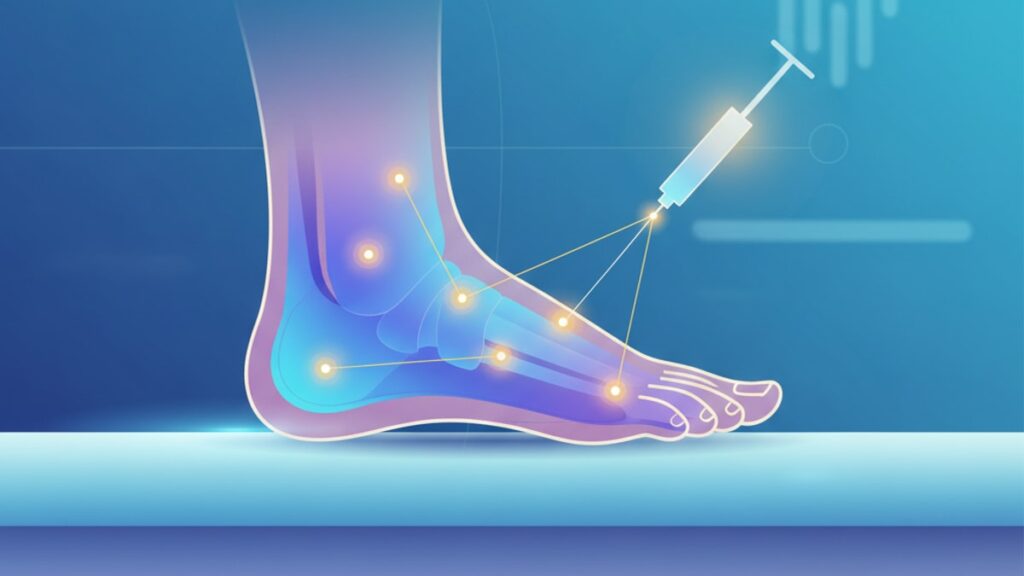
It’s this very persistence that has pushed the research community to explore more innovative tools. Among them, the peptide BPC-157 has generated considerable interest for its potential role in tissue repair and regeneration. But with this interest comes a flood of questions, and one of the most common our team hears is this: if one were designing a research protocol, exactly where would you inject BPC 157 for plantar fasciitis? It's not a simple question, and the answer is far more nuanced than a single spot on a diagram. This is about understanding the mechanics of the peptide, the nature of the injury, and the goals of your research.
First, Let's Get Real About Plantar Fasciitis
Before we can talk about solutions, we have to respect the problem. Plantar fasciitis isn't just simple 'foot pain' or inflammation. It's a degenerative condition affecting the plantar fascia, a thick, web-like ligament that connects your heel to the front of your foot. Think of it as your foot's natural shock absorber. When it's chronically overloaded—from running, standing for long periods, or even improper footwear—it develops microscopic tears. The body tries to heal, but the constant strain creates a vicious cycle of incomplete repair, leading to pain, stiffness, and a catastrophic loss of function.
It’s a biomechanical mess. The tissue becomes thickened, fibrotic, and less elastic. It's less about active, raging inflammation (the '-itis' is a bit of a misnomer in chronic cases) and more about a state of failed healing. This is a critical distinction. We’re not just trying to put out a fire; we're trying to rebuild a foundational structure. And that's precisely why researchers are so intrigued by compounds that might support angiogenesis (the formation of new blood vessels) and cellular repair at a fundamental level.
BPC-157: A Quick Refresher for Researchers
BPC-157, or Body Protection Compound 157, is a synthetic peptide chain composed of 15 amino acids. In preclinical studies, primarily in animal models, it has demonstrated a remarkable ability to promote healing in a sprawling range of tissues—tendons, ligaments, muscles, and even the gut. It's believed to work by upregulating growth factors, enhancing blood vessel formation, and modulating nitric oxide pathways, all of which are critical, non-negotiable elements of tissue regeneration.
Now, here’s what our team can't stress enough: the integrity of any research hinges on the quality of the materials used. The world of peptides is unfortunately filled with products of questionable purity. A contaminated or improperly synthesized peptide won't just fail to produce results; it can completely invalidate a study. That's why at Real Peptides, we're unflinching in our commitment to small-batch synthesis and rigorous quality control. For researchers investigating compounds like our BPC 157 Peptide, knowing you have a pure, stable, and accurately sequenced product is the bedrock of reliable data. It’s everything.
The Core Question: Where to Inject BPC 157 for Plantar Fasciitis?
Alright, let's get to the heart of the matter. When designing a protocol, the debate over injection location typically splits into two main camps: localized (site-specific) and systemic (subcutaneous). Each has its own logic, benefits, and drawbacks.
There is no single 'right' answer. The best approach depends entirely on the specific goals, variables, and risk tolerance of the research being conducted.
Approach 1: The Localized Injection Strategy
The intuitive answer for many is to go local. The logic is straightforward: deliver the healing compound directly to the site of the injury for maximum concentration and effect. For plantar fasciitis, this means administering the peptide into the tissue near the origin of the plantar fascia, right where it attaches to the calcaneus (the heel bone). This is the area that typically shows the most degeneration and is the epicenter of the pain.
Sounds simple, right? Not exactly.
This is a technically demanding approach. The target area is small and surrounded by a complex network of nerves, tendons, and blood vessels. The goal is to inject subcutaneously or intramuscularly near the damaged fascia, not directly into it, which could cause more damage. It requires a precise understanding of foot anatomy. The injection would typically be on the medial (inner) side of the heel, aiming for the tenderest point identified by palpation.
Pros of a Localized Approach:
- High Concentration: Delivers the highest possible dose of the peptide directly to the damaged tissue.
- Targeted Action: Theoretically initiates the healing cascade precisely where it's needed most.
Cons of a Localized Approach:
- Technical Difficulty: Requires significant skill and anatomical knowledge to perform safely and effectively.
- Increased Discomfort: Injections into the sole of the foot can be quite painful.
- Higher Risk Profile: There's a greater risk of hitting a nerve, causing a hematoma, or simply missing the optimal target zone, which could render the application less effective.
Our professional observation is that while the logic of local injections is appealing, its practical execution in a research setting introduces numerous variables that can be difficult to control.
Approach 2: The Systemic (Subcutaneous) Strategy
The second school of thought leverages one of BPC-157's most fascinating properties: its potential for systemic action. Preclinical data suggests that even when administered in a location far from the injury site, BPC-157 can travel through the bloodstream and exert its regenerative effects wherever damage is present. It seems to have an innate homing mechanism for injury.
This completely changes the game. It means you don't need to endure a painful or risky injection in the foot. Instead, the peptide can be administered via a simple subcutaneous injection into a pinch of body fat. The most common and convenient sites are the abdomen (a few inches to the side of the navel), the glutes, or the quadriceps. It's the same method used for compounds like insulin or other peptides such as Ipamorelin.
Pros of a Systemic Approach:
- Ease of Administration: It's incredibly simple, quick, and requires minimal technical skill.
- Low Discomfort: A subcutaneous injection with a small gauge needle is virtually painless for most.
- Minimal Risk: The risk of complications is extremely low.
- Whole-Body Effect: May offer ancillary benefits by addressing other low-grade inflammation or nagging injuries elsewhere in the body.
Cons of a Systemic Approach:
- Lower Local Concentration: The peptide is distributed throughout the body, so the concentration reaching the plantar fascia will be lower than with a direct, local injection.
- Theoretical Potency Debate: Some researchers argue that for a severe, localized injury, a systemic approach might be less potent or slower to act, though this is still a subject of debate.
Honestly, our experience in the research supply field shows a strong preference for the systemic approach, especially in initial study phases. It removes so many confounding variables and safety concerns, allowing the focus to remain squarely on the effects of the peptide itself.
Local vs. Systemic: A Comparison for Your Research Protocol
To make this clearer, let's break it down in a table. This is how our team often visualizes the trade-offs when discussing protocol design with researchers.
| Feature | Localized (Site-Specific) Injection | Systemic (Subcutaneous) Injection |
|---|---|---|
| Target Area | Subcutaneous/intramuscular tissue near the plantar fascia origin. | Subcutaneous fat tissue in the abdomen, glute, or thigh. |
| Ease of Administration | Difficult. Requires anatomical precision and skill. | Very Easy. Simple, straightforward, and highly repeatable. |
| Potential Discomfort | High. The sole of the foot is a very sensitive area. | Very Low. Typically painless or a very minor pinch. |
| Risk Profile | Moderate. Risk of hitting nerves, causing bruising, or infection. | Extremely Low. Minimal risk of any significant side effects. |
| Theoretical Efficacy | Potentially faster or more potent due to high local concentration. | Highly effective due to systemic action, but possibly slower onset. |
| Best For… | Advanced protocols where maximum local concentration is the key variable. | Most research protocols, especially those prioritizing safety and consistency. |
We've seen it work time and again. The consistency and ease of the systemic approach make it a powerful tool for gathering clean, reliable data. The question often isn't 'which is better?' but rather 'which is more practical and repeatable for the study's objectives?'
Important Considerations Beyond Just the Injection Site
Deciding where to inject BPC 157 for plantar fasciitis is just one piece of a much larger puzzle. A successful research protocol is comprehensive. It accounts for every variable. Let's be honest, overlooking these details is the fastest way to compromise your work.
1. Peptide Purity and Sourcing: We've touched on this, but it bears repeating. Your source is everything. A peptide is a precise sequence of amino acids. If that sequence is wrong, or if the vial is full of contaminants from a sloppy synthesis process, you're not actually studying BPC-157. You're studying an unknown substance. At Real Peptides, our guarantee of purity is the promise that what's on the label is what's in the vial, allowing your research to proceed with confidence. This commitment extends across our entire catalog, from foundational peptides to more specialized compounds like TB 500 Thymosin Beta 4.
2. Proper Reconstitution and Handling: Peptides like BPC-157 are delivered in a lyophilized (freeze-dried) powder state for stability. They must be reconstituted with a sterile solvent before use. The industry standard for this is Bacteriostatic Water, which contains a small amount of benzyl alcohol to prevent bacterial growth. Using anything else (like tap water or even sterile water without the bacteriostatic agent) can compromise the peptide's integrity and safety. Proper handling—gently rolling, not shaking, the vial—is also crucial to preserve the delicate peptide chains.
3. Dosage and Protocol Duration: Dosage in preclinical studies is often calculated based on body weight, typically in micrograms (mcg) per kilogram (kg). A common range studied is between 2-10 mcg/kg, administered once or twice daily. The duration of the protocol can vary wildly, from a few weeks for acute injuries to several months for chronic conditions like plantar fasciitis. Consistency is key.
4. The Power of Stacking: In the world of peptide research, investigators rarely look at a single compound in isolation. They often explore synergies. For tendon and ligament injuries, BPC-157 is frequently studied alongside TB-500 (Thymosin Beta-4). While BPC-157 is often seen as the 'local repairman,' TB-500 is viewed as the systemic 'master healer' that promotes cell migration and reduces inflammation on a broader scale. Combining them, as conceptually bundled in research stacks like the Wolverine Peptide Stack, is a common strategy aimed at creating a more powerful, multi-faceted healing response. Exploring our full collection of peptides can reveal many such potential synergies for advanced research.
Thinking through these factors transforms a simple question about location into a robust and well-designed research strategy. It's the difference between hoping for a result and methodically working towards one. When you're ready to design your next project, our team wants you to feel empowered to Get Started Today with the highest quality materials available.
The journey into peptide research is fascinating, and understanding these foundational principles is what separates anecdotal reports from credible scientific inquiry. The debate over where to inject BPC 157 for plantar fasciitis highlights a central theme: the most effective approach is often the one that is most consistent, safe, and repeatable. For many researchers, that points directly toward a systemic subcutaneous protocol. It provides a reliable baseline to study the powerful potential of these remarkable compounds, paving the way for future discoveries.
Frequently Asked Questions
Is a subcutaneous injection near the foot a good compromise between local and systemic?
▼
Some researchers have explored this, injecting into the subcutaneous tissue of the ankle or calf. While theoretically closer to the injury, it doesn’t offer the same direct concentration as a true local injection and lacks the simplicity of a standard abdominal subcutaneous injection. Our team generally finds it’s best to commit fully to one of the two primary strategies for cleaner data.
How deep should a localized BPC-157 injection for plantar fasciitis be?
▼
For a research protocol using a localized approach, the injection would typically be subcutaneous or shallow intramuscular. The goal is to saturate the area around the damaged fascia, not to inject directly into the ligament itself, which could cause further injury. This requires significant anatomical knowledge.
Can I use BPC-157 capsules for plantar fasciitis research?
▼
Oral [BPC 157 Capsules](https://www.realpeptides.co/products/bpc-157-capsules/) are primarily studied for their effects on the gastrointestinal tract. While BPC-157 is orally bioavailable and may have some systemic effects, injectable forms are generally considered far more efficient for targeting musculoskeletal injuries like plantar fasciitis due to higher bioavailability.
What is the difference between BPC-157 and TB-500 for this type of injury?
▼
BPC-157 is often associated with promoting angiogenesis and localized repair at the site of injury. [TB 500 Thymosin Beta 4](https://www.realpeptides.co/products/tb-500-thymosin-beta-4/), on the other hand, is known for its systemic effects, promoting cell migration, and reducing inflammation. They are often studied together to create a synergistic healing effect.
How long does a typical research cycle for BPC-157 and plantar fasciitis last?
▼
Protocol duration varies, but for a chronic condition like plantar fasciitis, research cycles often last from 4 to 8 weeks, and sometimes longer. The goal is to allow enough time for the slow process of ligament and tendon remodeling to occur.
Does it matter what time of day the injection is administered?
▼
Currently, there is no conclusive research indicating an optimal time of day for BPC-157 administration. For research purposes, the most critical factor is consistency. Administering the peptide at the same time each day helps to maintain stable levels in the body and ensures protocol consistency.
Do I need to stop stretching or other therapies during a BPC-157 protocol?
▼
In a research context, this would be a variable to control. Generally, gentle mobility work and supportive therapies are considered complementary. However, aggressive stretching or activities that aggravate the fascia should be avoided to allow the tissue to heal without repeated strain.
What is the proper way to reconstitute BPC-157?
▼
You should use [Bacteriostatic Water](https://www.realpeptides.co/products/bacteriostatic-water/) for reconstitution. Gently inject the water into the vial, letting it run down the side of the glass. Do not shake the vial; instead, gently roll it between your fingers until the lyophilized powder is fully dissolved.
How should I store BPC-157 before and after reconstitution?
▼
Before reconstitution, the lyophilized powder is stable at room temperature but is best stored in a refrigerator. After reconstituting with bacteriostatic water, the peptide solution must be kept refrigerated and is typically stable for several weeks.
Is the systemic effect of BPC-157 proven in human trials?
▼
It’s important to clarify that BPC-157 research is primarily in preclinical and animal stages. While anecdotal reports are widespread, formal human clinical trials are limited. Our discussion is based on interpreting the existing body of preclinical evidence for research design purposes.
Can BPC-157 be combined with other peptides like Ipamorelin?
▼
Yes, in research settings, BPC-157 is often ‘stacked’ with other peptides. While its most common partner for injury is TB-500, it can be used alongside growth hormone secretagogues like [CJC1295 Ipamorelin 5MG 5MG](https://www.realpeptides.co/products/cjc1295-ipamorelin-5mg-5mg/) to support systemic recovery and anabolism, though this creates a more complex protocol.
